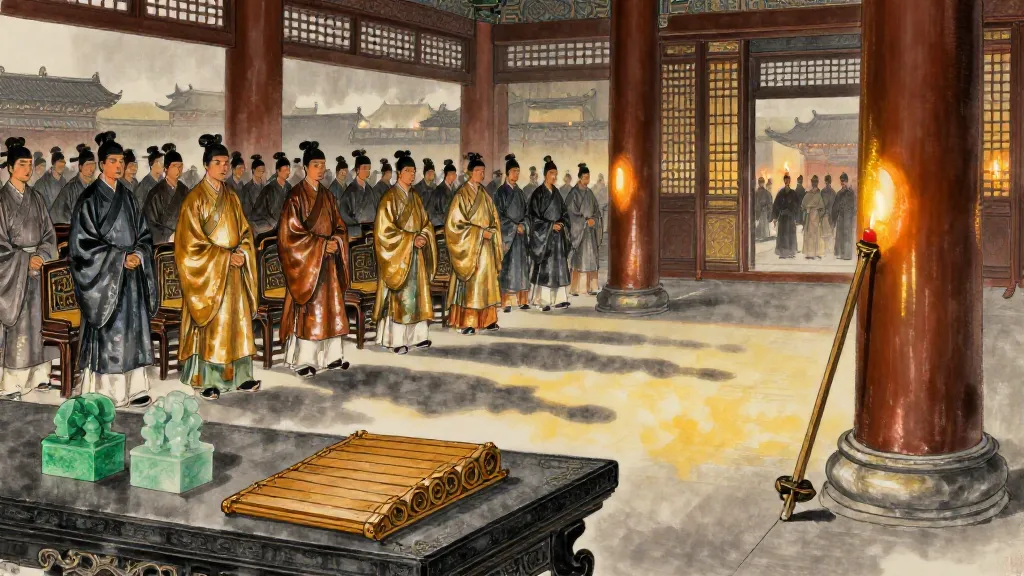
難言 (The Difficulty of Persuasion) — Chinese ink painting

韓非子 Hanfeizi · Chapter 3

難言

The Difficulty of Persuasion

View:

言說之難

The Twelve Perils of Speech

臣非非難言也,所以難言者:言順比滑澤,洋洋纚纚然,則見以為華而不實。敦祗恭厚,鯁固慎完,則見以為掘而不倫。多言繁稱,連類比物,則見以為虛而無用。捴微說約,徑省而不飾,則見以為劌而不辯。激急親近,探知人情,則見以為譖而不讓。閎大廣博,妙遠不測,則見以為夸而無用。家計小談,以具數言,則見以為陋。言而近世,辭不悖逆,則見以為貪生而諛上。言而遠俗,詭躁人間,則見以為誕。捷敏辯給,繁於文采,則見以為史。殊釋文學,以質信言,則見以為鄙。時稱詩書,道法往古,則見以為誦。此臣非之所以難言而重患也。

It is not that your minister Fei finds speaking itself difficult. What makes speaking difficult is this: if one's words are smooth, flowing, and eloquent, one is judged ornamental but insubstantial. If one is earnest, respectful, and thorough, one is judged clumsy and incoherent. If one speaks at length with abundant references and analogies, one is judged empty and impractical. If one is terse and concise, direct and unadorned, one is judged sharp-tongued and inarticulate. If one speaks with urgency and familiarity, probing into human motives, one is judged slanderous and presumptuous. If one speaks in grand and sweeping terms, profound and unfathomable, one is judged extravagant and useless. If one discusses household accounts and speaks in concrete numbers, one is judged petty. If one speaks of contemporary affairs in inoffensive terms, one is judged a coward who flatters his superiors. If one speaks of matters remote from common experience, strange and unsettling, one is judged absurd. If one is quick-witted and rhetorically deft, rich in literary flourish, one is judged a mere scribe. If one abandons literary refinement and speaks plainly and honestly, one is judged vulgar. If one quotes the Odes and Documents and invokes ancient precedent, one is judged a mere reciter. These are the reasons why your minister Fei finds speaking difficult and deeply fears the consequences.

Notes

1context

This chapter is among the most personal in the Hanfeizi. Han Fei reportedly had a severe stammer that made oral persuasion difficult, which may explain his turn to written argument. The twelve rhetorical traps he describes form a closed system: every possible style of speech is grounds for rejection.

2translation

臣非 -- Han Fei refers to himself in the third person as 'your minister Fei,' one of the few chapters where he names himself directly. This is unusual and signals the chapter's autobiographical nature.

賢士之禍

The Calamities That Befall the Worthy

故度量雖正,未必聽也;義理雖全,未必用也。大王若以此不信,則小者以為毀訾誹謗,大者患禍災害死亡及其身。故子胥善謀而吳戮之,仲尼善說而匡圍之,管夷吾實賢而魯囚之。故此三大夫豈不賢哉?而三君不明也。上古有湯至聖也,伊尹至智也;夫至智說至聖,然且七十說而不受,身執鼎俎為庖宰,昵近習親,而湯乃僅知其賢而用之。故曰以至智說至聖,未必至而見受,伊尹說湯是也;以智說愚必不聽,文王說紂是也。故文王說紂而紂囚之,翼侯炙,鬼侯臘,比干剖心,梅伯醢,夷吾束縛,而曹羈奔陳,伯里子道乞,傅說轉鬻,孫子臏腳於魏,吳起收泣於岸門、痛西河之為秦、卒枝解於楚,公叔痤言國器、反為悖,公孫鞅奔秦,關龍逢斬,萇宏分胣,尹子阱於棘,司馬子期死而浮於江,田明辜射,宓子賤、西門豹不鬥而死人手,董安於死而陳於市,宰予不免于田常,范睢折脅於魏。此十數人者,皆世之仁賢忠良有道術之士也,不幸而遇悖亂闇惑之主而死,然則雖賢聖不能逃死亡避戮辱者何也?則愚者難說也,故君子不少也。且至言忤於耳而倒於心,非賢聖莫能聽,願大王熟察之也。

Thus even if one's standards and measures are correct, one will not necessarily be heeded; even if one's moral reasoning is flawless, one will not necessarily be employed. If the great king takes this as untrustworthy, then at best I will be accused of slander and defamation, and at worst I will suffer calamity, disaster, and death upon my person.

Wu Zixu was a brilliant strategist, yet Wu executed him. Confucius was a gifted persuader, yet the people of Kuang besieged him. Guan Zhong was truly worthy, yet Lu imprisoned him. Were these three great ministers not worthy? It was their rulers who lacked discernment.

In high antiquity, Tang was supremely sagacious and Yi Yin was supremely wise. Yet when supreme wisdom tried to persuade supreme sagacity, it took seventy attempts before he was accepted. Yi Yin had to take up the tripod and chopping block to serve as a cook, drawing close through familiarity, before Tang barely recognized his worth and employed him. Thus the saying: when supreme wisdom persuades supreme sagacity, acceptance is not guaranteed -- this is the case of Yi Yin and Tang. When wisdom tries to persuade stupidity, it will certainly not be heeded -- this is the case of King Wen and Zhou of Shang.

King Wen persuaded Zhou, and Zhou imprisoned him. The Marquis of Yi was roasted alive. The Marquis of Gui was made into dried meat. Bi Gan had his heart cut out. Mei Bo was minced into paste. Guan Zhong was bound in fetters. Cao Ji fled to Chen. Baili Xi begged for food on the road. Fu Yue was sold as a convict laborer. Sun Bin had his kneecaps cut off in Wei. Wu Qi wept at the bank gate, grieving that the West River lands had fallen to Qin, and was ultimately dismembered in Chu. Gongshu Cuo recommended a man as a 'vessel of state,' only to be thought mad. Gongsun Yang fled to Qin. Guan Longfeng was beheaded. Chang Hong was disemboweled. Yin Zi was cast into a pit of thorns. Sima Ziqi was killed and his body floated down the river. Tian Ming was shot and killed unjustly. Mi Zijian and Ximen Bao were put to death without even a fight. Dong Anyu was killed and his body displayed in the marketplace. Zai Yu could not escape Tian Chang. Fan Sui had his ribs broken in Wei.

These dozen-odd men were all humane, worthy, loyal, and capable scholars who possessed the arts of governance. They were simply unfortunate enough to encounter perverse, chaotic, benighted, and confused rulers, and so they died. If even sages and worthies cannot escape death and avoid execution and humiliation, why is this? Because fools are impossible to persuade -- and rulers of this kind are not few. Moreover, words that reach the ultimate truth grate upon the ear and unsettle the mind; none but a sage can bear to hear them. I beg the great king to consider this carefully.

Notes

1person伍子胥Wu Zixu

Wu Zixu (伍子胥, d. 484 BC) was a minister of Wu who urged King Fuchai to destroy Yue. Ignored, he was forced to commit suicide. His body was reportedly thrown into the river in a leather sack.

2person伊尹Yi Yin

Yi Yin (伊尹) was the legendary minister who helped Tang (湯) found the Shang dynasty. The tradition that he served as Tang's cook before being recognized is a common motif of merit hidden by humble station.

3person比干Bi Gan

Bi Gan (比干) was a royal uncle of Zhou of Shang who remonstrated with the tyrant and was killed by having his heart cut out. He became the archetype of the loyal minister martyred by a depraved ruler.

4person孫臏Sun Bin

Sun Bin (孫臏, fl. 4th c. BC) was a military strategist and descendant of Sun Wu. His rival Pang Juan had him falsely accused of a crime in Wei, resulting in the punishment of having his kneecaps removed (臏). He later took revenge at the Battle of Maling (341 BC).

5person吳起Wu Qi

Wu Qi (吳起, d. 381 BC) was a famous general and reformer who served Lu, Wei, and Chu. His reforms in Chu threatened the aristocracy, and after King Dao's death he was killed and dismembered (枝解) by the nobles.

6person公孫鞅Gongsun Yang

Gongsun Yang (公孫鞅), better known as Shang Yang or Lord Shang (商鞅, d. 338 BC), was the great Legalist reformer of Qin. After his patron Duke Xiao died, he was accused of treason and torn apart by chariots.

7person范睢Fan Sui

Fan Sui (范睢, d. c. 255 BC) was a strategist who was beaten nearly to death by the Wei minister Wei Qi before escaping to Qin, where he became chief minister under King Zhaoxiang.

8context

The catalogue of martyred worthies serves Han Fei's argument that the problem is structural, not personal: no matter how talented the adviser, the system of unaccountable royal power makes persuasion inherently lethal. This is a distinctly Legalist diagnosis -- virtue alone cannot solve the problem of governance.

Edition & Source

Text
《韓非子》 Hanfeizi
Edition
中華古詩文古書籍網 transcription, 《四部叢刊》本
Commentary
Han Fei (韓非), Warring States period