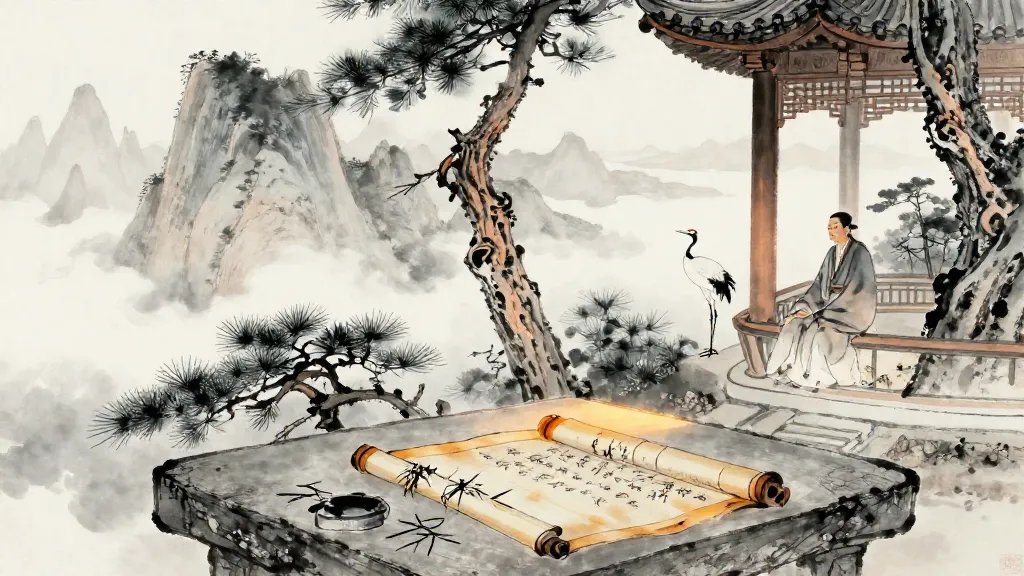
十過 (The Ten Faults) — Chinese ink painting

韓非子 Hanfeizi · Chapter 10

十過

The Ten Faults

View:

十過總論

The Ten Faults Enumerated

十過:一曰行小忠,則大忠之賊也。二曰顧小利,則大利之殘也。三曰行僻自用,無禮諸候,則亡身之至也。四曰不務聽治而好五音,則窮身之事也。五曰貪愎喜利,則滅國殺身之本也。六曰耽於女樂,不顧國政,則亡國之禍也。七曰離內遠遊而忽於諫士,則危身之道也。八曰過而不聽於忠臣,而獨行其意,則滅高名為人笑之始也。九曰內不量力,外恃諸候,則削國之患也。十曰國小無禮,不用諫臣,則絕世之勢也。

The ten faults: First, performing petty loyalty is the enemy of great loyalty. Second, fixating on petty gains is the ruin of great advantage. Third, acting willfully, insisting on one's own way, and showing no courtesy to the feudal lords leads inevitably to personal destruction. Fourth, neglecting governance and indulging in music leads to personal ruin. Fifth, greed, obstinacy, and appetite for profit are the root of national destruction and personal death. Sixth, addiction to female entertainers and disregard for state affairs brings the calamity of national ruin. Seventh, leaving the capital for distant travels while ignoring remonstrating advisers is the path to personal danger. Eighth, committing errors yet refusing to heed loyal ministers, insisting on one's own course, is the beginning of destroying one's reputation and becoming a laughingstock. Ninth, overestimating one's internal strength and depending on external allies brings the affliction of territorial diminishment. Tenth, being a small state without propriety and refusing to employ remonstrating ministers creates the conditions for dynastic extinction.

Notes

1context

This is one of the longest chapters in the Hanfeizi. Each of the ten faults is illustrated with a historical anecdote, making it a compendium of cautionary tales. The chapter blends narrative skill with analytical precision in a way characteristic of Han Fei's best writing.

行小忠:豎谷陽進酒

The First Fault -- Petty Loyalty: Guyang Offers Wine

奚謂小忠?昔者楚共王與晉厲公戰於鄢陵,楚師敗,而共王傷其目。酣戰之時,司馬之反渴而求飲,豎谷陽操觴酒而進之。子反曰:「嘻!,退,酒也。「陽曰:「非酒也。「子反受而飲之。子反之為人也,嗜酒,而甘之,弗能絕於口,而醉。戰既罷,共王欲戰,令人召司馬子反,司馬子反辭以心疾。共王駕而自往,入其幄中,聞酒臭而還,曰:「今日之戰,不穀親傷。所恃者,司馬也,而司馬又醉如此,是亡楚國之社稷而不恤吾眾也。不穀無復戰矣。「於是還師而去,斬司馬子反以為大戮。故豎陽之進酒,不以仇子反也,其心忠愛之而適足以殺之。故曰:行小忠,則大忠之賊也。

What is meant by petty loyalty? In the past, King Gong of Chu fought Duke Li of Jin at Yanling. The Chu army was defeated and King Gong suffered a wound to his eye. At the height of the battle, the Marshal Zifan was thirsty and asked for drink. The servant Guyang brought a cup of wine and offered it to him. Zifan said: 'Away with it -- that is wine!' Guyang said: 'It is not wine.' Zifan accepted and drank it. Now Zifan was by nature fond of wine, and finding it sweet he could not stop drinking until he was drunk.

After the battle paused, King Gong wished to resume fighting and sent for Marshal Zifan. Zifan excused himself with a claim of chest pains. King Gong drove his chariot to Zifan's tent himself, and upon entering smelled the stench of wine. He turned back and said: 'In today's battle, I myself was wounded. My sole reliance was the Marshal, and the Marshal is drunk like this -- he would ruin the altars of soil and grain of Chu and shows no concern for my people. I shall fight no more.' He thereupon withdrew his army and departed, and had Marshal Zifan executed as a public punishment.

Now when the servant Guyang offered wine, it was not out of enmity toward Zifan. His heart was loyal and loving -- yet it was precisely enough to kill him. Therefore it is said: performing petty loyalty is the enemy of great loyalty.

Notes

1person楚共王Chu Gong Wang

King Gong of Chu (楚共王, r. 590-560 BC) fought the Battle of Yanling (鄢陵之戰) against Jin in 575 BC, one of the major engagements in the long Chu-Jin rivalry for hegemony.

2person子反Zifan

Zifan (子反), personal name Cefan, was the Marshal (司馬) of Chu. His execution for drunkenness during the Yanling campaign became a standard cautionary tale.

3translation

不穀 ('the fruitless one') is the self-deprecating first-person pronoun used by rulers of Chu, equivalent to 寡人 ('the solitary one') used by rulers of other states.

顧小利:虞公貪璧

The Second Fault -- Petty Gain: The Lord of Yu Covets the Jade

奚謂顧小利?昔者晉獻公欲假道於虞以伐虢。荀息曰:「君其以垂棘之璧與屈產之乘,賂虞公,求假道焉,必假我道。「君曰:「垂棘之璧,吾先君之寶也;屈產之乘,寡人之駿馬也。若受吾幣不假之道,將奈何?「荀息曰:「彼不假我道,必不敢受我。若受我,而假我道,則是寶猶取之內府而藏之外府也,馬猶取之內廄而著之外廄也。君勿尤。「君曰:「諾。「乃使荀息以垂棘之璧與屈產之乘賂虞公而求假道焉。虞公貪利其璧與馬而欲許之。宮之奇諫曰:「不可許。夫虞之有虢也,如車之有輔。輔依車,車亦依輔,虞、虢之勢正是也。若假之道,則虢朝亡而虞夕從之矣。不可,願勿許。「虞公弗聽,逐假之道。荀息伐虢克之,還反處三年,與兵伐虞,又克之。荀息牽馬操璧而報獻公,獻公說曰:「璧則猶是也。雖然,馬齒亦益長矣。「故虞公之兵殆而地削者,何也?愛小利而不慮其害。故曰:顧小利,則大利之殘也。

What is meant by fixating on petty gain? In the past, Duke Xian of Jin wished to borrow passage through Yu in order to attack Guo. Xun Xi said: 'My lord, offer the jade disc of Chuiji and the team of horses from Quchan as bribes to the Lord of Yu, and request passage through his territory. He will certainly grant it.' The duke said: 'The jade disc of Chuiji is a treasure from my ancestors; the team from Quchan is my finest horses. What if he accepts my gifts but refuses passage?' Xun Xi said: 'If he does not grant us passage, he will certainly not dare accept them. If he accepts and grants passage, then it is merely as if the treasure were moved from an inner treasury to an outer one, and the horses from an inner stable to an outer one. My lord need not worry.' The duke said: 'Very well.'

He thereupon sent Xun Xi with the Chuiji jade and the Quchan team to bribe the Lord of Yu and request passage. The Lord of Yu, coveting the jade and horses, wished to grant it. Gong Zhiqi remonstrated: 'This must not be permitted. Yu's relationship to Guo is like a cart's relationship to its cheekboards. The cheekboard depends on the cart, and the cart depends on the cheekboard -- the strategic position of Yu and Guo is exactly this. If you grant passage, Guo will perish in the morning and Yu will follow by evening. It must not be done; I beg you to refuse.'

The Lord of Yu did not listen and granted passage. Xun Xi attacked Guo and conquered it. He returned, and after three years, raised troops and attacked Yu -- conquering it as well. Xun Xi led back the horses and brought the jade disc to report to Duke Xian. The duke was delighted and said: 'The jade is just as it was. However, the horses' teeth have grown somewhat longer.'

Why was it that the Lord of Yu's army was destroyed and his territory lost? Because he loved petty gain and did not consider the harm. Therefore it is said: fixating on petty gain is the ruin of great advantage.

Notes

1person晉獻公Jin Xian Gong

Duke Xian of Jin (晉獻公, r. 676-651 BC) was a powerful and expansionist ruler who destroyed several neighboring states including Yu (虞) and Guo (虢) around 655 BC.

2person荀息Xun Xi

Xun Xi (荀息, d. 651 BC) was a strategist who served Duke Xian of Jin. His 'borrowing passage to destroy Guo' (假道伐虢) became one of the Thirty-Six Stratagems.

3person宮之奇Gong Zhiqi

Gong Zhiqi (宮之奇) was a minister of Yu who foresaw the trap. When his advice was ignored, he fled the state before its destruction. His metaphor of the cart and cheekboard (唇亡齒寒, 'when the lips are gone, the teeth grow cold') became a famous idiom.

行僻自用:楚靈王之會

The Third Fault -- Willful Arrogance: King Ling of Chu's Assembly

奚謂行僻?昔者楚靈王為申之會,宋太子後至,執而囚之;狎徐君;拘齊慶封。中射士諫曰:「合諸候不可無禮,此存亡之機也。昔者桀為有戎之會而有糹昏叛之,紂為黎丘之蒐而戎狄叛之,由無禮也。君其圖之。「君不聽,遂行其其意。居未期年,靈王南遊,群臣從而劫之。靈王餓而死乾溪之上。故曰:行僻自用,無禮諸候,則亡身之至也。

What is meant by willful arrogance? In the past, King Ling of Chu convened the assembly at Shen. When the crown prince of Song arrived late, he had him seized and imprisoned. He treated the Lord of Xu with contempt. He detained Qing Feng of Qi. The palace archer remonstrated: 'When assembling the feudal lords, one must not be discourteous -- this is the hinge of survival and destruction. In the past, Jie convened the assembly at Yourong, and the Youhun people revolted. Zhou of Shang held the hunt at Liqiu, and the Rong and Di peoples revolted -- all because of discourtesy. My lord should consider this carefully.'

The king did not listen and insisted on his own course. Less than a year later, King Ling went on a southern tour, and his own ministers followed and seized power against him. King Ling starved to death at Ganxi.

Therefore it is said: acting willfully, insisting on one's own way, and showing no courtesy to the feudal lords leads inevitably to personal destruction.

Notes

1person楚靈王Chu Ling Wang

King Ling of Chu (楚靈王, r. 540-529 BC) was notorious for his extravagance and tyranny. His assembly at Shen (申) in 538 BC was meant to assert Chu's hegemony, but his arrogant behavior alienated the other states. He was overthrown in 529 BC and died of starvation.

2place乾溪Ganxi

Ganxi (乾溪) was a location in the Chu heartland (modern Anhui province) where King Ling died after being abandoned by his followers during the 529 BC coup.

好五音:師曠鼓琴

The Fourth Fault -- Indulgence in Music: Music Master Kuang Plays the Zither

奚謂好音?昔者衛靈公將之晉,至濮水之上,稅車而放馬,設舍以宿。夜分,而聞鼓新聲者而說之。他人問左右,盡報弗聞。乃召師涓而告之,曰:「有鼓新聲者,使人問左右,盡報弗聞。其狀似鬼神,子為我聽而寫之。「師涓曰:「諾。因靜坐撫琴而寫之。師涓明日報曰:「臣得之矣,而未習也,請復一宿習之。「靈公曰:「諾。「因復留宿。明日而習之,遂去之晉。晉平公觴之於施夷之台。酒酣,靈公起。公曰:「有新聲,願請以示。「平公曰:「善」。乃召師涓,令坐師曠之旁,援琴鼓之。未終,師曠撫止之,曰:「此亡國之聲,不可遂也。「平公曰:「此道奚出?「師曠曰:「此師延之所作,與紂為靡靡之也。及武王伐紂,師延東走,至於濮水而自投。故聞此聲者,必於水之上。先聞此聲者,其國必削,不可遂。「平公曰:「寡人所好者,音也,子其使遂之。「師涓鼓動究之。平公問師曠曰:「此所謂何聲也?「師曠曰:「此所謂清商也。「公曰:「清商固最悲乎?「師曠曰:「不如清徵。「公曰:「清徵可得而聞乎?「師曠曰:「不可。古之聽清徵者,皆有德義之君也。今吾君德薄,不足以聽。「平公曰:「寡人之所好者,音也,願試聽之。「師曠不得已,援琴而鼓。一奏之,有玄鶴二八,道南方來,集於郎門之垝;再奏之,而列。三奏之,延頸而鳴,舒翼而舞,音中宮商之聲,聲聞於天。平公大說,坐者皆喜。平公提觴而起為師曠壽,反坐而問曰:「音莫悲於清徵乎?「師曠曰:「不如清角。「平公曰:「清角可得而聞乎?「師曠曰:「不可。昔者黃帝合鬼神於泰山之上,駕象車而六蛟龍,畢方並鎋,蚩尤居前,風伯進掃,雨師灑道,虎狼在前,鬼神在後,騰蛇伏地,鳳皇覆上,大合鬼神,作為清角。今吾君德薄,不足聽之。聽之,將恐有敗。「平公曰:「寡人老矣,所好者音也,願遂聽之。「師曠不得已而鼓之。一奏之,有玄雲從西北方起;再奏之,大風至,大雨隨之,裂帷幕,破俎豆,隳廊瓦。坐者散走,平公恐懼伏於廊室之間。晉國大旱,赤地三年。平公之身遂癃病。故曰:不務聽治,而好五音不已,則窮身之事也。

What is meant by indulgence in music? In the past, Duke Ling of Wei was traveling to Jin. Upon reaching the Pu River, he unyoked his chariots, released his horses, and set up camp for the night. At midnight he heard someone playing a new melody and was delighted by it. He asked his attendants, but all reported hearing nothing. He summoned Music Master Juan and told him: 'Someone is playing a new melody. I asked my attendants and none of them heard it. It seems like the work of ghosts and spirits. Listen and transcribe it for me.' Music Master Juan said: 'Very well.' He sat quietly, took up his zither, and transcribed it. The next day he reported: 'I have captured it, but have not yet practiced it. Allow me one more night to rehearse.' Duke Ling agreed, and they stayed another night. The following day, having mastered it, they proceeded to Jin.

Duke Ping of Jin hosted a banquet for him at the Shiyi Terrace. When the wine was flowing freely, Duke Ling rose and said: 'I have a new melody and wish to present it.' Duke Ping said: 'Excellent.' He summoned Music Master Juan and had him sit beside Music Master Kuang. Juan took up the zither and began to play. Before the piece was finished, Music Master Kuang pressed his hand upon the strings to stop him, saying: 'This is the music of a ruined state. It must not be played to completion.' Duke Ping asked: 'Where does this melody originate?' Music Master Kuang said: 'This was composed by Music Master Yan for Zhou of Shang -- it was his decadent music. When King Wu attacked Zhou, Music Master Yan fled east and drowned himself in the Pu River. Therefore whoever hears this music must be near water. The first state to hear this music will certainly be diminished. It must not be played.' Duke Ping said: 'What I love is music. Let it be played to the end.'

Music Master Juan played it through to completion. Duke Ping asked Music Master Kuang: 'What is this melody called?' Kuang replied: 'This is called the Clear Shang mode.' The duke asked: 'Is the Clear Shang the most sorrowful of all?' Kuang said: 'It is not as sorrowful as the Clear Zhi mode.' The duke asked: 'Can I hear the Clear Zhi?' Kuang said: 'You cannot. Those who heard the Clear Zhi in antiquity were all rulers of virtue and righteousness. My lord's virtue is too thin; you are not worthy to hear it.' Duke Ping said: 'What I love is music. Let me try hearing it.'

Music Master Kuang had no choice but to take up his zither and play. At the first strain, sixteen black cranes came from the south and gathered upon the railing of the corridor gate. At the second strain, they formed into lines. At the third strain, they stretched their necks and cried, spread their wings and danced, their calls harmonizing with the gong and shang tones, their sound reaching to heaven. Duke Ping was overjoyed; all present were delighted. He raised his goblet, rose to toast Music Master Kuang, then sat back down and asked: 'Is there nothing more sorrowful than the Clear Zhi?' Kuang said: 'It is not as sorrowful as the Clear Jue mode.' The duke asked: 'Can I hear the Clear Jue?' Kuang said: 'You cannot. In the past, the Yellow Emperor assembled the gods and spirits atop Mount Tai, riding an elephant chariot drawn by six water dragons, with Bifang at the axle, Chiyou in the vanguard, the Lord of Wind sweeping the path, the Master of Rain sprinkling the road, tigers and wolves before, ghosts and spirits behind, flying serpents on the ground, and phoenixes overhead. In this great assembly of spirits, he composed the Clear Jue. My lord's virtue is too thin; you are not worthy to hear it. If you hear it, I fear there will be catastrophe.'

Duke Ping said: 'I am old. What I love is music. Let me hear it through.' Music Master Kuang had no choice but to play. At the first strain, dark clouds rose from the northwest. At the second strain, a great wind arrived, followed by torrential rain, tearing the curtains, shattering the sacrificial vessels, and smashing the corridor tiles. All present fled in panic. Duke Ping cowered in terror between the corridors. The state of Jin suffered a great drought, with scorched earth for three years. Duke Ping himself fell gravely ill.

Therefore it is said: neglecting governance and indulging endlessly in music leads to personal ruin.

Notes

1person衛靈公Wei Ling Gong

Duke Ling of Wei (衛靈公, r. 534-493 BC) appears in multiple classical texts as a mediocre but pleasure-loving ruler.

2person師曠Shi Kuang

Music Master Kuang (師曠) was the famous blind court musician of Jin, renowned for his extraordinary musical perception. He served Duke Ping of Jin (晉平公, r. 557-532 BC) and was considered the greatest musician of the Spring and Autumn period.

3context

The five modes (五音: gong, shang, jue, zhi, yu) formed the basis of ancient Chinese music theory. The story ascribes supernatural power to higher modes, with Clear Jue being so potent it could summon storms. Han Fei uses this supernaturally charged narrative to make a political point about rulers who prioritize pleasure over governance.

貪愎喜利:智伯之亡

The Fifth Fault -- Greed and Obstinacy: The Fall of Zhibo

奚謂貪愎?昔者智伯瑤率趙、韓、魏而伐范、中行,滅之。反歸,休兵數年。因令人請地於韓。韓康子欲勿與,段規諫曰:「不可不與也。夫知伯之為人也,好利而驁愎。彼來請地而弗與,則移兵於韓必矣。君其與之。與之彼狃,又將請地他國。他國且有不聽,不聽,則知伯必加之兵。如是,韓可以免於患而待其事之變。「康子曰:「諾。「因令使者致萬家之縣一於知鐵。知伯說,又令人請地於魏。宣子欲勿與,趙葭諫曰:「彼請地於韓,韓與之。今請地於魏,魏弗與,則是魏內自強,而外怒知伯也。如弗予,其措兵於魏必矣。不如予之。「宣子曰:「諾。「因令人致萬家之縣一於知伯。知伯又令人之趙請蔡,皋狼之地,趙襄子弗與。知伯因陰約韓、魏將以伐趙。

What is meant by greed and obstinacy? In the past, Zhibo Yao led the forces of Zhao, Han, and Wei to attack the Fan and Zhonghang clans, and destroyed them. He returned home and rested his troops for several years. He then sent envoys to demand territory from Han.

Kangzi of Han wished to refuse. Duan Gui remonstrated: 'You cannot refuse. Zhibo is by nature greedy and arrogantly obstinate. If he demands territory and you refuse, he will certainly turn his army on Han. My lord should grant it. Once he obtains it easily, he will grow accustomed to success and demand territory from other states. Some state will refuse, and when it refuses, Zhibo will certainly attack it with his army. In this way, Han can avoid the immediate danger and wait for events to change.' Kangzi said: 'Very well.' He sent envoys to present a district of ten thousand households to Zhibo.

Zhibo was pleased, and then sent envoys to demand territory from Wei. Xuanzi of Wei wished to refuse. Zhao Jia remonstrated: 'He demanded territory from Han, and Han gave it. Now he demands from Wei, and if Wei refuses, Wei would be strengthening itself internally while angering Zhibo externally. If you do not give it, he will certainly turn his army on Wei. Better to give it.' Xuanzi said: 'Very well.' He sent envoys to present a district of ten thousand households to Zhibo.

Zhibo then sent envoys to Zhao demanding the lands of Cai and Gaolang. Lord Xiang of Zhao refused. Zhibo thereupon secretly agreed with Han and Wei to attack Zhao.

Notes

1person智伯瑤Zhi Bo Yao

Zhibo Yao (智伯瑤, d. 453 BC), also known as Zhi Yao, was the head of the Zhi clan and the most powerful minister in the state of Jin. His insatiable territorial demands ultimately provoked the alliance that destroyed him.

2person韓康子Han Kangzi

Kangzi of Han (韓康子) was the head of the Han clan. His adviser Duan Gui (段規) devised the strategy of appeasement followed by patience -- a classic 'wait for the enemy to overreach' approach.

3person趙襄子Zhao Xiangzi

Lord Xiang of Zhao (趙襄子, d. 425 BC) was the head of the Zhao clan whose refusal to yield territory to Zhibo triggered the siege of Jinyang and ultimately the partition of Jin.

智伯之亡(續):晉陽之圍

The Fall of Zhibo (continued): The Siege of Jinyang

襄子召張孟談而告之曰:「夫知伯之為人也,陽親而陰疏。三使韓、魏而寡人不與焉,其措兵於寡人必矣。今吾安居而可?「張孟談曰:「夫董閼於,簡主之才臣也,其治晉陽,而尹鐸循之,其餘教猶存,君其定居晉陽而已矣。「君是曰:「諾。「乃召延陵生,令將車騎先至晉陽,君因從之。君至,而行其城郭及五官之藏。城郭不治,倉無積粟,府無儲錢,庫無甲兵,邑無守具。襄子懼,乃召張孟談曰:「寡人行城郭及五官之藏,皆不備具,吾將何以應敵。?「張孟談曰:「臣聞聖人之治,藏於民,不藏於府庫,務修其教,不治城郭。君其出令,令民自遺三年之食,有餘粟者入之倉;遺三年之用,有餘錢者入之府;遺有奇人者使治城郭之繕。「君夕出令,明日,倉不容粟,府無積錢。庫不受甲兵。居五日而城郭已治,守備已具。君召張孟談而問之曰:「吾城郭已治,守備已具。錢粟已足,甲兵有餘。吾奈無箭何?「張孟談曰:「臣聞董子之治晉陽也,公宮之垣皆以荻蒿楛楚牆之,其楛高至於丈,君發而用之。「於是發而試之,其堅則雖簵之勁弗能過也。君曰:「箭已足矣,奈無金何?「張孟談曰:「臣聞董子之治晉陽也,公宮令舍之堂,皆以煉銅為柱質。君發而用之。「於是發而用之,有餘金矣。號令已定,守備已具。三國之兵果至。至則乘晉陽之城,遂戰。三月弗能拔。因舒軍而圍之,決晉陽之水以灌之。圍晉陽三年。城中巢居而處,懸釜而炊,財食將盡,士大夫羸病。襄子謂張孟談曰:「糧食匱,財力盡,士大夫羸病,吾恐不能守矣!欲以城下,何國之可下?「張孟談曰:「臣聞之:'亡弗能存,危弗能安,則無為貴智矣。'君釋此計者。臣請試潛行而出,見韓、魏之君。「張孟談見韓、魏之君曰:「臣聞:'亡齒寒。'今知伯率二君而伐趙,趙將亡矣。趙亡,則二君為之次。「二君曰:「我知其然也。雖然,知伯之為人也中,粗而少親。我謀而覺,則其禍必至矣。為之奈何?「張孟談曰:「謀出二君之口而入臣之耳,人莫之知也。「二君因與張孟談約三軍之反,與之期日。夜遣孟談入晉陽,以報二君之反。襄子迎孟談而再拜之,且恐且喜。二君以約遣張孟談,因朝知伯而出,遇智過於轅門之外。智過怪其色,因入見知伯曰:「二君貌將有變。「君曰:「何如?「曰:「其行矜而意高,非他時節也,君不如先之。「君曰:「吾與二主約謹矣,破趙而三分其地,寡人所以親之,必不侵欺。兵之著於晉陽三年,今旦暮將拔之而饗其利,何乃將有他心?必不然。子釋勿憂,勿出於口。「明旦,二主又朝而出,復見智過於轅門。智過入見曰:「君以臣之言告二主乎?「君曰:「何以知之?「曰:「今日二主朝而出,見臣而其色動,而視屬臣。此必有變,君不如殺之。「君曰:「子置勿復言。「智過曰:「不可,必殺之。若不能殺,遂親之。「君曰;「親之奈何?「智過曰:「魏宣子謀臣曰趙葭,韓康子之謀臣曰段規,此皆能移其君之計。君與其二君約:破趙國,因封二子者各萬家之縣一。如是,則二主之心可以無變矣。「知伯曰:「破趙而三分其地,又封二子者各萬家之縣一,則吾所得者少。不可。「智過見其言之不聽也,出,因更其族為輔氏。至於期日之夜,趙氏殺其守堤之吏而決其水灌知伯軍。知伯軍救水而亂,韓、魏翼而擊之,襄子將卒犯其前,大敗知伯之軍而擒知伯。知伯身死軍破,國分為三,為天下笑。故曰:貪愎好利,則滅國殺身之本也。

Lord Xiang summoned Zhang Mengtian and told him: 'Zhibo is a man who is outwardly friendly but inwardly estranged. He has sent demands to Han and Wei but I alone refused -- he will certainly turn his army on me. Where can I safely settle?' Zhang Mengtian said: 'Dong Eyu was a talented minister of Lord Jian who governed Jinyang, and Yin Duo continued his administration. The legacy of their governance remains. My lord should settle at Jinyang.' The lord agreed and dispatched advance forces to Jinyang, then followed.

Upon arriving, he inspected the city walls and the stores of the five offices. The walls were in disrepair; the granaries had no stored grain; the treasury had no reserves; the armory had no weapons; the city had no defensive equipment. Lord Xiang was alarmed and summoned Zhang Mengtian: 'I have inspected the walls and all five storehouses -- none are prepared. How shall I resist the enemy?'

Zhang Mengtian said: 'I have heard that the sage's governance stores wealth among the people, not in treasuries. He cultivates moral instruction rather than city walls. Issue an order: let the people keep three years' worth of food for themselves and send any surplus grain to the granaries; keep three years' worth of money and send any surplus to the treasury; those with extra manpower should be assigned to repair the walls.' The lord issued the order that evening. By the next day, the granaries could not hold all the grain, and the treasury overflowed. Within five days, the walls were repaired and defenses fully prepared.

The lord asked: 'The walls are repaired, defenses prepared, money and grain sufficient, weapons more than enough. But what about arrows?' Zhang Mengtian said: 'When Dong Eyu governed Jinyang, the walls of the ducal palace were all built with reeds, mugwort, and thorn-bush cores, rising to a full zhang in height. Extract and use them.' They tested them, and found them as strong as the finest bamboo arrows.

The lord asked: 'Arrows are sufficient. But what about metal?' Zhang Mengtian said: 'When Dong Eyu governed Jinyang, the pillars in the halls of the ducal palace and guest quarters were all cast from refined copper. Extract and use them.' They did, and had metal to spare.

With orders established and defenses prepared, the armies of the three states duly arrived. They assaulted Jinyang's walls and fought for three months without taking the city. They then spread out their forces to encircle it and diverted the river to flood it. After three years of siege, the people of the city were living in treetop nests, hanging their cooking pots from the rafters. Food and wealth were nearly exhausted, and the officers were gaunt and ill.

Lord Xiang said to Zhang Mengtian: 'Food is scarce, resources exhausted, the officers sick. I fear I cannot hold out. I wish to surrender the city -- to which state should I surrender?' Zhang Mengtian replied: 'I have heard it said: if you cannot preserve what is about to perish, or stabilize what is in danger, then wisdom has no value. My lord, abandon this plan. Let me try to slip out and meet with the lords of Han and Wei.'

Zhang Mengtian met the lords of Han and Wei and said: 'I have heard the saying: when the lips perish, the teeth grow cold. Zhibo now leads you two lords to attack Zhao. When Zhao perishes, you two will be next.' The two lords said: 'We know this. However, Zhibo is by nature crude and suspicious. If he discovers our plot, the disaster will certainly fall upon us. What can be done?' Zhang Mengtian said: 'This plan leaves your mouths and enters only my ears -- no one else will know.' The two lords agreed with Zhang Mengtian on a plan for their armies to turn, and set a date.

That night, Zhang Mengtian was sent back into Jinyang to report the reversal. Lord Xiang received him with two bows, both fearful and overjoyed. After the agreement was dispatched, the two lords went to pay court on Zhibo and upon leaving, encountered Zhi Guo outside the camp gate. Zhi Guo was disturbed by their expressions and went to see Zhibo: 'The two lords' faces show signs of change.' Zhibo asked what he meant. 'Their bearing is proud and their spirits are high -- this is not their usual manner. My lord should strike first.' Zhibo said: 'My agreement with the two lords is firm. When Zhao is broken, we divide its territory in three. This is why they cooperate with me -- they will not betray me. The army has been at Jinyang for three years; any day now we will take it and enjoy the spoils. Why would they have other designs? Impossible. Drop this and speak no more of it.'

The next morning, the two lords again came to pay court, and upon leaving again encountered Zhi Guo at the camp gate. Zhi Guo went in and said: 'Did my lord reveal my words to the two lords?' Zhibo asked how he knew. 'Today when the two lords came out and saw me, their expressions shifted and their eyes fixed on me. They are certainly plotting. My lord should kill them.' Zhibo said: 'Enough. Do not speak of this again.' Zhi Guo said: 'This will not do -- you must kill them. If you cannot kill them, then bind them with greater rewards.' Zhibo asked how. Zhi Guo said: 'Wei Xuanzi's chief counselor is Zhao Jia; Han Kangzi's chief counselor is Duan Gui. Both can alter their lords' plans. Agree with the two lords that when Zhao is destroyed, each of these two counselors will be enfeoffed with a district of ten thousand households. Then the two lords' hearts can be kept from changing.' Zhibo said: 'Destroy Zhao and divide it three ways, and then also enfeof their two counselors with districts of ten thousand households each? My share would be too small. I refuse.'

Zhi Guo, seeing that his advice was not heeded, departed and changed his clan name to Fu.

On the appointed night, the Zhao forces killed Zhibo's dike guards and diverted the floodwaters onto Zhibo's army. Zhibo's troops scrambled to deal with the flooding and fell into disorder. Han and Wei attacked from the flanks, while Lord Xiang led his soldiers in a frontal assault. They utterly routed Zhibo's army and captured Zhibo himself. Zhibo was killed, his army destroyed, and his domain divided into three -- becoming a laughingstock for All-Under-Heaven.

Therefore it is said: greed, obstinacy, and appetite for profit are the root of national destruction and personal death.
Notes

1person張孟談Zhang Mengtian

Zhang Mengtian (張孟談) was the chief strategist of Lord Xiang of Zhao. His secret mission to reverse the Han-Wei alliance is one of the great diplomatic coups of the pre-Warring States period.

2person智過Zhi Guo

Zhi Guo (智過) was a kinsman and adviser of Zhibo whose repeated warnings went unheeded. His decision to change his clan name to Fu (輔) before the catastrophe shows he foresaw the disaster clearly enough to disassociate himself from the doomed Zhi clan.

3context

The destruction of Zhibo and the subsequent partition of Jin among Han, Zhao, and Wei in 453 BC is conventionally taken as the beginning of the Warring States period. This event is one of the most frequently cited historical examples in the Hanfeizi, illustrating the fatal consequences of unchecked greed.

耽於女樂:穆公伐戎

The Sixth Fault -- Addiction to Female Entertainers: Duke Mu's Conquest of the Rong

奚謂耽於女樂?昔者戎王使由余聘於秦,穆公問之曰:「寡人嘗聞道而未得目見之也,原聞古之明主得國失國常何以?「由余對曰:「臣嘗得聞之矣,常以儉得之,以奢失之。「穆公曰:「寡人不辱而問道於子,子以儉對寡人何也?「由余對曰:「臣聞昔者堯有天下,飯於土簋,飲於土鉶。其地南至交趾,北至「幽都,東西至日月所出入者,莫不實服。堯禪天下,虞舜受之,作為食器,斬山木而財子,削鋸修其跡,流漆墨其上,輸之於宮以為食器。諸候以為益侈,國之不服者十三。舜禪天下而傳之於禹,禹作為祭器,墨染其外,而硃畫書其內,縵帛為茵,將席頗緣,觸酌有采,而樽俎有飾。此彌侈矣,而國之不服者三十三。夏後氏沒,殷人受之,作為大路,而建旒九,食器雕琢,觴酌刻鏤,白壁堊墀,茵席雕文。此彌侈矣,而國之不服者五十三。君子皆知文章矣,而欲服者彌少。臣故曰:儉其道也。「由余出,公乃召內史廖而告之,曰:「寡人:'聞鄰國有聖人,敵國之憂也。'今由余,聖人也,寡人患之,吾將余何?「內史廖曰:「臣聞戎王之居,僻陋而道遠,未聞中國之聲。君其遣之女樂,以亂其政,而後為由余請期,以疏其諫。彼君臣有間而後可圖也。「君曰:「諾。「乃使內史廖以女樂二八遣戎王,因為由余請期。戎王許諾,見其女樂而說之,設酒張飲,日以聽樂,終幾不遷,牛馬半死。由余歸,因諫戎王,戎王弗聽,由余遂去之秦。秦穆公迎而拜之上卿,問其兵勢與其地形。既以得之,舉兵而伐之,兼國十二,開地千里。故曰:耽於女樂,不顧國政,則亡國之禍也。

What is meant by addiction to female entertainers? In the past, the King of the Rong sent You Yu as an envoy to Qin. Duke Mu asked him: 'I have long heard of the Way but never seen it with my own eyes. I wish to hear by what means the enlightened rulers of antiquity gained and lost their states.' You Yu replied: 'I have heard that they invariably gained them through frugality and lost them through extravagance.'

Duke Mu said: 'I do you the honor of asking about the Way, and you answer me with frugality?' You Yu replied: 'I have heard that in ancient times Yao possessed All-Under-Heaven, yet ate from earthen bowls and drank from earthen vessels. His territory extended south to Jiaozhi, north to Youdu, and east and west to wherever the sun rises and sets -- all truly submitted. Yao abdicated All-Under-Heaven, and Shun received it. Shun made eating vessels by cutting mountain timber, shaping and sanding them, lacquering them black, and sending them to the palace. The feudal lords considered this increasingly extravagant, and thirteen states no longer submitted. Shun abdicated All-Under-Heaven and passed it to Yu. Yu made ritual vessels -- dyed black on the outside, painted red within -- with plain silk for mats, bordered and trimmed, colorful drinking vessels, and decorated wine stands and platters. This was even more extravagant, and thirty-three states no longer submitted. When the Xia house fell and the Yin people received All-Under-Heaven, they built grand carriages with nine-streamer banners, carved their eating vessels, engraved their drinking cups, whitewashed their walls, and embroidered their mats. This was more extravagant still, and fifty-three states no longer submitted. All rulers understood refinement, yet those willing to submit grew ever fewer. Therefore I say: frugality is the Way.'

After You Yu departed, Duke Mu summoned the Internal Historian Liao and told him: 'I have heard that when a neighboring state has a sage, it is a rival state's worry. Now You Yu is a sage, and I am troubled by this. What shall I do?' The Internal Historian said: 'I have heard that the Rong king's domain is remote and backward, and he has never heard the entertainments of the Central States. Send him female musicians to disorder his governance, then request an extension of You Yu's stay to create distance between You Yu and his king. Once a rift opens between that ruler and his minister, you can make your move.'

Duke Mu agreed and sent sixteen female musicians to the Rong king through the Internal Historian, while requesting to extend You Yu's stay. The Rong king consented. When he saw the female musicians he was delighted, setting out wine for daily feasting and listening to music without end, neglecting to migrate his herds until half the cattle and horses had died. You Yu returned and remonstrated with the king, but the king would not listen. You Yu thereupon left for Qin. Duke Mu received him, appointed him Senior Minister, and asked him about military positions and terrain. Having obtained this intelligence, he raised an army and attacked, annexing twelve states and opening a thousand li of territory.

Therefore it is said: addiction to female entertainers and disregard for state affairs brings the calamity of national ruin.

Notes

1person秦穆公Qin Mu Gong

Duke Mu of Qin (秦穆公, r. 659-621 BC) was one of the Five Hegemons of the Spring and Autumn period. His conquest of the western Rong tribes greatly expanded Qin's territory.

2person由余You Yu

You Yu (由余) was a Rong official of Chinese descent who defected to Qin. His knowledge of the Rong military and geography was instrumental in Duke Mu's westward expansion.

3translation

女樂二八 -- 'sixteen female musicians' (literally 'two-eights'). 二八 is a classical way of saying sixteen. These entertainers were a deliberate weapon of soft power, sent to corrupt the Rong king's governance.

離內遠遊:齊景公遊海

The Seventh Fault -- Leaving the Capital: Duke Jing of Qi's Ocean Excursion

奚謂離內遠遊?昔者齊景公游于海而樂之。號令諸大夫曰:「言歸者死。「顏涿聚曰:「君游海而樂之,奈臣有圖國者何?君雖樂之,將安得。「齊景公曰:「寡人布令曰'言歸者死',今子犯寡人之令。「援戈將擊之。顏涿聚曰:「昔桀殺關龍逢而紂殺王子比干,今君雖殺臣之身以三之可也。臣言為國,非為身也。「延頸而前曰:「君擊之矣!「君乃釋戈趣駕而歸。至三日,而聞國人有謀不內齊景公者矣。齊景公所以遂有齊國者,顏涿聚之力地。故曰:離內遠遊,則危身之道也。

What is meant by leaving the capital for distant travels? In the past, Duke Jing of Qi went on an ocean excursion and was delighted by it. He issued an order to all his ministers: 'Anyone who speaks of returning shall die.' Yan Zhuoju said: 'My lord is delighted by his ocean excursion -- but what of those plotting to seize the state back home? However much you enjoy this, where will your enjoyment lead?'

Duke Jing said: 'I have issued the order that anyone who speaks of returning shall die. Now you defy my order.' He seized a lance to strike him. Yan Zhuoju said: 'In the past, Jie killed Guan Longfeng and Zhou killed Prince Bi Gan. If my lord kills me to join their number, so be it. I speak for the state, not for myself.' He stretched his neck forward and said: 'Strike!'

The duke thereupon put down his lance, hurried to his chariot, and returned. Within three days, he heard that there were people in the capital plotting to bar Duke Jing from re-entering Qi. That Duke Jing ultimately retained his state was due to the strength of Yan Zhuoju.

Therefore it is said: leaving the capital for distant travels is the path to personal danger.

Notes

1person齊景公Qi Jing Gong

Duke Jing of Qi (齊景公, r. 547-490 BC) was a long-reigning ruler known for extravagance and indecision. His minister Yan Ying (晏嬰) frequently remonstrated with him.

2person顏涿聚Yan Zhuoju

Yan Zhuoju (顏涿聚) was a minister of Qi whose willingness to face death in order to remonstrate exemplifies the Legalist ideal of the courageous adviser -- though Han Fei would argue that good institutions should not depend on such personal heroism.

過而不聽忠臣:桓公不用管仲之言

The Eighth Fault -- Ignoring Loyal Ministers: Duke Huan Disregards Guan Zhong's Dying Counsel

奚謂過而不聽於忠臣?昔者齊桓公九合諸候,一匡天下,為五伯長,管仲佐之。管仲老,不能用事,休居於家。桓公從而問之曰:「仲父家居有病,即不幸而不起此病,政安遷之?「管仲曰:「臣老矣,不可問也。雖然,臣聞之,知臣莫若君,知子莫若父。君其試以心決之。「君曰:「鮑叔牙何如?「管仲曰:「不可。鮑叔牙為人,剛愎而上悍。剛則犯民以暴,愎則不得民心,悍則下不為用。其心不懼,非霸者之佐也。「公曰:「然則豎刁何如?「管仲曰:「不可。夫人之情莫不愛其身。公妒而好內,豎刁自獖以為治內。其身不愛,又安能愛君?「公曰:「然,則術公子開方何如?「管仲曰:「不可。齊、衛之間不過十日之行,開方為事君,欲適君之故,十五年不歸見其父母,此非人情也。其父母之不親也,又能親君乎?「公曰:「然則易牙何?「管仲曰:「不可。夫易牙為君主味。君之所未嘗食唯人肉耳,易牙蒸其子首而進之,君所知也。人之情莫不愛其子,今蒸其子以為膳於君,其子弗愛,又安能愛君乎?「公曰:「然則孰可?「管仲曰:「隰朋可。其為人也,堅中而廉外,少欲而多信。夫堅中,則足以為表;廉外,則可以大任;少欲,則能臨其眾;多信,則能親鄰國。此霸者之佐也,君其用之。「君曰:「諾。「居一年餘,管鍾死,君遂不用隰朋而與豎刁。刁蒞事三年,桓公南遊堂阜,豎刁率易牙、衛公子開方及大臣為亂。桓公渴餒而死南門之寢、公守之室,身死三月不收,蟲出於戶。故桓公之兵橫行天下,為五伯長,卒見弒於其臣,而滅高名,為天下笑者,何也?不用管仲之過也。故曰:過而不聽於忠臣,獨行其意,則滅其高名為人笑之始也。

What is meant by committing errors and not heeding loyal ministers? In the past, Duke Huan of Qi united the feudal lords nine times, rectified All-Under-Heaven, and became the chief of the Five Hegemons, with Guan Zhong assisting him. When Guan Zhong grew old and could no longer serve, he retired to his home. Duke Huan visited and asked: 'My father-minister is home and ill. If by misfortune you do not recover from this illness, to whom should governance be transferred?'

Guan Zhong said: 'I am old and should not be consulted. However, I have heard it said: no one knows a minister like his ruler, and no one knows a son like his father. Let my lord decide from his own judgment.' The duke asked: 'What about Bao Shuya?' Guan Zhong said: 'He will not do. Bao Shuya is by nature rigid, obstinate, and fierce. Rigidity makes him harsh toward the people; obstinacy loses him their hearts; fierceness means his subordinates will not serve him. He lacks the capacity for fear -- he is not a hegemon's minister.'

The duke asked: 'Then what about the eunuch Shu Diao?' Guan Zhong said: 'He will not do. It is human nature to love one's own body. You are jealous and fond of the inner chambers. Shu Diao castrated himself to manage the inner chambers. A man who does not love his own body -- how can he love his ruler?'

The duke asked: 'Then what about Prince Kai Fang of Wei?' Guan Zhong said: 'He will not do. The distance between Qi and Wei is no more than ten days' journey, yet Kai Fang, in order to serve you and please you, has not returned to visit his parents for fifteen years. This is not human nature. A man who is not close to his own parents -- how can he be close to his ruler?'

The duke asked: 'Then what about Yi Ya?' Guan Zhong said: 'He will not do. Yi Ya is your master chef. The only thing you had never tasted was human flesh, and Yi Ya steamed his own son's head and presented it to you -- as you yourself know. It is human nature to love one's children above all else. A man who would steam his own child to prepare a meal for his ruler -- if he does not love his child, how can he love his ruler?'

The duke asked: 'Then who will do?' Guan Zhong said: 'Xi Peng will do. He is a man of inner firmness and outer integrity, with few desires and great trustworthiness. Inner firmness makes him a model for others; outer integrity makes him fit for great responsibility; few desires enable him to lead the multitude; great trustworthiness enables him to win over neighboring states. This is a hegemon's minister. My lord should employ him.' The duke said: 'Very well.'

Over a year later Guan Zhong died, and the duke did not employ Xi Peng but instead entrusted affairs to Shu Diao. After Shu Diao had administered affairs for three years, Duke Huan traveled south to Tangfu. Shu Diao, together with Yi Ya, Prince Kai Fang of Wei, and other ministers, staged a revolt. Duke Huan died of thirst and hunger in the bedchamber of the southern gate, in the keeper's quarters. His body lay unattended for three months until maggots crawled out through the door.

Duke Huan's armies had marched across All-Under-Heaven; he was the chief of the Five Hegemons. Yet in the end he was murdered by his own ministers, his great name destroyed, and he became a laughingstock for All-Under-Heaven. Why? Because he did not heed the counsel of Guan Zhong.

Therefore it is said: committing errors yet refusing to heed loyal ministers, insisting on one's own course, is the beginning of destroying one's reputation and becoming a laughingstock.

Notes

1person齊桓公Qi Huan Gong

Duke Huan of Qi (齊桓公, r. 685-643 BC) was the first of the Five Hegemons of the Spring and Autumn period. His partnership with Guan Zhong is the archetype of the ruler-minister relationship in Chinese political thought.

2person管仲Guan Zhong

Guan Zhong (管仲, d. 645 BC) was the great reformer and statesman who made Qi the first hegemon. His deathbed assessment of the duke's favorites is one of the most famous passages in classical Chinese political literature.

3person易牙Yi Ya

Yi Ya (易牙) was Duke Huan's chef who famously cooked his own son's flesh to satisfy the duke's curiosity about the taste of human meat. He became a byword for extreme and unnatural sycophancy.

4person豎刁Shu Diao

Shu Diao (豎刁) was a eunuch who castrated himself to gain access to the duke's inner chambers, and later led the rebellion that caused Duke Huan's death.

5context

Guan Zhong's method of evaluation is purely structural: he judges each candidate not by their professed loyalty but by whether their behavior conforms to natural human motivations. A man who violates basic human attachments (to his body, parents, or children) cannot be trusted -- not because he is evil, but because his behavior is inexplicable and therefore unpredictable. This is Legalist psychology at its most penetrating.

內不量力:韓之失宜陽

The Ninth Fault -- Overestimating Internal Strength: Han Loses Yiyang

奚謂內不量力?昔者秦之攻宜陽,韓氏急。公仲朋謂韓君曰:「與國不可恃也,豈如因張儀為和於秦哉!因賂以名都而南與伐楚,是患解於秦而害交於楚也。「公曰:「善。「乃警公仲之行,將西和秦。楚王聞之,懼,召陳軫而告之曰:「韓朋將西和秦,今將奈何?「陳軫曰:「秦得韓之都一,驅其練甲,秦、韓為一以南鄉楚,此秦王之所以廟祠而求也,其為楚害必矣。王其趣發信臣,多其車,重其幣,以奉韓曰:'不穀之國雖小,卒已悉起,願大國之信意於秦也。因願大國令使者入境視楚之起卒也。'「韓使人之楚,楚王因發車騎,陳之下路,謂韓使者曰:「報韓君,言弊邑之兵今將入境矣。「使者還報韓君,韓君大大悅,止公仲。公仲曰:「不可。夫以實害我者,秦也;以名救我者,楚也。聽楚之虛言而輕強秦之實禍,則危國之本也。「韓君弗聽。公仲怒而歸,十日不朝。宜陽益急,韓君令使者趣卒於楚,冠蓋相望而卒無至者。宜陽果拔,為諸候笑。故曰:內不量力,外恃諸候者,則國削之患也。

What is meant by overestimating internal strength? In the past, when Qin attacked Yiyang, Han was in dire straits. Gongzhong Peng said to the lord of Han: 'Allied states cannot be relied upon. Would it not be better to make peace with Qin through Zhang Yi? Offer a famous city as tribute and join Qin in attacking Chu to the south. This would relieve the threat from Qin and shift the harm onto Chu.'

The lord said: 'Good.' He prepared Gongzhong's mission, about to go west to make peace with Qin. The King of Chu heard of this and was alarmed. He summoned Chen Zhen and asked: 'The Han envoy is going west to make peace with Qin. What shall we do?' Chen Zhen said: 'If Qin obtains one of Han's cities and commands Han's trained soldiers, Qin and Han united and turning south against Chu -- this is what the King of Qin prays for in his ancestral temple. The harm to Chu is certain. Your Majesty should quickly dispatch a trusted envoy with many chariots and lavish gifts, saying to Han: "Though our state is small, we have already mobilized all our troops. We beg the great state to stand firm against Qin. We invite the great state to send an envoy to observe the mobilization of Chu's forces."'

Han sent someone to Chu. The King of Chu deployed cavalry and chariots, arraying them on the main road, and told the Han envoy: 'Report to the lord of Han that our troops are about to enter his borders.' The envoy returned and reported. The lord of Han was overjoyed and stopped Gongzhong's mission.

Gongzhong said: 'This will not do. It is Qin that harms us in reality; it is Chu that rescues us in name only. Heeding Chu's empty words while making light of Qin's real threat is the root of endangering the state.' The lord of Han did not listen. Gongzhong went home in anger and did not attend court for ten days.

The situation at Yiyang grew more desperate. The lord of Han sent envoys to urge Chu for troops -- their carriages and outriders stretched as far as the eye could see, but no soldiers ever arrived. Yiyang was duly taken, and Han became a laughingstock among the feudal lords.

Therefore it is said: overestimating one's internal strength and depending on external allies brings the affliction of territorial diminishment.

Notes

1place宜陽Yiyang

Yiyang (宜陽) was a strategic city of Han located in modern Henan province. Its capture by Qin in 308 BC was a major blow that demonstrated the futility of relying on allied promises.

2person陳軫Chen Zhen

Chen Zhen (陳軫) was a strategist who served multiple states during the Warring States period. Here he advises Chu on a deception that keeps Han fighting Qin alone -- a textbook example of using empty promises to manipulate allies.

3context

This anecdote is particularly pointed for Han Fei's own state of Han (韓), which was the weakest of the seven major Warring States and frequently victimized by exactly this kind of false diplomatic promise.

國小無禮:曹伯無禮於重耳

The Tenth Fault -- A Small State without Propriety: The Lord of Cao Disrespects Chong'er

奚謂國小無禮?昔者晉公子重耳出亡,過於曹,曹君袒裼而觀之。釐負羈與叔瞻侍於前。叔瞻謂曹君曰:「臣觀晉公子,非常人也。君遇之無禮,彼若有時反國而起兵,即恐為曹傷,君不如殺之。「曹君弗聽。釐負羈歸而不樂,其妻問之曰:「公從外來而有不樂之色,何也?「負羈曰:「吾聞之,有福不及,禍來連我。今日吾君召晉公子,其遇之無禮。我與在前,吾是以不樂。「其妻曰:「吾觀晉公子,萬乘之主也;其左右從者,萬乘之相也。今窮而出亡過於曹,曹遇之無禮。此若反國,必誅無禮,則曹其首也。子奚不先自貳焉。「負羈曰:「諾。「盛黃金於壺,充之以餐,加璧其上,夜令人遺公子。公子見使者,再拜,受其餐而辭其璧。公子自曹入楚,自楚入秦。入秦三年,秦穆公召群臣而謀曰:「昔者晉獻公與寡人交,諸候莫弗聞。獻公不幸離群臣,出入十年矣。嗣子不善,吾恐此將仿令其宗廟不祓陰而社稷不血食也。如是弗定,則非與人交之道。吾欲輔重耳而入之晉,何如?「群臣皆曰:「善。「公因起卒,革車五百乘,疇騎二千,步卒五萬,輔重耳入之於晉,立為晉君。重耳即位三年,舉兵而伐曹矣。因令人告曹君曰:「懸叔瞻而出之,我且殺而以為大戮。「又令人告釐負羈曰:「軍旅薄城,吾知子不違也。其表子之閭,寡人將以為令,令軍勿敢犯。「曹人聞之,率其親戚而保釐負羈之閭者七百餘家。此禮之所用也。故曹,小國也,而迫於晉、楚之間,其君之危猶累卵也,而以無禮蒞之,此所以絕世也。故曰:國小無禮,不用諫臣,則絕世之勢也。

What is meant by a small state without propriety? In the past, Prince Chong'er of Jin was in exile and passed through Cao. The Lord of Cao bared his upper body to gawk at him. Xi Fuji and Shu Zhan were in attendance. Shu Zhan said to the Lord of Cao: 'I observe that this prince of Jin is no ordinary man. My lord treats him without propriety. If he should someday return to his state and raise an army, I fear it will mean harm for Cao. My lord should kill him.' The Lord of Cao did not listen.

Xi Fuji returned home in low spirits. His wife asked: 'You come from court with a troubled expression. Why?' Fuji said: 'I have heard it said that when good fortune does not reach you, misfortune comes to claim you. Today our lord summoned the prince of Jin and treated him without propriety. I was present, and this is why I am troubled.' His wife said: 'I observe that this prince of Jin is the ruler of a ten-thousand-chariot state in waiting; his attendants are chancellors of a ten-thousand-chariot state. Now he passes through Cao in poverty and exile, and Cao treats him without propriety. When he returns to his state, he will certainly punish those who showed no propriety -- and Cao will be first. Why not make a separate arrangement for yourself now?'

Fuji agreed. He filled a pot with gold, packed food around it, placed a jade disc on top, and sent it to the prince by night. The prince received the messenger, bowed twice, accepted the food but declined the jade.

The prince went from Cao to Chu, from Chu to Qin. After three years in Qin, Duke Mu summoned his ministers to deliberate: 'In the past, Duke Xian of Jin was my ally -- all the feudal lords knew of it. Duke Xian unfortunately left his ministers, and it has been ten years since. His successors have been unworthy. I fear that Jin's ancestral temples will go unsweept and its altars of soil and grain will receive no blood sacrifices. If we do not settle this, it is not the way to honor an alliance. I wish to support Chong'er and restore him to Jin. What say you?' All the ministers said: 'Excellent.'

The duke thereupon mobilized his forces -- five hundred war chariots, two thousand cavalry, and fifty thousand infantry -- to escort Chong'er into Jin, where he was established as lord. Three years after taking the throne, Chong'er raised an army and attacked Cao. He sent word to the Lord of Cao: 'Hang Shu Zhan outside the walls and hand him over -- I intend to kill him and make a public example.' He also sent word to Xi Fuji: 'The army approaches the city walls. I know you will not resist. Mark your neighborhood gate, and I will issue orders that the army must not violate it.'

When the people of Cao heard this, over seven hundred households brought their families to shelter in Xi Fuji's neighborhood. This is what propriety achieves.

Now Cao was a small state, pressed between Jin and Chu, its ruler's position as precarious as stacked eggs -- yet he governed with impropriety. This is why his line was extinguished.

Therefore it is said: a small state without propriety that refuses to employ remonstrating ministers creates the conditions for dynastic extinction.

Notes

1person重耳Chong'er

Prince Chong'er (重耳), later Duke Wen of Jin (晉文公, r. 636-628 BC), spent nineteen years in exile before returning to become one of the Five Hegemons. His wanderings through various states became legendary, with each state's treatment of him determining its later fate.

2person釐負羈Xi Fuji

Xi Fuji (釐負羈) was a minister of Cao whose wife showed greater political acumen than the ruler. His private courtesy to Chong'er saved his family and neighborhood when Cao was later attacked.

3context

The Lord of Cao 'bared his upper body to gawk' (袒裼而觀) at Chong'er because the prince was rumored to have fused ribs (骈胁). This voyeuristic rudeness to a royal guest epitomizes the petty discourtesy that destroys small states.

Edition & Source

Text
《韓非子》 Hanfeizi
Edition
中華古詩文古書籍網 transcription, 《四部叢刊》本
Commentary
Han Fei (韓非), Warring States period