奸劫弒臣 (Treacherous, Coercive, and Regicidal Ministers) — Chinese ink painting

韓非子 Hanfeizi · Chapter 14

奸劫弒臣

Treacherous, Coercive, and Regicidal Ministers

View:

奸臣取幸之道

How Treacherous Ministers Win Favor

凡奸臣皆欲順人主之心以取親幸之勢者也。是以主有所善,臣從而譽之;主有所憎,臣因而毀之。凡人之大體,取捨同者則相是也,取捨異者則相非也。今人臣之所譽者,人主之所是也,此之謂同取;人臣之所毀者,人主之所非也,此之謂同舍。夫取捨合而相與逆者,未嘗聞也。此人臣之所以取信幸之道也。夫奸臣得乘信幸之勢以毀譽進退群臣者,人主非有術數以御之也,非參驗以審之也,必將以曩之合己信今之言,此幸臣之所以得欺主成私者也。故主必蔽於上,而臣必重於下矣,此之謂擅主之臣。

All treacherous ministers seek to conform to the ruler's heart in order to seize the leverage of intimate favor. Therefore, whatever the ruler approves, the minister follows by praising it; whatever the ruler dislikes, the minister follows by condemning it. As a general rule of human nature, those who share the same preferences affirm one another, and those who differ in their preferences reject one another. What the minister praises is what the ruler affirms -- this is called 'shared approval.' What the minister condemns is what the ruler rejects -- this is called 'shared rejection.' When preferences align, mutual opposition has never been heard of. This is the means by which ministers win trust and favor.

When a treacherous minister has ridden the leverage of trust and favor to control the advancement and demotion of other ministers through praise and condemnation, and the ruler has no techniques of governance to check him, no cross-referencing and verification to audit him -- then the ruler will inevitably trust the minister's present words because of their past agreement. This is how favored ministers deceive the ruler and achieve their private ends.

Therefore the ruler is inevitably obstructed above, and the minister inevitably grows powerful below. This is called a minister who has usurped the ruler.

Notes

1context

This chapter is one of the most systematic in the Hanfeizi, presenting a comprehensive theory of how ministers subvert rulers and how institutional mechanisms (法術) can prevent this. The title groups three types of dangerous ministers in ascending order of severity: treacherous (奸), coercive (劫), and regicidal (弒).

2translation

擅主之臣 ('a minister who has usurped the ruler') does not necessarily mean one who has staged a coup. It refers to a minister who has captured the ruler's decision-making process so completely that the ruler's choices are effectively the minister's choices.

國有擅主之臣之害

The Harm When a State Has Ministers Who Usurp the Ruler

國有擅主之臣,則群下不得盡其智力以陳其忠,百官之吏不得奉法以致其功矣。何以明之?夫安利者就之,危害者去之,此人之情也。今為臣盡力以致功,竭智以陳忠者,其身困而家貧,父子罹其害;為奸利以弊人主,行財貨以事貴重之臣者,身尊家富,父子被其澤:人焉能去安利之道而就危害之處哉?治國若此其過也,而上欲下之無奸,吏之奉法,其不可得亦明矣。故左右知貞信之不可以得安利也,必曰:「我以忠信事上,積功勞而求安,是猶盲而欲知黑白之情,必不幾矣。若以道化行正理,不趨富貴,事上而求安,是猶聾而欲審清濁之聲也,愈不幾矣。二者不可以得安,我安能無相比周,蔽主上,為奸私以適重人哉?「此必不顧人主之義矣。其百官之吏亦知方正之不可以得安也,必曰:「我以清廉事上而求安,若無規矩而欲為方圓也,必不幾矣;若以守法不朋黨治官而求安,是猶以足搔頂也,愈不幾也!二者不可以得安,能無廢法行私以適重人哉?「此必不顧君上之法矣。故以私為重人者眾,而以法事君者少矣。是以主孤於上而臣成黨於下,此田成之所以殺簡公者也。

When a state has a minister who has usurped the ruler, then the subordinates below cannot fully employ their intelligence and strength to demonstrate loyalty, and the officials cannot uphold the law to achieve results. How can this be demonstrated?

People pursue what is safe and profitable and avoid what is dangerous and harmful -- this is human nature. Today, a minister who exerts his strength to achieve results and exhausts his wisdom to demonstrate loyalty finds his person in difficulty and his family in poverty, with father and son suffering the consequences. A minister who practices treacherous profiteering to obstruct the ruler and distributes wealth to serve powerful ministers finds his person honored and his family wealthy, with father and son enjoying the benefits. How can people be expected to abandon the path of safety and profit and embrace danger and harm?

When governing a state goes this wrong, for the ruler to expect his subordinates to be free of treachery and his officials to uphold the law -- the impossibility is obvious.

Therefore those at the ruler's side, knowing that integrity and honesty cannot bring safety and profit, will inevitably say: 'If I serve the ruler with loyalty and honesty, accumulating merit to seek security -- that is like a blind man trying to distinguish black from white; it simply cannot be done. If I follow the Way and practice correct principles, not pursuing wealth and rank while serving the ruler and seeking security -- that is like a deaf man trying to discern pure from muddy tones; it is even less possible. Since neither path can bring security, how can I not form factions and cliques, obstruct the ruler, and practice treachery to please the powerful?' Such a person will certainly disregard the ruler's principles.

The officials likewise know that uprightness cannot bring security, and will inevitably say: 'If I serve the ruler with integrity and seek security -- that is like trying to draw squares and circles without compass and straightedge; it simply cannot be done. If I uphold the law, refuse factions, and administer my office properly while seeking security -- that is like trying to scratch the top of one's head with one's foot; it is even less possible. Since neither path can bring security, how can I not abandon the law, pursue private interests, and please the powerful?' Such a person will certainly disregard the ruler's law.

Therefore those who serve the powerful through private channels are many, while those who serve the ruler through law are few. This is why the ruler stands isolated above while ministers form factions below. This is how Tian Cheng was able to murder Duke Jian of Qi.

Notes

1person田成Tian Cheng

Tian Cheng (田成, also known as Tian Chang/田常 or Chen Heng/陳恆, d. c. 481 BC) murdered Duke Jian of Qi (齊簡公) in 481 BC, a pivotal step in the Tian clan's usurpation of Qi. Confucius reportedly urged military action against the usurper, but was refused.

2context

The rational-choice argument here is the core of Legalist institutional theory: people respond to incentive structures, not moral exhortations. If the system rewards treachery and punishes integrity, rational actors will choose treachery. The solution is not better people but better institutions.

術數之治

Governance Through Institutional Techniques

夫有術者之為人臣也,得效度數之言,上明主法,下困奸臣,以尊主安國者也。是以度數之言得效於前,則賞罰必用於後矣。人主誠明於聖人之術,而不苟於世欲之言,循名實而定是非,因參驗而審言辭。是以左右近習之臣,知偽詐之不可以得安也,必曰:「我不去奸私之行,盡力竭智以事主,而乃以相與比周,妄毀譽以求安,是猶負千鈞之重,陷於不測之淵而求生也,必不幾矣。「百官之吏,亦知為奸利之不可以得安也,必曰:「我不以清廉方正奉法,乃以貪污之心枉法以取私利,是猶上高陵之顛墮峻裕谷之下而求生,必不幾矣。「安危之道若此其明也,左右安能以虛言惑主,而百官安敢以貪漁下?是以臣得陳其忠而不弊,下得守其職而不怨。此管仲之所以治齊,而商君之所以強秦也。

When a man of institutional technique serves as minister, he is able to put forward measured and systematic proposals: above, he clarifies the ruler's laws; below, he constrains treacherous ministers -- thereby honoring the ruler and stabilizing the state. When systematic proposals are proven effective beforehand, rewards and punishments will inevitably be applied afterward.

If the ruler truly understands the sage's techniques, refuses to indulge in the fashionable rhetoric of the age, holds names to realities in determining right and wrong, and employs cross-referencing and verification to audit all claims -- then the intimate attendants, knowing that deception and fraud cannot bring them security, will inevitably say: 'If I do not abandon treacherous and private conduct, exerting my strength and exhausting my wisdom to serve the ruler, but instead form factions, make reckless praise and condemnation to seek security -- that is like bearing a thousand-jun weight and sinking into a fathomless abyss while hoping to survive; it simply cannot be done.'

The officials likewise, knowing that treacherous profiteering cannot bring them security, will inevitably say: 'If I do not uphold the law with integrity and uprightness, but instead with a corrupt and greedy heart bend the law for private gain -- that is like climbing to the summit of a high ridge and plunging into a steep valley while hoping to survive; it simply cannot be done.'

When the paths to security and danger are this clear, how can attendants confuse the ruler with empty words, and how dare officials plunder the people below? Thus ministers are able to demonstrate their loyalty without obstruction, and subordinates are able to keep their posts without resentment. This is how Guan Zhong governed Qi, and how Lord Shang strengthened Qin.

Notes

1person商君Shang Jun

Lord Shang (商君), i.e., Shang Yang (商鞅, d. 338 BC), was the great Legalist reformer of Qin whose comprehensive legal and administrative reforms transformed Qin into the strongest of the Warring States. Han Fei pairs him with Guan Zhong as exemplars of institutional governance.

2translation

度數 ('measures and numbers') is a Legalist technical term for systematic, quantifiable governance methods -- as opposed to subjective judgments of character or appeals to personal virtue.

聖人治國之道

The Sage's Method of Governing the State

從是觀之,則聖人之治國也,固有使人不得不愛我之道,而不恃人之以愛為我也。恃人之以愛為我者危矣,恃吾不可不為者安矣。夫君臣非有骨肉之親,正直之道可以得利,則臣盡力以事主;正直之道不可以得安,則臣行私以幹上。明主知之,故設利害之道以示天下而已矣。夫是以人主雖不口教百官,不目索奸邪,而國已治矣。人主者,非目若離婁乃為明也,非耳若師曠乃為聰也。不任其數,而待目以為明,所見都少矣,非不弊之術也。不因其勢,而待耳以為聰,所聞者寡矣,非不欺之道也。明主者,使天下不得不為己視,天下不得不為己聽。故身在深宮之中而明照四海之內,而天下弗能蔽弗能欺者,何也?暗亂之道廢而聰明之勢興也。故善任勢者國安,不知因其勢者國危。

From this perspective, when the sage governs a state, he possesses methods that make it so people cannot help but serve him -- he does not rely on people voluntarily loving and serving him. To rely on people serving you out of love is dangerous; to rely on making it so they cannot avoid serving you is safe.

Between ruler and minister there are no bonds of flesh and blood. When the path of uprightness can bring profit, ministers exert their full strength to serve the ruler. When the path of uprightness cannot bring safety, ministers pursue private interests to manipulate the ruler. The enlightened ruler understands this, and therefore simply establishes the paths of advantage and harm and displays them to All-Under-Heaven.

Thus the ruler, though he does not personally instruct every official with his mouth or personally seek out every treachery with his eyes, finds the state already well-governed. A ruler need not have eyes like Li Lou to be called perceptive, nor ears like Music Master Kuang to be called discerning. If he does not employ systematic methods but relies on his own eyes for perception, what he sees will be very little -- this is not a technique for avoiding obstruction. If he does not exploit his positional advantage but relies on his own ears for discernment, what he hears will be meager -- this is not a method for avoiding deception.

The enlightened ruler makes it so All-Under-Heaven cannot help but see on his behalf, and cannot help but hear on his behalf. Thus he sits within the deep palace yet illuminates everything within the Four Seas, and All-Under-Heaven can neither obstruct nor deceive him. Why? Because the paths of darkness and disorder have been abolished, and the leverage of perceptiveness and discernment has been established. Therefore one who is skilled at employing positional advantage keeps the state secure; one who does not know how to exploit positional advantage puts the state in danger.

Notes

1person離婁Li Lou

Li Lou (離婁) was a legendary figure of antiquity said to possess supernatural visual acuity, able to see the tip of a hair at a hundred paces.

2translation

勢 ('positional advantage' or 'structural power') is one of the three pillars of Legalist governance alongside 法 (law) and 術 (technique). It refers to the power inherent in the ruler's institutional position, independent of personal ability.

3context

The core Legalist insight: good governance is not about the ruler's personal virtues (keen eyes, sharp ears) but about institutional design that makes the entire system function as the ruler's eyes and ears. This is a theory of distributed intelligence through properly aligned incentives.

商君之法與世學之非

Lord Shang's Reforms and the Errors of Contemporary Learning

古秦之俗,君臣廢法而服私,是以國亂兵弱而主卑。商君說秦孝公以變法易俗而明公道,賞告奸、困末作而利本事。當此之時,秦民習故俗之有罪可以得免,無功可以得尊顯也,故輕犯新法。於是犯之者其誅重而必,告之者其賞厚而信,故奸莫不得而被刑者眾,民疾怨而眾過日聞。孝公不聽,遂行商君之法。民後知有罪之必誅,而告私奸者眾也,故民莫犯,其刑無所加。是以國治而兵強,地廣而主尊。此其所以然者,匿罪之罰重,而告奸之賞厚也。此亦使天下必為己視聽之道也。至治之法術已明矣,而世學者弗知也。且夫世之愚學,皆不知亂之情,讘訁夾多誦先古之書,以亂當世之治;智慮不足以避阱井之陷,又妄非有術之士。聽其言者危,用其計者亂,此亦愚之至大而患之至甚者也。俱與有術之士,有談說之名,而實相去千萬也。此夫名同而實有異者也。夫世愚學之人比有術之士也,猶蟻垤之比大陵也,其相去遠矣。

In the old customs of Qin, ruler and ministers alike abandoned the law and served private interests. The state was therefore disordered, its armies weak, and its ruler debased. Lord Shang persuaded Duke Xiao of Qin to change the laws, transform customs, and make public principles clear -- rewarding those who reported crimes, restricting secondary occupations, and promoting agriculture.

At that time, the people of Qin were accustomed to the old ways, where the guilty could obtain pardons and those without merit could gain honor and prominence. They therefore made light of the new laws and violated them freely. The punishments for violations were then made severe and certain, and the rewards for informing were made generous and reliable. Consequently, no criminal went undetected, those punished were numerous, and the people were resentful and bitter -- transgressions were heard of daily.

Duke Xiao did not waver, and continued to enforce Lord Shang's laws. The people eventually came to understand that punishment for crimes was certain and that those who informed on private lawbreaking were many. Therefore the people ceased to violate the law, and punishments had nowhere to be applied. The state was well-governed and its armies strong, its territory expanded and its ruler honored.

The reason for this was that the penalties for concealing crimes were severe and the rewards for reporting treachery were generous. This too was a method of making All-Under-Heaven see and hear on the ruler's behalf. The laws and techniques of perfect governance have been made clear -- yet the scholars of the age do not understand.

The foolish scholars of the age are ignorant of the nature of disorder. They mumble and recite the books of high antiquity to confuse contemporary governance. Their intelligence is insufficient to avoid falling into a well, yet they presume to criticize those who possess institutional techniques. Those who heed their words face danger; those who employ their plans face chaos. This is foolishness of the greatest magnitude and affliction of the utmost severity. They share the name of 'scholars' with men of technique, but in substance the distance between them is immeasurable. The foolish scholars of the age compared to men of institutional technique are like an anthill compared to a great mountain -- the gap between them could not be wider.

Notes

1person秦孝公Qin Xiao Gong

Duke Xiao of Qin (秦孝公, r. 361-338 BC) was the ruler who empowered Shang Yang to carry out the comprehensive Legalist reforms that transformed Qin from a backward western state into the most powerful of the Warring States.

2context

Han Fei's contempt for Confucian scholars (世之愚學) is one of the sharpest polemical elements in the Hanfeizi. He attacks them not for being evil but for being irrelevant: their knowledge of antiquity is useless for contemporary governance, and their opposition to institutional methods actively harmful.

嚴刑重罰之辯

The Defense of Severe Punishments

而聖人者,審於是非之實,察於治亂之情也。故其治國也,正明法,陳嚴刑,將以救群生之亂,去天下之禍,使強不陵弱,眾不暴寡,耆老得遂,幼孤得長,邊境不侵,群臣相關,父子相保,而無死亡系虜之患,此亦功之至厚者也。愚人不知,顧以為暴。愚者固欲治而惡其所以治,皆惡危而喜其所以危者。何以知之?夫嚴刑重罰者,民之所惡也,而國之所以治也;哀憐百姓輕刑罰者,民之所喜,而國之所以危也。聖人為法國者,必逆於世,而順於道德。知之者同於義而異於俗;弗知這者,異於義而同於俗。天下知之者少,則義非矣。

The sage is precise about the substance of right and wrong, and penetrating in his understanding of the dynamics of order and disorder. Therefore when he governs a state, he establishes clear laws and displays severe punishments -- in order to rescue the multitude from chaos, remove the calamities of All-Under-Heaven, prevent the strong from bullying the weak and the many from oppressing the few, enable the elderly to live out their years and orphaned children to grow up, keep the borders from invasion, ensure that ministers look after one another and fathers and sons protect one another, and eliminate the disasters of death, captivity, and enslavement. This is achievement of the most profound kind.

Fools do not understand this and instead regard it as tyranny. Fools invariably desire good governance while hating the means by which governance is achieved. They all fear danger while delighting in the very things that create it. How do I know? Severe punishments and heavy penalties are what the people hate, yet they are what makes the state well-governed. Pitying the commoners and lightening punishments is what the people delight in, yet it is what endangers the state.

The sage who establishes laws for a state must go against the age but accord with moral principle. Those who understand this align with righteousness but differ from convention; those who do not understand align with convention but differ from righteousness. Since few in All-Under-Heaven understand, righteousness itself is condemned.

Notes

1context

This is perhaps the clearest statement of the Legalist paradox: harsh laws are humane in their outcomes (peace, stability, protection of the weak), while lenient laws are cruel in their outcomes (disorder, suffering, predation). Han Fei argues that compassion at the policy level produces cruelty at the experiential level.

仁義惠愛之非與法術之功

The Failure of Benevolence and the Achievement of Institutional Technique

世之學者說人主,不曰:「乘威嚴之勢以困奸邪之臣」,而皆曰:「仁義惠愛而已矣!「世主美仁義之名而不察其實,是以大者國亡身死,小者地削主卑。何以明之?夫施與貧困者,此世之所謂仁義;哀憐百姓輕刑罰者,此世之所謂惠愛也。夫有施與貧困,則無功者得賞;不忍誅罰,則暴亂者不止。國有無功得賞者,則民不外務當敵斬首,內不急力田疾作,皆欲行貨財,事富貴,為私善,立名譽,以取尊官厚俸。故奸私之臣愈眾,而暴亂之徒愈勝,不亡何時!夫嚴刑者,民之所畏也;重罰者,民之所惡也。故聖人陳其所畏以禁其邪,設其所惡以防其奸,是以國安而暴亂不起。吾以是明仁義愛惠之不足用,而嚴刑重罰之可以治國也。無棰策之威,銜橛之備,雖造父不能以服馬;無規矩之法,繩墨之端,雖王爾不能以成方圓;無威嚴之勢,賞罰之法,雖舜不能以為治。今世主皆輕釋重罰嚴誅,行愛惠,而欲霸王之功,亦不可幾也。故善為主者,明賞設利以勸之,使民以功賞而不以仁義賜;嚴刑重罰以禁之,使民以罪誅而不以愛惠免。是以無功者不望,而有罪者不幸矣。託於犀車良馬之上,則可以陸犯阪阻之患;乘舟之安,持楫之利,則可以水絕江河之難;操法術之數,行重罰嚴誅,則可以致霸王之功。治國之有法術賞罰,猶若陸行之有犀車良馬也,水行之有輕舟便楫也,乘之者遂得其成。伊尹得之,湯以王;管仲得之,齊以霸;商君得之,秦以強。此三人者,皆明於霸王之術,察於治強之數,而不以牽於世俗之言;適當世明主之意,則有直任布衣之士,立為卿相之處;處位治國,則有尊主廣地之實:此之謂足貴之臣。湯得伊尹,以百里之地立為天子;桓公得管仲,立為五霸主,九合諸候,一匡天下;孝公得商君,地以廣,兵以強。故有忠臣者,外無敵國之患,內無亂臣之憂,長安於天下,而名垂後世,所謂忠臣也。

The scholars of the age counsel rulers not by saying 'Ride the leverage of authority and severity to constrain treacherous ministers,' but instead all say: 'Benevolence, righteousness, kindness, and love -- nothing more!' Rulers of the age admire the name of benevolence and righteousness without examining its substance. As a result, in severe cases their states perish and they die; in milder cases their territory is diminished and their authority debased.

How can this be demonstrated? Giving to the poor and destitute -- this is what the age calls benevolence and righteousness. Pitying the commoners and lightening punishments -- this is what the age calls kindness and love. But when there are gifts to the poor, then those without merit receive rewards. When punishments are not enforced, violent and disorderly people are not stopped. When a state has people gaining rewards without merit, then the populace will not strive externally to face the enemy and take heads in battle, nor internally to labor hard at farming. Everyone will seek to trade in wealth, serve the rich and powerful, perform private favors, and establish personal reputations in order to obtain high offices and generous stipends. Thus treacherous and private-minded ministers multiply, while violent and disorderly people grow more dominant -- when will such a state not perish?

Severe punishments are what the people fear; heavy penalties are what the people hate. The sage displays what they fear to prohibit their wickedness and establishes what they hate to prevent their treachery. Thus the state is secure and violent disorder does not arise. From this I demonstrate that benevolence, righteousness, kindness, and love are insufficient, while severe punishments and heavy penalties can govern a state.

Without the authority of whip and goad and the equipment of bit and bridle, even Zaofu could not control horses. Without the laws of compass and square and the standard of the inked line, even Wang Er could not draw circles and squares. Without the leverage of authority and severity and the laws of reward and punishment, even Shun could not achieve good governance.

Today's rulers all lightly abandon heavy penalties and severe punishments, practice kindness and love, and yet desire the achievements of a hegemon-king -- this simply cannot be achieved.

Therefore the skilled ruler establishes clear rewards and obvious incentives to encourage the people, so that the people are rewarded for merit and not gifted through benevolence. He establishes severe punishments and heavy penalties to prohibit them, so that the people are punished for crimes and not exempted through kindness. Thus those without merit do not harbor false hopes, and those with crimes do not count on luck.

Mounting a sturdy chariot drawn by fine horses, one can traverse hilly and obstructed terrain on land. Riding a stable boat and holding a useful oar, one can cross the hazards of great rivers on water. Wielding the methods of law and technique, enforcing heavy penalties and severe punishments, one can achieve the accomplishments of a hegemon-king.

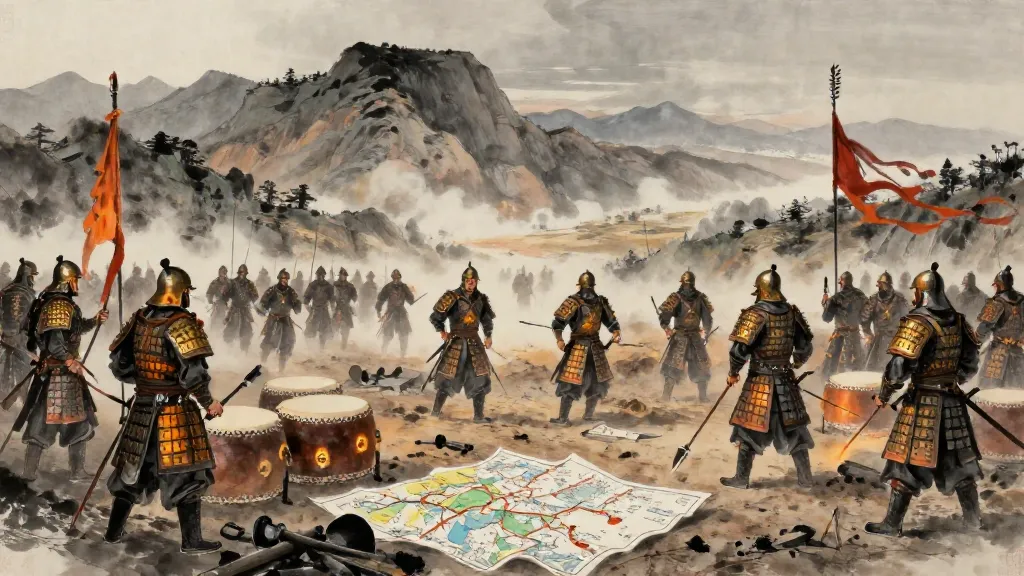
Law, technique, reward, and punishment in governing a state are like sturdy chariots and fine horses for land travel, or light boats and handy oars for water travel -- those who ride them achieve their goals.

Yi Yin grasped this, and Tang became king. Guan Zhong grasped this, and Qi achieved hegemony. Lord Shang grasped this, and Qin became strong. These three men all understood the techniques of hegemon-kings and perceived the methods of governance and strength. They were not dragged along by the fashionable rhetoric of the age. When they suited the intentions of an enlightened ruler of their time, then commoners could be appointed directly to the rank of minister and chancellor. When they held office and governed the state, there was the substance of honoring the ruler and expanding the territory. These are what may be called truly valuable ministers.

Tang gained Yi Yin, and from a territory of a hundred li became Son of Heaven. Duke Huan gained Guan Zhong, became chief of the Five Hegemons, united the feudal lords nine times, and rectified All-Under-Heaven. Duke Xiao gained Lord Shang, and his territory expanded and his armies strengthened. Therefore one who has a loyal minister faces no threat from rival states externally, no worry from rebellious ministers internally, enjoys lasting peace in All-Under-Heaven, and leaves a name for posterity. This is what is meant by a loyal minister.
Notes

1person造父Zaofu

Zaofu (造父) was a legendary charioteer of the Zhou dynasty, said to be so skilled he could drive a team of horses at extraordinary speed. He serves here as a metaphor: even the greatest natural talent requires tools.

2person伊尹Yi Yin

Yi Yin (伊尹) served Tang (湯), founder of the Shang dynasty. Guan Zhong (管仲) served Duke Huan of Qi. Shang Yang (商鞅) served Duke Xiao of Qin. Han Fei presents these three as the supreme examples of ministers who achieved results through institutional methods rather than moral exhortation.

3context

The chariot-and-boat metaphor encapsulates the Legalist position: law and technique are vehicles, not values. They are tools that any competent ruler can use to achieve results, regardless of personal virtue. This is what separates Legalism from Confucianism: virtue is optional when institutions are sound.

厲憐王

The Leper Pities the King

諺曰:「厲憐王。「此不恭之言也。雖然,古無虛諺,不可不察也。此謂劫殺死亡之主言也。人主無法術以御其臣,雖長年而美材,大臣猶將得勢,擅事主斷,而各為其私急。而恐父兄毫傑之士,借人主之力,以禁誅於己也,故殺賢長而立幼弱,廢正的而立不義。故《春秋》記之曰:「楚王子圍將聘於鄭,未出境,聞王病而反。因入問病,以其冠纓絞王而殺之,遂自立也。齊崔杼,其妻美,而莊公通之,數如崔氏之室。及公往,崔子之徒賈舉率崔子之徒而攻公。公入室,請與之分國,崔子不許;公請自刃於廟,崔子又不聽;公乃走,逾於北牆。賈舉射公,中其股,公墜,崔子之徒以戈斫公而死之,而立其弟景公。「近之所見:李兌之用趙也,餓主父百日而死,卓齒之用齊也,擢湣王之筋,懸之廟梁,宿昔而死。故厲雖癕腫疕瘍,上比於《春秋》,未至於絞頸射股也;下比於近世,未至餓死擢筋也。故劫殺死亡之君,此其心之憂懼,形之苦痛也,必甚於厲矣。由此觀之,雖「厲憐王「可也。

The proverb says: 'The leper pities the king.' This sounds disrespectful. However, ancient proverbs are never empty -- they must be examined. This proverb speaks of rulers who are coerced, murdered, and destroyed.

When a ruler lacks law and technique to control his ministers, no matter how long-lived or talented he may be, great ministers will still seize power, monopolize affairs, make decisions in the ruler's name, and each urgently pursue his own private interests. Fearing that outstanding men among the ruler's kin might borrow the ruler's authority to investigate and punish them, they kill the worthy and mature to install the young and weak, depose the legitimate to install the illegitimate.

Thus the Spring and Autumn Annals records: 'Prince Wei of Chu was about to go on a diplomatic mission to Zheng. Before leaving the border, he heard that the king was ill and turned back. He entered to inquire about the illness, and strangled the king with his own hat-strings, then proclaimed himself king.'

Also: 'Cui Zhu of Qi had a beautiful wife, and Duke Zhuang was having an affair with her, frequently visiting the Cui household. When the duke came, Jia Ju, a follower of Cui Zhu, led Cui's men to attack the duke. The duke retreated into a room and offered to divide the state with Cui -- Cui refused. The duke asked to be allowed to kill himself in the ancestral temple -- Cui refused again. The duke fled and tried to climb over the north wall. Jia Ju shot him, hitting him in the thigh. The duke fell, and Cui's men hacked him to death with halberds, then installed his younger brother as Duke Jing.'

In more recent times, what we have witnessed: when Li Dui held power in Zhao, he starved Lord Wuling to death over a hundred days. When Zhuo Chi held power in Qi, he ripped out King Min's sinews, hung him from a temple beam, and he died overnight.

Thus the leper, though afflicted with sores, swelling, and ulcers -- comparing upward to the Spring and Autumn era, his suffering does not reach the point of strangulation and arrow wounds; comparing downward to recent times, it does not reach the point of starvation and sinew-ripping. The anguish of heart and agony of body suffered by rulers who are coerced and murdered must certainly exceed that of a leper.

From this perspective, 'the leper pities the king' is entirely apt.

Notes

1person楚王子圍Chu Wang Zi Wei

Prince Wei of Chu (楚王子圍), later King Ling of Chu (楚靈王), murdered his nephew King Jia'ao (楚郟敖) in 541 BC by strangling him with his own hat-strings during a sick visit -- one of the most brazen regicides of the Spring and Autumn period.

2person崔杼Cui Zhu

Cui Zhu (崔杼, d. 546 BC) was a powerful minister of Qi who murdered Duke Zhuang of Qi (齊莊公) in 548 BC after the duke had an affair with his wife. The incident is famous in Chinese historiography because the court scribe insisted on recording the murder truthfully despite Cui's threats.

3person趙武靈王Zhao Wuling Wang

Lord Wuling of Zhao (趙武靈王, d. 295 BC) was the innovative ruler who introduced cavalry warfare to Chinese armies. After a succession crisis he was trapped in his palace by the minister Li Dui (李兌) and starved to death.

4context

The chapter's conclusion, 'the leper pities the king,' is one of Han Fei's most memorable formulations. It inverts conventional hierarchy: the lowest member of society (a leper) is better off than the highest (a ruler), because the ruler without institutional protections faces horrors that no disease can match. This is the ultimate argument for Legalist governance: power without system is worse than powerlessness.

Edition & Source

Text
《韓非子》 Hanfeizi
Edition
中華古詩文古書籍網 transcription, 《四部叢刊》本
Commentary
Han Fei (韓非), Warring States period