釋法以臣備臣之患
The Danger of Using Ministers to Check Ministers Instead of Law
人主之過,在己任臣矣,又必反與其所不任者備之,此其說必與其所任者為仇,而主反制於其所不任者。今所與備人者,且曩之所備也。人主不能明法而以制大臣之威,無道得小人之信矣。人主釋法而以臣備臣,則相愛者比周而相譽,相憎者朋黨而相非。非譽交爭,則主惑亂矣。人臣者,非名譽請謁無以進取,非背法專制無以為威,非假於忠信無以不禁,三者,愍主壞法之資也。人主使人臣雖有智慧,不得背法而專制;雖有賢行,不得逾功而先勞,雖有忠信,不得釋法而不禁:此之謂明法。
The ruler's error lies in this: having appointed a minister, he then turns to those he has not appointed to guard against the first. The inevitable result is that those brought in as checks become enemies of those originally trusted, and the ruler ends up controlled by those he did not originally trust. Moreover, those now brought in to guard against others were themselves the very people previously guarded against.
A ruler who cannot make law clear and use it to constrain the authority of great ministers has no way to secure the loyalty of lesser men. When the ruler abandons law and uses ministers to check ministers, those who are allies will form cliques and praise each other, while those who are enemies will form factions and condemn each other. When praise and condemnation battle back and forth, the ruler is bewildered and confused.
As for ministers: without reputation, praise, and solicitation they have no way to advance; without overriding the law and monopolizing power they have no way to establish authority; without appropriating the appearance of loyalty and trustworthiness they have no way to avoid prohibition. These three are the resources for confusing the ruler and destroying the law.
When the ruler ensures that ministers, no matter how wise, may not override the law to monopolize power; no matter how virtuous in conduct, may not bypass merit to claim unearned precedence; no matter how loyal and trustworthy, may not set aside the law to avoid prohibition -- this is called making law clear.
Notes
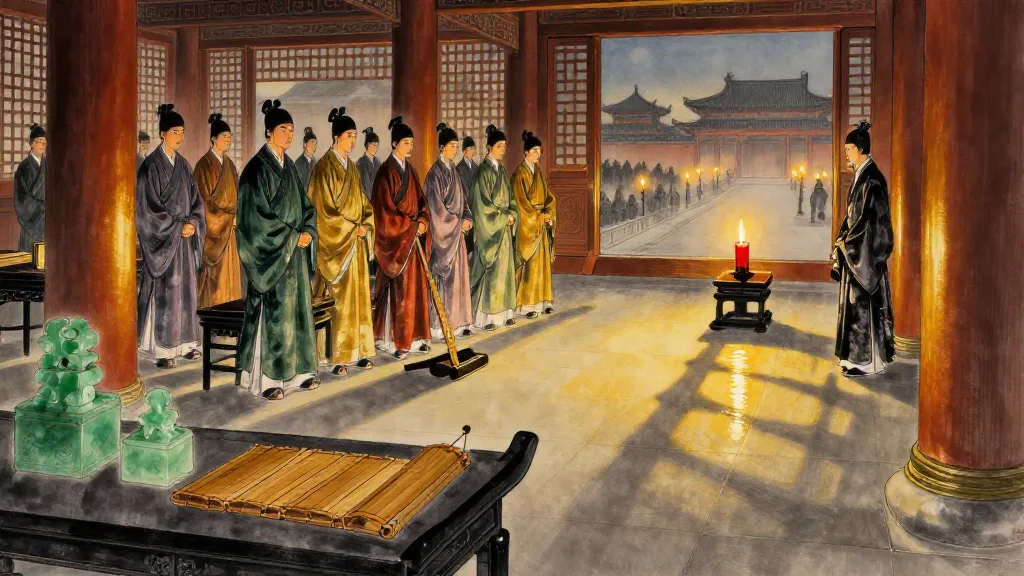
The title 南面 ('Facing South') refers to the ruler's position: in Chinese court protocol, the ruler sits facing south, receiving ministers who face north. The chapter is therefore about the art of ruling -- what it means to sit on the throne properly.
The critique of 'using ministers to check ministers' (以臣備臣) targets a common practice where rulers set up rival ministers to balance each other. Han Fei argues this creates faction warfare rather than accountability. The proper check on ministerial power is institutional law, not interpersonal rivalry.