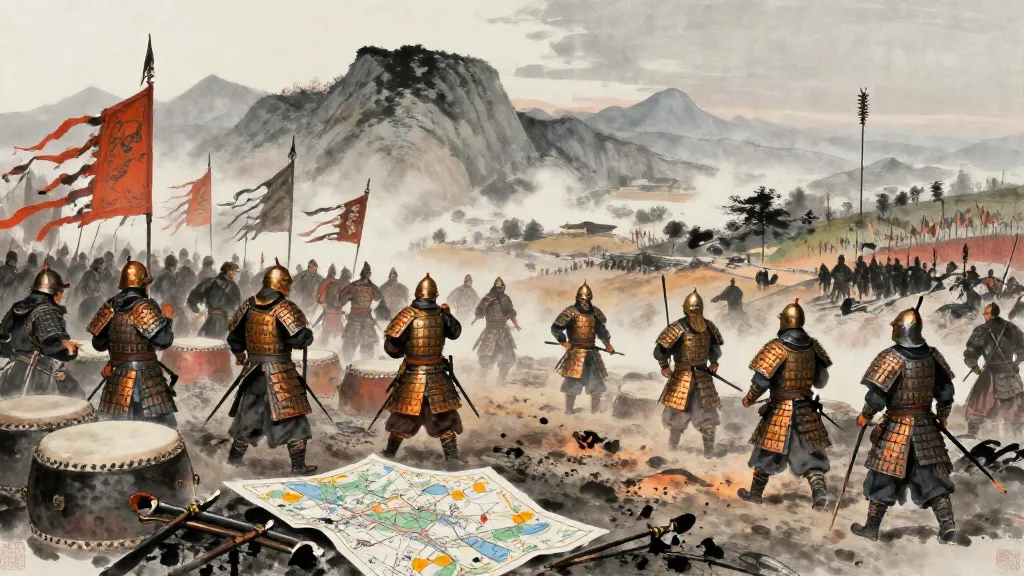
龜策之惑
The Delusion of Divination
鑿龜數策,兆曰“大吉“,而以攻燕者,趙也。鑿龜數筴,兆曰“大吉“,而以攻趙者,燕也。劇辛之事燕,無功而社稷危;鄒衍之事燕,無功而國道絕。趙代先得意於燕,後得意於齊,國亂節高。自以為與秦提衡,非趙龜神而燕龜欺也。趙又嘗鑿龜數筴而北伐燕,將劫燕以逆秦,兆曰“大吉“。始攻大梁而秦出上黨矣,兵至厘而六城拔矣;至陽城,秦拔鄴矣;龐援揄兵而南,則鄣盡矣。臣故曰:趙龜雖無遠見於燕,且宜近見於秦。秦以其“大吉“,闢地有實,救燕有有名。趙以其“大吉“,地削兵辱,主不得意而死。又非秦龜神而趙龜欺也。初時者,魏數年東鄉攻盡陶、衛,數年西鄉以失其國,此非豐隆、五行、太一、王相、攝提、六神、五括、天河、殷搶、歲星非數年在西也,又非天缺、弧逆、刑星、熒惑、奎台非數年在東也。故曰:龜筴鬼神不足舉勝,左右背鄉不足以專戰。然而恃之,愚莫大焉。
Zhao bored tortoise shells and counted the yarrow stalks; the omen read 'greatly auspicious,' and with this Zhao attacked Yan. Yan bored tortoise shells and counted the yarrow stalks; the omen read 'greatly auspicious,' and with this Yan attacked Zhao. Ju Xin served Yan but achieved nothing, and the altars of state were endangered; Zou Yan served Yan but achieved nothing, and the way of the state was severed. Zhao at first prevailed against Yan, then prevailed against Qi, yet the state fell into disorder even as its prestige was high. It fancied itself the equal of Qin on the balance -- not because Zhao's tortoise was divine and Yan's tortoise was deceitful.
Zhao again bored tortoise shells and counted yarrow stalks to march north against Yan, intending to coerce Yan into opposing Qin; the omen read 'greatly auspicious.' But when Zhao had barely begun attacking Daliang, Qin was already advancing out of Shangdang. By the time Zhao's forces reached Li, six cities had fallen; by the time they reached Yangcheng, Qin had taken Ye. Pang Yuan withdrew his troops southward, and all the border defenses were lost.
Therefore I say: though Zhao's tortoise lacked foresight regarding Yan, it should at least have shown near-sight regarding Qin. Qin's 'greatly auspicious' omen yielded real territorial gains and the fame of rescuing Yan. Zhao's 'greatly auspicious' omen yielded loss of territory, humiliation of its army, and the death of its ruler in frustration. This was not because Qin's tortoise was divine and Zhao's tortoise was deceitful.
In earlier times, Wei spent years attacking eastward and conquered all of Tao and Wey, then spent years facing westward only to lose its own territory. This was not because the astrological signs of Fenlong, the Five Phases, Taiyi, Wangxiang, Sheti, the Six Spirits, the Five Brackets, the Celestial River, Yinqiang, and the Year Star were all in the west for those years, nor because the Celestial Gap, Reversed Arc, Punishment Star, Yinghuo, and Kuitai were all in the east. Therefore I say: tortoise shells, yarrow stalks, and ghosts and spirits are insufficient to secure victory; left and right, advance and retreat are insufficient to determine battle. To rely on such things -- there is no greater folly.
Notes
Ju Xin (劇辛) was a Zhao native who served as a general of Yan. He was defeated and killed by Zhao's Pang Nuan around 242 BC.
Zou Yan (鄒衍, c. 305-240 BC) was a philosopher of the Yin-Yang school from Qi who later served at the court of Yan. He is famous for his theory of the Five Phases (五德終始說).
Pang Yuan (龐援), also known as Pang Nuan (龐煖), was a Zhao general active in the late Warring States period.
The long list of astrological terms (豐隆, 五行, 太一, etc.) represents the entire apparatus of celestial divination that Han Fei dismisses as irrelevant to statecraft. This is a characteristically Legalist rejection of superstition in favor of institutional governance.