說林上 (A Forest of Persuasions, Part I) — Chinese ink painting

韓非子 Hanfeizi · Chapter 22

說林上

A Forest of Persuasions, Part I

View:

湯讓天下於務光

Tang Yields All-Under-Heaven to Wu Guang

湯以伐桀,而恐天下言己為貪也,因乃讓天下於務光。而恐務光之受之也,乃使人說務光曰:“湯殺君,而欲傳惡聲於子,故讓天下於子。“務光因自投於河。

Tang, having attacked Jie, feared that All-Under-Heaven would call him greedy. So he offered All-Under-Heaven to Wu Guang. But fearing that Wu Guang might accept, he sent someone to persuade Wu Guang, saying: 'Tang has killed his sovereign and now wishes to transfer the odium to you -- that is why he offers All-Under-Heaven to you.' Wu Guang thereupon drowned himself in the river.

Notes

1person務光Wu Guang

Wu Guang (務光) was a legendary hermit of the Shang period. Tang's manipulation of him -- offering the throne while secretly ensuring rejection -- exemplifies the theme of this chapter: calculated deception beneath a veneer of virtue.

2context

The 'Forest of Persuasions' (說林) chapters consist of short anecdotes illustrating political cunning, strategic thinking, and the ambiguities of human motivation. They function as a reference collection for political strategists.

子圉與孔子・鮑叔晚救邢

Ziyu and Confucius; Bao Shu's Late Rescue of Xing

子圉見孔子於商太宰。孔子出,子圉入,請問客。太宰曰:“吾已見孔子,則視子猶蚤虱之細者也。吾今見之於君。“子圉恐孔子貴於君也,因謂太宰曰:“君已見孔子,亦將視子猶蚤虱也。“太宰因弗復見也。晉人伐邢,齊桓公將救之。鮑叔曰:“太蚤。邢不亡,晉不敝;晉不敝,齊不重。且夫持危之功,不如存亡之德大。君不如晚救之以敝晉,齊實利;待邢亡而復存之,其名實美。“桓公乃弗救。

Ziyu introduced Confucius to the Grand Steward of Song. After Confucius departed, Ziyu entered and asked for the Grand Steward's assessment of the guest. The Grand Steward said: 'Now that I have met Confucius, I see you as no larger than a flea or louse. I intend to present him to our lord.' Ziyu, fearing Confucius would become more honored than himself at court, said to the Grand Steward: 'Once our lord has met Confucius, he will also see you as no larger than a flea or louse.' The Grand Steward therefore never presented Confucius.

Jin invaded Xing. Duke Huan of Qi was about to rescue it. Bao Shu said: 'Too soon. If Xing does not perish, Jin will not be exhausted. If Jin is not exhausted, Qi's importance will not grow. Moreover, the merit of sustaining a state in danger is less than the virtue of restoring a state from extinction. My lord would do better to rescue Xing late, thereby exhausting Jin -- which truly benefits Qi -- and then wait until Xing has perished before restoring it. The fame from this would be far more glorious.' Duke Huan therefore did not rescue Xing.

Notes

1person鮑叔牙Bao Shuya

Bao Shu (鮑叔), full name Bao Shuya (鮑叔牙), was the lifelong friend of Guan Zhong and a minister of Duke Huan of Qi. Here his advice is coldly strategic: let an ally suffer to maximize Qi's gain.

2person齊桓公Qi Huan Gong

Duke Huan of Qi (齊桓公, r. 685-643 BC) was the first of the Five Hegemons.

智伯索地・老馬識途

Zhibo Demands Territory; The Old Horse Knows the Way

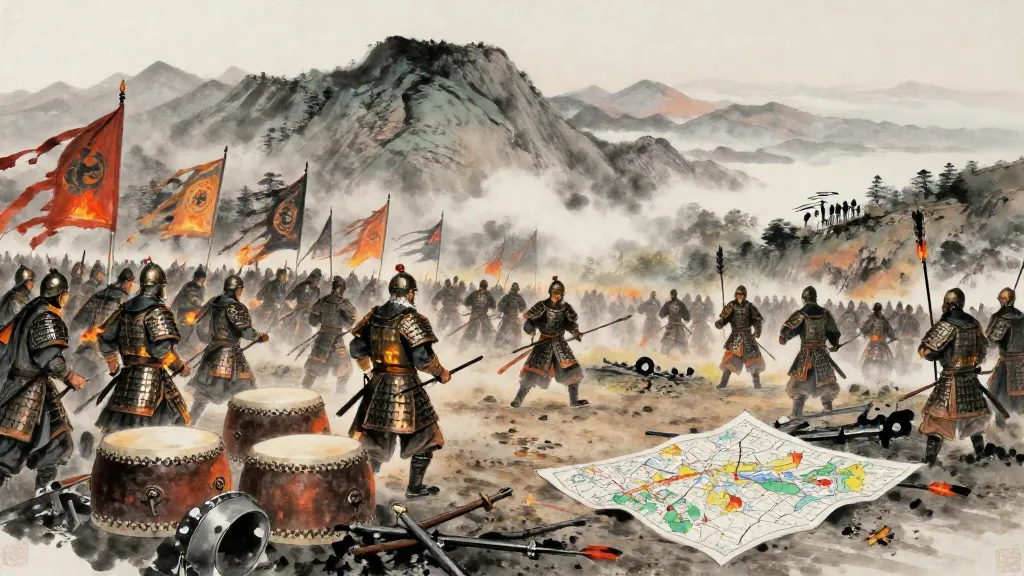
智伯索地於魏宣子,魏宣子弗予。任章曰:“何故不予?“宣子曰:“無故請地,故弗予。“任章曰:“無故索地,鄰國必恐。彼重欲無厭,天下必懼。君予之地,智伯必驕而輕敵,鄰邦必懼而相親。以相親之兵待輕敵之國,則智伯之命不長矣。《周書》曰:'將欲敗之,必姑輔之;將欲取之,必姑予之。'君不如予之以驕智伯。且君何釋以天下圖智氏,而獨以吾國為智氏質乎?“君曰:“善。“乃與之萬戶之邑。智伯大悅,因索地於趙,弗與,因圍晉陽。韓、魏反之外,趙氏應之內,智氏以亡。管仲、隰朋從於桓公而伐孤竹,春往冬反,迷惑失道。管仲曰:“老馬之智可用也。“乃放老馬而隨之,遂得道。行山中無水,隰朋曰:“蟻冬居山之陽,夏居山之陰。蟻壤一寸而有水。“乃掘地,遂得水。以管仲之聖而隰朋之智,至其所不知,不難師於老馬與蟻。今人不知以其愚心而師聖人之智,不亦過乎?

Zhibo demanded territory from Lord Xuan of Wei. Lord Xuan refused. Ren Zhang said: 'Why not give it?' Lord Xuan said: 'He demands territory without cause, so I refuse.' Ren Zhang said: 'Demanding territory without cause will alarm the neighboring states. His greed being insatiable, All-Under-Heaven will be frightened. If you give him the land, Zhibo will grow arrogant and underestimate his enemies; the neighboring states will be frightened and draw closer together. With the army of allied states awaiting a power that underestimates its enemies, Zhibo's life will not last long. The Book of Zhou says: "If you wish to defeat someone, you must first assist him; if you wish to take from someone, you must first give to him." My lord would do better to give in order to make Zhibo arrogant. Besides, why should my lord abandon the chance to let All-Under-Heaven bring down the Zhi clan, and instead make our state alone a hostage to them?'

The lord said: 'Excellent.' He gave Zhibo a fief of ten thousand households. Zhibo was greatly pleased and then demanded territory from Zhao. Zhao refused, and Zhibo besieged Jinyang. Han and Wei turned against him from outside; the Zhao house responded from within. The Zhi clan was thus destroyed.

Guan Zhong and Xi Peng accompanied Duke Huan on an expedition against Guzhu. They set out in spring and returned in winter, losing their way in confusion. Guan Zhong said: 'We can make use of the wisdom of old horses.' They released an old horse and followed it, and found the road. Traveling through the mountains, they ran out of water. Xi Peng said: 'Ants live on the sunny side of mountains in winter and the shady side in summer. Where there is an ant mound one inch high, there is water below.' They dug into the ground and found water.

With all of Guan Zhong's sagacity and Xi Peng's intelligence, when they reached something they did not know, they did not disdain to learn from an old horse and from ants. Yet people today, in their ignorance, do not learn from the wisdom of sages. Is this not a grave error?
Notes

1person管仲Guan Zhong

Guan Zhong (管仲, d. 645 BC) was the famous prime minister of Duke Huan of Qi, credited with making Qi the first hegemon. The phrase 老馬識途 ('the old horse knows the way') from this passage became a proverb meaning that experienced people can be relied upon for guidance.

2person隰朋Xi Peng

Xi Peng (隰朋) was another minister of Duke Huan, known for practical wisdom.

不死之藥・巧詐不如拙誠

The Elixir of Immortality; Clumsy Sincerity Surpasses Artful Deceit

有獻不死之藥於荊王者,謁者操之以入。中射之士問曰:“可食乎?“曰:“可。“因奪而食之。王大怒,使人殺中射之士。中射之士使人說王曰:“臣問謁者,曰'可食',臣故食之,是臣無罪,而罪在謁者也。且客獻不死之藥,臣食之而王殺臣,是死藥也,是客欺王也。夫殺無罪之臣,而明人之欺王也,不如釋臣。“王乃不殺。樂羊為魏將而攻中山,其子在中山,中山之君烹其子而遺之羹。樂羊坐於幕下而啜之,盡一杯。文候謂堵師贊曰:“樂羊以我故而食其子之肉。“答曰:“其子而食之,且誰不食?“樂羊罷中山,文候賞其功而疑其心。孟孫獵得鹿,使秦西巴持之歸,其母隨之而啼。秦西巴弗忍而與之。孟孫適,至而求鹿。答曰:“余弗忍而與其母。“孟孫大怒,逐之。居三月,復召以為其子傳。其御曰:“曩將罪之,今召以為子傳,何也?“孟孫曰:“夫不忍鹿,又且忍吾子乎?“故曰:“巧詐不如拙誠。“樂羊以有功見疑,秦古巴以有罪益信。

Someone presented an elixir of immortality to the King of Chu. The gatekeeper took it in hand to carry it inside. A palace guard asked: 'May this be eaten?' The gatekeeper said: 'Yes.' The guard snatched it and ate it. The king was furious and ordered the guard's execution. The guard sent someone to plead his case: 'I asked the gatekeeper whether it could be eaten. He said yes. Therefore I ate it -- my crime lies with the gatekeeper, not with me. Moreover, a guest presented an elixir of immortality; I ate it and yet the king would kill me -- this makes it an elixir of death, meaning the guest deceived the king. To kill an innocent minister while confirming that you have been deceived -- it would be better to release me.' The king did not kill him.

Yue Yang served as a general of Wei and attacked Zhongshan. His son was being held in Zhongshan. The lord of Zhongshan boiled his son and sent the broth to Yue Yang. Yue Yang sat beneath the command tent and drank it, draining the cup. Marquis Wen said to Du Shizan: 'Yue Yang ate his own son's flesh for my sake.' Du Shizan replied: 'If he can eat his own son, whose flesh would he not eat?' After Yue Yang conquered Zhongshan, Marquis Wen rewarded his merit but suspected his character.

Mengsun went hunting and caught a fawn. He gave it to Qin Xiba to carry home, but the doe followed, crying. Qin Xiba could not bear it and released the fawn to its mother. When Mengsun returned and asked for the fawn, Qin Xiba said: 'I could not bear it and gave it back to its mother.' Mengsun was furious and dismissed him. After three months, he summoned Qin Xiba back and made him tutor to his son. His charioteer asked: 'Before, you were going to punish him; now you make him your son's tutor. Why?' Mengsun said: 'If he could not bear to let the fawn suffer, how much less would he let my son suffer?'

Therefore it is said: 'Clumsy sincerity surpasses artful deceit.' Yue Yang, despite his merit, was met with suspicion. Qin Xiba, despite his offense, was trusted all the more.

Notes

1person樂羊Yue Yang

Yue Yang (樂羊) was a general of Wei under Marquis Wen (魏文侯, r. 445-396 BC). His willingness to drink broth made from his own son demonstrated extreme loyalty -- but also made him appear inhuman and untrustworthy.

2context

The proverb '巧詐不如拙誠' ('clumsy sincerity surpasses artful deceit') is one of the most famous lines from the Hanfeizi. The contrast between Yue Yang and Qin Xiba illustrates a paradox: extreme displays of loyalty can backfire, while natural human compassion can build deeper trust.

涸澤之蛇・象箸之戒

The Snakes of the Dried Marsh; The Warning of the Ivory Chopsticks

鴟夷子皮事田成子,田成子去齊,走而之燕,鴟夷子皮負傳而從。至望邑,子皮曰:“子獨不聞涸澤之蛇乎?澤涸,蛇將徙。有小蛇謂大蛇曰:“子行而我隨之,人以為蛇之行者耳,必有殺子者。不如相銜負我以行,人以我為神君也。乃相銜負以越公道。人皆避之,曰:'神君也。'今子美而我惡,以子為我上客,千乘之君也;以子為我使者,萬乘之卿也。子不如為我舍人。“田成子因負傳而隨之。至逆旅,逆旅之君待之甚敬,因獻酒肉。紂為象箸而箕子怖,以為象箸必不盛羹於土鉶,則必將犀玉之杯;玉杯象箸必不盛菽藿,則必旄象豹胎;旄象豹胎必不衣短褐而舍茅茨之下,則必錦衣九重,高台廣室也。稱此以求,則天下不足矣。聖人見微以知萌,見端以知末,故見象箸而怖,知天下之不足也。

Chiyi Zipi served Tian Chengzi. When Tian Chengzi fled Qi and headed for Yan, Chiyi Zipi carried the travel documents and followed. Reaching Wangyi, Zipi said: 'Have you not heard the parable of the snakes in the dried marsh? When the marsh dried up, the snakes had to migrate. A small snake said to a large snake: "If you slither along and I follow, people will see just ordinary snakes and will surely kill you. Better for us to entwine -- you carry me on your back. People will take me for a spirit lord." So they entwined and crossed the public road. People all avoided them, saying: "A spirit lord!" Now, you are handsome and I am ugly. If you serve as my honored guest, I appear as a lord of a thousand chariots. If you serve as my envoy, I appear as a minister of a state of ten thousand chariots. Would you not be willing to act as my retainer?'

Tian Chengzi thereupon carried the documents and followed. When they arrived at an inn, the innkeeper treated them with great respect and offered wine and meat.

Zhou of Shang had ivory chopsticks made, and Jizi was filled with dread. He reasoned: ivory chopsticks would surely not be paired with earthen bowls -- they would require cups of rhinoceros horn and jade. Ivory chopsticks and jade cups would not serve bean-and-vegetable soup -- they would require yak tail, elephant, and leopard embryo. Such delicacies would not be eaten in rough cloth under a thatched roof -- they would require brocade robes in nine layers, lofty terraces and grand halls. Pursuing things on this scale, All-Under-Heaven would not suffice.

The sage perceives the subtle to know the sprout; perceives the beginning to know the end. Therefore he saw ivory chopsticks and was filled with dread, knowing that All-Under-Heaven would not suffice.

Notes

1context

The parable of the snakes is a lesson in political positioning: the less capable person (the small snake/Zipi) gains prestige by having the more capable person serve beneath him. Appearances and role-assignment matter more than actual ability in determining political outcomes.

2context

The ivory chopsticks anecdote appears in both Ch. 21 (喻老) and here in Ch. 22 (說林上), with slight variations. Its repetition underscores its importance as an illustration of causal reasoning from small signs to large consequences.

衛人教子・隰斯彌不伐樹

The Wei Man's Instructions to His Daughter; Xisimi Does Not Fell the Trees

衛人嫁其子而教之曰:“必私積聚。為人婦而出,常也;其成居,幸也。“其子因私積聚,其姑以為多私而出之。其子所以反者倍其所以嫁。其父不自罪於教子非也,而自知其益富。念人臣之處官者,皆是類也。隰斯彌見田成子,田成子與登台四望。三面皆暢,南望,隰子家之樹蔽之。田成子亦不言。隰子歸,使人伐之;斧離數創,隰子止之。其相室曰:“何變之數也?“隰子曰:“古者有諺曰:'知淵中之魚者不祥。'夫田子將有大事,而我示之知微,我必危矣。不伐樹,未有罪也;知人之所不言,其罪大矣。“乃不伐也。

A man of Wei married off his daughter and instructed her: 'Be sure to save secretly. It is common for a married woman to be sent away; that she remains is merely good fortune.' His daughter therefore saved secretly, and her mother-in-law considered her too acquisitive and sent her away. What the daughter brought back was double what she had brought as a dowry. The father did not blame himself for teaching his daughter wrongly -- he only congratulated himself on his increased wealth. Consider that ministers who hold office are all of this kind.

Xi Simi visited Tian Chengzi. Tian Chengzi took him up a tower to survey the four directions. Three sides afforded a clear view, but looking south, the trees of Xi Simi's estate blocked the view. Tian Chengzi said nothing. Xi Simi went home and ordered men to cut them down. After a few strokes of the axe, he stopped them. His steward asked: 'Why the sudden change?' Xi Simi said: 'There is an old proverb: "One who can see the fish in the depths is ill-omened." Tian Chengzi is planning something great, and I have shown him that I perceive the unspoken. This will surely endanger me. Not cutting down the trees is no offense; but showing that I know what another has not said -- that is a grave offense.' So he did not cut them down.

Notes

1person田成子Tian Chengzi

Tian Chengzi (田成子), also known as Tian Chang (田常), was the powerful minister who controlled Qi and whose descendants eventually usurped the throne. His survey from the tower -- noticing whose trees blocked his view -- hints at his expansionist ambitions.

2context

The proverb '知淵中之魚者不祥' ('knowing the fish in the depths brings ill fortune') warns against displaying too-keen perception of a powerful person's secret intentions. Xi Simi's wisdom lies in concealing his insight to avoid becoming a target.

美者自美・巧詐同事異為

The Beautiful Who Know Their Beauty; Same Actions, Different Motives

楊子過於宋,東之逆旅,有妾二人,其惡者貴,美者賤。楊子問其故。逆旅之父答曰:“美者自美,吾不知其美也;惡者自惡,吾不知其惡也。“楊子謂弟子曰:“行賢而自賢之心,焉往而不美。“田伯鼎好士而存其君,白公好士而亂荊。其好士則同,其所以為則異。公孫友自刖而尊百里,豎刁自宮而諂桓公。其自刑則同,其所以自刑之為則異。慧子曰:“狂者東走,逐者亦東走。其東走則同,其所以東走之為則異。故曰:同事之人,不可不審察也。“

Yang Zi stopped at an inn in Song while traveling east. The innkeeper had two concubines: the ugly one was honored and the beautiful one was lowly. Yang Zi asked the reason. The innkeeper replied: 'The beautiful one considers herself beautiful -- I do not see her beauty. The ugly one considers herself ugly -- I do not see her ugliness.' Yang Zi said to his disciples: 'Act with worth but without the self-consciousness of being worthy, and wherever you go you will be appreciated.'

Tian Boding patronized men of talent and thereby preserved his lord. Bai Gong patronized men of talent and thereby threw Chu into chaos. Their patronage of men of talent was the same; their purposes were different. Gongsun You mutilated himself to elevate Baili Xi. Shu Diao castrated himself to ingratiate himself with Duke Huan. Their self-mutilation was the same; their reasons for self-mutilation were different.

Huizi said: 'The madman runs eastward; his pursuer also runs eastward. Their running eastward is the same; their reasons for running eastward are different.' Therefore it is said: 'People who do the same things must be carefully examined.'

Notes

1person楊朱Yang Zhu

Yang Zi (楊子) is Yang Zhu (楊朱), the proto-hedonist philosopher who advocated self-preservation. The innkeeper's preference for the unselfconscious concubine illustrates Yang Zhu's philosophy of effortless naturalness.

2person豎刁Shu Diao

Shu Diao (豎刁) was a eunuch who castrated himself to gain access to Duke Huan of Qi's inner court. After Duke Huan's death, he participated in the power struggle that led to chaos in Qi -- proving that his self-sacrifice was motivated by ambition, not loyalty.

3context

The core Legalist principle: identical actions can serve opposite purposes. The ruler must examine motivations, not just behaviors. This is why Han Fei advocates institutional mechanisms (法術) that align incentives, rather than relying on personal judgment of character.

Edition & Source

Text
《韓非子》 Hanfeizi
Edition
中華古詩文古書籍網 transcription, 《四部叢刊》本
Commentary
Han Fei (韓非), Warring States period