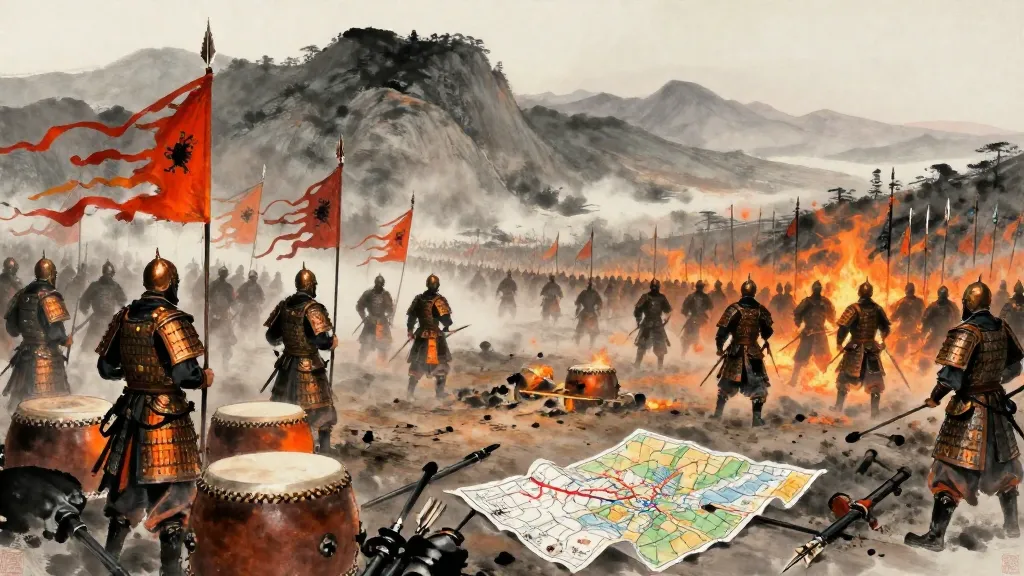
用人 (Employing People) — Chinese ink painting

韓非子 Hanfeizi · Chapter 27

用人

Employing People

View:

循天順人而明賞罰

Following Heaven, Complying with Human Nature, and Clarifying Rewards and Punishments

聞古之善用人者,必循天順人而明賞罰。循天,則用力寡而功立;順人,則刑罰省而令行;明賞罰,則伯夷、盜跖不亂。如此,則白黑分矣。治國之臣,效功於國以履位,見能於官以受職,盡力於權衡以任事。人臣皆宜其能,勝其官,輕其任,而莫懷餘力於心,莫負兼官之責於君。故內無伏怨之亂,外無馬服之患。明君使事不相干,故莫訟;使士不兼官,故技長;使人不同功,故莫爭。爭訟止,技長立,則強弱不觳力,冰炭不合形,天下莫得相傷,治之至也。

I have heard that those of antiquity who excelled at employing people invariably followed Heaven, complied with human nature, and clarified rewards and punishments. Following Heaven means that little effort is expended yet achievement is established. Complying with human nature means that punishments are reduced yet orders are carried out. Clarifying rewards and punishments means that even Bo Yi and Robber Zhi do not fall into disorder. Under such conditions, white and black are clearly distinguished.

The ministers of a well-governed state demonstrate merit to the state in order to hold their positions, display ability in office in order to receive their appointments, and exert their full strength upon the balance in order to carry out their tasks. When all ministers are suited to their abilities, adequate to their offices, and find their duties light, none harboring excess energy in their hearts and none burdening the ruler with the responsibility of multiple offices -- then internally there is no disorder from hidden resentment, and externally there is no crisis like that of Ma Fu.

The enlightened ruler ensures that responsibilities do not overlap, so there are no disputes. He ensures that officers do not hold concurrent posts, so their skills develop fully. He ensures that people do not share the same merits, so there is no competition. When disputes and litigation cease and skills are fully developed, the strong and weak do not struggle against one another, and ice and charcoal do not combine. Nothing under Heaven can cause mutual harm. This is the ultimate in governance.

Notes

1person馬服君 (趙奢)Ma Fu Jun (Zhao She)

Ma Fu (馬服) refers to Ma Fu Jun, the title of Zhao She (趙奢), a Zhao general. The reference is to the disaster at Changping when Zhao She's son Zhao Kuo (趙括), who held his father's old post, led the Zhao army to catastrophic defeat -- illustrating the peril of inherited or concurrent offices.

2translation

冰炭不合形 ('ice and charcoal do not combine'): incompatible elements are kept separate. The institutional principle: clear division of responsibilities prevents the factional conflicts that arise when jurisdictions overlap.

釋法術而心治

Abandoning Law and Technique for Governance by Whim

釋法術而心治,堯不能正一國,去規矩而妄意度,奚仲不能成一輪;廢尺寸而差短長,王爾不能半中。使中主守法術,拙匠守規矩尺寸,則萬不失矣。君人者能去賢巧之所不能,守中拙之所萬不失,則人力盡而功名立。

If one abandons the techniques of governance and rules by personal whim, even Yao could not set right a single state. If one discards the compass and square to rely on arbitrary estimation, even Xi Zhong could not fashion a single wheel. If one abolishes the ruler and the inch to judge long and short by guesswork, even Wang Er could not get it half right.

But let a mediocre ruler adhere to the techniques of governance, and let a clumsy craftsman follow the compass, square, ruler, and inch -- then not one case in ten thousand will be in error.

The ruler who can discard what even the exceptionally talented cannot achieve and instead hold fast to what even the mediocre and clumsy will never get wrong -- such a ruler will see human effort fully expended and achievement and fame established.

Notes

1person奚仲Xi Zhong

Xi Zhong (奚仲) was the legendary inventor of the chariot, credited with creating the first wheeled vehicle. Wang Er (王爾) was known for precision in measurement.

2context

This passage reprises a core Legalist argument: systems designed for average competence will always outperform systems that depend on genius. The compass and square (objective tools) make the clumsy craftsman reliable; legal institutions (法術) make the mediocre ruler effective.

可為之賞・可避之罰

Achievable Rewards and Avoidable Punishments

明主立可為之賞,設可避之罰。故賢者勸賞而不見子胥之禍,不肖者少罪而不見傴剖背,肓者處平而不遇深谷,愚者守靜而不陷險危。如此,則上下之恩結矣。古之人曰:“其心難知,喜怒難中也。“故以表示目,以鼓語耳,以法教心。君人者釋三易之數而行一難知之心,如此,則怒積於上而怨積於下。以積怒而御積怨,則兩危矣。明主之表易見,故約立;其教易知,故言用;其法易為,故令行。三者立而上無私心,則下得循法而治,望表而動,隨繩而斷,因攢而縫。如此,則上無私威之毒,而下無愚拙之誅。故上居明而少怒,下盡忠而少罪。

The enlightened ruler establishes rewards that can be achieved and sets punishments that can be avoided. Thus the worthy are encouraged by rewards without suffering the fate of Wu Zixu; the unworthy commit few offenses without suffering the hunchback's split back; the blind walk on level ground without encountering deep ravines; the foolish remain still without falling into dangerous places. Under such conditions, the bonds of benevolence between ruler and ruled are forged.

The ancients said: 'The heart is hard to know; joy and anger are hard to hit upon.' Therefore one uses a marker to direct the eyes, a drum to instruct the ears, and the law to teach the heart.

If the ruler abandons the three easy methods and instead acts upon the one unknowable heart, then anger accumulates above and resentment accumulates below. To govern accumulated resentment with accumulated anger -- both sides are endangered.

The enlightened ruler's marker is easy to see; therefore agreements are established. His teaching is easy to understand; therefore his words are heeded. His law is easy to follow; therefore his orders are carried out.

When these three are established and the ruler has no private agenda, those below can follow the law to govern, look to the marker to act, follow the plumb line to make judgments, and follow the awl-holes to sew. Under such conditions, those above exercise no arbitrary cruelty, and those below suffer no punishments for stupidity. Thus those above dwell in clarity with little anger, and those below give their full loyalty with few offenses.

Notes

1context

The three easy methods (表/marker for eyes, 鼓/drum for ears, 法/law for heart) represent objective, externally visible systems that make expectations transparent. Han Fei contrasts these with the 'one unknowable heart' -- governance by the ruler's unpredictable personal judgment, which creates mutual fear and resentment.

介子推與廉恥

Jie Zitui and the Sense of Honor

聞之曰:“舉事無患者,堯不得也。“而世未嘗無事也。君人者不輕爵祿,不易富貴,不可與救危國。故明主厲廉恥,招仁義。昔者介子推無爵祿而義隨文公,不忍口腹而仁割其肌,故人主結其德,書圖著其名。人主樂乎使人以公盡力,而苦乎以私奪威;人臣安乎以能受職,而苦乎以一負二。故明主除人臣之所苦,而立人主之所樂。上下之利,莫長於此。不察私門之內,輕慮重事,厚誅薄罪,久怨細過,長侮偷快,數以德追禍,是斷手而續以玉也,故世有易身之患。

I have heard it said: 'To undertake affairs without encountering trouble -- even Yao could not achieve this.' And the world has never been without affairs.

A ruler who does not take rank and salary lightly, who does not treat wealth and honor cheaply, cannot be called upon to rescue a state in peril. Therefore the enlightened ruler cultivates the sense of honor and shame, and attracts benevolence and righteousness.

In the past, Jie Zitui held no rank or salary, yet out of righteousness followed Duke Wen. Unable to bear the hunger pangs, he benevolently cut flesh from his own thigh to feed the duke. Therefore rulers have been bound by gratitude toward him, and books and paintings have recorded his name.

The ruler finds joy in having people serve the public interest with full effort, and finds suffering when private interests usurp his authority. The minister finds ease in receiving office according to ability, and finds suffering when one person bears the burden of two.

Therefore the enlightened ruler removes what causes ministers to suffer, and establishes what brings the ruler joy. No benefit to ruler and ruled is greater than this.

Failing to examine what goes on within private households, making light judgments about weighty matters, imposing heavy punishments for minor offenses, nursing resentment over trivial errors, prolonging insults for momentary satisfaction, repeatedly trying to recover from disaster through acts of grace -- this is like cutting off a hand and replacing it with jade. Therefore the world suffers from the calamity of trading one's own life.

Notes

1person介子推Jie Zitui

Jie Zitui (介子推) followed Duke Wen of Jin during his nineteen years of exile. When the duke was starving, Jie Zitui cut flesh from his own thigh to feed him. After Duke Wen became ruler, Jie Zitui retired to the mountains rather than claim a reward. The duke set fire to the mountain to flush him out, but Jie Zitui chose to die in the flames. The Cold Food Festival (寒食節) traditionally commemorates him.

隙穴之臣與獨立之主

Ministers as Crevices and the Isolated Ruler

人主立難為而罪不及,則私怨生;人臣失所長而奉難給,則伏怨結。勞苦不撫循,憂悲不哀憐,喜則譽小人,賢不肖俱賞,怒則毀君子,使伯夷與盜跖俱辱,故臣有叛主。使燕王內憎其民而外愛魯人,而燕不用而魯不附。民見憎,不能盡力而務功;魯見說,而不能離死命而親他主。如此,則人臣為隙穴,而人主獨立。以隙穴之臣而事獨立之主,此之謂危殆。

When the ruler sets impossible standards yet punishments do not correspond, private resentment arises. When ministers are deprived of what they are good at yet must provide what is difficult to supply, hidden resentment builds.

If toil and suffering are not consoled, if grief and sorrow receive no compassion; if in joy the ruler praises petty men and rewards the worthy and unworthy alike; if in anger the ruler denounces gentlemen and humiliates Bo Yi and Robber Zhi equally -- then ministers will have cause to betray their ruler.

Suppose the King of Yan internally despised his own people yet externally doted on the people of Lu. Then Yan's people would be of no use and Lu's people would not attach themselves to him. The people, seeing themselves despised, could not exert their full effort or pursue achievement. The people of Lu, though flattered, could not abandon their own state and pledge allegiance to another ruler. Under such conditions, the ministers become crevices in the wall, and the ruler stands isolated.

When ministers are crevices serving an isolated ruler -- this is called peril.

Notes

1translation

隙穴 ('crevices and gaps'): ministers who are disaffected become structural weaknesses in the state, like gaps in a wall through which enemies can enter. This architectural metaphor recurs throughout Legalist literature.

至治之國・無眉睫之禍

The Ultimate Governance; No Danger at the Eyelashes

釋儀的而妄發,雖中小不巧;釋法制而妄怒,雖殺戮而奸人不恐。罪生甲,禍歸乙,伏怨乃結。故至治之國,有賞罰而無喜怒。故聖人極有刑法,而死無螫毒,故奸人服。發矢中的,賞罰當符,故堯復生,羿復立。如此,則上無殷、夏之患,下無比干之禍,君高枕而臣樂業,道蔽天地,德極萬世矣。夫人主不寒隙穴而勞力於赭堊,暴雨疾風必壞。不去眉睫之禍而慕賁、育之死,不謹蕭牆之患而固金城於遠境,不用近賢之課而外結萬乘之交於千里,飄風一旦起,則賁、育不及救,而外交不及至,禍莫大於此。當今之世,為人主忠計者,必無使燕王說魯人,無使近世慕賢於古,無思越人以救中國溺者。如此,則上下親,內功立,外名成。

If one abandons the target and shoots wildly, hitting the mark is not skill. If one abandons the legal system and rages arbitrarily, though one kills and executes, villains will not be afraid. When guilt originates with one person yet the disaster falls upon another, hidden resentment builds.

Therefore in the best-governed state, there are rewards and punishments but no personal joy and anger. The sage applies punishments and laws to their fullest, yet even when they bring death there is no stinging venom. Therefore villains submit. When arrows hit the target and rewards and punishments match the tally -- then Yao lives again and Yi the Archer stands once more.

Under such conditions, above there is no calamity like that of Shang and Xia; below there is no tragedy like that of Bi Gan. The ruler rests upon a high pillow and ministers take joy in their work. The Way covers Heaven and Earth; virtue reaches ten thousand generations.

But if the ruler does not seal the crevices yet labors at painting and plastering, then violent rain and fierce wind will surely bring ruin. If one does not remove the danger at the eyelashes yet admires the death-defying valor of Ben and Yu; if one does not attend to the threat within the courtyard walls yet fortifies distant border strongholds; if one does not heed the counsel of nearby worthies yet forges alliances with states of ten thousand chariots a thousand li away -- when a sudden gale arises, Ben and Yu cannot arrive in time to save, and the distant ally cannot arrive in time to help. No disaster is greater than this.

In today's world, those who calculate loyally on behalf of the ruler must not let the King of Yan dote on the people of Lu; must not let the present age yearn for the worthies of antiquity; must not rely on the men of Yue to rescue one drowning in the Central States.

Under such conditions, ruler and ruled will be close, internal achievements will be established, and external fame will be won.

Notes

1translation

蕭牆之患 ('the threat within the courtyard walls'): danger from within, as opposed to external military threats. This phrase, also found in the Analects, warns that internal dysfunction is more dangerous than external enemies.

2context

The chapter concludes with a systematic indictment of strategic errors: painting over cracks instead of fixing foundations, admiring heroism instead of preventing crises, cultivating distant alliances instead of internal governance. The Legalist message: begin with what is near, concrete, and institutional.

Edition & Source

Text
《韓非子》 Hanfeizi
Edition
中華古詩文古書籍網 transcription, 《四部叢刊》本
Commentary
Han Fei (韓非), Warring States period