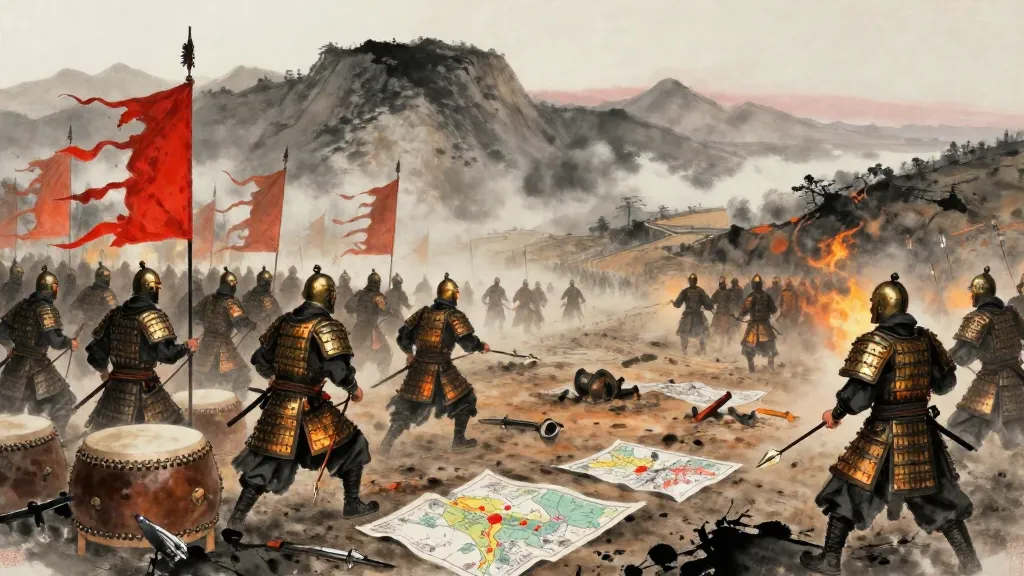
大體 (The Grand Structure) — Chinese ink painting

韓非子 Hanfeizi · Chapter 29

大體

The Grand Structure

View:

古之全大體者

Those Who Preserved the Grand Structure in Antiquity

古之全大體者:望天地,觀江海,因山谷,日月所照,四時所行,雲布風動;不以智累心,不以私累己;寄治亂於法術,托是非於賞罰,屬輕重於權衡;不逆天理,不傷情性;不吹毛而求小疵,不洗垢而察難知;不引繩之外,不推繩之內;不急法之外,不緩法之內;守成理,因自然;禍福生乎道法,而不出乎愛惡;榮辱之責在乎己,而不在乎人。

Those in antiquity who preserved the grand structure gazed upon heaven and earth, observed the rivers and seas, followed the mountains and valleys -- all that the sun and moon illumine, all that the four seasons traverse, all that the clouds spread and the winds stir. They did not burden their minds with cleverness, nor encumber themselves with private interests. They entrusted order and disorder to the law and to techniques; they assigned right and wrong to rewards and punishments; they delegated weightiness and lightness to the balance and scale.

They did not oppose the natural order, nor injure innate dispositions. They did not blow apart the fur to seek tiny blemishes, nor scrub away grime to inspect what is hard to know. They did not pull the plumb-line beyond its reach, nor push it within its compass. They did not hasten what lies beyond the law, nor slacken what lies within it. They preserved established principles and followed nature. Misfortune and fortune arose from the Way and the law, not from personal love and hate. The responsibility for honor and disgrace lay with oneself, not with others.

Notes

1translation

法術 (fa shu): 'the law and techniques' -- the two central pillars of Legalist governance. 法 (the law) refers to publicly promulgated statutes; 術 (techniques) refers to the ruler's private methods of controlling officials.

2translation

吹毛而求小疵 (blow apart the fur to seek tiny blemishes) is an idiom warning against excessive scrutiny that finds fault where none exists. The complementary phrase 洗垢而察難知 (scrub away grime to inspect what is hard to know) warns against investigating what is better left alone.

3context

This passage has strong Daoist overtones -- the emphasis on naturalness, non-interference, and cosmic patterns. Han Fei was a student of the Confucian Xunzi but also deeply influenced by Laozi. This chapter represents the synthesis: Daoist metaphysics grounding Legalist practice.

至安之世

The Age of Perfect Security

故至安之世,法如朝露,純樸不散,心無結怨,口無煩言。故車馬不疲弊於遠路,旌旗不亂乎大澤,萬民不失命於寇戎,雄駿不創壽於旗幢;豪傑不著名於圖書,不錄功於盤盂,記年之牒空虛。故曰:利莫長乎簡,福莫久於安。

Therefore, in the age of perfect security, the law was like morning dew -- pure and unspoiled, never scattered. Hearts harbored no knotted resentments; mouths uttered no weary complaints. Horses and chariots were not worn out on distant roads; banners and flags were not disordered in great marshes. The myriad people did not lose their lives to invaders, and fine steeds did not have their lifespans cut short beneath battle standards. Heroes and champions did not inscribe their names in books, nor record their deeds on bronze vessels. The annals of the years were empty.

Hence it is said: no benefit lasts longer than simplicity; no blessing endures longer than security.

Notes

1context

The paradox of the empty annals: in a perfectly governed age, nothing noteworthy happens because there are no crises, no wars, no heroes needed. This is the Legalist-Daoist ideal of governance so effective it becomes invisible.

2translation

盤盂 (pan yu) refers to bronze ritual vessels on which meritorious deeds were inscribed. The absence of such inscriptions means there were no wars requiring heroism.

匠石與賁育

The Master Craftsman and the Strongmen

使匠石以千歲之壽,操鉤,視規矩,舉繩墨,而正太山;使賁、育帶干將而齊萬民;雖盡力於巧,極盛於壽,太山不正,民不能齊。故曰:古之牧天下者,不使匠石極巧以敗太山之體,不使賁、育盡威以傷萬民之性。因道全法,君子樂而大奸止。澹然閒靜,因天命,持大體。故使人無離法之罪,魚無失水之禍。如此,故天下少不可。

Suppose you gave the master craftsman Shi a lifespan of a thousand years, had him take up his hook, consult his compass and square, raise his ink-line, and set about straightening Mount Tai. Suppose you had Meng Ben and Xia Yu gird on the sword Ganjiang and set about regulating the myriad people. Though they exhausted their skill in craft and their fullest measure of years, Mount Tai would not be straightened, and the people could not be regulated.

Hence it is said: those in antiquity who shepherded All-Under-Heaven did not make the master craftsman exhaust his skill to ruin the substance of Mount Tai, nor make the strongmen exhaust their might to injure the nature of the myriad people. They followed the Way and perfected the law. The noble man found joy, and great villainy ceased. Tranquil and quietly at ease, they followed Heaven's mandate and held fast to the grand structure. Thus people were kept from the crime of departing from the law, and fish were kept from the disaster of leaving the water. In this way, nothing under Heaven was left wanting.

Notes

1person匠石Jiang Shi

Craftsman Shi (匠石) was a legendary artisan of consummate skill, often referenced in Daoist texts (especially Zhuangzi) as a metaphor for perfect technique.

2translation

干將 (Ganjiang) was one of the most famous swords of antiquity, forged by the swordsmith Ganjiang and his wife Mo Ye during the Wu kingdom period.

大人寄形於天地

The Great Man Entrusts His Form to Heaven and Earth

上不天則下不遍覆,心不地則物不畢載。太山不立好惡,故能成其高;江海不擇小助,故能成其富。故大人寄形於天地而萬物備,歷心於山海而國家富。上無忿怒之毒,下無伏怨之患,上下交順,以道為舍。故長利積,大功立,名成於前,德垂於後,治之至也。

If the ruler above is not like Heaven, then below he cannot cover all. If the mind is not like Earth, then it cannot bear all things. Mount Tai does not establish preferences, and so it can achieve its height. The rivers and seas do not reject small tributaries, and so they can achieve their abundance.

Thus the great man entrusts his form to heaven and earth, and the myriad things are provided for; he extends his mind to the mountains and seas, and the state grows wealthy. Above there is no poison of fury and rage; below there is no calamity of hidden resentment. Above and below are mutually compliant, taking the Way as their dwelling. Thus lasting benefits accumulate, great achievements are established, a name is made in one's own time, and virtue is transmitted to posterity. This is the perfection of governance.

Notes

1context

This concluding passage draws heavily on Daoist imagery -- the impartial abundance of mountains and seas, the ruler as cosmic force. The chapter as a whole reads as Han Fei's vision of the ideal ruler who combines Daoist non-attachment with Legalist institutional rigor.

Edition & Source

Text
《韓非子》 Hanfeizi
Edition
中華古詩文古書籍網 transcription, 《四部叢刊》本
Commentary
Han Fei (韓非), Warring States period