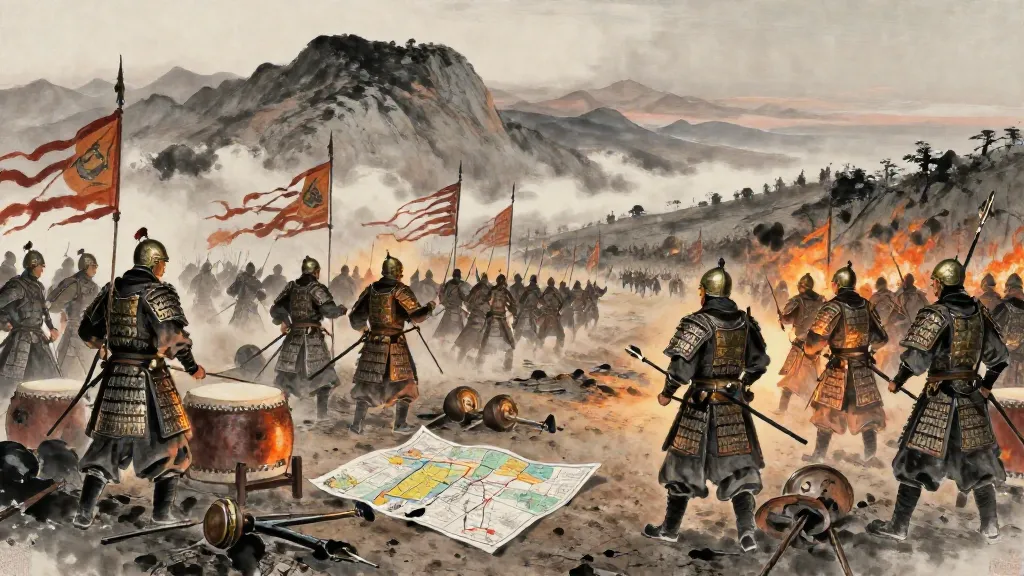
外儲說左下 (Outer Collected Sayings, Left Series, Part Two) — Chinese ink painting

韓非子 Hanfeizi · Chapter 33

外儲說左下

Outer Collected Sayings, Left Series, Part Two

View:

經一至經六:六論綱要

Principles One through Six: Summary

△經一

以罪受誅,人不怨上,跀危坐子皋。以功受賞,臣不德君,翟璜操右契而乘軒。襄王不知,故昭卯五乘而履<屍橋>。上不過任,臣不誣能,即臣將為夫少室周。

△經二

恃勢而不恃信,故東郭牙議管仲。恃術而不恃信,故渾軒非文公。

△經三

失臣主之理,則文王自履而矜。不易朝燕之處,則季孫終身莊而遇賊。

△經四

利所禁,禁所利,雖神不行。譽所罪,毀所賞,雖堯不治。

△經五

臣以卑儉為行,則爵不足以觀賞;寵光無節,則臣下侵逼。

△經六

公室卑則忌直言,私行勝則少公功。

Principle One: When people are punished for actual crimes, they do not resent the ruler -- as shown by the amputee who saved Zi Gao. When ministers are rewarded for actual merit, they do not claim the ruler's grace as their own -- as shown by Di Huang holding the right tally and riding in a grand carriage. King Xiang did not understand this, hence Zhao Mao received five teams of horses but still complained. When rulers do not exceed proper assignments and ministers do not falsely claim abilities, then ministers will behave like Shaoshi Zhou.

Principle Two: Rely on positional advantage rather than on personal trust -- hence Dongguo Ya's criticism of Guan Zhong. Rely on techniques rather than trust -- hence Hun Xuan's criticism of Duke Wen.

Principle Three: If one loses the proper principle of ruler and minister, then King Wen ties his own shoes and invites presumptuousness. If one does not distinguish between court and private settings, then Ji Sun maintains lifelong solemnity but encounters assassins.

Principle Four: Prohibit what is profitable while profiting from what is prohibited -- even a god could not govern. Praise what is punished and condemn what is rewarded -- even Yao could not bring order.

Principle Five: When ministers adopt humility and frugality as their conduct, rank is insufficient to display rewards. When favor and glory know no limits, ministers encroach upon the ruler.

Principle Six: When the public house is diminished, frank speech is feared. When private conduct prevails, public achievement is rare.

Notes

1context

This second part of the Left Series focuses on structural problems of governance: the mismatch between incentives and prohibitions, the dangers of excessive ministerial humility or excess favor, and the importance of maintaining proper ruler-minister boundaries.

說一:跀危救子皋

Explanation One: The Amputee Saves Zi Gao

孔子相衛,弟子子皋為獄吏,刖人足,所跀者守門。人有惡孔子於衛君者,曰:"尼欲作亂。"衛君欲執孔子。孔子走,弟子皆逃。子皋從出門,跀危引之而逃之門下室中,吏追不得。夜半,子皋問跀危曰:"吾不能虧主之法令而親跀子之足,是子報仇之時,而子何故乃肯逃我?我何以得此於子?"跀危曰:"吾斷足也,固吾罪當之,不可奈何。然方公之獄治臣也,公傾側法令,先後臣以言,欲臣之免也甚,而臣知之。及獄決罪定,公憱然不悅,形於顏色,臣見又知之。非私臣而然也,夫天性仁心固然也。此臣之所以悅而德公也。"

Confucius served as minister of Wei, and his disciple Zi Gao served as a judicial officer. Zi Gao had sentenced a man to amputation of the foot. The amputee was assigned as a gatekeeper. Someone slandered Confucius to the lord of Wei, saying: 'Confucius intends to rebel.' The lord of Wei wanted to arrest Confucius. Confucius fled and all his disciples escaped. When Zi Gao came out through the gate, the amputee pulled him aside and hid him in a room beneath the gate. The pursuers could not find him.

At midnight, Zi Gao asked the amputee: 'I could not bend my lord's law, and I personally sentenced your foot to amputation. This was your chance for revenge -- why did you choose to save me? How have I earned this from you?' The amputee replied: 'My foot was cut off -- it was my crime that merited it, and nothing could be done. But when you were trying my case, you leaned and stretched the law, speaking on my behalf before and after, wishing deeply for my acquittal -- and I knew it. When the sentence was decided and my punishment set, your face fell with sorrow, visible in your expression -- and I saw it and knew it again. It was not that you showed me private favor; it was your innate benevolent nature. This is why I was glad and felt gratitude toward you.'

Notes

1person子皋Zi Gao

Zi Gao (子皋) was a disciple of Confucius who served as a judicial officer in Wei.

2context

Han Fei includes this Confucian anecdote to illustrate the first principle: when punishment is properly applied for genuine crimes, even the punished do not resent the official. The amputee's gratitude comes not from leniency but from seeing Zi Gao's sincere reluctance within the bounds of law.

說二:東郭牙議管仲

Explanation Two: Dongguo Ya Challenges Guan Zhong's Appointment

齊桓公將立管仲,令群臣曰:"寡人才將立管仲為仲父。善者入門而左,不善者入門而右。"東郭牙中門而立。公曰:寡人立管仲為仲父,令曰'善者左,不善者右。'今子何為中門而立?"牙曰:"以管仲之智,為能謀天下乎?"公曰:"能。""以斷,為敢行大事乎?"公曰:"敢。"牙曰:"若知能謀天下,斷敢行大事,君因專屬之國柄焉。以管仲之能,乘公之勢以治齊國,得無危乎?"公曰:"善。"乃令隰朋治內、管仲治外以相參。

Duke Huan of Qi was about to install Guan Zhong and issued an order to his ministers: 'I am about to install Guan Zhong as Zhongfu. Those who approve, enter the gate and go left; those who disapprove, enter and go right.' Dongguo Ya stood in the center of the gate. The duke asked: 'I am installing Guan Zhong as Zhongfu. I ordered those who approve to go left and those who disapprove to go right. Why do you stand in the center?'

Dongguo Ya asked: 'With Guan Zhong's wisdom, is he capable of planning for All-Under-Heaven?' The duke said: 'He is.' 'With his decisiveness, does he dare carry out great undertakings?' The duke said: 'He does.' Dongguo Ya said: 'If his wisdom can plan for All-Under-Heaven and his boldness can carry out great undertakings, and you then exclusively entrust him with the instruments of state power -- with Guan Zhong's ability, riding upon your positional advantage to govern Qi, would this not be dangerous?' The duke said: 'Well spoken.' He then appointed Xi Peng to manage internal affairs and Guan Zhong to manage external affairs, so that they would serve as checks on each other.

Notes

1person東郭牙Dongguo Ya

Dongguo Ya (東郭牙) was a minister of Qi who advocated structural checks on power even when the appointee was as capable as Guan Zhong.

2person管仲Guan Zhong

Guan Zhong (管仲, d. 645 BC) was the great chancellor of Qi who made Duke Huan the first of the Five Hegemons. The title Zhongfu (仲父, 'Second Father') showed the extraordinary status Duke Huan accorded him.

說四:西門豹治鄴

Explanation Four: Ximen Bao Governs Ye

西門豹為鄴令,清克潔欲,秋毫之端無私利也,而甚簡左右。左右因相與比周而惡之。居期年,上計,君收其璽。豹自請曰:"臣昔者不知所以治鄴,今臣得矣,原請璽復以治鄴。不當,請伏斧鑕之罪。"文候不忍而復與之。豹因重斂百姓,急事左右。期年,上計,文候迎而拜之。豹對曰:"往年臣為君治鄴,而君奪臣璽;今臣為左右治鄴,而君拜臣。臣不能治矣。"遂納璽而去。文候不受,曰:"寡人鼅不知子,今知矣。願子勉為寡人治之。"遂不受。

Ximen Bao was appointed magistrate of Ye. He was scrupulously clean and free of personal gain -- not even a hair's breadth of private profit. But he was very curt with the ruler's attendants. The attendants conspired together to slander him. After a year, when the annual accounts were submitted, the lord took back his seal of office.

Ximen Bao requested: 'In the past I did not know how to govern Ye. Now I understand. I beg to have the seal returned so I may govern Ye again. If I fail, I will submit to the punishment of the axe and block.' Marquis Wen could not bear to refuse and returned the seal. Ximen Bao then taxed the people heavily and lavished attention on the attendants. After a year, when accounts were submitted, Marquis Wen came out to greet him with a bow.

Ximen Bao replied: 'Last year, I governed Ye for my lord, and my lord took my seal. This year, I governed Ye for the attendants, and my lord bows to me. I cannot govern any longer.' He returned the seal and departed. Marquis Wen would not accept it, saying: 'I was wrong not to know you before. Now I understand. I beg you to continue governing for me.' He refused to take back the seal.

Notes

1person西門豹Ximen Bao

Ximen Bao (西門豹) was a famous official of Wei who served under Marquis Wen. He is best known for ending the practice of human sacrifice to the River God at Ye.

2context

This anecdote illustrates Principle Four: when the incentive structure rewards corruption (pleasing attendants) and punishes integrity (honest governance), even excellent officials cannot function. The ruler must align rewards with actual performance, not courtier opinion.

說五:管仲三歸與孫叔敖之儉

Explanation Five: Guan Zhong's Three Returns and Sun Shuao's Frugality

管仲相齊,曰:"臣貴矣,然而臣貧。"桓公曰:"使子有三歸之家。"曰:"臣富矣,然而臣卑。"桓公使立於高、國之上。曰:"臣尊矣,然而臣疏。"乃立為仲父。孔子聞而非之曰:"泰侈逼上。"

孫叔敖相楚,棧車牝馬,糲餅菜羹,枯魚之膳,冬羔裘,夏葛衣,面有飢色,則良大夫也。其儉逼下。

When Guan Zhong was chancellor of Qi, he said: 'I am honored, but I am poor.' Duke Huan said: 'I grant you the estate of Three Returns.' Guan Zhong said: 'I am wealthy, but I am of low rank.' Duke Huan had him placed above the Gao and Guo clans. Guan Zhong said: 'I am exalted, but I am distant from you.' He was then installed as Zhongfu. Confucius heard of this and disapproved: 'His extravagance encroaches upon the ruler.'

Sun Shuao was chancellor of Chu. He rode in a rough carriage drawn by a mare, ate coarse cakes and vegetable broth with dried fish, wore lambskin in winter and hemp in summer, and his face showed signs of hunger. He was truly a worthy minister -- yet his frugality encroached upon those below.

Notes

1person孫叔敖Sun Shuao

Sun Shuao (孫叔敖, d. 593 BC) was chancellor of Chu under King Zhuang. His extreme frugality is contrasted with Guan Zhong's extravagance -- both represent opposite but equally problematic extremes.

2context

Han Fei's point (Principle Five) is that both extremes are harmful: if a minister is too frugal, rank distinctions lose their meaning and rewards cannot motivate; if too extravagant, he threatens the ruler's preeminence. The correct approach is for conduct to match one's institutional position.

說六:子產忠諫與管仲乞食

Explanation Six: Zi Chan's Loyal Counsel and Guan Zhong Begging for Food

子產者,子國之子也。子產忠於鄭君,子國譙怒之曰:"夫介異於人臣,而獨忠於主。主賢明,能聽汝;不明,將不汝聽。聽與不聽,未可必知,而汝已離於群臣;離於群臣,則必危汝身矣。非徒危己也,又且危父也。"

管仲束縛,自魯之齊,道而饑渴,過綺烏封人而乞食。鳥封人跪而食之,甚敬。封人因竊謂仲曰:"適幸,及齊不死而用齊,將何報我?"曰:"如子之言,我且賢之用,能之使,勞之論。我何以報子?"封人怨之。

Zi Chan was the son of Zi Guo. Zi Chan was loyal to the ruler of Zheng. His father Zi Guo angrily rebuked him: 'You set yourself apart from all other ministers and are uniquely loyal to the ruler. If the ruler is wise, he will listen to you. If he is not wise, he will not. Whether he listens or not is impossible to know for certain, yet you have already alienated yourself from the other ministers. Alienated from the other ministers, you will surely endanger yourself -- and not only yourself, but your father as well.'

Guan Zhong was bound as a prisoner, being transported from Lu to Qi. On the road, hungry and thirsty, he passed through the border post at Qi Wu and begged for food. The border-keeper knelt and fed him with great respect. The keeper then whispered to Guan Zhong: 'If by fortune you reach Qi without being killed and are employed by Qi, how will you repay me?' Guan Zhong said: 'If things go as you say, I shall employ the worthy, use the capable, and evaluate the diligent. What do I owe you?' The border-keeper was resentful.

Notes

1person子國Zi Guo

Zi Guo (子國) was the father of Zi Chan (子產). His warning captures a practical truth of court politics: conspicuous loyalty isolates one from peers and creates danger.

2context

Guan Zhong's response to the border-keeper is a perfect Legalist statement: he refuses to promise private favors, insisting he will govern by public merit alone. The keeper's resentment shows how the public-spirited official inevitably disappoints those who expect personal patronage.

Edition & Source

Text
《韓非子》 Hanfeizi
Edition
中華古詩文古書籍網 transcription, 《四部叢刊》本
Commentary
Han Fei (韓非), Warring States period