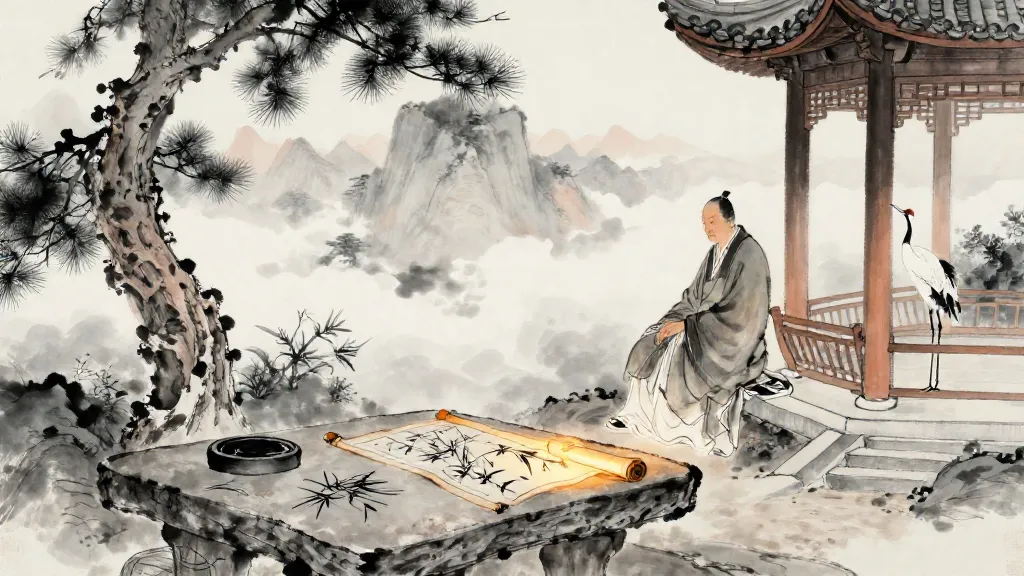
六反 (The Six Reversals) — Chinese ink painting

韓非子 Hanfeizi · Chapter 46

六反

The Six Reversals

View:

六反:世譽六民與世毀六民

The Six Reversals: Six Types the World Praises and Six It Condemns

畏死遠難,降北之民也,而世尊之曰"貴生之士"。學道立方,離法之民也,而世尊之曰"文學之士"游居厚養,牟食之民也,而世尊之曰"有能之士"。語曲牟知,偽詐之民也。而世尊之曰"辯智之士"。行劍攻殺,暴憿之民也,而世尊之曰"磏勇之士"。活賊匿奸,當死之民也,而世尊之曰"任譽之士"。此六民者,世之所譽也。赴險殉誠,死節之民,而世少之曰"失計之民"也。寡聞從令,全法之民也,而世少之曰"樸陋之民"也。力作而食,生利之民也,而世少之曰"寡能之民"也,嘉厚純粹,整谷之民也,而世少之曰"愚戇之民"也。重命畏事,尊上之民也,而世少之曰"怯懾之民"也。挫賊遏奸,明上之民也,而世少之曰"謟讒之民"也。此六民者,世之所毀也。奸偽無益之民六,而世譽之如彼;耕戰有益之民六,而世毀之如此:此之謂"六反"。布衣循私利而譽之,世主聽虛聲而禮之,禮之所在,利必加焉。百姓循私害而訾之,世主壅於俗而賤之,賤之所在,害必加焉。故名賞在乎私惡當罪之民,而毀害在乎公善宜賞之士,索國之富強,不可得也。

Those who fear death and avoid difficulty are the surrendering and fleeing people, yet the world honors them as 'scholars who value life.' Those who study the Way and establish methods outside the law are people who depart from the law, yet the world honors them as 'scholars of culture and learning.' Those who wander idly and live sumptuously are people who seize food without producing it, yet the world honors them as 'men of ability.' Those who twist words and chase after knowledge are deceitful and fraudulent people, yet the world honors them as 'men of eloquence and intelligence.' Those who carry swords and commit assault and murder are violent and reckless people, yet the world honors them as 'men of purity and courage.' Those who shelter criminals and conceal treachery are people who deserve death, yet the world honors them as 'men of loyalty and honor.' These six types are what the world praises.

Those who rush into danger and die for integrity are people of steadfast loyalty, yet the world belittles them as 'people who miscalculated.' Those of few pretensions who obey commands are law-abiding people, yet the world belittles them as 'simple and crude people.' Those who labor hard for their food are people who produce wealth, yet the world belittles them as 'people of little ability.' Those who are upright, substantial, pure, and sincere are the most upright people, yet the world belittles them as 'foolish and simple people.' Those who take commands seriously and fear transgression are people who respect their superiors, yet the world belittles them as 'timid and intimidated people.' Those who thwart criminals and check treachery are people who serve the ruler well, yet the world belittles them as 'sycophantic and slanderous people.' These six types are what the world condemns.

Six types of treacherous, deceitful, and useless people, and the world praises them thus. Six types of people useful for farming and warfare, and the world condemns them thus -- this is what is called 'the six reversals.' Private individuals follow their private interests and praise these types; rulers of the age heed empty reputation and honor them. Where honor exists, profit surely follows. The common people follow their private resentments and denounce the latter types; rulers of the age, blocked by convention, despise them. Where contempt exists, harm surely follows. When fame and reward go to people who deserve punishment for private wrongdoing, and censure and harm go to those who deserve reward for public good -- to seek the wealth and strength of the state under these conditions is impossible.

Notes

1context

The 'Six Reversals' is one of Han Fei's most famous formulations: six kinds of people harmful to the state receive cultural praise, while six kinds beneficial to the state receive cultural contempt. The chapter title refers to these six pairs of inverted valuations.

2translation

The six honored types correspond roughly to: (1) pacifists and draft-dodgers, (2) Confucian/Daoist scholars, (3) parasitic aristocrats, (4) sophists, (5) sword-carrying vigilantes (游俠), and (6) those who harbor fugitives. The six condemned types correspond to: (1) soldiers, (2) obedient citizens, (3) farmers, (4) honest simple folk, (5) respectful subjects, and (6) informants who report crimes.

法苦而長利,仁樂而後窮

The Law Is Bitter but Lasting; Benevolence Is Pleasant but Leads to Ruin

古者有諺曰:"為政猶沐也,雖有棄發,必為之。"愛棄發之費而忘長發之利,不知權者也。夫彈痤者痛,飲藥者苦,為苦憊之故不彈痤飲藥,則身不活,病不已矣。今上下之接,無子父之澤,而欲以行義禁下,則交必有郄矣。且父母之於子也,產男則相賀,產女則殺之。此俱出父母之懷衽,然男子受賀,女子殺之者,慮其後便,計之長利也。故父母之於子也,猶用計算之心以相待也,而況無父子之澤乎?今學者之說人主也,皆去求利之心,出相愛之道,是求人主之過父母之親也,此不熟於論恩,詐而誣也,故明主不受也。聖人之治也,審於法禁,法禁明著,則官法;必於賞罰,賞罰不阿,則民用。官治則國富,國富則兵強,而霸王之業成矣。霸王者,人主之大利也。人主挾大利以聽治,故其任官者當能,其賞罰無私。使士民明焉,盡力致死,則功伐可立而爵祿可致,爵祿致而富貴之業成矣。富貴者,人臣之大利也。人臣挾大利以從事,故其行危至死,其力盡而不望。此謂君不仁,臣不忠,則不可以霸王矣。

An ancient proverb says: 'Governing is like washing one's hair -- though some hair is lost, one must do it.' To begrudge the cost of lost hair and forget the benefit of growing hair is to not understand trade-offs. Lancing a boil is painful; drinking medicine is bitter. But to refuse to lance the boil or drink the medicine because of the pain and bitterness means the body will not survive and the illness will not be cured.

Now, the relationship between ruler and subject lacks the affection of father and child. To attempt to control those below through the practice of righteousness when such affection does not exist will inevitably produce rifts. Moreover, even parents treat their children calculatingly: when a son is born, they congratulate each other; when a daughter is born, they kill her. Both come from the parents' bosom equally, yet the son is congratulated and the daughter killed -- because they calculate future utility and reckon long-term benefit. If even parents relate to their children with a calculating mind, how much more so when there is no bond of parent and child?

Now the scholars who advise the ruler all tell him to abandon the pursuit of profit and follow the way of mutual love. They ask the ruler to exceed even parental affection -- this shows ignorance of the nature of kindness, and is fraudulent and deceptive. Therefore the enlightened ruler does not accept it.

The sage's governance carefully examines laws and prohibitions. When laws and prohibitions are clear and manifest, officials follow the law. When rewards and punishments are certain and impartial, the people exert themselves. When offices are well governed, the state is rich. When the state is rich, the army is strong, and the enterprise of hegemony and kingship is achieved. Hegemony and kingship are the ruler's greatest profit. When the ruler grasps this greatest profit as his basis for governance, his appointments match ability and his rewards and punishments are free of favoritism. When scholars and people see this clearly and devote their full strength even unto death, then merit can be established and rank and salary attained. Rank and salary attained, the enterprise of wealth and honor is complete. Wealth and honor are the minister's greatest profit. When the minister grasps this greatest profit as his basis for service, his conduct braves danger unto death and his strength is exhausted without resentment.

This is called: the ruler is not benevolent, and the minister is not loyal -- yet hegemony and kingship cannot be achieved otherwise.

Notes

1context

The line 'the ruler is not benevolent, and the minister is not loyal' (君不仁,臣不忠) is one of Han Fei's most provocative formulations. He does not mean these as criticisms but as descriptive truths: effective governance does not require the Confucian virtues of benevolence and loyalty, but rather a system of aligned incentives where both ruler and minister pursue their own rational self-interest within a framework of law.

2translation

The passage about killing daughters reflects the harsh demographic realities of ancient China. Han Fei uses it not to endorse the practice but to demonstrate that even the most 'natural' of human relationships -- parent and child -- operates on calculated self-interest, undermining the Confucian claim that governance can be based on benevolence.

必知必誅

Certain Detection, Certain Punishment

夫奸必知則備,必誅則止;不知則肆,不誅則行。夫陳輕貨於幽隱,雖曾、史可疑也;懸百金於市,雖大盜不取也。不知,則曾、史可疑於幽隱;必知,則大盜不取懸金於市。故明主之治國也,眾其守而重其罪,使民以法禁而不以廉止。母之愛子也倍父,父令之行於子者十母;吏之於民無愛,令之行於民也萬父。母積愛而令窮,吏威嚴而民聽從,嚴愛之策亦可決矣。且父母之所以求於子也,動作則欲其安利也,行身則欲其遠罪也。君上之於民也,有難則用其死,安平則盡其力。親以厚愛關子於安利而不聽,君以無愛利求民之死力而令行。明主知之,故不養恩愛之心而增威嚴之勢。故母厚愛處,子多敗,推愛也;父薄愛教笞,子多善,用嚴也。

When treachery will certainly be detected, people take precautions; when it will certainly be punished, they desist. When it will not be detected, they act freely; when it will not be punished, they carry on. Place cheap goods in a dark, hidden place, and even Zeng Shen and Shi Qiu would be suspected of taking them. Hang a hundred pieces of gold in the marketplace, and even the greatest thief would not take them. Where detection is uncertain, even Zeng Shen and Shi Qiu are suspects in the dark; where detection is certain, even the greatest thief will not take gold hung in public.

Therefore the enlightened ruler governs the state by multiplying the watchguards and increasing the severity of punishments, causing the people to be restrained by legal prohibitions rather than stopped by personal integrity. A mother loves her child twice as much as a father, yet a father's commands are obeyed by the child ten times more than a mother's. Officials have no love for the people, yet their commands are obeyed ten thousand times more than a father's. A mother accumulates love yet her commands go unfulfilled; officials exercise severity and the people obey. The policy choice between severity and love can thus be settled.

Moreover, what parents seek from their children is: in their actions, that they pursue safety and profit; in their conduct, that they stay far from crime. What the ruler seeks from the people is: in difficulty, their willingness to die; in peace, their full strength. Parents, through deep love, guide their children toward safety and profit -- yet the children do not obey. The ruler, through loveless self-interest, demands the people's willingness to die and devote their full strength -- yet his commands are obeyed. The enlightened ruler understands this. Therefore he does not cultivate a heart of kindness and love but increases the force of authority and severity. Where a mother's deep love prevails, children often go astray -- because love was indulged. Where a father's sparing love is enforced through the rod, children often turn out well -- because severity was applied.

Notes

1person曾參Zeng Shen

Zeng Shen (曾參, 505-435 BC) and Shi Qiu (史鰌) were proverbial exemplars of moral integrity in the Confucian tradition. Han Fei's point is that even paragons of virtue would be tempted (or at least suspected) under conditions of poor surveillance.

2context

The marketplace gold analogy is one of Han Fei's most elegant arguments: moral character is irrelevant when institutional design is right. With perfect surveillance, even thieves behave; without it, even saints are suspect. This is the definitive statement of the Legalist position that institutions, not character, determine behavior.

重刑輕刑之辨

The Debate Between Heavy and Light Punishments

今家人之治產也,相忍以饑寒,相強以勞苦,雖犯軍旅之難,饑饉之患,溫衣美食者,必是家也;相憐以衣食,相惠以佚樂,天飢歲荒,嫁妻賣子者,必是家也。故法之為道,前苦而長利;仁之為道,偷樂而後窮。聖人權其輕重,出其大利,故用法之相忍,而棄仁人之相憐也。學者之言皆曰"輕刑",此亂亡之術也。凡賞罰之必者,勸禁也。賞厚,則所欲之得也疾;罰重,則所惡之禁也急。夫欲利者必惡害,害者,利之反也。反於所欲,焉得無惡?欲治者必惡亂,亂者,治之反也。是故欲治甚者,其賞必厚矣;其惡亂甚者,其罰必重矣。今取於輕刑者,其惡亂不甚也,其欲治又不甚也。此非特無術也,又乃無行。是故決賢、不肖、愚、知之美,在賞罰之輕重。且夫重刑者,非為罪人也。明主之法,揆也。治賊,非治所揆也;所揆也者,是治死人也。刑盜,非治所刑也;治所刑也者,是治胥靡也。故曰:重一奸之罪而止境內之邪,此所以為治也。重罰者,盜賊也;而悼懼者,良民也。欲治者奚疑於重刑名!若夫厚賞者,非獨賞功也,又勸一國。受賞者甘利,未賞者慕業,是報一人之功而勸境內之眾也,欲治者何疑於厚賞!

When a household manages its property, family members endure hunger and cold together and push each other through toil and hardship. Even when military conscription or famine strikes, such a family will still eat well and dress warmly. The household whose members indulge each other with food and clothing and treat each other to leisure and pleasure will, when the skies bring famine and the years bring crop failure, end up selling wives and children. Therefore the way of the law brings pain at first but lasting benefit; the way of benevolence brings stolen pleasures followed by ruin. The sage weighs the lighter against the heavier and chooses the greater benefit. Therefore he employs the mutual endurance of the law and abandons the mutual pity of the benevolent.

The scholars all say 'lighten the punishments' -- this is the method of chaos and ruin. The purpose of making rewards and punishments certain is to motivate and prohibit. When rewards are generous, what is desired is obtained quickly. When punishments are severe, what is detested is prohibited urgently. Those who desire profit must detest harm -- harm is the opposite of profit. When something opposes what one desires, how can one not detest it? Those who desire order must detest chaos -- chaos is the opposite of order. Therefore those who strongly desire order make their rewards generous, and those who strongly detest chaos make their punishments severe. Those who advocate light punishments neither detest chaos strongly nor desire order strongly. This is not merely a lack of technique -- it is also a lack of resolve. The measure that distinguishes the worthy from the unworthy, the foolish from the wise, lies in the weight of rewards and punishments.

Moreover, heavy punishments are not for the criminals. The enlightened ruler's law is a compass line. Executing a robber is not governing the one executed -- governing the one executed would be governing a dead man. Punishing a thief is not governing the one punished -- governing the one punished would be governing a convict laborer. Therefore it is said: making the punishment for one act of treachery severe stops all wickedness within the borders. This is governance. Those who receive heavy punishment are the bandits and thieves; those who tremble in fear are the good citizens. Why should those who desire order hesitate at the name of heavy punishment? Generous rewards, too, do not merely reward the meritorious -- they motivate the entire state. Those who receive rewards enjoy the profit; those not yet rewarded aspire to the work. Repaying one person's merit motivates everyone within the borders. Why should those who desire order hesitate at generous rewards?

Notes

1context

The household analogy encapsulates Han Fei's entire philosophy of governance: strict discipline leads to long-term prosperity, while soft indulgence leads to ruin. This is presented not as cruelty but as clear-eyed love -- like the father who disciplines rather than the mother who indulges.

2translation

The 'compass line' (揆) metaphor is crucial: heavy punishments do not exist for the sake of the criminal but to establish a standard that deters everyone else. The punishment of one person is the governance of the many. This consequentialist reasoning is characteristic of Legalist thought.

重刑止奸,輕刑為民之垤

Heavy Punishments Stop Treachery; Light Punishments Are Anthills for the People

今不知治者皆曰:"重刑傷民,輕刑可以止奸,何必於重哉?"此不察於治者也。夫以重止者,未必以輕止也;以輕止者,必以重止矣。是以上設重刑者而奸盡止,奸盡止,則此奚傷於民也?所謂重刑者,奸之所利者細,而上之所加焉者大也。民不以小利加大罪,故奸必止者也。所謂輕刑者,奸之所利者大,上之所加焉者小也。民慕其利而傲其罪,故奸不止也。故先聖有諺曰:"不躓于山,而躓於垤。"山者大,故人順之;垤微小,故人易之也。今輕刑罰,民必易之。犯而不誅,是驅國而棄之也;犯而誅之,是為民設陷也。是故輕罪者,民之垤也。是以輕罪之為民道也,非亂國也,則設民陷也,此則可謂傷民矣!

Today those who do not understand governance all say: 'Heavy punishments harm the people. Light punishments can stop treachery -- why insist on severity?' This shows a failure to understand governance. What can be stopped by heavy punishment cannot necessarily be stopped by light punishment, but what can be stopped by light punishment can certainly be stopped by heavy punishment. Therefore when the ruler establishes heavy punishments, all treachery ceases. When all treachery ceases, how does this harm the people?

What is meant by heavy punishment is: the profit the criminal gains is small, while the penalty the ruler imposes is great. The people will not incur great punishment for small profit, so treachery necessarily stops. What is meant by light punishment is: the profit the criminal gains is great, while the penalty the ruler imposes is small. The people covet the profit and scorn the punishment, so treachery does not stop.

Therefore the ancient sages had a proverb: 'One does not stumble on a mountain but stumbles on an anthill.' The mountain is large, so people approach it carefully. The anthill is small, so people treat it lightly. Now if punishments are light, the people will certainly treat them lightly. If they transgress and are not executed, this is driving the state to ruin and abandoning it. If they transgress and are executed, this is setting traps for the people. Therefore light punishments are the people's anthill.

Thus light punishments as a policy for the people either bring the state to chaos or set traps for the people -- this is what can truly be called 'harming the people'!

Notes

1context

The anthill analogy is psychologically astute: people are careful around obvious dangers but careless around small ones. Light punishments create a moral hazard -- people are tempted to transgress because the punishment seems small, but when they do transgress and are punished, they feel trapped. Heavy punishments, by contrast, are so clearly disproportionate to any potential gain that no one is tempted in the first place.

愛民足用不足以治

Loving the People and Sufficient Resources Are Not Sufficient for Governance

今學者皆道書策之頌語,不察當世之實事,曰:"上不愛民,賦斂常重,則用不足而下恐上,故天下大亂。"此以為足其財用以加愛焉,雖輕刑罰,可以治也。此言不然矣。凡人之取重賞罰,固已足之之後也;雖財用足而後厚愛之,然而輕刑,猶之亂也。夫當家之愛子,財貨足用,貨財足用則輕用,輕用則侈泰。親愛之則不忍,不忍則驕恣。侈泰則家貧,驕恣則行暴。此雖財用足而愛厚,輕利之患也。凡人之生也,財用足則隳於用力,上懦則肆於為非。財用足而力作者,神農也;上治懦而行修者,曾、史也,夫民之不及神農、曾、史亦明矣。老聃有言曰:"知足不辱,知止不殆。"夫以殆辱之故而不求於足之外者,老聃也。今以為足民而可以治,是以民為皆如老聃。故桀貴在天子而不足於尊,富有四海之內而不足於寶。君人者雖足民,不能足使為君天子,而桀未必為天子為足也,則雖足民,何可以為治也?故明主之治國也,適其時事以致財物,論其稅賦以均貧富,厚其爵祿以盡賢能,重其刑罰以禁奸邪,使民以力得富,以事致貴,以過受罪,以功致賞,而不念慈惠之賜,此帝王之政也。

Today's scholars all recite the laudatory phrases of books and documents without examining the actual conditions of the present age. They say: 'When the ruler does not love the people and taxation is always heavy, then resources are insufficient and those below fear those above, so All-Under-Heaven falls into great chaos.' They conclude that making resources sufficient and adding love, even with light punishments, is enough to govern. This is wrong.

The reason people accept heavy rewards and punishments is precisely because their basic needs are already met. Yet even with sufficient resources and abundant love, if punishments are light, there will still be chaos. Consider a family that loves its children and has ample wealth. With ample wealth, spending is careless; careless spending leads to extravagance. With deep love, there is no heart for discipline; without discipline, children become arrogant and willful. Extravagance impoverishes the family; arrogance and willfulness produce violent behavior. Though wealth was sufficient and love was abundant, the harm of light indulgence is evident.

It is human nature that when resources are sufficient, people slacken their effort; when authority is weak, people indulge in wrongdoing. One who has sufficient resources yet still works hard is a Shen Nong. One who lives under weak authority yet still cultivates his conduct is a Zeng Shen or Shi Qiu. That the common people do not measure up to Shen Nong, Zeng Shen, or Shi Qiu is obvious. Laozi said: 'He who knows when he has enough will not be disgraced; he who knows when to stop will not be endangered.' But the one who, for fear of disgrace and danger, does not seek beyond sufficiency -- that is Laozi himself. To assume that making the people sufficient is enough for governance is to assume that all people are like Laozi.

Jie held the exalted position of Son of Heaven yet was not satisfied with his honor; he possessed all within the four seas yet was not satisfied with his treasures. Even if a ruler makes his people sufficient, he cannot make them sufficient in being rulers themselves. And Jie was not necessarily satisfied even as Son of Heaven -- so even with sufficient people, how can this lead to governance?

Therefore the enlightened ruler governs by adapting to the circumstances of the time to gather resources, adjusting taxes to equalize rich and poor, making rank and salary generous to fully employ the worthy and capable, and making punishments severe to prohibit treachery and wickedness. He causes the people to gain wealth through effort, attain honor through service, suffer punishment through transgression, and receive rewards through merit -- without thinking of charitable gifts. This is the governance of emperors and kings.

Notes

1person神農Shen Nong

Shen Nong (神農, the 'Divine Farmer') was a legendary sage-king credited with inventing agriculture and personally tilling the fields. Han Fei uses him as an impossibly high standard of diligence that ordinary people cannot match.

2translation

The Laozi quotation (知足不辱,知止不殆) is from chapter 44 of the Daodejing. Han Fei's argument is characteristically ruthless: Laozi's counsel of contentment describes only Laozi himself; ordinary people are not content even when they have enough. Governance must be designed for ordinary people, not sages.

官職為能士之鼎俎

Office Is the Tripod Cauldron That Reveals a Man's Ability

人皆寐,則盲者不知;皆嘿,則喑者不知。覺而使之視,問而使之對,則喑盲者窮矣。不聽其言也,則無術者不知;不任其身也,則不肖者不知。聽其言而求其當,任其身而責其功,則無術不肖者窮矣。夫欲得力士而聽其自言,雖庸人與烏獲不可別也;授之以鼎俎,則罷健效矣。故官職者,能士之鼎俎也,任之以事而愚智分矣。故無術者得於不用,不肖者得於不任。言不用而自文以為辯,身不任者而自飾以為高。世主眩其辯、濫其高而尊貴之,是不須視而定明也,不待對而定辯也,喑盲者不得矣。明主聽其言必責其用,觀其行必求其功,然則虛舊之學不談,矜誣之行不飾矣。

When everyone is asleep, the blind go undetected. When everyone is silent, the mute go undetected. But rouse them and make them see, question them and make them answer -- and the blind and mute are exposed. If one does not test their words, those without technique go undetected. If one does not assign them tasks, the incompetent go undetected. Test their words and demand accuracy; assign them tasks and demand results -- and those without technique and the incompetent are exposed.

If you want to find a strong man and listen to people's self-descriptions, you cannot distinguish a mediocrity from Wu Huo. But hand them a tripod cauldron, and the weak and the strong are immediately revealed. Therefore official duties are the tripod cauldron of capable men: assign tasks, and the foolish and wise are distinguished.

Those without technique benefit from not being tested. The incompetent benefit from not being assigned tasks. Those who are not tested yet embellish themselves as eloquent; those who are not assigned tasks yet adorn themselves as lofty. Rulers of the age, dazzled by their eloquence and swayed by their loftiness, honor and exalt them. This is like declaring someone has keen eyesight without making them see, or declaring someone eloquent without making them answer -- in which case the blind and mute would never be exposed.

The enlightened ruler, when he hears words, always demands practical results; when he observes conduct, always demands achievements. In that case, empty and stale learning is no longer discussed, and arrogant and fraudulent conduct is no longer adorned.

Notes

1person烏獲Wu Huo

Wu Huo (烏獲) was a legendary strongman of the Qin state, often paired with Meng Ben (孟賁) as exemplars of superhuman physical strength.

2context

The 'tripod cauldron' (鼎俎) metaphor is brilliant in its simplicity: just as you can only identify a strong man by giving him something heavy to lift, you can only identify a capable official by giving him responsibilities and measuring results. This is the practical core of the Legalist approach to personnel management -- meritocratic testing rather than reputation-based selection.

Edition & Source

Text
《韓非子》 Hanfeizi
Edition
中華古詩文古書籍網 transcription, 《四部叢刊》本
Commentary
Han Fei (韓非), Warring States period