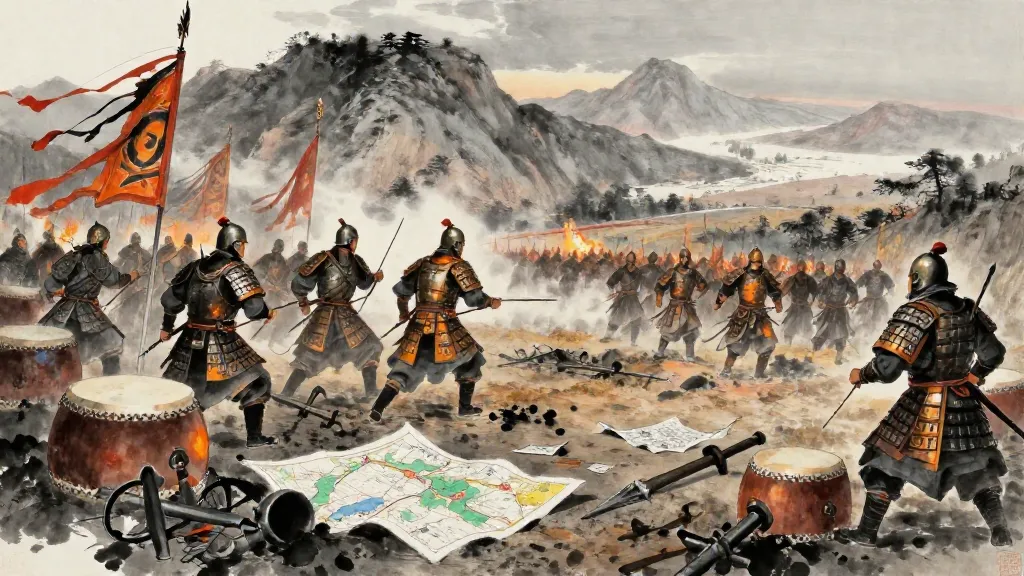
文啟 (Civil Awakening) — Chinese ink painting

六韜 Liutao · Chapter 14

文啟

Civil Awakening

View:

聖人之守

What the Sage Guards

文王問太公曰:「聖人何守?」太公曰:「何憂何嗇,萬物皆得。政之所施,莫知其化;時之所在,莫知其移。聖人守此而萬物化,何窮之有,終而復始。優而游之,展轉求之;求而得之,不可不藏;既以藏之,不可不行;既以行之,勿復明之。夫天地不自明,故能長生;聖人不自明,故能明彰。

King Wen asked Taigong: 'What does the sage guard?' Taigong said: 'What is there to worry about? What is there to hoard? The myriad things all find their place. Where governance is applied, none perceives the transformation. Where the proper season prevails, none perceives the change. The sage guards this and the myriad things are transformed — how could there be any limit? It ends and begins again. Dwell in it with leisure; turn it over and seek it. Having sought and found it, you must store it. Having stored it, you must put it into practice. Having put it into practice, do not make a display of it. Heaven and earth do not illuminate themselves, and therefore they endure. The sage does not illuminate himself, and therefore his brightness shines forth.'

大紀大定大失

The Great Pattern, the Great Stability, the Great Loss

「古之聖人聚人而為家,聚家而為國,聚國而為天下;分封賢人以為萬國,命之曰大紀。陳其政教,順其民俗;群曲化直,變於形容;萬國不通,各樂其所;人愛其上,命之曰大定。嗚呼!聖人務靜之,賢人務正之,愚人不能正,故與人爭;上勞則刑繁,刑繁則民憂,民憂則流亡。上下不安其生,累世不休,命之曰大失。

The sages of antiquity gathered people into households, gathered households into states, and gathered states into the world. They enfeoffed worthy men to form the myriad states — this was called the Great Pattern. They set forth governance and instruction, following the customs of each people. The crooked were all transformed to straightness, changed in form and appearance. The myriad states did not interfere with one another, each content in its own place. The people loved those above them — this was called the Great Stability. Alas! The sage devotes himself to keeping things still, the worthy man devotes himself to keeping things correct. The fool cannot keep things correct and so contends with others. When those above are overworked, punishments proliferate. When punishments proliferate, the people are anxious. When the people are anxious, they flee and wander. When those above and below are not secure in their livelihoods, and this continues for generations without cease — this is called the Great Loss.'

靜之之道

The Way of Keeping Things Still

「天下之人如流水,障之則止。啟之則行,靜之則清。嗚呼!神哉!聖人見其所始,則知其所終。」文王曰:「靜之奈何?」太公曰:「天有常形,民有常生,與天下共其生而天靜矣。太上因之,其次化之。夫民化而從政,是以天無為而成事,民無與而自富,此聖人之德也。」文王曰:「公言乃協予懷,夙夜念之不忘,以用為常。」

The people of the world are like flowing water — dam them and they stop, open the way and they flow, let them be still and they become clear. Alas! How divine! The sage sees where things begin and thereby knows where they will end.' King Wen asked: 'How does one keep things still?' Taigong said: 'Heaven has its constant form, the people have their constant life. Share life with the whole world and heaven will be still. The highest approach is simply to follow along; the next best is to transform them. When the people are transformed and follow governance, heaven acts without interference and affairs are accomplished, the people receive nothing special yet become prosperous of their own accord — this is the virtue of the sage.' King Wen said: 'Your words accord perfectly with what is in my heart. I shall reflect on them day and night without forgetting, and make them my constant practice.'

Edition & Source

Text
《六韜》 Liutao
Edition
中華古詩文古書籍網 transcription
Commentary
Traditional military commentaries