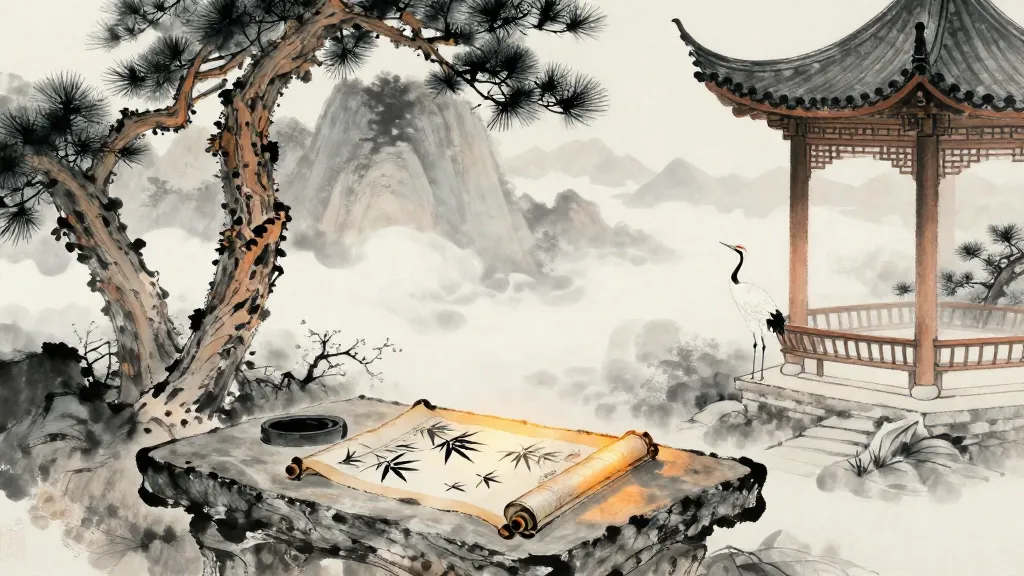
律管探敵
Using Pitch Pipes to Probe the Enemy
武王問太公曰:「律管之聲,可以知三軍之消息、勝負之決乎?」太公曰:「深哉!王之問也。夫律管十二,其要有五音——宮、商、角、徵、羽,此其正聲也。萬代不易,五行之神,道之常也,可以知敵金、木、水、火、土,各以其勝攻之。古者三皇之世,虛無之情以制剛強。無有文字,皆由五行。五行之道,天地自然。六甲之分,微妙之神。
King Wu asked Taigong: 'Can the sounds of pitch pipes be used to know the condition of the three armies and determine victory or defeat?' Taigong said: 'Profound indeed is the king's question! The twelve pitch pipes have as their essence the five notes — gong, shang, jue, zhi, and yu — these are the standard tones. Unchanged through ten thousand generations, they are the spirits of the five elements, the constants of the Way. Through them you can know which of the enemy's elements — metal, wood, water, fire, or earth — is dominant, and attack each with the element that conquers it. In the age of the Three Sovereigns of antiquity, the essence of emptiness and nothingness was used to control what was hard and strong. Before writing existed, everything operated through the five elements. The way of the five elements is the natural order of heaven and earth. The divisions of the six cycles of sixty are subtle and divine.'
Notes
The five notes (五音) of the Chinese pentatonic scale — gong (宮), shang (商), jue (角), zhi (徵), yu (羽) — were correlated with the five elements (五行) and used in military divination. This chapter describes an acoustic intelligence technique: using pitch pipes near the enemy camp at night to determine which resonant frequency responds, thereby divining the enemy's elemental affinity and vulnerability.