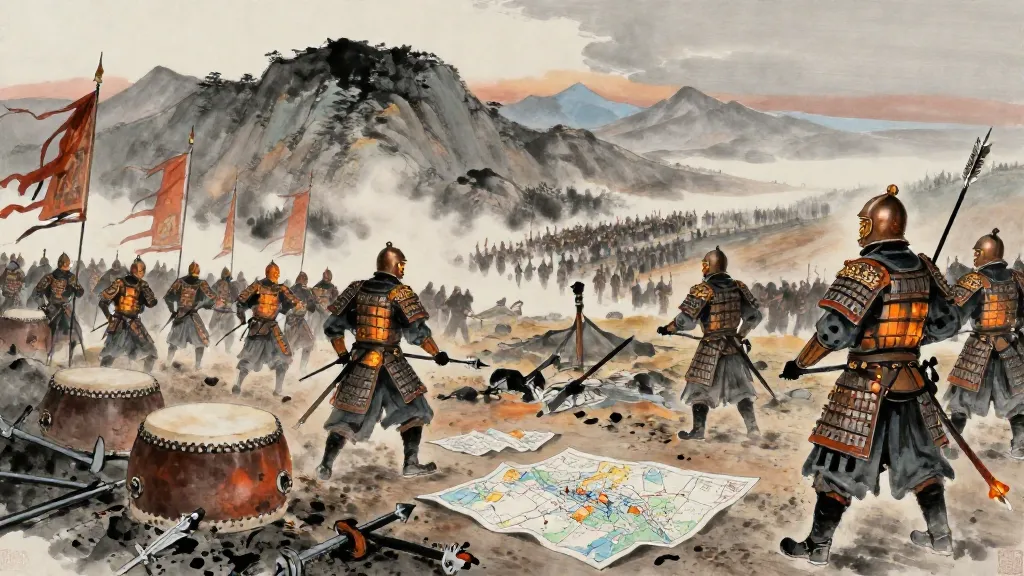
壘虛 (Empty Ramparts) — Chinese ink painting

六韜 Liutao · Chapter 42

壘虛

Empty Ramparts

View:

知敵虛實

Discerning the Enemy's Strength and Weakness

武王問太公曰:「何以知敵壘之虛實,自來自去?」太公曰:「將必上知天道,下知地理,中知人事。登高下望,以觀敵人變動:望其壘,即知其虛實;望其士卒,則知其去來。」

King Wu asked Taigong: "How can one know whether the enemy's ramparts are occupied or empty, and whether they are coming or going?" Taigong said: "A general must understand the patterns of heaven above, the principles of terrain below, and human affairs in between. Climb to a height and look down to observe the enemy's movements. By observing their ramparts, you can know whether they are full or empty. By observing their soldiers, you can know whether they are advancing or withdrawing."

辨別敵詐

Detecting Enemy Deceptions

武王曰:「何以知之?」太公曰:「聽其鼓無音,鐸無聲,望其壘上多飛鳥而不驚,上無氛氣,必知敵詐而為偶人也。敵人卒去不遠,未定而復返者,彼用其士卒太疾也。太疾,則前後不相次;不相次則行陣必亂。如此者,急出兵擊之,以少擊眾,則必勝矣。」

King Wu said: "How can one know these things?" Taigong said: "Listen — if their drums make no sound and their bells produce no noise; observe — if many birds alight on their ramparts without being startled and there is no dust or haze above them — you may be certain the enemy is using decoys in the form of straw dummies. If the enemy has just departed but has not gone far, and they turn back before settling — this means they are driving their soldiers too hard. When driven too hard, front and rear lose cohesion; when cohesion is lost, their formations must be in disorder. In such circumstances, rush out troops to strike them. Even with few attacking many, you will certainly prevail."

Edition & Source

Text
《六韜》 Liutao
Edition
中華古詩文古書籍網 transcription
Commentary
Traditional military commentaries