林戰之紀
The Principles of Forest Warfare
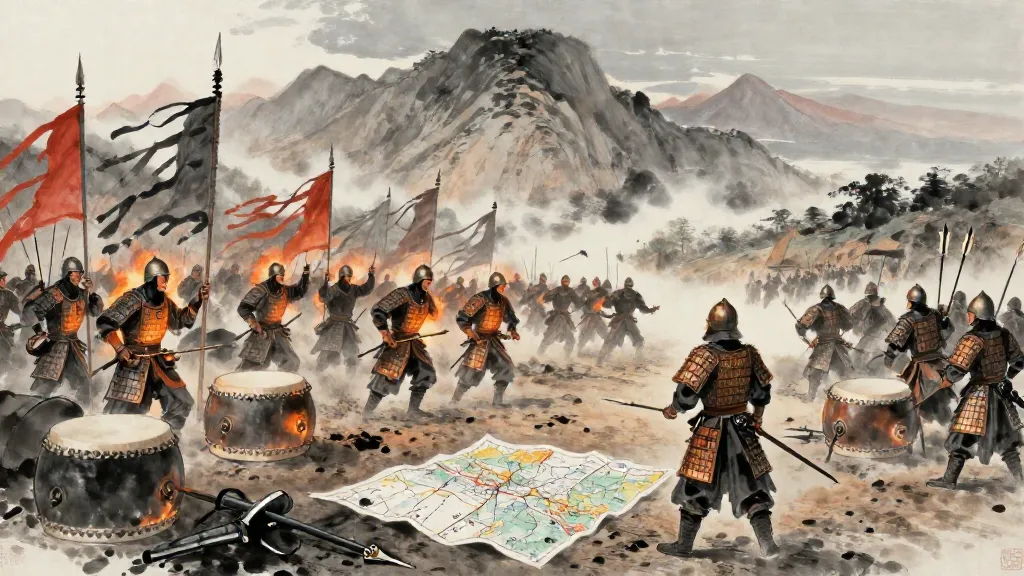
武王問太公曰:「引兵深入諸侯之地,遇大林,與敵人分林相拒。吾欲以守則固,以戰則勝,為之奈何?」太公曰:「使吾三軍分為沖陣,便兵所處,弓弩為表,戟盾為裡;斬除草木,極廣吾道,以便戰所;高置旌旗,謹敕三軍,無使敵人知吾之情,是謂林戰。林戰之法:率吾矛戟,相與為伍;林間木疏,以騎為輔,戰車居前,見便則戰,不見便則止;林多險阻,必置沖陣,以備前後,三軍疾戰,敵人雖眾,其將可走;更戰更息,各按其部。是謂林戰之紀。」
King Wu asked Taigong: "If we lead our army deep into hostile territory and encounter a great forest, and we and the enemy each hold part of the forest in opposition — if I wish to make our defense solid and ensure victory in battle, what should be done?" Taigong said: "Divide our three armies into assault formations, deploying troops where convenient. Place crossbows and bows on the outer line, halberds and shields on the inner line. Clear away vegetation and widen our paths to the utmost to facilitate combat. Raise banners high and strictly instruct the three armies — do not let the enemy know our dispositions. This is called forest warfare. The method of forest warfare: lead with halberds and spears, grouping them in squads of five. Where trees are sparse in the forest, use cavalry as support with war chariots in front — engage when the opportunity appears, halt when it does not. Where the forest is full of obstacles, you must place assault formations to secure front and rear. When the three armies fight with speed, even if the enemy is numerous, their general can be routed. Alternate between fighting and resting, each unit holding its position. These are the principles of forest warfare."