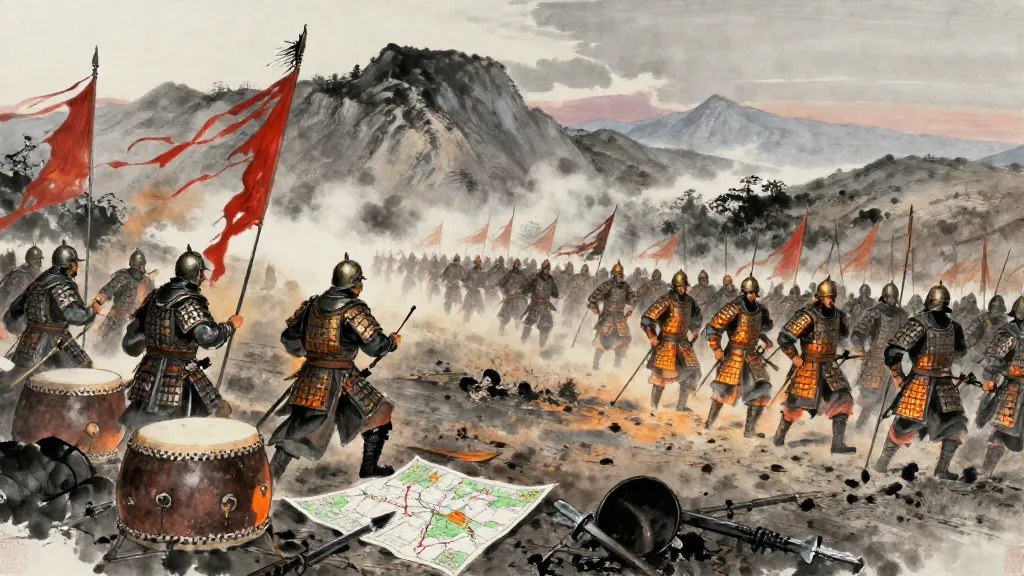
十死之地
The Ten Death Grounds for Chariots
武王問太公曰:「戰車奈何?」太公曰:「步貴知變動,車貴知地形,騎貴知別徑奇道,三軍同名而異用也。凡車之死地有十,其勝地有八。」武王曰:「十死之地奈何?」太公曰:「往而無以還者,車之死地也。越絕險阻,乘敵遠行者,車之竭地也。前易後險者,車之困地也。陷之險阻而難出者,車之絕地也。圯下漸澤,黑土粘埴者,車之勞地也。左險右易,上陵仰阪者,車之逆地也。殷草橫畝,犯歷深澤者,車之拂地也。車少地易,與步不敵者,車之敗地也。後有溝瀆,左有深水,右有峻阪者,車之壞地也。日夜霖雨,旬日不止,道路潰陷,前不能進,後不能解者,車之陷地也。此十者,車之死地也。故拙將之所以見擒,明將之所以能避也。」
King Wu asked Taigong: "What about chariot warfare?" Taigong said: "Infantry prizes knowledge of changing conditions, chariots prize knowledge of terrain, cavalry prizes knowledge of byways and unusual routes — the three arms share the same name of 'soldiers' but serve different purposes. Chariots have ten death grounds and eight victory grounds." King Wu said: "What are the ten death grounds?" Taigong said: "Ground from which there is no return — this is death ground for chariots. Crossing extreme obstacles to pursue the enemy on a long march — this is exhaustion ground. Easy ground in front but difficult ground behind — this is entrapment ground. Mired in obstacles with no way out — this is cut-off ground. Crumbling ground at the edge of marshes, with black sticky clay — this is toil ground. Difficult terrain on the left, easy on the right, climbing ridges and ascending slopes — this is adverse ground. Dense grass crossing plowed fields, pushing through deep marshes — this is hindering ground. Too few chariots on open ground, outmatched by infantry — this is defeat ground. Ditches behind, deep water on the left, steep slopes on the right — this is ruinous ground. Continuous rain day and night for ten days without stopping, roads collapsed and impassable, unable to advance or withdraw — this is mired ground. These ten are death grounds for chariots. The incompetent general gets captured because of them; the brilliant general avoids them."