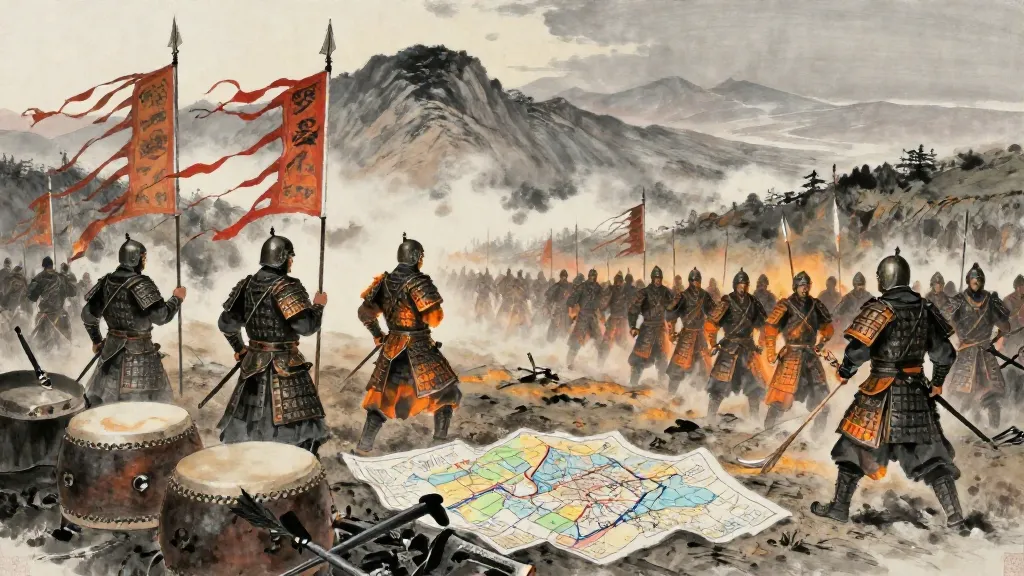
法儀 (Models and Standards) — Chinese ink painting

墨子 Mozi · Chapter 4

法儀

Models and Standards

View:

天下從事不可無法儀

All Endeavors Require Models and Standards

子墨子曰:天下從事者,不可以無法儀。無法儀而其事能成者,無有。雖至士之為將相者,皆有法。雖至百工從事者,亦皆有法。百工為方以矩,為圓以規,直以繩,衡以水,正以縣。無巧工不巧工,皆以此五者為法。巧者能中之,不巧者雖不能中,放依以從事,猶逾己。故百工從事,皆有法所度。今大者治天下,其次治大國,而無法所度,此不若百工辯也。

Master Mozi said: 'All who engage in work under heaven cannot do without models and standards. There is no case where work succeeds without models and standards. Even scholars who serve as generals and ministers all have models. Even the hundred artisans who engage in work all have models. The artisans make squares with the carpenter's square, circles with the compass, straight lines with the plumb line, level surfaces with the water level, and vertical lines with the hanging weight. Whether skilled or unskilled, all artisans use these five as their models. The skilled can hit the mark; the unskilled, though they cannot hit the mark, can still follow and rely on them in their work and still surpass their own unaided abilities. Therefore all the hundred artisans have models and measures for their work. Now those who govern the realm at the highest level, or govern a great state at the next level, yet have no models and measures -- this shows less discernment than the hundred artisans.'

法天

Taking Heaven as the Model

然則奚以為治法而可?當皆法其父母,奚若?天下之為父母者眾,而仁者寡。若皆法其父母,此法不仁也。法不仁,不可以為法。當皆法其學,奚若?天下之為學者眾,而仁者寡,若皆法其學,此法不仁也。法不仁,不可以為法。當皆法其君,奚若?天下之為君者眾,而仁者寡,若皆法其君,此法不仁也。法不仁,不可以為法。故父母、學、君三者,莫可以為治法。然則奚以為治法而可?故曰:莫若法天。天之行廣而無私,其施厚而不德,其明久而不衰,故聖王法之。

Then what should serve as the model for good governance? Should we all model ourselves on our parents? Parents throughout the realm are many, but the benevolent among them are few. If we all model ourselves on our parents, we model ourselves on what is not benevolent. A model that is not benevolent cannot serve as a model. Should we all model ourselves on our teachers? Teachers throughout the realm are many, but the benevolent among them are few. If we all model ourselves on our teachers, we model ourselves on what is not benevolent. A model that is not benevolent cannot serve as a model. Should we all model ourselves on our rulers? Rulers throughout the realm are many, but the benevolent among them are few. If we all model ourselves on our rulers, we model ourselves on what is not benevolent. A model that is not benevolent cannot serve as a model. Therefore parents, teachers, and rulers -- none of these three can serve as the model for governance. Then what should serve as the model? I say: nothing is as good as modeling on Heaven. Heaven's course is broad and impartial; its bestowals are generous and claim no gratitude; its brightness is enduring and does not fade. Therefore the sage kings modeled on Heaven.

Notes

1context

This passage establishes the distinctive Mohist concept of 'Heaven' (天) as the ultimate moral standard. Unlike the Confucian emphasis on human exemplars and ritual tradition, Mozi argues that only Heaven provides a universally valid model because all human sources are fallible.

天欲人相愛相利

Heaven Desires That People Love and Benefit One Another

既以天為法,動作有為,必度於天。天之所欲則為之,天所不欲則止。然而天何欲何惡者也?天必欲人之相愛相利,而不欲人之相惡相賊也。奚以知天之欲人之相愛相利,而不欲人之相惡相賊也?以其兼而愛之,兼而利之也。奚以知天兼而愛之,兼而利之也?以其兼而有之,兼而食之也。今天下無大小國,皆天之邑也。人無幼長貴賤,皆天之臣也。此以莫不芻牛羊,豢犬豬,潔為酒醴粢盛,以敬事天。此不為兼而有之、兼而食之邪?天苟兼而有食之,夫奚說不欲人之相愛相利也?故曰:愛人利人者,天必福之;惡人賊人者,天必禍之。曰:殺不辜者,得不祥焉。夫奚說人為其相殺而天與禍乎?是以知天欲人相愛相利,而不欲人相惡相賊也。

Having taken Heaven as our model, in all actions and undertakings we must measure ourselves against Heaven. What Heaven desires, we do; what Heaven does not desire, we stop. But what does Heaven desire and what does it hate? Heaven certainly desires that people love one another and benefit one another, and does not desire that people hate one another and harm one another. How do we know Heaven desires people to love and benefit one another, and does not desire people to hate and harm one another? Because Heaven universally loves and universally benefits them. How do we know Heaven universally loves and benefits them? Because Heaven universally possesses and feeds them. Now all states under heaven, great and small, are Heaven's cities. All people, young and old, noble and humble, are Heaven's subjects. Therefore there is none who does not raise cattle and sheep, rear dogs and pigs, and prepare clean wine, millet, and grain offerings to reverently serve Heaven. Is this not because Heaven universally possesses and feeds them? If Heaven does universally possess and feed them, how can it not desire that people love and benefit one another? Therefore it is said: those who love and benefit others, Heaven will surely bring them blessings; those who hate and harm others, Heaven will surely bring them misfortune. It is said: those who kill the innocent will receive ill fortune. How else can we explain that when people kill one another, Heaven sends down misfortune upon them? This is how we know that Heaven desires people to love and benefit one another, and does not desire people to hate and harm one another.

聖王法天而暴王逆天

Sage Kings Follow Heaven, Tyrant Kings Defy Heaven

昔之聖王禹湯文武,兼愛天下之百姓,率以尊天事鬼,其利人多,故天福之,使立為天子,天下諸侯皆賓事之。暴王桀紂幽厲,兼惡天下之百姓,率以詬天侮鬼。其賊人多,故天禍之,使遂失其國家,身死為於天下僇,後世子孫毀之,至今不息。故為不善以得禍者,桀紂幽厲是也。愛人利人以得福者,禹湯文武是也。愛人利人以得福者有矣,惡人賊人以得禍者,亦有矣。

The sage kings of old -- Yu, Tang, Wen, and Wu -- universally loved the people of the realm and led them to honor Heaven and serve the spirits. Because they benefited people greatly, Heaven blessed them, caused them to be established as Sons of Heaven, and all the feudal lords served them as guests. The tyrant kings -- Jie, Zhou, You, and Li -- universally hated the people of the realm and led them to revile Heaven and insult the spirits. Because they harmed people greatly, Heaven brought misfortune upon them, caused them to lose their states and die, and they became objects of punishment for all the realm; their descendants for generations have reviled them, and this has not ceased to this day. Therefore those who did evil and received misfortune -- Jie, Zhou, You, and Li are examples. Those who loved and benefited people and received blessings -- Yu, Tang, Wen, and Wu are examples. Cases of those who loved and benefited people and received blessings exist, and cases of those who hated and harmed people and received misfortune also exist.

Edition & Source

Text
《墨子》 Mozi
Edition
《四部叢刊》本
Commentary
Traditional commentaries