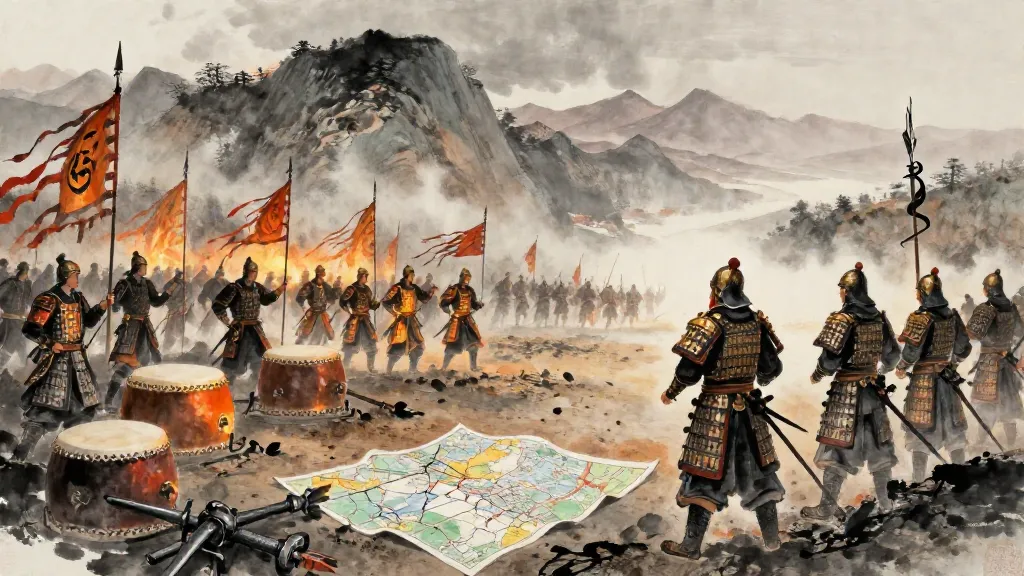
七患 (The Seven Afflictions) — Chinese ink painting

墨子 Mozi · Chapter 5

七患

The Seven Afflictions

View:

國有七患

A State Has Seven Afflictions

子墨子曰:國有七患。七患者何?城郭溝池不可守而治宮室,一患也;邊國至境,四鄰莫救,二患也;先盡民力無用之功,賞賜無能之人,民力盡於無用,財寶虛於待客,三患也;仕者持祿,游者憂交,君修法討臣,臣懾而不敢拂,四患也;君自以為聖智而不問事,自以為安強而無守備,四鄰謀之不知戒,五患也;所信不忠,所忠不信,六患也;畜種菽粟不足以食之,大臣不足以事之,賞賜不能喜,誅罰不能威,七患也。以七患居國,必無社稷;以七患守城,敵至國傾。七患之所當,國必有殃。

Master Mozi said: 'A state has seven afflictions. What are the seven afflictions? When the city walls and moats cannot be defended yet the ruler builds palaces -- this is the first affliction. When enemy states reach the borders and none of the four neighbors comes to the rescue -- this is the second affliction. When the people's strength is first exhausted on useless projects and rewards are given to incompetent people, the people's strength spent on the useless and the treasury emptied on entertaining guests -- this is the third affliction. When officials cling to their salaries, wandering scholars worry about their connections, the ruler applies the law to punish his ministers, and the ministers are cowed and dare not remonstrate -- this is the fourth affliction. When the ruler considers himself a sage and wise man and does not inquire into affairs, considers himself secure and strong yet has no defensive preparations, and does not know to be on guard when the four neighbors plot against him -- this is the fifth affliction. When those he trusts are not loyal and those who are loyal he does not trust -- this is the sixth affliction. When the stores of beans and grain are insufficient to feed the people, the great ministers are insufficient to serve him, rewards and bestowals cannot bring joy, and punishments cannot inspire awe -- this is the seventh affliction. A state that harbors these seven afflictions will certainly lose its altars of soil and grain. A city defended with these seven afflictions will fall when the enemy arrives. Wherever these seven afflictions are present, the state will surely suffer calamity.'

食者國之寶

Food Is the Treasure of the State

凡五穀者,民之所仰也,君之所以為養也。故民無仰,則君無養;民無食,則不可事。故食不可不務也,地不可不立也,用不可不節也。五穀盡收,則五味盡御於主;不盡收,則不盡御。一谷不收謂之饉,二谷不收謂之旱,三谷不收謂之凶,四谷不收謂之饋,五穀不收謂之飢。

The five grains are what the people depend on and what the ruler is nourished by. Therefore if the people have nothing to depend on, the ruler has nothing to be nourished by; if the people have no food, they cannot be employed. Therefore food production must not be neglected, the land must be put to productive use, and expenditures must be kept frugal. When all five grains are harvested fully, then all five flavors are available to the ruler; when not all are harvested, then not all are available. When one grain fails, it is called 'shortage'; when two grains fail, it is called 'drought'; when three grains fail, it is called 'famine'; when four grains fail, it is called 'scarcity'; when all five grains fail, it is called 'starvation.'

備者國之重

Preparedness Is the Weight of the State

食者,國之寶也;兵者,國之爪也;城者,所以自守也;此三者,國之具也。故曰:以其極役,修其城郭,則民勞而不傷;以其常正,收其租稅,則民費而不病。民所苦者,非此也。苦於厚作斂於百姓,賞以賜無功,虛其府庫,以備車馬、衣裘、奇怪;苦其役徒,以治宮室觀樂,死又厚為棺槨,多為衣裘。生時治台榭,死又修墳墓,故民苦於外,府庫單于內,上不厭其樂,下不堪其苦。故國離寇敵則傷,民見凶飢則亡,此皆備不具之罪也。且夫食者,聖人之所寶也。故《周書》曰:「國無三年之食者,國非其國也;家無三年之食者,子非其子也。」此之謂國備。

Food is the treasure of the state; arms are the claws of the state; walls are for self-defense -- these three are the equipment of the state. Therefore it is said: if you employ the people to the utmost in repairing the city walls, the people will toil but not be harmed; if you collect rent and taxes at the standard rates, the people will spend but not suffer. What the people suffer from is not these things. They suffer from heavy exactions upon the people, from rewards given to those without merit, from emptying the treasury to provide chariots, horses, robes, and exotic curiosities; they suffer from corvee labor to build palaces and places of entertainment, and from lavish coffins in death and excessive burial garments. In life the rulers build terraces and pavilions; in death they construct grand tombs. Thus the people suffer without and the treasury is depleted within; those above never tire of their pleasures, and those below cannot bear their suffering. Therefore when enemies and bandits come, the state is harmed; when the people face famine, they perish -- all this is the fault of inadequate preparedness. Food is what the sage treasures. Therefore the Book of Zhou says: 'A state without three years' store of food is not truly its state; a family without three years' store of food -- the son is not truly its son.' This is what is meant by state preparedness.

Edition & Source

Text
《墨子》 Mozi
Edition
《四部叢刊》本
Commentary
Traditional commentaries