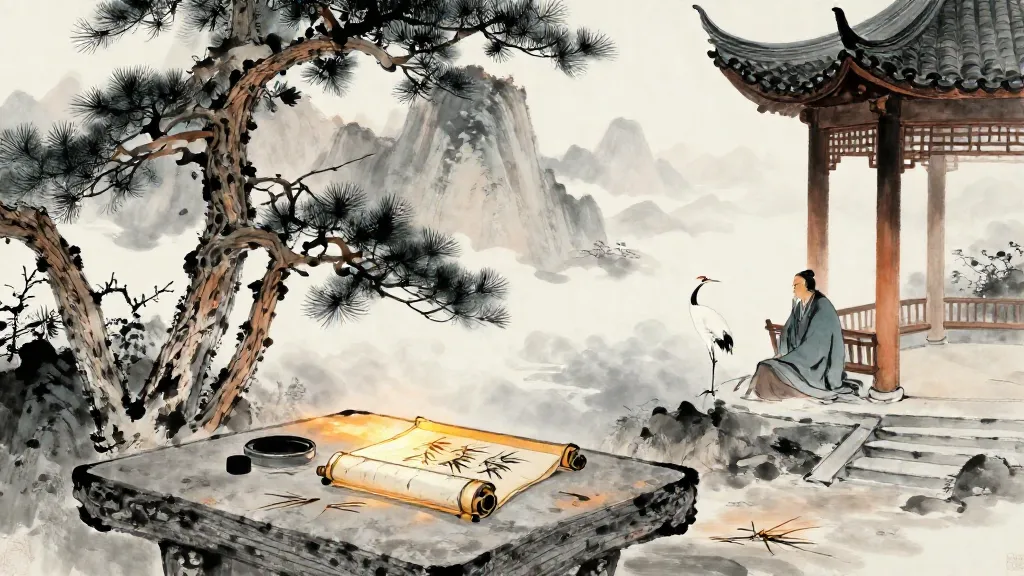
三辯 (Three Arguments) — Chinese ink painting

墨子 Mozi · Chapter 7

三辯

Three Arguments

View:

程繁問聖王不為樂

Cheng Fan Questions the Sage Kings' Rejection of Music

程繁問於子墨於曰:「夫子曰:'聖王不為樂。'昔諸侯倦於聽治,息於鐘鼓之樂;士大夫倦於聽治,息於竽瑟之樂;農夫春耕、夏耘、秋斂、冬藏,息於聆缶之樂。今夫子曰:'聖王不為樂。'此譬之猶馬駕而不稅,弓張而不弛,無乃非有血氣者之所不能至邪!」

Cheng Fan questioned Master Mozi, saying: 'You say that the sage kings did not make music. But in the past, when feudal lords grew weary of governing, they rested with the music of bells and drums; when officials grew weary of governing, they rested with the music of mouth organs and zithers; when farmers completed their spring plowing, summer weeding, autumn harvesting, and winter storing, they rested with the music of tapping on clay jars. Now you say the sage kings did not make music. This is like a horse that is harnessed but never unyoked, a bow that is drawn but never relaxed -- is this not beyond what any creature of flesh and blood can endure?'

Notes

1person程繁Cheng Fan

Cheng Fan (程繁) was an interlocutor who challenged Mozi's anti-music position. His argument represents the common-sense Confucian view that music serves a necessary restorative function.

樂逾繁治逾寡

The More Elaborate the Music, the Less the Good Governance

子墨子曰:「昔者堯舜有茅茨者,且以為禮,且以為樂。湯放桀於大水,環天下自立以為王,事成功立,無大後患,因先王之樂,又自作樂,命曰《護》,又修《九招》,武王勝殷殺紂,環天下自立以為王,事成功立,無大後患,因先王之樂,又自作樂,命曰《象》。周成王因先王之樂,又自作樂,命曰《騶虞》。周成王之治天下也,不若武王;武王之治天下也,不若成湯;成湯之治天下也,不若堯舜。故其樂逾繁者,其治逾寡。自此觀之,樂非所以治天下也。」

Master Mozi said: 'In the past, Yao and Shun had only thatched roofs, yet these served both for ritual and for music. Tang banished Jie at the Great Water and circled the realm to establish himself as king. When his enterprise was accomplished and his achievements established, with no great future threats, he inherited the music of the former kings and also created his own music, called the Hu. He also revised the Nine Summons. King Wu defeated Yin and killed Zhou, circled the realm to establish himself as king. When his enterprise was accomplished and his achievements established, with no great future threats, he inherited the music of the former kings and also created his own music, called the Xiang. King Cheng of Zhou inherited the music of the former kings and also created his own music, called the Zou Yu. Now King Cheng's governance of the realm was inferior to King Wu's; King Wu's was inferior to Tang's; Tang's was inferior to Yao's and Shun's. Thus the more elaborate the music became, the less the good governance. From this we can see that music is not what governs the realm.'

Edition & Source

Text
《墨子》 Mozi
Edition
《四部叢刊》本
Commentary
Traditional commentaries