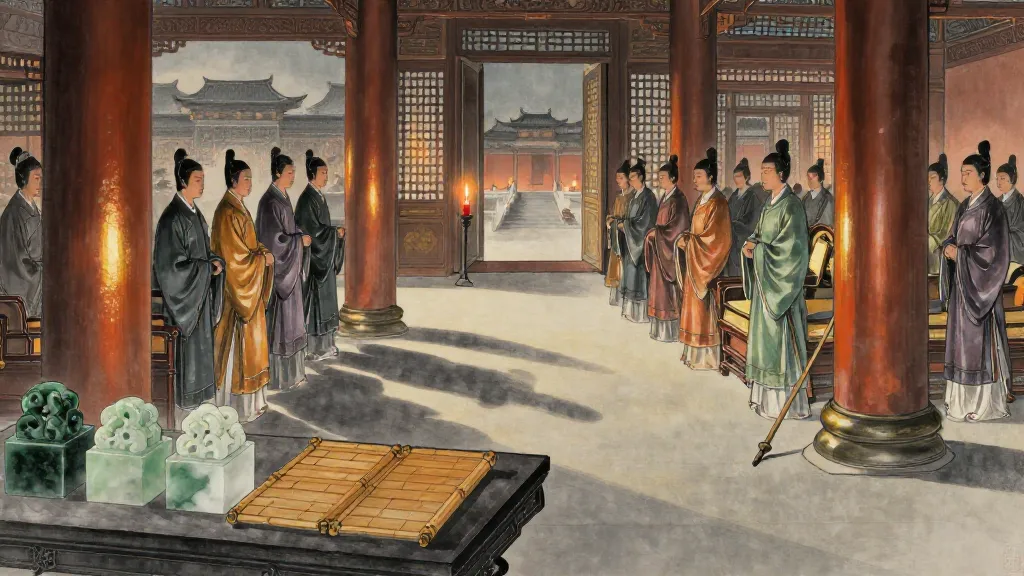
尚賢(上) (Elevating the Worthy, Part I) — Chinese ink painting

墨子 Mozi · Chapter 8

尚賢(上)

Elevating the Worthy, Part I

View:

尚賢為政之本

Elevating the Worthy Is the Foundation of Governance

子墨子言曰:「今者王公大人為政於國家者,皆欲國家之富,人民之眾,刑政之治。然而不得富而得貧,不得眾而得寡,不得治而得亂,則是本失其所欲,得其所惡。是其故何也?」子墨子言曰:「是在王公大人為政於國家者,不能以尚賢事能為政也。是故國有賢良之士眾,則國家之治厚;賢良之士寡,則國家之治薄。故大人之務,將在於眾賢而巳。」

Master Mozi said: 'Today's kings, dukes, and great men who govern states all desire their states to be wealthy, their people to be numerous, and their governance to be well-ordered. Yet they do not achieve wealth but achieve poverty, do not achieve a large population but achieve a small one, do not achieve order but achieve chaos -- thus they fundamentally lose what they desire and obtain what they hate. What is the reason for this?' Master Mozi said: 'It is because the kings, dukes, and great men who govern states cannot make a policy of elevating the worthy and employing the capable. Therefore when a state has many worthy and good scholars, its governance will be substantial; when worthy and good scholars are few, its governance will be thin. Thus the great man's chief concern should be to make the worthy numerous.'

Notes

1context

The Shang Xian (Elevating the Worthy) chapters form one of Mozi's 'ten theses' -- the core doctrines presented in sets of three (Upper, Middle, Lower). This first chapter establishes the principle that meritocratic governance is the foundation of all state prosperity.

眾賢之術

Methods for Making the Worthy Numerous

曰:「然則眾賢之術將奈何哉?」子墨子言曰:「譬若欲眾其國之善射御之士者,必將富之、貴之、敬之、譽之,然後國之善射御之士,將可得而眾也。況又有賢良之士,厚乎德行,辯乎言談,博乎道術者乎!此固國家之珍而社稷之佐也,亦必且富之、貴之、敬之、譽之,然後國之良士,亦將可得而眾也。」

Someone asked: 'Then what is the method for making the worthy numerous?' Master Mozi said: 'It is like wanting to increase the number of skilled archers and charioteers in one's state -- one must enrich them, ennoble them, respect them, and praise them; only then can the state's skilled archers and charioteers be made numerous. How much more so for worthy and good scholars who are rich in moral conduct, persuasive in discourse, and broad in the arts of the Way! These are truly the treasures of the state and the pillars of the altars of soil and grain. One must also enrich them, ennoble them, respect them, and praise them; only then can the state's good scholars be made numerous.'

有能則舉之

Promote Those Who Are Capable

故古者聖王之為政,列德而尚賢。雖在農與工肆之人,有能則舉之。高予之爵,重予之祿,任之以事,斷予之令。曰:「爵位不高,則民弗敬;蓄祿不厚,則民不信;政令不斷,則民不畏。」舉三者授之賢者,非為賢賜也,欲其事之成。故當是時,以德就列,以官服事,以勞殿賞,量功而分祿。故官無常貴而民無終賤。有能則舉之,無能則下之。舉公義,辟私怨,此若言之謂也。

Therefore when the sage kings of old governed, they ranked men by virtue and elevated the worthy. Even among farmers and artisans in the marketplace, those who had ability were promoted. They were given high rank, generous salaries, entrusted with affairs, and given authority to issue commands. It was said: 'If their rank is not high, the people will not respect them; if their salaries are not generous, the people will not trust them; if their authority to command is not decisive, the people will not fear them.' These three things were given to the worthy not as a gift to the worthy, but because the ruler desired the tasks to be accomplished. Therefore in those times, men were placed in rank according to their virtue, served in office according to their duties, were rewarded according to their labor, and salaries were divided according to their merit. Thus no official was permanently noble, and no commoner was permanently humble. Those with ability were promoted; those without ability were demoted. Public righteousness was upheld and private grudges were set aside -- this is what these words mean.

堯舉舜禹舉益

Yao Promoted Shun, Yu Promoted Yi

故古者堯舉舜於服澤之陽,授之政,天下平。禹舉益於陰方之中,授之政,九州成。湯舉伊尹於庖廚之中,授之政,其謀得。文王舉閎夭、泰顛於罝罔之中,授之政,西土服。

In ancient times Yao promoted Shun from the sunny side of the Fu Marsh, entrusted him with government, and the realm was pacified. Yu promoted Yi from within the dark regions, entrusted him with government, and the Nine Provinces were brought to completion. Tang promoted Yi Yin from the kitchen, entrusted him with government, and his plans succeeded. King Wen promoted Hong Yao and Tai Dian from among the hunting nets, entrusted them with government, and the western lands submitted.

Notes

1personShun

Shun (舜) was the legendary sage emperor who was discovered by Yao while farming and fishing in humble circumstances. His promotion from commoner to Son of Heaven is the paradigmatic example of Mohist meritocracy.

Edition & Source

Text
《墨子》 Mozi
Edition
《四部叢刊》本
Commentary
Traditional commentaries