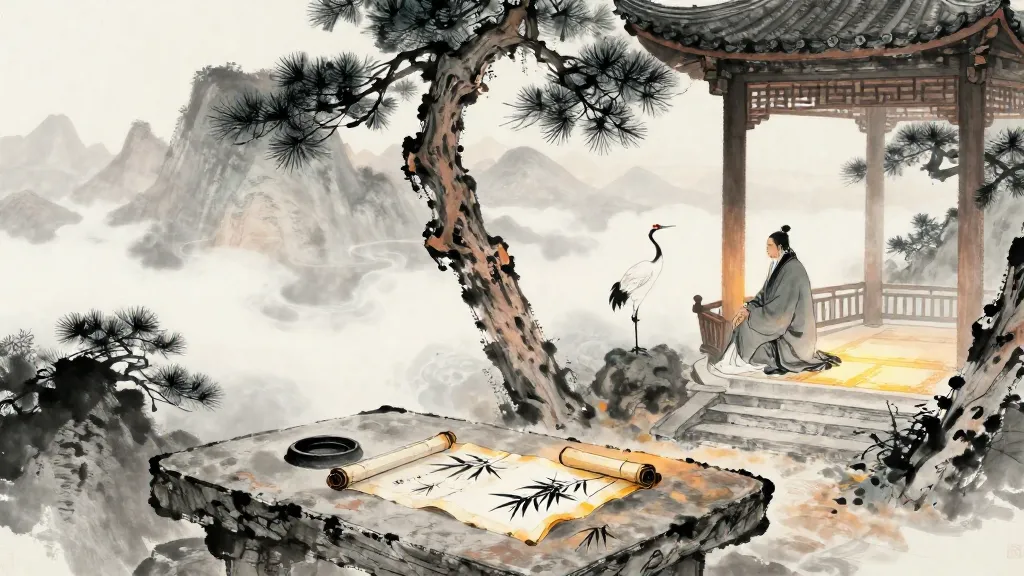
兼愛(上) (Universal Love, Part I) — Chinese ink painting

墨子 Mozi · Chapter 14

兼愛(上)

Universal Love, Part I

View:

亂起不相愛

Disorder Arises from Failure to Love One Another

聖人以治天下為事者也,必知亂之所自起,焉能治之;不知亂之所自起,則不能治。譬之如醫之攻人之疾者然:必知疾之所自起,焉能攻之;不知疾之所自起,則弗能攻。治亂者何獨不然?必知亂之所自起,焉能治之;不知亂之斯自起,則弗能治。聖人以治天下為事者也,不可不察亂之所自起。當察亂何自起?起不相愛。

The sage whose task is to bring order to the realm must know the source from which disorder arises before he can set it right; if he does not know the source from which disorder arises, he cannot set it right. This is like a physician treating a person's illness: he must know the source from which the illness arises before he can treat it; if he does not know the source from which the illness arises, he cannot treat it. Why should putting disorder to right be any different? One must know the source from which disorder arises before one can set it right; if one does not know the source from which disorder arises, one cannot set it right. The sage whose task is to bring order to the realm must examine the source from which disorder arises. When we examine where disorder arises from, it arises from failure to love one another.

Notes

1context

The Jian Ai (Universal Love) chapters contain Mozi's most famous and distinctive doctrine. The term 兼愛 (jian ai) means 'impartial love' or 'universal love' -- loving all people equally without distinction of kinship or social status. This directly challenges the Confucian emphasis on graded love (愛有差等).

不相愛之害

The Harms of Not Loving One Another

臣子之不孝君父,所謂亂也。子自愛,不愛父,故虧父而自利;弟自愛,不愛兄,故虧兄而自利;臣自愛,不愛君,故虧君而自利,此所謂亂也。雖父之不慈子,兄之不慈弟,君之不慈臣,此亦天下之所謂亂也。

When ministers and sons are not filial toward their lords and fathers -- this is what is called disorder. The son loves himself but does not love his father, so he harms his father to benefit himself. The younger brother loves himself but does not love his elder brother, so he harms his elder brother to benefit himself. The minister loves himself but does not love his lord, so he harms his lord to benefit himself. This is what is called disorder. Even when fathers are not kind to their sons, elder brothers are not kind to their younger brothers, and lords are not kind to their ministers -- this too is what the realm calls disorder.

兼相愛則天下治

If All Loved Universally, the Realm Would Be Well-Governed

若使天下兼相愛,愛人若愛其身,猶有不孝者乎?視父兄與君若其身,惡施不孝?猶有不慈者乎?視弟子與臣若其身,惡施不慈?故不孝不慈亡有。猶有盜賊乎?故視人之室若其室,誰竊?視人身若其身,誰賊?故盜賊亡有。猶有大夫之相亂家、諸侯之相攻國者乎?視人家若其家,誰亂?視人國若其國,誰攻?故大夫之相亂家、諸侯之相攻國者亡有。若使天下兼相愛,國與國不相攻,家與家不相亂,盜賊無有,君臣父子皆能孝慈,若此,則天下治。

If everyone in the realm loved universally, loving others as they love themselves, would there still be any who are unfilial? If one regarded one's father, elder brother, and lord as one regards oneself, how would one act unfilially? Would there still be any who are unkind? If one regarded one's younger brother, son, and minister as one regards oneself, how would one act unkindly? Therefore unfiliality and unkindness would cease to exist. Would there still be thieves and bandits? If one regarded others' homes as one's own home, who would steal? If one regarded others' persons as one's own person, who would rob? Therefore thieves and bandits would cease to exist. Would there still be great officers disrupting one another's families or feudal lords attacking one another's states? If one regarded others' families as one's own family, who would cause disruption? If one regarded others' states as one's own state, who would attack? Therefore great officers disrupting families and feudal lords attacking states would cease to exist. If everyone in the realm loved universally, state would not attack state, family would not disrupt family, there would be no thieves or bandits, and lords and ministers, fathers and sons would all be able to act with filiality and kindness. If it were thus, the realm would be well-governed.

不可以不勸愛

We Must Not Fail to Encourage Love

故聖人以治天下為事者,惡得不禁惡而勸愛?故天下兼相愛則治,交相惡則亂。故子墨子曰:「不可以不勸愛人者,此也。」

Therefore the sage whose task is to bring order to the realm -- how can he not prohibit hatred and encourage love? When the realm universally loves one another there is order; when all mutually hate one another there is chaos. Therefore Master Mozi said: 'We must not fail to encourage people to love one another -- this is the reason.'

Edition & Source

Text
《墨子》 Mozi
Edition
《四部叢刊》本
Commentary
Traditional commentaries