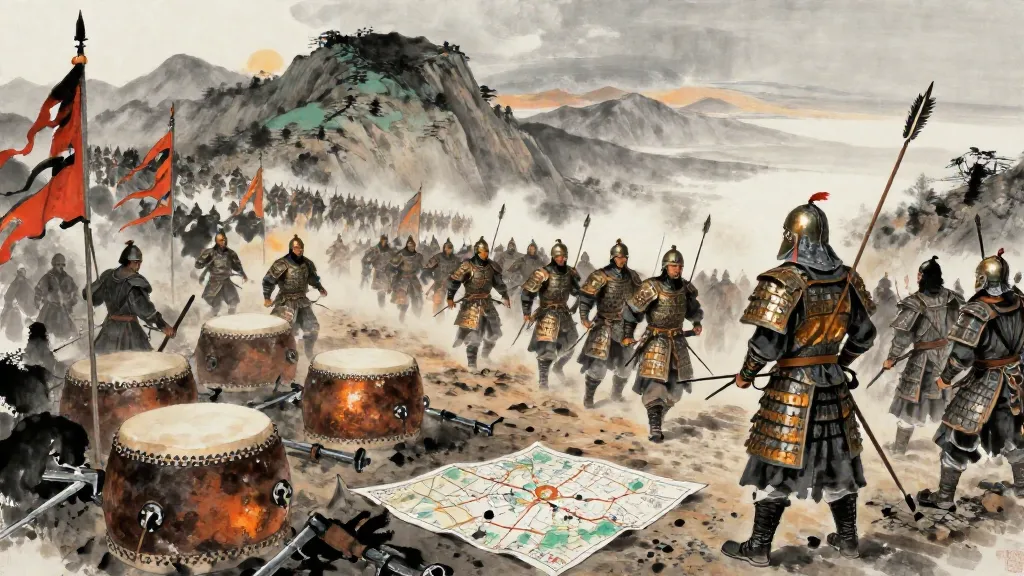
兼愛(中) (Universal Love, Part II) — Chinese ink painting

墨子 Mozi · Chapter 15

兼愛(中)

Universal Love, Part II

View:

天下之害

The Harms of the Realm

子墨子言曰:「仁人之所以為事者,必興天下之利,除去天下之害,以此為事者也。」然則天下之利何也?天下之害何也?子墨子言曰:「今若國之與國之相攻,家之與家之相篡,人之與人之相賊,君臣不惠忠,父子不慈孝,兄弟不和調,此則天下之害也。」

Master Mozi said: 'What the humane person takes as his task is necessarily to promote the benefits of the realm and to eliminate its harms -- this is what he takes as his task.' Then what are the benefits of the realm? What are the harms of the realm? Master Mozi said: 'When states attack one another, families plunder one another, people injure one another, rulers and ministers are not generous and loyal, fathers and sons are not kind and filial, elder and younger brothers are not harmonious -- these are the harms of the realm.'

兼相愛交相利之法

The Method of Universal Love and Mutual Benefit

子墨子言曰:「以兼相愛、交相利之法易之。」然則兼相愛、交相利之法,將奈何哉?子墨子言:「視人之國,若視其國;視人之家,若視其家;視人之身,若視其身。是故諸侯相愛,則不野戰;家主相愛,則不相篡;人與人相愛,則不相賊;君臣相愛,則惠忠;父子相愛,則慈孝;兄弟相愛,則和調。天下之人皆相愛,強不執弱,眾不劫寡,富不侮貧,貴不敖賤,詐不欺愚。凡天下禍篡怨恨,可使毋起者,以相愛生也,是以仁者譽之。」

Master Mozi said: 'Replace it with the method of universal love and mutual benefit.' But what is the method of universal love and mutual benefit? Master Mozi said: 'Regard others' states as you regard your own state; regard others' families as you regard your own family; regard others' persons as you regard your own person. Therefore when feudal lords love one another, they will not wage war in the open field; when heads of families love one another, they will not plunder one another; when people love one another, they will not injure one another; when rulers and ministers love one another, they will be generous and loyal; when fathers and sons love one another, they will be kind and filial; when brothers love one another, they will be harmonious. When all the people of the realm love one another, the strong will not oppress the weak, the many will not rob the few, the rich will not insult the poor, the noble will not be arrogant toward the humble, and the cunning will not deceive the foolish. All the calamity, plunder, resentment, and hatred in the realm can be prevented from arising, because they arise from mutual love -- this is why the humane praise it.'

君說則士能之

If the Ruler Approves, the Officers Can Do It

昔者晉文公好士之惡衣,故文公之臣,皆牂羊之裘,韋以帶劍,練帛之冠,入以見於君,出以踐於朝。是其故何也?君說之,故臣為之也。昔者楚靈王好士細要,故靈王之臣,皆以一飯為節,脅息然後帶,扶牆然後起。比期年,朝有黧黑之色。

In the past, Duke Wen of Jin liked his officers to wear coarse clothing. Therefore Duke Wen's ministers all wore sheepskin robes, leather belts with swords, and caps of unbleached silk when entering to see the ruler and going out to attend court. Why was this? Because the ruler approved of it, so the ministers did it. In the past, King Ling of Chu liked his officers to have slender waists. Therefore King Ling's ministers all limited themselves to a single meal as their ration, held their breath and then fastened their belts, and leaned against the wall before they could stand up. Within a year, the court was filled with dark, emaciated faces.

Notes

1person楚靈王Chu Ling Wang

King Ling of Chu (楚靈王, r. 540-529 BC) was known for his extravagant and tyrannical rule. The anecdote of his preference for slender waists became proverbial in Chinese literature (楚王好細腰).

古者聖王行兼

The Sage Kings of Old Practiced Universal Love

是故子墨子言曰:「今天下之士君子,忠實欲天下之富,而惡其貧;欲天下之治,而惡其亂,當兼相愛、交相利。此聖王之法,天下之治道也,不可不務為也。」

Therefore Master Mozi said: 'Now the scholars and gentlemen of the realm, if they truly desire the realm's wealth and hate its poverty, desire the realm's order and hate its chaos, should practice universal love and mutual benefit. This is the method of the sage kings and the Way of governing the realm -- it must not fail to be practiced.'

Edition & Source

Text
《墨子》 Mozi
Edition
《四部叢刊》本
Commentary
Traditional commentaries