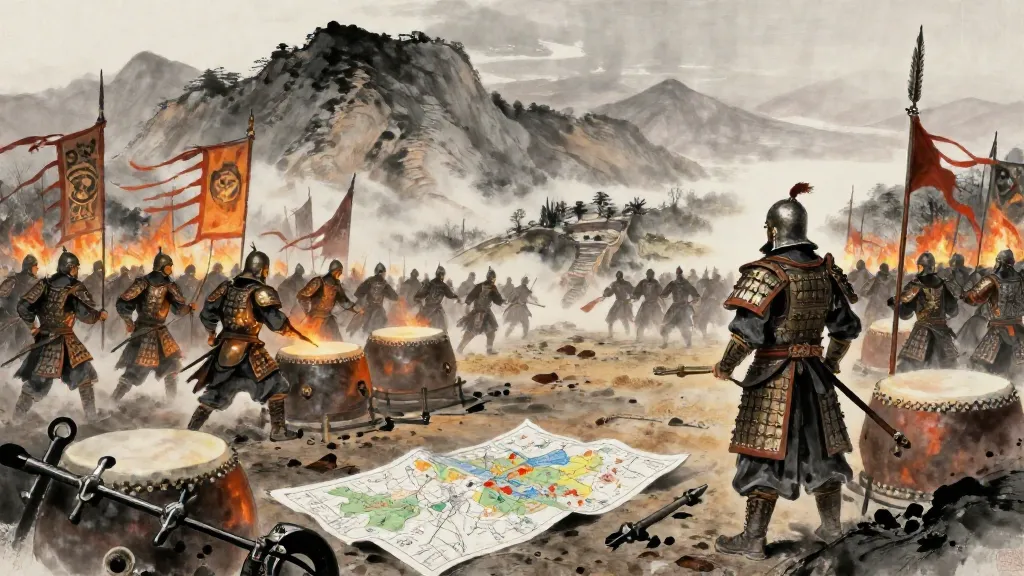
兼愛(下) (Universal Love, Part III) — Chinese ink painting

墨子 Mozi · Chapter 16

兼愛(下)

Universal Love, Part III

View:

別非兼是

Partiality Is Wrong, Universality Is Right

分名乎天下,惡人而賊人者,兼與?別與?即必曰:「別也。」然即之交別者,果生天下之大害者與?是故別非也。子墨子曰:「非人者必有以易之,若非人而無以易之,譬之猶以水救水也,其說將必無可矣。」是故子墨子曰:「兼以易別。」

If we classify all those in the realm who hate and harm others, is their approach universal or partial? We must say: 'It is partial.' Since those who practice partiality indeed produce the greatest harms in the realm, therefore partiality is wrong. Master Mozi said: 'One who condemns must have something to replace it with. If one condemns without having anything to replace it with, it is like trying to put out fire with fire -- the doctrine will surely lead nowhere.' Therefore Master Mozi said: 'Replace partiality with universality.'

Notes

1context

The key philosophical distinction in this chapter is between 兼 (jian, 'universal/inclusive') and 別 (bie, 'partial/discriminating'). Mozi argues that all social harms trace back to partiality -- loving one's own more than others -- and the remedy is universality.

兼士與別士之辯

The Debate Between the Universalist and the Partialist

子墨子曰:「用而不可,雖我亦將非之;且焉有善而不可用者。」姑嘗兩而進之。誰以為二士,使其一士者執別,使其一士者執兼。是故別士之言曰:「吾豈能為吾友之身,若為吾身?為吾友之親,若為吾親?」是故退睹其友,飢即不食,寒即不衣,疾病不侍養,死喪不葬埋。別士之言若此,行若此。兼士之言不然,行亦不然。曰:「吾聞高士於天下者,必為其友之身,若為其身;為其友之親,若為其親。然後可以為高士於天下。」是故退睹其友,飢則食之,寒則衣之,疾病侍養之,死喪葬埋之。兼士之言若此,行若此。

Master Mozi said: 'If something is impracticable, even I would condemn it. But how can there be something good that is impracticable?' Let us try presenting both approaches side by side. Suppose there are two scholars: have one hold the partial view and the other the universal view. The partialist says: 'How can I care for my friend's person as for my own person? How can I care for my friend's parents as for my own parents?' Therefore when he sees his friend in need, he does not feed the hungry, clothe the cold, tend the sick, or bury the dead. Such are the partialist's words and such is his conduct. The universalist's words and conduct are otherwise. He says: 'I have heard that a superior scholar in the realm must care for his friend's person as for his own person, and for his friend's parents as for his own parents. Only then can he be called a superior scholar in the realm.' Therefore when he sees his friend in need, he feeds the hungry, clothes the cold, tends the sick, and buries the dead. Such are the universalist's words and such is his conduct.

言而非兼擇即取兼

People Condemn Universality in Words but Choose It in Practice

然即敢問:今有平原廣野於此,被甲嬰胄,將往戰,死生之權未可識也;又有君大夫之遠使於巴、越、齊、荊,往來及否,未可識也。然即敢問:不識將惡也,家室,奉承親戚、提挈妻子而寄託之,不識於兼之有是乎?於別之有是乎?我以為當其於此也,天下無愚夫愚婦,雖非兼之人,必寄託之於兼之有是也。此言而非兼,擇即取兼,即此言行費也。

Then let me ask: suppose on this broad plain and wide wilderness, donning armor and helmet, you are about to go to war, and whether you live or die is uncertain; or suppose you are sent by your lord on a distant mission to Ba, Yue, Qi, or Jing, and whether you will return is uncertain. Let me ask: not knowing what will happen, to whom would you entrust your family, commend your relatives, and consign your wife and children? To the universalist or to the partialist? I believe that at such a time, there is no foolish man or foolish woman in the realm -- even those who condemn universality -- who would not entrust them to the universalist. This means condemning universality in words but choosing universality when it matters -- words and actions contradict each other.

兼者聖王之道

Universality Is the Way of the Sage Kings

故兼者,聖王之道也,王公大人之所以安也,萬民衣食之所以足也,故君子莫若審兼而務行之。為人君必惠,為人臣必忠;為人父必慈,為人子必孝,為人兄必友,為人弟必悌。故君子莫若欲為惠君、忠臣、慈父、孝子、友兄、悌弟,當若兼之,不可不行也,此聖王之道,而萬民之大利也。

Therefore universality is the Way of the sage kings, the means by which kings and great men find security, and the means by which the myriad people have sufficient clothing and food. The gentleman should carefully examine universality and strive to practice it. As a ruler one must be generous; as a minister one must be loyal; as a father one must be kind; as a son one must be filial; as an elder brother one must be friendly; as a younger brother one must be respectful. Therefore the gentleman who wishes to be a generous ruler, a loyal minister, a kind father, a filial son, a friendly elder brother, or a respectful younger brother must practice universality. It must not go unpracticed. This is the Way of the sage kings and the great benefit of the myriad people.

Edition & Source

Text
《墨子》 Mozi
Edition
《四部叢刊》本
Commentary
Traditional commentaries