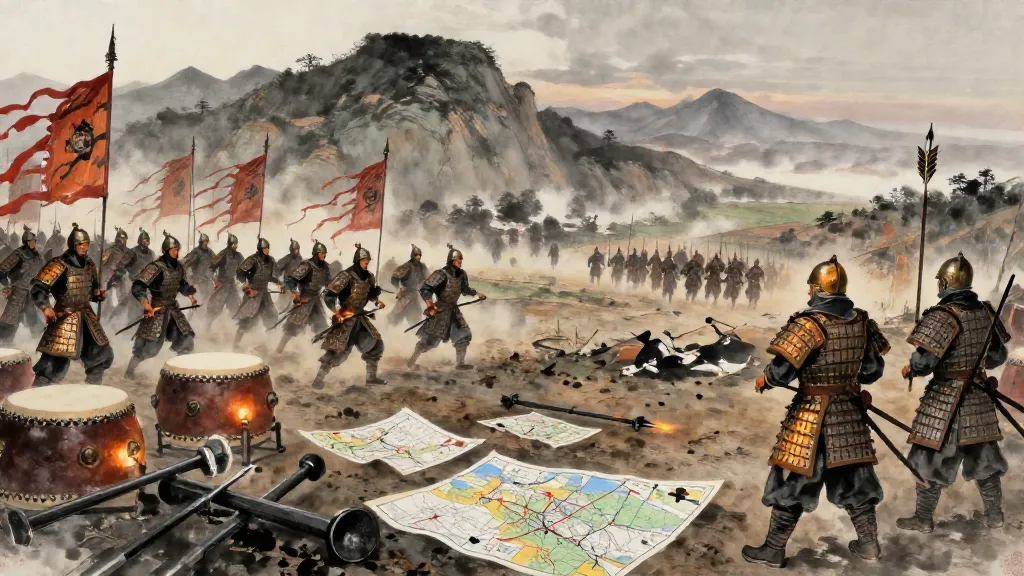
非攻(下) (Condemning Offensive Warfare, Part III) — Chinese ink painting

墨子 Mozi · Chapter 19

非攻(下)

Condemning Offensive Warfare, Part III

View:

攻非天鬼人之利

Offensive War Benefits Neither Heaven, Spirits, nor People

夫取天之人,以攻天之邑,此刺殺天民,剝振神之位,傾覆社稷,攘殺其牲□,則此上不中天之利矣。意將以為利鬼乎?夫殺之人,滅鬼神之主,廢滅先王,賊虐萬民,百姓離散,則此中不中鬼之利矣。意將以為利人乎?夫殺之人為利人也博矣!

To take Heaven's people and attack Heaven's cities, to slaughter Heaven's subjects, strip the spirits of their positions, overthrow the altars of soil and grain, and kill the sacrificial animals -- this does not serve the interests of Heaven above. Does one intend it to benefit the spirits? To kill people and destroy the spirits' patrons, to abolish the former kings and cruelly oppress the myriad people until the hundred families are scattered -- this does not serve the interests of the spirits in the middle. Does one intend it to benefit the people? To kill people as a means of benefiting people is a most generous reckoning indeed!

攻非誅

Offensive War Is Not Righteous Punishment

子墨子曰:「子未察吾言之類,未明其故者也。彼非所謂『攻』,謂『誅』也。」

Master Mozi said: 'You have not examined the categories in my arguments and have not understood their reasoning. Those cases were not what is called "offensive war" -- they were what is called "righteous punishment."'

Notes

1context

Mozi draws a crucial distinction between 攻 (gong, 'offensive warfare' -- aggression against innocent states) and 誅 (zhu, 'righteous punishment' -- campaigns sanctioned by Heaven against tyrants like Jie and Zhou). This distinction allows Mozi to condemn wars of conquest while still honoring the sage kings' campaigns.

義名立天下之道

The Way to Establish Righteous Reputation in the Realm

子墨子曰:「今若有能信效先利天下諸侯者,大國之不義也,則同憂之;大國之攻小國也,則同救之,小國城郭之不全也,必使修之,布粟之絕則委之,幣帛不足則共之。以此效大國,則小國之君說。」

Master Mozi said: 'Now if there were someone who could truly demonstrate concern for the benefit of the realm's feudal lords -- when a great state acts unrighteously, he shares their worry; when a great state attacks a small state, he joins in rescuing it; when a small state's walls are not intact, he sees to their repair; when their grain runs out, he supplies it; when their silk and cloth are insufficient, he shares his own. By thus demonstrating concern for great states, the rulers of small states would be pleased.'

非攻不可不察

Condemning Offensive Warfare Must Be Examined

是故子墨子曰:「今且天下之王公大人士君子,中情將欲求興天下之利,除天下之害,當若繁為攻伐,此實天下之巨害也。今欲為仁義,求為上士,尚欲中聖王之道,下欲中國家百姓之利,故當若『非攻』之為說,而將不可不察者此也!」

Therefore Master Mozi said: 'Now the kings, dukes, great men, and scholars of the realm who truly desire to promote the realm's benefits and eliminate its harms should recognize that frequent wars of conquest are in fact the greatest harm of the realm. Those who desire to practice benevolence and righteousness, who seek to be superior scholars, who above wish to accord with the Way of the sage kings and below wish to serve the interests of the state and the people -- they must examine the doctrine of condemning offensive warfare, and this must not go unexamined!'

Edition & Source

Text
《墨子》 Mozi
Edition
《四部叢刊》本
Commentary
Traditional commentaries