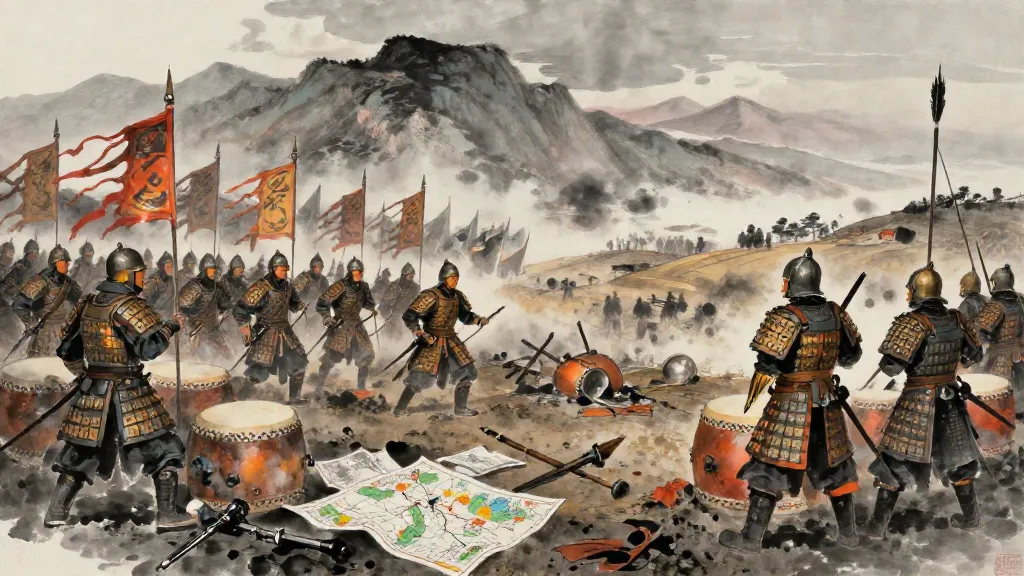
天志(上) (Heaven's Will, Part I) — Chinese ink painting

墨子 Mozi · Chapter 26

天志(上)

Heaven's Will, Part I

View:

知小不知大

Knowing the Small but Not the Great

子墨子言曰:「天下之士君子,知小而不知大。」何以知之?以其處家者知之。若處家得罪於家長,猶有鄰家所避逃之;然且親戚、兄弟、所知識,共相儆戒,皆曰:「不可不戒矣!不可不慎矣!」

Master Mozi said: 'The scholars and gentlemen of the realm understand small things but not great things.' How do we know this? We know it from how they conduct themselves in a household. If a person offends the head of his household, he can still flee to a neighbor's house for refuge; yet his relatives, brothers, and acquaintances all warn one another, saying: 'You must be on guard! You must be careful!'

Notes

1context

The Tian Zhi (Heaven's Will) chapters develop Mozi's distinctive theology. For Mozi, Heaven (天) is a personal, purposive deity that actively rewards the righteous and punishes the wicked. This is more anthropomorphic than the Confucian conception of Heaven as an impersonal moral order.

天欲義惡不義

Heaven Desires Righteousness and Hates Unrighteousness

然則天亦何欲何惡?天欲義而惡不義。然則率天下之百姓,以從事於義,則我乃為天之所欲也。我為天之所欲,天亦為我所欲。

Then what does Heaven desire and what does it hate? Heaven desires righteousness and hates unrighteousness. If I then lead the people of the realm to devote themselves to righteousness, I am doing what Heaven desires. If I do what Heaven desires, Heaven will also do what I desire.

義政與力政

Righteous Government and Forceful Government

順天意者,義政也;反天意者,力政也。然義政將奈何哉?子墨子言曰:「處大國不攻小國,處大家不篡小家,強者不劫弱,貴者不傲賤,多詐者不欺愚。此必上利於天,中利於鬼,下利於人,三利無所不利,故舉天下美名加之,謂之聖王。」

Conforming to Heaven's will is righteous government; opposing Heaven's will is forceful government. What does righteous government entail? Master Mozi said: 'Those in great states do not attack small states; those in great families do not plunder small families; the strong do not oppress the weak; the noble are not arrogant toward the humble; the cunning do not deceive the foolish. This necessarily benefits Heaven above, benefits the spirits in the middle, and benefits the people below. Benefiting all three with no harm to any -- therefore all the finest names in the realm are conferred upon such a ruler, and he is called a sage king.'

天志如規矩

Heaven's Will Is Like the Compass and Square

子墨子言曰:「我有天志,譬若輪人之有規,匠人之有矩,輪匠執其規、矩,以度天下之方圜,曰:'中者是也,不中者非也。'今天下之士君子之書,不可勝載,言語不可詳計,上說諸侯,下說列士,其於仁義,則大相遠也。何以知之?曰:我得天下之明法以度之。」

Master Mozi said: 'I have Heaven's will, just as the wheelwright has his compass and the carpenter has his square. The wheelwright and carpenter grasp their compass and square to measure all the circles and squares in the realm, saying: what accords with them is right; what does not accord with them is wrong. Now the writings of the realm's scholars and gentlemen are beyond counting, their speeches beyond reckoning; they persuade feudal lords above and scholars below, yet on the matter of benevolence and righteousness they diverge enormously. How do I know this? I say: I have obtained the realm's clear standard to measure them by.'

Edition & Source

Text
《墨子》 Mozi
Edition
《四部叢刊》本
Commentary
Traditional commentaries