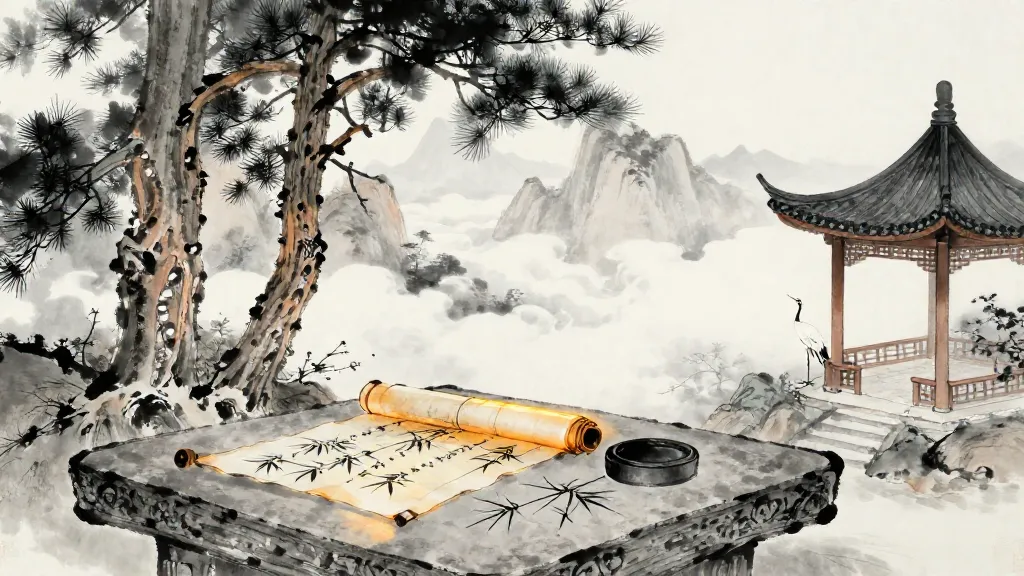
貴義 (Valuing Righteousness) — Chinese ink painting

墨子 Mozi · Chapter 47

貴義

Valuing Righteousness

View:

萬事莫貴於義

Nothing is More Precious than Righteousness

子墨子曰:"萬事莫貴於義。今謂人曰:'予子冠履,而斷子之手足,子為之乎?'必不為,何故?則冠履不若手足之貴也。又曰:'予子天下而殺子之身,子為之乎?'必不為,何故?則天下不若身之貴也。爭一言以相殺,是貴義於其身也。故曰:萬事莫貴於義也。"

Master Mozi said: 'Nothing in the world is more precious than righteousness. Suppose someone said to you: "I will give you a hat and shoes, but cut off your hands and feet. Would you do it?" You certainly would not. Why? Because a hat and shoes are not as precious as hands and feet. Again: "I will give you the whole world, but kill you. Would you do it?" You certainly would not. Why? Because the whole world is not as precious as your life. Yet people contend over a single word and kill each other over it -- this shows they value righteousness above their very lives. Therefore I say: nothing in the world is more precious than righteousness.'

湯與伊尹

Tang and Yi Yin

子墨子南遊於楚,見楚獻惠王,獻惠王以老辭,使穆賀見子墨子。子墨子說穆賀,穆賀大說,謂子墨子曰:"子之言,則成善矣!而君王,天下之大王也,毋乃曰'賤人之所為'而不用乎?"子墨子曰:"唯其可行。譬若藥然,草之本,天子食之,以順其疾,豈曰'一草之本'而不食哉?"

Master Mozi traveled south to Chu and sought an audience with King Xianhui of Chu. The king declined on grounds of old age and sent Mu He to meet Master Mozi. Master Mozi persuaded Mu He, and Mu He was greatly pleased. He said: 'Your words are certainly good! But the king is the great king of the world -- might he not say "This is the work of a commoner" and refuse to adopt it?' Master Mozi said: 'It matters only whether it can be put into practice. Consider medicine: the root of a herb -- even the Son of Heaven eats it to cure his illness. Would he say "This is merely a herb's root" and refuse to eat it?'

Notes

1person楚惠王、穆賀Chu Hui Wang, Mu He

King Xianhui of Chu (楚獻惠王) likely refers to King Hui of Chu (楚惠王, r. 488-432 BC). Mu He (穆賀) was a Chu minister.

日者之謬

The Error of the Diviner

子墨子北之齊,遇日者。日者曰:"帝以今日殺黑龍於北方,而先生之色黑,不可以北。"子墨子不聽,遂北,至淄水,不遂而反焉。日者曰:"我謂先生不可以北。"子墨子曰:"南之人不得北,北之人不得南,其色有黑者,有白者,何故皆不遂也?且帝以甲乙殺青龍於東方,以丙丁殺赤龍於南方,以庚辛殺白龍於西方,以壬癸殺黑龍於北方,若用子之言,則是禁天下之行者也。是圍心而虛天下也,子之言不可用也。"

Master Mozi was traveling north to Qi when he encountered a diviner. The diviner said: 'The Lord on High has today slain the Black Dragon in the north, and since your complexion is dark, you must not go north.' Master Mozi did not listen and continued north, but upon reaching the Zi River could not cross and turned back. The diviner said: 'I told you that you must not go north.' Master Mozi said: 'People from the south cannot go north, and people from the north cannot go south; among them there are dark-complexioned and fair-complexioned people alike. Why could none of them cross? Moreover, if the Lord on High slays the Green Dragon in the east on days jia-yi, the Red Dragon in the south on days bing-ding, the White Dragon in the west on days geng-xin, and the Black Dragon in the north on days ren-gui -- if we followed your doctrine, all travel in the world would be forbidden. This would blockade the mind and empty the world. Your doctrine cannot be used.'

Notes

1context

The diviner (日者) practices a form of calendrical divination correlating the Five Phases (五行) with compass directions and the sexagenary cycle. Mozi's refutation through reductio ad absurdum -- showing that the diviner's system would prohibit all travel everywhere -- is a classic example of Mohist logical argumentation applied to popular superstition.

Edition & Source

Text
《墨子》 Mozi
Edition
中華古詩文古書籍網 transcription, 《四部叢刊》本
Commentary
Mo Di (墨翟) et al., Warring States period