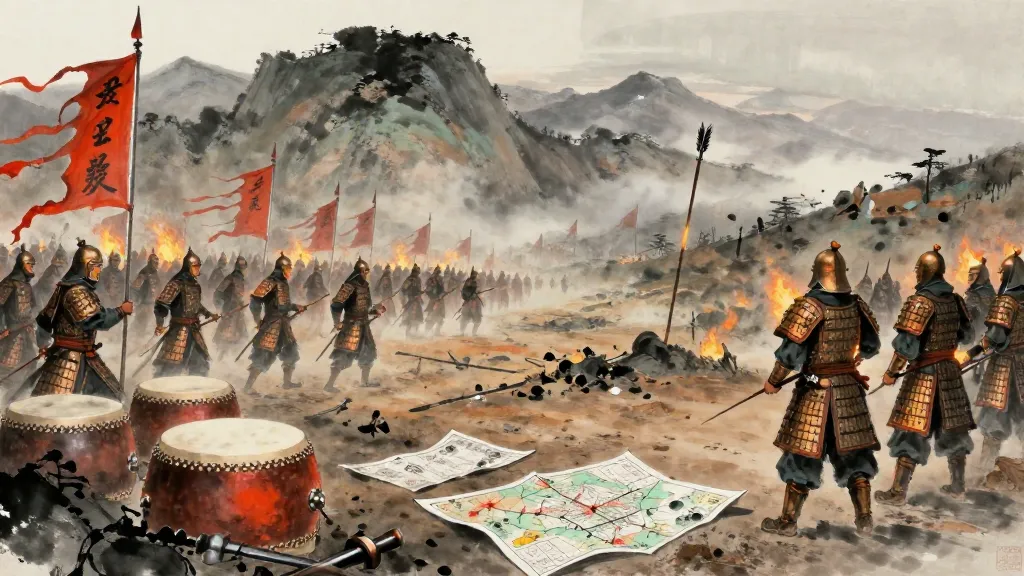
雜守 (Miscellaneous Defense Methods) — Chinese ink painting

墨子 Mozi · Chapter 71

雜守

Miscellaneous Defense Methods

View:

守城器械部署

Deployment of Defensive Equipment

渠長丈五尺,其埋者三尺,矢長丈二尺。渠廣丈六尺,其弟丈二尺,渠之垂者四尺。樹渠無傅葉五寸,梯渠十丈一梯。

The defensive palisade stakes are one zhang five chi long, with three chi buried. The arrows are one zhang two chi long. The palisade is one zhang six chi wide, with an inner dimension of one zhang two chi, and the overhanging portion is four chi. When erecting the palisade, leave a gap of five cun from the parapet. Place a ladder every ten zhang of palisade.

五不守

Five Conditions Where Defense is Impossible

子墨子曰:凡不守者有五:城大人少,一不守也;城小人眾,二不守也;人眾食寡,三不守也;市去城遠,四不守也;畜積在外,富人在虛,五不守也。率萬家而城方三里。

Master Mozi said: There are five conditions under which a city cannot be defended. First, when the city is large but the population is small. Second, when the city is small but the population is large. Third, when the population is large but food is scarce. Fourth, when the market is far from the city. Fifth, when stored provisions are outside the walls and the wealthy reside in the countryside. The standard ratio is ten thousand households for a city three li on each side.

Notes

1context

This concluding passage provides a practical checklist for assessing a city's defensibility. The standard of 10,000 households per 3-li-square city gives a population density benchmark for defense planning. These five conditions represent the Mohist distillation of defensive strategic principles into actionable intelligence.

糧食分配標準

Food Rationing Standards

斗食,終歲三十六石;參食,終歲二十四石;四食,終歲十八石;五食,終歲十四石四斗;六食,終歲十二石。斗食食五升,參食食參升小半,四食食二升半,五食食二升,六食食一升大半,日再食。救死之時,日二升者二十日,日三升者三十日,日四升者四十日,如是而民免於九十日之約矣。

Under the 'full ration' system, one person consumes thirty-six shi per year. Under the 'three-meal' system, twenty-four shi per year. Under the 'four-meal' system, eighteen shi. Under the 'five-meal' system, fourteen shi and four dou. Under the 'six-meal' system, twelve shi. Full ration is five sheng per meal, three-meal is just over three sheng, four-meal is two and a half sheng, five-meal is two sheng, six-meal is just over one and a half sheng, eating twice daily. In desperate times: two sheng per day lasts twenty days, three sheng per day lasts thirty days, four sheng per day lasts forty days. In this way the people can survive the ninety-day constraint.

Notes

1context

This rationing schedule is a practical logistical tool for siege commanders. The '90-day constraint' (九十日之約) corresponds to the three-month standard for food reserves mentioned in the general defense principles of chapter 52. The graduated rationing system allows commanders to extend food supplies as the siege lengthens.

Edition & Source

Text
《墨子》 Mozi
Edition
中華古詩文古書籍網 transcription, 《四部叢刊》本
Commentary
Mo Di (墨翟) et al., Warring States period