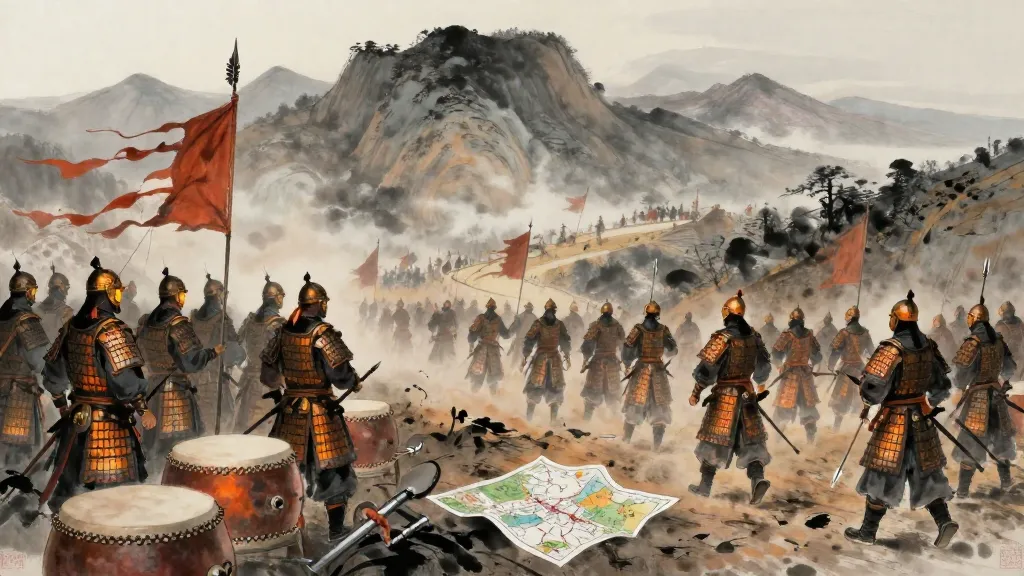
號令 (Orders and Commands) — Chinese ink painting

墨子 Mozi · Chapter 70

號令

Orders and Commands

View:

守城總則

General Rules of City Defense

安國之道,道任地始,地得其任則功成,地不得其任則勞而無功。人亦如此,備不先具者無以安主。凡守城者以亟傷敵為上,其延日持久以待救之至,不明於守者也,不能此,乃能守城。

The Way of securing a state begins with assigning terrain to its proper use. When terrain is properly used, the task succeeds; when it is not, there is toil without result. People are the same: if preparations are not made in advance, there is no way to protect the ruler. The supreme principle of city defense is to inflict damage on the enemy as quickly as possible. Those who merely try to hold out day after day awaiting relief do not understand defense. Only those who can actively strike the enemy can truly defend a city.

Notes

1context

This chapter is the most comprehensive of the Mohist military treatises, covering everything from chain of command and intelligence operations to military law, fire prevention, rationing, espionage, and post-siege rewards. It reads like a complete military administrative manual for a besieged city.

城中管理與軍法

City Management and Military Law

圍城之重禁,敵人卒而至,嚴令吏命無敢喧囂、三最、進行、相視坐泣、流涕若視、舉手相探、相指、相呼、相麾、相踵、相投、相擊、相靡以身及衣、訟駁言語。及非令也而視敵動移者,斬。伍人不得,斬;得之,除。

The strict prohibitions during a siege: When the enemy arrives suddenly, strict orders are issued that no one may shout or make noise, form into clusters, advance without orders, look at each other and weep, let tears fall visibly, reach toward each other, point at each other, call to each other, wave to each other, follow each other, throw things at each other, strike each other, press against each other with body or clothing, or argue and quarrel. Anyone who watches the enemy's movements without orders is executed. If the squad of five does not apprehend the offender, the squad is executed; if they do apprehend them, the squad is pardoned.

Notes

1context

The extreme severity of these regulations reflects the desperate conditions of a siege, where panic and disorder could lead to the fall of the city and the death of all inhabitants. The collective punishment system (伍坐) -- where a squad of five is held jointly responsible -- was a standard feature of Warring States military organization.

烽火與偵察

Beacon Fires and Reconnaissance

出候無過十里,居高便所樹表,表三人守之,比至城者三表,與城上烽燧相望,晝則舉烽,夜則舉火。

Send out scouts no farther than ten li. Station them at elevated advantageous positions and erect signal posts, each guarded by three men. Establish three signal posts in sequence leading back to the city, each within sight of the city's beacon tower. By day, raise smoke signals; by night, raise fires.

Edition & Source

Text
《墨子》 Mozi
Edition
中華古詩文古書籍網 transcription, 《四部叢刊》本
Commentary
Mo Di (墨翟) et al., Warring States period