The Reign of Khosrow Parviz (Part 1) — Persian miniature painting

Shahnameh · Fall of the Sasanians

The Reign of Khosrow Parviz (Part 1)

پادشاهی خسرو پرویز ۱

View:

آگاهی خسرو و آمدن به بغداد

Khosrow Receives the News and Rides to Baghdad

چوگستهم وبندوی به آذرگشسپ فگندند مردی سبک بر دو اسپ که در شب به نزدیک خسرو شود از ایران به آگاهی نو شود فرستاده آمد بر شاه نو گذشته شبی تیره از ماه نو ز آشوب بغداد گفت آنچ دید جوان شد چو برگ گل شنبلید چنین گفت هرکو زراه خرد بتیزی ز بی‌دانشی بگذرد نترسد ز کردار چرخ بلند گراین بد که گفتی خوش آمد مرا خور و خواب در آتش آمد مرا ولیکن پدر چون به خون آخت دست از ایران نکردم سران نشست هم او را کنون چون یکی بنده‌ام سخن هرچ گوید نیوشنده‌ام هم اندر زمان داغ دل با سپاه بکردار آتش بیامد ز راه سپاهی بد از بردع و اردبیل همی‌رفت با نامور خیل خیل از ارمینیه نیز چندی سپاه همی‌تاخت چون باد با پور شاه چوآمد ببغداد زو آگهی که آمد خریدار تخت مهی همه شهر ز آگاهی آرام یافت جهانجوی از آرامشان کام یافت پذیره شدندش بزرگان شهر کسی را که از مهتری بود بهر نهادند بر پیشگه تخت عاج همان طوق زرین وپرمایه تاج بشهر اندرون رفت خسرو بدرد بنزد پدر رفت با بادسرد

When Gostaham and Banduy were at the fire temple of Adur Gushnasp, they dispatched a swift rider on two horses to bring news to Khosrow through the night — fresh word from Iran. The messenger arrived before the young king after a dark moonless night, and told him everything he had witnessed of the turmoil in Baghdad. The young man's face turned pale as a yellow flower.

Khosrow spoke: "Whoever acts in haste out of ignorance, abandoning the path of reason, and does not fear the workings of the high heavens — this trouble you report brings me no joy. It has set my food and sleep on fire. Yet when my father turned his hand to bloodshed, I did not drive the lords of Iran from their seats. Even now I am like a servant to him; whatever he commands, I will hear."

At once, heartsick but resolved, Khosrow rode out like fire upon the road with his army. He had troops from Barda and Ardabil, marching in column after column of distinguished warriors. From Armenia too came a body of soldiers, riding swift as the wind alongside the prince.

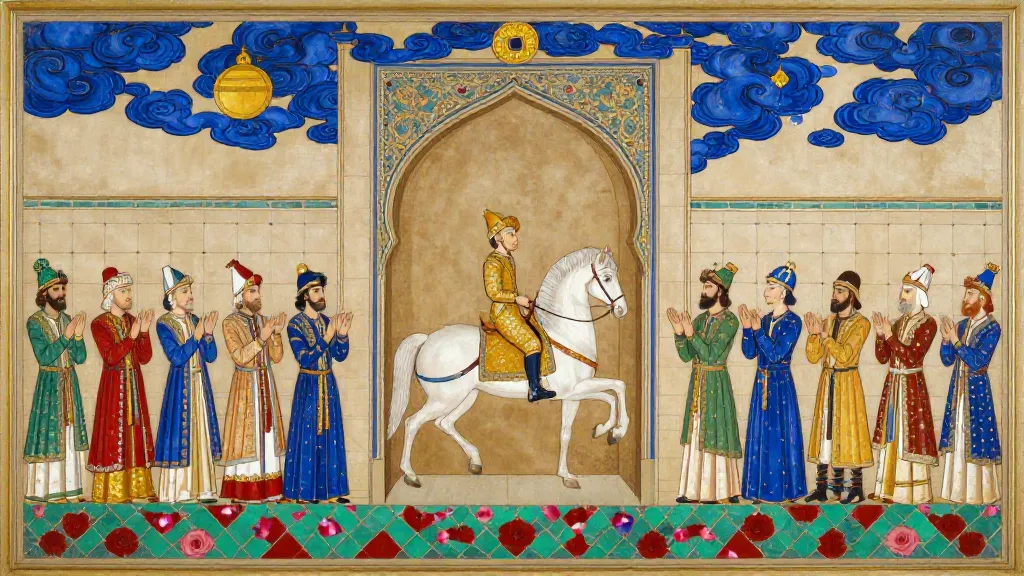
When word reached Baghdad that the heir to the throne was coming, the whole city found peace, and the ambitious prince gained what he sought from their calm. The great men of the city came out to meet him — all who had a share in authority. They set out an ivory throne upon the terrace, along with a golden torque and a splendid crown.

Khosrow entered the city with a heavy heart. He went to his father with cold sighs.

Notes

1personگستهمGostaham

Khosrow's maternal uncle. One of the conspirators who deposed Hormozd IV.

2personبندویBanduy

Khosrow's other maternal uncle. Co-conspirator with Gostaham in the palace coup.

3place

One of the three great sacred fires of Zoroastrian Iran, associated with the warrior class, located at Takht-e Soleyman in Azerbaijan.

4personخسروKhosrow

Khosrow II Parviz (r. 590–628 AD), son of Hormozd IV, the last great Sasanian king.

5place

Here used loosely for the capital region. The Sasanian capital was Ctesiphon (Tisfun), near modern Baghdad.

6personهرمزدHormozd

Hormozd IV, who had been blinded and deposed by the nobles Gostaham and Banduy.

7place

City in the Caucasus (modern Barda, Azerbaijan), a major military center.

8place

City in northwestern Iran (modern Ardabil), center of Azerbaijan province.

9place

The Armenian territories under Sasanian suzerainty.

10personهرمزدHormozd

Hormozd IV, now blinded and imprisoned.

تاجگذاری خسرو و خطبه‌ی عدالت

Khosrow's Coronation and Speech of Justice

چه جوییم زین گنبد تیزگرد که هرگز نیاساید از کارکرد یکی راهمی تاج شاهی دهد یکی را بدریا بماهی دهد یکی را برهنه سروپای و سفت نه آرام و خواب و نه جای نهفت یکی را دهد توشه‌ی شهد و شیر بپوشد بدیبا و خز و حریر سرانجام هردو بخاک اندرند بتارک بدام هلاک اندرند اگر خود نزادی خردمند مرد ندیدی ز گیتی چنین گرم و سرد ندیدی جهان ازبنه به بدی اگر که بدی مرد اگر مه بدی کنون رنج در کارخسرو بریم بخواننده آگاهی نو بریم چو خسرو نشست از برتخت زر برفتند هرکس که بودش هنر گرانمایگان را همه خواندند بر آن تاج نو گوهر افشاندند به موبد چنین گفت کاین تاج وتخت نیابد مگر مردم نیک بخت مبادا مرا پیشه جز راستی که بیدادی آرد همه کاستی ابا هرکسی رای ما آشتیست ز پیکار کردن سرماتهیست ز یزدان پذیرفتم این تخت نو همین روشن و مایه وربخت نو شما نیز دلها بفرمان دهید بهرکار بر ما سپاسی نهید از آزردن مردم پارسا و دیگر کشیدن سر از پادشا سوم دور بودن ز چیز کسان که دودش بود سوی آنکس رسان که درگاه و بی‌گه کسی رابسوخت ببی مایه چیزی دلش برفروخت دگر هرچ در مردمی در خورد مر آن را پذیرنده باشد خرد نباشد مرا باکسی داوری اگر تاج جوید گر انگشتری کرا گوهر تن بود با نژاد نگوید سخن با کسی جز بداد نباشد شما را جز از ایمنی هرآنکس که بشنید گفتار شاه همی آفرین خواند برتاج و گاه برفتند شاد از بر تخت او بسی آفرین بود بر بخت او

What do we seek from this swift-turning dome of heaven, which never rests from its labor? To one it grants a royal crown; another it casts to the fish at the bottom of the sea. One man goes barefoot and bare-shouldered, with no rest, no sleep, no shelter. Another is given honey and milk for his portion, and is clothed in silk and brocade and fur. In the end both lie in the earth, both caught in the snare of death. If only the wise man had never been born, he would not have seen such heat and cold from the world. The world has never been better than this, whether one is great or small.

Now let us take up the labor of Khosrow's story and bring fresh tidings to the reader.

When Khosrow sat upon the golden throne, all men of ability came forward. The notables were summoned, and they scattered jewels over the new crown. Khosrow addressed the chief priest: "This crown and throne come only to the fortunate. May my only habit be justice, for injustice brings nothing but ruin. With all men our policy is peace; our mind is empty of any desire for war. I have received this new throne from God, along with this bright and bountiful new fortune. You too — give your hearts over to obedience, and in every matter show us gratitude."

He then set out three warnings: "First, do not torment a pious man. Second, do not withdraw your neck from the king's authority. Third, keep far from other men's property, for its smoke reaches the one who in season and out of season burns another, whose heart is inflamed over a worthless thing. And whatever else befits humanity — let reason accept it. I will hold no quarrel with any man, whether he seeks a crown or a ring. Whoever has noble lineage to match his nature will speak to no one except with justice. You shall have nothing from me but safety."

All who heard the king's words called down blessings upon his crown and throne. They departed in joy, and many blessings were spoken over his fortune.

Notes

1personموبدMobad

A Zoroastrian high priest (موبد); chief religious authority at court.

دیدار خسرو با هرمزد کور

Khosrow Visits His Blinded Father

سپهبد فرود آمد از تخت شاد همه شب ز هرمز همی‌کرد یاد چو پنهان شد آن چادر آبنوس بگوش آمد از دوربانگ خروش جهانگیر شد تابنزد پدر نهانش پر ازدرد وخسته جگر چو دیدش بنالید و بردش نماز همی‌بود پیشش زمانی دراز بدو گفت کای شاه نابختیار ز نوشین روان در جهان یادگار تو دانی که گر بودمی پشت تو بسوزن نخستی سر انگشت تو نگر تا چه فرمایی اکنون مرا غم آمد تو را دل پر از خون مرا گر ای دون که فرمان دهی بر درت یکی بنده‌ام پاسبان سرت نجویم کلاه و نخواهم سپاه ببرم سرخویش در پیش شاه بدو گفت هر مزد ای پرخرد همین روز سختی ز من بگذرد مرا نزد تو آرزو بد سه چیز برین بر فزونی نخواهیم نیز یکی آنک شبگیر هر بامداد کنی گوش ما را به آواز شاد و دیگر سواری ز گردنکشان که از رزم دیرینه دارد نشان بر من فرستی که از کارزار سخن گوید و کرده باشد شکار دگر آنک داننده مرد کهن که از شهریاران گزارد سخن نوشته یکی دفتر آرد مرا بدان درد و سختی سرآرد مرا سیم آرزوی آنک خال تواند پرستنده و ناهمال تواند نبینند زین پس جهان را بچشم بریشان برانی برین سوک خشم بدو گفت خسرو که ای شهریار مباد آنک برچشم تو سوکوار نباشد و گرچه بود درنهان که بدخواه تو دور بادازجهان ولیکن نگه کن بروشن روان که بهرام چو بینه شد پهلوان سپاهست با او فزون از شمار سواران و گردان خنجرگزار اگر ما بگستهم یازیم دست بگیتی نیابیم جای نشست دگر آنک باشد دبیر کهن که برشاه خواند گذشته سخن سواری که پرورده باشد برزم بداند همان نیز آیین بزم ازین هر زمان نو فرستم یکی تو با درد پژمان مباش اندکی مدان این زگستهم کاین ایزدیست ز گفتار و کردار نابخردیست دل تو بدین درد خرسند باد همان با خرد نیز پیوند باد بگفت این و گریان بیامد زپیش نکرد آشکارا بکس راز خویش پسر مهربان‌تر بد از شهریار بدین داستان زد یکی هوشیار که یار زبان چرب و شیرین سخن که از پیر نستوه گشته کهن هنرمند گر مردم بی‌هنر بفرجام هم خاک دارد ببر

The king came down from the throne in gladness, but all night he thought of Hormozd. When the ebony curtain of night was drawn away and the cry of the rooster was heard from afar, he went to his father's side — outwardly composed, but inwardly full of grief, his heart broken.

When he saw his father, he cried out and bowed before him, and remained in his presence a long time. He said: "O king of ill fortune, heir of Anushirvan in this world — you know that had I been your support, no one would have pricked even your fingertip with a needle. Tell me now what you command of me. Grief has come to you, and my heart is full of blood for your sake. If you so order, I will stand at your gate — a slave and a guardian of your person. I seek no crown, I ask for no army. I would lay down my own head before the king."

Hormozd answered: "O wise son, this harsh day will pass from me. In your presence I have three wishes, and beyond these I will ask for nothing more. First, that each morning at dawn you gladden my ears with a cheerful voice. Second, that you send me a veteran horseman from among the warriors — one who has seen old battles and can speak of war, and who has hunted game. Third, that you send a learned old man who can tell tales of kings, who will bring me a written book so that I may pass the time through my pain and hardship."

Then a third wish: "Your maternal uncles — they are servants and no equals of yours. Let them never again look upon the world. Pour your wrath upon them for this deed of mourning."

Khosrow replied: "O king, may no grief come before your eyes. It shall not be — or if it is, it shall be hidden, for may your enemy be far from the world. But consider with a clear mind: Bahram Chobin has become the champion. He has an army beyond counting — horsemen and warriors wielding swords. If we raise our hand against Gostaham, we will find no place to stand in all the world."

As for the other requests — a veteran scribe to read tales of old kings, a horseman trained in war who knows also the ways of the feast — "I will send you a new one at every turn. Do not sit in grief, not even a little. Do not blame Gostaham for this. It was God's doing, born of foolish speech and action. May your heart be content with this sorrow, and may it keep its bond with wisdom."

He spoke these words and came away weeping, and revealed his secrets to no one. The son was more compassionate than the king himself. On this matter a wise man told a parable: that the companion of smooth tongue and sweet speech, who has grown stubborn and old — whether he be a man of talent or one without it — in the end, all have the earth for their embrace.

Notes

1personهرمزدHormozd

Hormozd IV, Khosrow's father, deposed and blinded.

2personنوشین روانAnushirvan

Khosrow I Anushirvan ('of the Immortal Soul'), Khosrow II's grandfather, remembered as the ideal Sasanian king.

3context

Gostaham and Banduy, who blinded Hormozd. The deposed king demands their punishment.

4personبهرام چوبینBahram Chobin

Bahram VI, a general of non-royal Mihranid lineage who revolted against Hormozd IV and then against Khosrow II, briefly seizing the throne (r. 590–591 AD). His epithet 'Chobin' means 'lance-like' or 'wooden.'

لشکرکشی بهرام و جاسوسان خسرو

Bahram Marches and Khosrow Sends Spies

چوبشنید بهرام کز روزگار چه آمد بران نامور شهریار نهادند بر چشم روشنش داغ بمرد آن چراغ دو نرگس بباغ پسر برنشست از بر تخت اوی بپا اندر آمد سر وبخت اوی ازان ماند بهرام اندر شگفت بپژمرد واندیشه اندر گرفت بفرمود تا کوس بیرون برند درفش بزرگی به هامون برند بنه برنهاد وسپه برنشست بپیکار خسرو میان را ببست سپاهی بکردار کوه روان همی‌راند گستاخ تا نهروان چوآگاه شد خسرو از کاراوی غمی گشت زان تیز بازار اوی که تا بازجویند کارجهان به کارآگهان گفت راز ازنخست زلشکر همی‌کرد باید درست که بااو یکی اند لشکر به جنگ وگر گردد این کار ما با درنگ دگر آنک بهرام در قلبگاه بود بیشتر گر میان سپاه چگونه نشیند بهنگام بار برفتن کند هیچ رای شکار برفتند کارآگهان از درش نبود آگه از کار وز لشکرش چو رفتند و دیدند و بازآمدند نهانی بر او فراز آمدند که لشکر بهرکار با اویکیست اگر نامدارست وگر کودکیست هرانگه که لشکر براند به راه بود یک زمان در میان سپاه زمانی شود بر سوی میمنه گهی بر چپ و گاه سوی بنه همه مردم خویش دارد براز بکردار شاهان نشیند ببار همان در در و دشت جوید شکار چواز رزم شاهان نراند همی همه دفتر دمنه خواهد همی چنین گفت خسرو بدستور خویش که کاری درازست ما را به پیش چو بهرام بر دشمن اسپ افکند بدریا دل اژدها بشکند دگر آنک آیین شاهنشهان بیاموخت از شهریار جهان سیم کش کلیله است ودمنه وزیر چون او رای زن کس ندارد دبیر

When Bahram heard what fortune had brought upon that famous king — that they had set a brand upon his bright eyes and that the light of those two narcissus-lamps in the garden had died; that the son had mounted his throne and his power and fortune had risen — Bahram was struck with wonder. He grew troubled and fell into thought.

He ordered the war-drums brought out and the great banner carried onto the plain. He loaded the baggage train, mounted his army, and girded himself for war against Khosrow. His host moved like a mountain on the march, advancing boldly to Nahravan.

When Khosrow learned of his movements, he grew anxious at Bahram's fierce aggression. He told his intelligence agents in private: "You must learn the state of the world from his army. Find out whether they are united with him in battle, or whether this campaign of ours will drag on. Also find out whether Bahram keeps to the center of his line or moves about within the army. How does he sit when he holds court? Does he ever go hunting?"

The agents went out from his gate — Bahram knew nothing of their mission or his own army's secrets. When they had gone and observed and returned, they came to the king in private and reported: "The army is with him in every matter, whether its men are famous or unknown. When he marches, he spends one moment in the center, then moves to the right wing, then to the left, then over to the baggage train. He keeps his own men close to him in confidence. He holds court in the manner of kings. He hunts across plain and mountain. And when he is not speaking of royal battles, he calls for the book of Kalila and Dimna."

Khosrow said to his counselor: "The task before us is long. When Bahram charges an enemy, he breaks the dragon's heart even in the sea. Moreover, he has learned the customs of kings from the king of the world himself. And third, his minister is Kalila and Dimna — no scribe has a counselor so shrewd."

Notes

1personبهرامBahram

Bahram Chobin. See section 3, note 4.

2place

A canal and district east of Ctesiphon, site of the confrontation between Khosrow and Bahram.

3context

The famous book of animal fables, originally Sanskrit (Panchatantra), translated into Middle Persian and then Arabic. That Bahram reads it suggests his skill in political cunning and statecraft.

شورای جنگ و پیشنهاد صلح

The War Council and Khosrow's Offer of Peace

ازان پس ببندوی و گستهم گفت که ما با غم و رنج گشتیم جفت چوگردوی و شاپور و چون اندیان نشستند با شاه ایران براز چنین گفت خسرو بدان مهتران که ای سرفرازان و جنگ آوران هرآن مغز کو را خرد روشنست زدانش یکی بر تنش جوشنست کس آنرا نبرد مگر تیغ مرگ شود موم ازان زخم پولاد ترگ کنون من بسال ازشما کهترم برای جوانی جهان نسپرم بگویید تا چاره‌ی کارچیست بران خستگیها پرآزار کیست بدو گفت موبد انوشه بدی همه مغز را فر وتوشه بدی چوپیدا شد این راز گردنده دهر خرد را ببخشید بر چاربهر چونیمی ازو بهره‌ی پادشاست که فر و خرد پادشا را سزاست دگر بهره‌ی مردم پارسا چو نزدیک باشد بشاه جهان خرد خویشتن زو ندارد نهان کنون از خرد پاره‌یی ماند خرد که دانا ورا بهر دهقان شمرد خرد نیست با مردم ناسپاس نه آنرا که او نیست یزدان شناس اگر بشنود شهریار این سخن که گفتست بیدار مرد کهن بدو گفت شاه این سخن گر بزر نویسم جز این نیست آیین و فر سخن گفتن موبدان گوهرست مرا در دل اندیشه دیگرست که چون این دو لشکر برابر شود سر نیزه‌ها بر دو پیکر شود نباشد مرا ننگ کز قلبگاه برانم شوم پیش او بی‌سپاه بخوانم به آواز بهرام را سپهدار بدنام خودکام را یکی ز آشتی روی بنمایمش نوازمش بسیار و بستایمش اگر خود پذیرد سخن به بود که چون او بدرگاه برکه بود وگر جنگ جوید منم جنگ جوی سپه را بروی اندر آریم روی همه کاردانان بدین داستان کجا گفت گشتند همداستان بزرگان برو آفرین خواندند ورا شهریار زمین خواندند همی‌گفت هرکس که ای شهریار زتو دور بادا بد روزگار تو را باد پیروزی و فرهی بزرگی و دیهیم شاهنشهی چنین گفت خسرو که این باد وبس شکست و جدایی مبیناد کس

Then Khosrow said to Banduy and Gostaham: "We have become partners with grief and hardship." He summoned Gorduy, Shapur, and Andian, and they sat with the king of Iran in private council.

Khosrow addressed the assembled lords: "O proud and battle-tested men — every mind illuminated by wisdom wears knowledge as armor upon its body. Nothing pierces that armor except the sword of death, before whose blow even a steel helm turns to wax. Now, I am younger than all of you in years, and in the rashness of youth I have not traveled the world. Speak — what is the remedy for our situation? Who among us is most aggrieved by these wounds?"

The chief priest answered: "May you live forever. May your mind be all light and sustenance. When the secret of the turning world was revealed, wisdom was divided into four portions. Nearly half belongs to the king, for glory and wisdom befit a king. The next portion belongs to the pious man. When such a man stands near the king of the world, wisdom does not hide itself from him. Now a smaller share remains, which the learned have reckoned as the portion of the landholder. Wisdom does not dwell with the ungrateful, nor with him who does not know God. If the king will hear these words that a wakeful old man has spoken —"

The king replied: "If I were to write these words in gold, there would be no finer creed. The speech of priests is a jewel. But I have another thought in my mind. When these two armies face each other and the spear-points are set against both sides, I would not think it shameful if I were to ride out from my own battle-line and go before Bahram without an army. I would call out to Bahram — that ill-famed, self-serving commander — and show him a face of peace. I would praise him generously and treat him with kindness. If he accepts my words, so much the better — who could serve more usefully at court than he? But if he seeks war, then I too am a seeker of war, and we will bring our armies face to face."

All the counselors agreed to this plan. The great men called down blessings upon him and named him lord of the earth. Everyone said: "O king, may the evil of time be far from you. May victory and glory be yours, along with greatness and the royal diadem."

Khosrow said: "May this be so, and may no one see defeat or separation."

Notes

1personگردویGorduy

A commander and advisor in Khosrow's entourage.

2personشاپورShapur

A nobleman in Khosrow's inner council.

3context

The landed gentry (دهقان, dehqan) of Sasanian Iran; local aristocrats who preserved Persian culture and tradition.

رویارویی در نهروان

The Confrontation at Nahravan

سپه را ز بغداد بیرون کشید سراپرده‌ی نور به هامون کشید دو لشکر چو تنگ اندر آمد به راه ازان روسپهبد وزین روی شاه چوشمع جهان شد بخم اندرون بیفشاند زلف شب تیره گون که دارد زبدخواه خود را نگاه چو از خنجر روز بگریخت شب همی‌تاخت سوزان دل وخشک لب تبیره برآمد زهر دو سرای بدان رزم خورشید بد رهنمای بگستهم وبندوی فرمود شاه که تا برنهادند زآهن کلاه چنین با بزرگان روشن روان همی‌راند تا چشمه‌ی نهروان طلایه ببهرام شد ناگزیر که آمد سپه بر دو پرتاب تیر چوبشنید بهرام لشکر براند جهاندیدگان را برخویش خواند نشست از برابلق مشک دم خنیده سرافراز رویینه سم سلیحش یکی هندوی تیغ بود که درزخم چون آتش میغ بود چوبرق درفشان همی‌راند اسپ بدست چپش ریمن آذرگشسپ چو آیینه گشسپ ویلان سینه نیز برفتند پرکینه و پرستیز سه ترک دلاور ز خاقانیان بران کین بهرام بسته میان پذیرفته هر سه که چون روی شاه ببینیم دور ازمیان سپاه بیاریم و آسوده شد لشکرت زیک روی خسرو دگر پهلوان میان اندرون نهروان روان نظاره بران از دو رویه سپاه که تا پهلوان چون رود نزد شاه رسیدند بهرام و خسرو بهم گشاده یکی روی و دیگر دژم نشسته جهاندار بر خنگ عاج فریدون یل بود با فر وتاج زدیبای زربفت چینی قبای چو گردوی پیش اندرون رهنمای چو بندوی و گستهم بردست شاه چو خراد برزین زرین کلاه هه غرقه در آهن و سیم و زر نه یاقوت پیدانه زرین کمر چو بهرام روی شهنشاه دید شد از خشم رنگ رخش ناپدید ازان پس چنین گفت با سرکشان که این روسپی زاده‌ی بدنشان زپستی و کندی بمردی رسید توانگر شد و رزمگه برکشید بزودی سرآرم بدو برجهان ببینید لشکرش راسر به سر که تا کیست زیشان یکی نامور سواری نبینم همی رزم جوی که بامن بروی اندر آرند روی ببیند کنون کار مردان مرد تگ اسپ وشمشیر وگرز نبرد همان زخم گوپال وباران تیر خروش یلان بر ده ودار وگیر ندارد بوردگه پیل پای چومن با سپاه اندر آیم زجای ز آواز من کوه ریزان شود هژبر دلاور گریزان شود بخنجر بدریا بر افسون کنیم بیابان سراسر پرازخون کنیم بگفت و برانگیخت ابلق زجای توگفتی شد آن باره پران همای یکی تنگ آورد گاهی گرفت بدو مانده بد لشکر اندر شگفت ز آورد گه شد سوی نهروان همی‌بود بر پیش فرخ جوان تنی چند با او ز ایرانیان همه بسته برجنگ خسرو میان چنین گفت خسرو که ای سرکشان ز بهرام چوبین که دارد نشان بدو گفت گردوی کای شهریار نگه کن بران مرد ابلق سوار قبایش سپید و حمایل سیاه همی‌راند ابلق میان سپاه جهاندار چون دید بهرام را بدانستش آغاز و فرجام را چنین گفت کان دودگون دراز نشسته بران ابلق سرفراز بدو گفت گردوی که آری همان نبردست هرگز به نیکی گمان چنین گفت کز پهلو کوژپشت بپرسی سخن پاسخ آرد درشت همان خوک بینی و خوابیده چشم دل آگنده دارد تو گویی بخشم بدیده ندیدی مر او را بدست کجا در جهان دشمن ایزدست نبینم همی در سرش کهتری نیابد کس او را بفرمانبری

He drew his army out of Baghdad and pitched his bright pavilion on the plain. The two armies drew close upon the road — the commander on one side, the king on the other.

When the candle of the world sank below the horizon and the dark-haired night shook loose its tresses, both sides kept watch against the enemy. When the sword of daylight put the night to flight, hearts burning and lips dry, the war-drums sounded from both camps, and the sun showed the way to battle.

The king commanded Gostaham and Banduy to put on their iron helms. With his great lords, clear of mind, he rode to the banks of the Nahravan canal. Bahram's scouts reported without delay that the opposing army had come within two arrow-flights.

When Bahram heard this, he marshaled his forces and summoned his veteran warriors. He mounted his piebald, musk-breathed horse — the famous, proud steed with hooves of steel. His only weapon was an Indian sword whose blow fell like fire from a thundercloud. He rode his horse like a flashing bolt of lightning. At his left hand was the villainous Azargushasp, and with him rode Ayineh-Gushasp and Yilan-Sineh, full of hatred and fury. Three bold Turks of the Khaqan's line had bound their waists to Bahram's cause, and all three had sworn that if they could catch sight of the king away from the main body of the army, they would seize him and put Bahram's forces at ease.

On one side stood Khosrow, on the other the champion, with the waters of Nahravan flowing between them. Both armies watched from their positions on either bank to see how the champion would approach the king.

Bahram and Khosrow came face to face — one with an open countenance, the other grim. The lord of the world sat upon his white-as-ivory horse, and he looked like Feridun the hero, crowned in glory. He wore a robe of gold-woven Chinese brocade, with Gorduy riding before him as guide. On the king's right hand were Banduy and Gostaham, and Khorrad-Borzin in his golden helm. All were clad head to foot in iron, silver, and gold — neither rubies nor golden belts could be distinguished amid the splendor.

When Bahram caught sight of the king, his face flushed with rage and his color vanished. He turned to his warriors and said: "This baseborn wretch of evil mark — from lowliness and weakness he has risen to manhood, grown rich, and drawn up a battle line. I will swiftly bring his world to an end. Look over his army from head to tail — is there even one famous man among them? I see no war-seeking horseman who would dare face me. He will now see the work of real men: the charge of horses, the flash of swords, the stroke of maces. He will see the rain of arrows, the roar of warriors, the seize and slaughter. No elephant can hold its ground in the arena when I come at it with my army. At my war-cry the mountains crumble, and the bold lion flees. With our swords we will cast spells upon the sea and fill the desert from end to end with blood."

He spoke, and spurred his piebald forward — you would have said the horse was a soaring huma-bird. He seized a narrow stretch of the battleground, and his army watched him in astonishment. He rode from the field to the bank of the Nahravan and halted before the young prince.

With him were a handful of Iranians who had girded themselves for war against Khosrow.

Khosrow said: "O proud warriors, who among you knows Bahram Chobin?" Gorduy answered: "O king, look at that man on the piebald horse — white tunic, black sword-belt, riding his piebald through the ranks."

The lord of the world looked upon Bahram and understood his beginning and his end. He said: "That long, dark-complexioned man, sitting tall on his piebald?" Gorduy replied: "The very same. He has never once inclined toward goodness."

Khosrow said: "If you question this crooked-backed warrior, he will return a harsh answer. That pig-nosed, sleepy-eyed man — you would think his heart was stuffed full of rage. Have you ever seen what he holds in his hand? He is the enemy of God in this world. I see no trace of humility in his head. No one will ever bring him to obedience."

Notes

1personبهرام چوبینBahram Chobin

Bahram Chobin, referred to here as 'the commander' (سپهبد).

2personآذرگشسپAzargushasp

One of Bahram's lieutenants (not the fire temple; a warrior sharing the name).

3personآیینه گشسپ و یلان سینهAyineh-Gushasp and Yilan-Sineh

Warriors in Bahram's retinue.

4context

Turkic warriors allied with Bahram, from the family of the Khaqan (supreme ruler of the Turkic confederation).

5personفریدونFeridun

Legendary king of Iran from the mythical age of the Shahnameh, famed for overthrowing the tyrant Zahhak. A byword for royal splendor.

6personخراد برزینKhorrad-Borzin

A nobleman in Khosrow's retinue.

7context

A mythical bird (همای) in Persian tradition; its shadow falling on a person was said to confer kingship.

گفتگوی خسرو و بهرام — صلح و توهین

The Parley — Khosrow's Peace Offer and Bahram's Insults

ازان پس به بندوی و گستهم گفت که بگشایم این داستان از نهفت که گر خر نیاید به نزدیک بار توبار گران را بنزد خر آر چو بفریفت چوبینه را نره دیو کجا بیند او راه گیهان خدیو هرآن دل که از آز شد دردمند نیایدش کار بزرگان پسند جز از جنگ چو بینه را رای نیست به دل‌ش اندرون داد را جای نیست چوبر جنگ رفتن بسی شد سخن نگه کرد باید ز سر تا ببن که داندکه در جنگ پیروز کیست بدان سردگر لشکر افروز کیست برین گونه آراسته لشکری بپرخاش بهرام یل مهتری دژاگاه مردی چو دیو سترگ سپاهی بکردار درنده گرگ گر ای دون که باشیم همداستان نباشد مرا ننگ زین داستان بپرسش یکی پیش دستی کنم ازان به که در جنگ سستی کنم اگر زو بر اندازه یابم سخن نوآیین بدیهاش گردد کهن زگیتی یکی گوشه اورا دهم سپاسی ز دادن بدو برنهم همه آشتی گردد این جنگ ما برین رزمگه جستن آهنگ ما مرا ز آشتی سودمندی بود خرد بی‌گمان تاج بندی بود چو بازارگانی کند پادشا ازو شاد باشد دل پارسا بدو گفت گستهم کای شهریار انوشه بدی تا بود روزگار همی گوهر افشانی اندر سخن تو داناتری هرچ باید بکن تو پردادی و بنده بیدادگر توپرمغزی و او پر از باد سر چوبشنید خسرو بپیمود راه خرامان بیامد به پیش سپاه بپرسید بهرام یل را ز دور همی‌جست هنگامه‌ی رزم سور ببهرام گفت ای سرافراز مرد چگونست کارت به دشت نبرد تودرگاه را همچو پیرایه‌ای همان تخت ودیهیم را مایه‌ای ستون سپاهی بهنگام رزم چوشمع درخشنده هنگام بزم جهانجوی گردی و یزدان پرست مداراد دارنده باز از تودست سگالیده‌ام روزگار تو را بخوبی بسیجیده کارتو را تو را با سپاه تو مهمان کنم زدیدار تو رامش جان کنم سپهدار ایرانت خوانم بداد کنم آفریننده را بر تو یاد سخنهاش بشنید بهرام گرد عنان باره‌ی تیزتگ را سپرد هم از پشت آن باره بردش نماز همی‌بود پیشش زمانی دراز چنین داد پاسخ مر ابلق سوار که من خرمم شاد وبه روزگار تو را روزگار بزرگی مباد نه بیداد دانی ز شاهی نه داد الان شاه چون شهریاری کند ورا مرد بدبخت یاری کند تو را روزگاری سگالیده‌ام بزودی یکی دار سازم بلند دو دستت ببندم بخم کمند بیاویزمت زان سزاوار دار ببینی ز من تلخی روزگار چو خسرو ز بهرام پاسخ شنید برخساره شد چون گل شنبلید چنین داد پاسخ که ای ناسپاس نگوید چنین مرد یزدان شناس چو مهمان بخوان توآید ز دور تو دشنام سازی بهنگام سور نه آیین شاهان بود زین نشان نه آن سواران گردنکشان نه تازی چنین کرد ونه پارسی اگر بشمری سال سدبار سی ازین ننگ دارد خردمند مرد بگرد در ناسپاسی مگرد چو مهمانت آواز فرخ دهد برین گونه بر دیو پاسخ دهد بترسم که روز بد آیدت پیش که سرگشته بینمت بر رای خویش تو را چاره بر دست آن پادشاست که زندست جاوید وفرانرواست تن اندر نکوهش دل اندر هراس مرا چون الان شاه خوانی همی زگوهر بیک سوم دانی همی نزیباست برمن کلاه مهی چون کسری نیا وچوهرمز پدر کرا دانی ازمن سزاوارتر

Then Khosrow said to Banduy and Gostaham: "Let me lay open this parable plainly. If the donkey will not come to the load, you must bring the heavy load to the donkey. The raging demon has deceived Chobin — how can he see the path of the Lord of the World? Every heart that is made sick by greed finds no favor in the eyes of the great. Chobin has no inclination except war; in his heart there is no place for justice."

"Much has been said about going to battle. But we must consider from top to bottom: who knows which side will be victorious? Who knows whose will be the army that prevails? Against a battle-line arrayed like this, under a champion like Bahram — a fearsome man, huge as a demon, with an army like ravenous wolves — if we agree, it will be no disgrace for me to take the initiative with an offer of parley rather than show weakness in battle. If I get a measured answer from him, his old habit of evil will give way to a new path. I will give him a province of the world and lay upon him a debt of gratitude. All our war will turn to peace, and our design upon this battlefield will change. From peace I will profit; wisdom without doubt crowns a man. When a king acts like a merchant, the pious man's heart is glad."

Gostaham said: "O king, may you live as long as time endures. You scatter jewels in your speech. You are the wiser — do what must be done. You are all justice, and your slave is all injustice. You are full of substance, and he is full of wind."

When Khosrow heard this, he made his way forward and rode gracefully before the army. He greeted Bahram from a distance, seeking the right moment for a contest or a feast.

He called out to Bahram: "O proud warrior, how goes it with you on the field of battle? You are an ornament to the court, the very foundation of the throne and crown. You are the pillar of the army in time of war, a shining candle in time of celebration. You are a world-seeking hero, a worshipper of God — may the Creator never withdraw his hand from you. I have considered your situation and have arranged your affairs with goodwill. I would make you and your army my honored guests. The sight of you would bring joy to my soul. I would call you, by right, the commander of Iran, and invoke God's blessing upon you."

Bahram the warrior heard these words. He reined in his swift horse and bowed from the saddle, and remained before Khosrow in reverence for a long time.

Then the rider of the piebald gave his answer: "I am content, in good spirits, and blessed by fortune. But may you never know a day of greatness. You know neither justice nor injustice in kingship. When an Alan shah plays at being king, only a wretched man serves as his ally. I have laid my own plans for your fate. I will soon raise a tall gallows, bind your two hands with the loop of a lasso, and hang you from that well-deserved scaffold. You will taste the bitterness of time at my hands."

When Khosrow heard Bahram's reply, his face turned yellow as a marigold. He answered: "O ungrateful wretch — no God-fearing man speaks this way. When a guest comes to your table from far away, you return insults instead of a feast. This is not the custom of kings, nor the way of proud horsemen. Neither Arab nor Persian has ever done so, not in three thousand years of counting. A wise man holds this a disgrace — do not go circling the door of ingratitude. When your guest calls out to you in good faith and you give back the answer of a demon, I fear an evil day will come upon you, for I see you spinning lost in your own judgment. Your remedy lies in the hand of the king who lives forever and whose grace abides."

"Your body is in reproach, your heart in dread. You call me an Alan shah — you count me outside my own lineage. The crown of greatness does not become me? With Khosrow for a grandfather and Hormozd for a father, who do you know more worthy than I?"

Notes

1context

A nomadic Iranian-speaking people of the Caucasus. Bahram uses 'Alan shah' as an insult, implying Khosrow's mother was of Alan (i.e., barbarian) origin.

2personخسروKhosrow (I Anushirvan)

Here referring to Khosrow I Anushirvan, Khosrow II's grandfather.

نبرد سخن — خسرو و بهرام

The War of Words — Khosrow and Bahram's Final Exchange

ورا گفت بهرام کای بدنشان به گفتار و کردار چون بیهشان نخستین ز مهمان گشادی سخن تو را با سخنهای شاهان چه کار نه فرزانه مردی نه جنگی سوار الان شاه بودی کنون کهتری هم ازبنده‌ی بندگان کمتری گنه کارتر کس توی درجهان نه شاهی نه زیباسری ازمهان بشاهی مرا خواندند آفرین نمانم که پی برنهی برزمین دگرآنک گفتی که بداختری نزیبد تو را شاهی و مهتری ازان گفتم ای ناسزاوار شاه که هرگز مبادی تو درپیش گاه که ایرانیان بر تو بر دشمنند بکوشند و بیخت زبن برکنند بدرند بر تنت بر پوست ورگ سپارند پس استخوانت بسگ بدو گفت خسرو که‌ای بدکنش چراگتشه‌ای تند وبرتر منش که آهوست بر مرد گفتار زشت تو را اندر آغاز بود این سرشت ز مغز تو بگسست روشن خرد خنک نامور کو خرد پرودرد هرآن دیو کاید زمانش فراز زبانش به گفتار گردد دراز نخواهم که چون تو یکی پهلوان بتندی تبه گردد و ناتوان سزد گر ز دل خشم بیرون کنی نجوشی وبر تیزی افسون کنی ز دارنده‌ی دادگر یادکن خرد را بدین یاد بنیاد کن یکی کوه داری بزیر اندورن که گر بنگری برتر از بیستون گر از تو یکی شهریار آمدی مغیلان بی‌بر ببار آمدی تو را دل پراندیشه مهتریست ببینیم تا رای یزدان بچیست ندانم که آمختت این بد تنی تو را با چنین کیش آهرمنی هران کاین سخن با تو گوید همی به گفتار مرگ تو جوید همی بگفت وفرود آمد از خنگ عاج ز سر بر گرفت آن بهاگیر تاج بنالید و سر سوی خورشید کرد زیزدان دلش پرزامید کرد چنین گفت کای روشن دادگر درخت امید از تو آید ببر تو دانی که بر پیش این بنده کیست کزین ننگ بر تاج باید گریست وزانجا سبک شد بجای نماز همی‌گفت با داور پاک راز گر این پادشاهی زتخم کیان بخواهد شدن تا نبندم میان نخواهم خورش جز زشیر دده ندارم به گنج اندرون زر وسیم بگاه پرستش بپوشم گلیم گر ای دون که این پادشاهی مراست پرستنده و ایمن و داد و راست تو پیروز گردان سپاه مرا به بنده مده تاج وگاه مرا اگرکام دل یابم این تاج واسپ بیارم دمان پیش آذرگشسپ همین یاره وطوق واین گوشوار همین جامه‌ی زر گوهرنگار همان نیزده بدره دینار زرد فشانم برین گنبد لاژورد پرستندگان رادهم ده هزار درم چون شوم برجهان شهریار زبهرامیان هرک گردد اسیر به پیش من آرد کسی دستگیر پرستنده فرخ آتش کنم دل موبد و هیربد خوش کنم بگفت این وز خاک برپای خاست ستمدیده گوینده‌ی بود راست زجای نیایش بیامد چوگرد به بهرام چوبینه آواز کرد که‌ای دوزخی بنده‌ی دیو نر خرد دور و دور از تو آیین وفر ستمگاره دیویست با خشم و زور کزین گونه چشم تو را کرد کور بجای خرد خشم و کین یافتی زدیوان کنون آفرین یافتی تو را خارستان شارستانی نمود یکی دوزخی بوستانی نمود چراغ خرد پیش چشمت بمرد زجان و دلت روشنایی ببرد نبودست جز جادوی پرفریب که اندر بلندی نمودت نشیب بشاخی همی یازی امروز دست که برگش بود زهر وبارش کبست نجستست هرگز تبار تواین نباشد بجوینده بر آفرین تو را ایزد این فر و برزت نداد نیاری ز گرگین میلاد یاد ایا مرد بدبخت وبیدادگر که خرچنگ رانیست پرعقاب نپرد عقاب از بر آفتاب به یزدان پاک وبتخت وکلاه که گر من بیابم تو را بی‌سپاه اگر برزنم بر تو برباد سرد ندارمت رنجه زگرد نبرد سخنها شنیدیم چندی درشت به پیروزگر بازهشتیم پشت اگر من سزاوار شاهی نیم مبادا که در زیر دستی زیم چنین پاسخش داد بهرام باز که ای بی خرد ریمن دیوساز پدرت آن جهاندار دین دوست مرد که هرگز نزد برکسی باد سرد چنو مرد را ارج نشناختی پس او جهاندار خواهی بدن خردمند و بیدار خواهی بدن تو ناپاکی و دشمن ایزدی نبینی زنیکی دهش جزبدی گر ای دون که هرمزد بیداد بود زمان و زمین زو بفریاد بود تو فرزند اویی نباشد سزا به ایران و توران شده پادشا تو را زندگانی نباید نه تخت یکی دخمه یی بس که دوری زبخت هم ان کین هرمز کنم خواستار دگرکاندر ایران منم شهریار کنون تازه کن برمن این داستان که از راستان گشت همداستان که تو داغ بر چشم شاهان نهی کسی کو نهد نیز فرمان دهی ازان پس بیابی که شاهی مراست ز خورشید تا برج ماهی مراست بدو گفت خسرو که هرگز مباد که باشد بدرد پدر بنده شاد نوشته چنین بود وبود آنچ بود سخن بر سخن چند باید فزود تو شاهی همی‌سازی از خویشتن که گر مرگت آید نیابی کفن بدین اسپ و برگستوان کسان یکی خسروی برزو نارسان نه خان و نه مان و نه بوم ونژاد یکی شهریاری میان پر زباد بدین لشکر و چیز ونامی دروغ نگیری بر تخت شاهی فروغ زتو پیش بودند کنداوران جهانجوی و با گرزهای گران نجستند شاهی که کهتر بدند نه اندر خور تخت و افسر بدند همی هرزمان سرفرازی بخشم همی آب خشم اندرآری بچشم بجوشد همی برتنت بدگمان زمانه بخشم آردت هر زمان جهاندار شاهی ز داد آفرید دگر از هنر وز نژاد آفرید بدان کس دهد کو سزاوارتر خرددارتر هم بی آزارتر الان شاه ما را پدر کرده بود کجا برمن ازکارت آزرده بود کنون ایزدم داد شاهنشهی بزرگی و تخت و کلاه مهی پذیرفتم این از خدای جهان کجا داشت تاج پدر یادگار ازان نامور پر هنر بخردان بدان دین که آورده بود از بهشت که پیغمبر آمد بلهراسپ داد پذیرفت زان پس بگشتاسپ داد هرآنکس که ما را نمودست رنج دگر آنک ازو یافتستیم گنج همه یکسر اندر پناه منند اگر دشمن ار نیک خواه منند همه بر زن وزاده بر پادشا نخوانیم کس را مگر پارسا ز شهری که ویران شداندر جهان بجایی که درویش باشد نهان توانگر کمن مرد درویش را پراگنده و مردم خویش را همه خارستانها کنم چون بهشت پر از مردم و چارپایان وکشت بمانم یکی خوبی اندر جهان که نامم‌پس از مرگ نبود نهان بیاییم و دل را تو رازو کنیم بسنجیم ونیرو ببازو کنیم چو هرمز جهاندار وباداد بود زمین و زمانه بدو شاد بود پسر بی‌گمان از پدر تخت یافت کلاه و کمر یافت و هم بخت یافت تو ای پرگناه فریبنده مرد که جستی نخستین ز هرمز نبرد نبد هیچ بد جز بفرمان تو وگر تنبل و مکر ودستان تو گر ایزد بخواهد من از کین شاه کنم بر تو خورشید روشن سیاه کنون تاج را درخور کار کیست چو من ناسزایم سزاوار کیست بدو گفت بهرام کای مرد گرد سزا آن بود کز تو شاهی ببرد چو از دخت بابک بزاد اردشیر که اشکانیان را بدی دار وگیر نه چون اردشیر اردوان را بکشت بنیرو شد و تختش آمد بمشت کنون سال چون پانسد برگذشت سر تاج ساسانیان سرد گشت کنون تخت و دیهیم را روز ماست سرو کار با بخت پیروز ماست

Bahram answered: "O wretch of evil mark, in word and deed like a madman — first you opened with talk of hospitality. What business have you with the speech of kings? You are no sage, and no warrior of note. You were an Alan shah; now you are even less — lower than a slave of slaves. You are the most guilty man in the world. You are no king, and you deserve no place among the great. They have called down royal blessings upon me. I will not let you set foot upon the earth again."

"And as for your saying I am of bad lineage and that kingship does not befit me — that is why I said it, O king unworthy of the throne, may you never stand in court again: the Iranians are your enemies. They will labor to tear your roots from the ground. They will rip skin and sinew from your body and then throw your bones to the dogs."

Khosrow replied: "O evil-natured man, why have you grown so wild and so high in your own esteem? Ugly speech is a blemish upon a man — this has been your character from the start. Bright reason has broken loose from your mind. Happy is the man of name who nurtures his wisdom. Every demon whose hour has come — his tongue grows long in speech. I would not wish that a champion such as you should be ruined by his own fury. It would be fitting if you drove anger out of your heart, if you cooled your temper and laid a spell upon your rage. Remember the just Creator. Make wisdom the foundation of this remembrance."

"You carry a mountain within you, one higher than Bisotun if you look closely. If a single king had risen from your line, even the thorny mugilan bush would have borne fruit. Your heart is full of thoughts of supremacy — let us see what God's judgment will be. I do not know who taught you this wickedness, this creed of Ahriman. Whoever speaks these words to you is seeking your death through his speech."

Khosrow finished speaking and dismounted from his ivory-white horse. He lifted the precious crown from his head. He cried out and turned his face to the sun, and filled his heart with hope in God.

He said: "O bright and just Creator, the tree of hope bears fruit from you alone. You know who stands before this servant — one over whom the crown itself ought to weep."

He went swiftly to a place of prayer and spoke his secrets to the righteous Judge: "If this kingship over the seed of Kay is destined to pass away, then I will not gird my waist for it again. I will seek no food but the milk of wild beasts. I will keep no gold or silver in my treasury. At the hour of worship I will wear only rough wool. But if this kingdom is truly mine — righteous, secure, and just — then make my army victorious. Do not give my throne and crown to a slave."

"If I obtain my heart's desire, I will bring this horse and this armor in haste before the fire of Adur Gushnasp. This bracelet, this torque, these earrings, this gold-and-jeweled robe — and also ten purses of yellow gold dinars — I will scatter before the azure dome of heaven. I will give ten thousand dirhams to the servants of the temple when I become king of the world. And whoever of Bahram's men is taken prisoner and brought captive before me — I will make him a devoted servant of the sacred fire and gladden the hearts of the priests and fire-keepers."

He spoke these words and rose from the dust — wronged, but his words were true. From the place of prayer he rode out like a whirlwind and called out to Bahram Chobin:

"O hellish slave of the male demon — wisdom is far from you, and so is every grace and custom. A tyrannical demon of wrath and force has blinded your eyes. In place of wisdom you found anger and malice; from the demons you have won your praise. A desert of thorns appeared to you as a rose garden; a pit of hell looked to you like paradise. The lamp of reason has died before your eyes and carried the light from your soul and heart. It was nothing but a sorcerer full of deceit who showed you the abyss while you stood on the height. Today you reach for a branch whose leaves are poison and whose fruit is death. Your lineage never sought this — no blessing falls on such a seeker."

"God did not give you this glory and this stature. Have you forgotten Gargin-e Milad, your ancestor? O man of ill fortune and injustice — the crab has no wing of the eagle, and the eagle does not fly above the sun."

"I swear by the pure God, by this throne and this crown: if I find you without your army, I will blow a cold wind upon you and not trouble you with the dust of battle."

"We have heard enough harsh words. We set our backs to the Victorious God. If I am not worthy of kingship, then may I never live in subjection."

Bahram answered in return: "O witless, impure, demon-serving fool — your father was a lord of the world, a pious man who never blew a cold wind upon anyone. You did not recognize the worth of such a man. And now you would be lord of the world? You would be wise and wakeful? You are impure and an enemy of God. You will see nothing from goodness-giving except evil. If Hormozd was unjust and the earth and heavens cried out against him — you are his son. It is not fitting that you should be king in Iran and Turan. You deserve neither life nor a throne — only a tomb, for you are far from fortune. I will seek vengeance for Hormozd. Moreover, I am the king in Iran."

"Now answer me this old tale, upon which the truthful have agreed: you are the one who branded the eyes of kings. And whoever gave that order, you carried it out. After all that, you will discover that kingship belongs to me — from the sun down to the sign of the Fish."

Khosrow said: "May it never be that a son takes pleasure in his father's pain. It was written thus, and what was, was. How long must words be heaped on words? You fashion yourself into a king — but if death comes, you will not find a shroud. With this horse and borrowed armor, with a man of kingly pretension who cannot reach that height — no hearth, no home, no land, no lineage — a king whose belt is full of wind. With this army and these riches and this fraudulent name, you will never grasp the splendor of the royal throne."

"Before you there were champions — world-seekers who bore heavy maces. They never sought kingship, for they were lesser men, unfit for the throne and crown. At every turn you puff yourself up in rage; at every moment anger brings tears of wrath to your eyes. Suspicion seethes upon your body; time drives you to fury at every hour."

"The lord of the world created kingship from justice, and then from merit and lineage. He gives it to the most worthy — to the one most endowed with wisdom, and the most harmless. Bahram the Alan had made himself a father to us, though you were offended at me in that affair. Now God has given me the sovereignty — greatness, the throne, and the crown of supremacy."

"I have accepted this from the God of the world. He who kept the crown as my father's legacy, from among those famous, gifted, wise men — by the faith that was brought from paradise, which the prophet gave to Lohrasp, and which passed after him to Goshtasp — whoever has shown us hardship, and whoever has given us treasure, all alike are under my protection, whether enemy or well-wisher. Over all their wives and children I am king. We call no man anything but a righteous man."

"Every city in the world that lies in ruin, every place where the poor hide in obscurity, every destitute man with scattered kinsmen — I will make every wasteland into a paradise, full of people and livestock and cultivation. I will leave behind such goodness in the world that my name will not be hidden after my death."

"Let us come now and make our hearts open. Let us measure ourselves and put our strength to the test."

When Hormozd was lord of the world and ruled with justice, the earth and the age were glad because of him. Without question, the son inherited the throne from the father — he gained the crown, the belt, and fortune alike.

"But you, O guilty and deceiving man, who first sought to make war upon Hormozd — there was no evil except by your command, by your schemes and tricks and cunning. If God wills it, I will darken the bright sun above you for the sake of my father's vengeance. Now tell me — who is fit for the crown? If I am unworthy, then who is more deserving?"

Bahram answered: "O man of war, it is fitting that kingship be taken from you. When Ardashir was born of the daughter of Babak, and gave the Arsacids their doom — was it not so that Ardashir slew Ardavan, grew strong by force, and seized the throne by his own fist? Now five hundred years have passed, and the head of the Sasanian line has grown cold. Now the throne and the diadem belong to our day. Our affair is with victorious fortune."
Notes

1place

The great cliff at Behistun in western Iran, famous for Darius I's monumental inscription. A symbol of immovable mass and pride.

2context

The Zoroastrian spirit of evil, destruction, and lies; the adversary of Ahura Mazda.

3context

The Kayanid dynasty, the legendary royal house of Iran in the Shahnameh. The Sasanians claimed descent from them.

4translation

Kebast (کبست) — a poisonous plant; used here metaphorically for a deadly outcome. The image of reaching for a branch whose fruit is death encapsulates Khosrow's warning that Bahram's ambition will destroy him.

5personگرگین میلادGargin-e Milad

An ancestor of Bahram Chobin from the Mihranid family; a warrior but not of royal blood. Khosrow reminds Bahram of his non-royal lineage.

6translation

A cosmological expression meaning 'from the highest heaven to the lowest depth' — i.e., the entire world. Bahram claims universal sovereignty.

7personلهراسپLohrasp

A Kayanid king of the Shahnameh who received Zoroaster's revelation.

8personگشتاسپGoshtasp

Son of Lohrasp, the Kayanid king who championed the Zoroastrian faith and waged war to spread it.

9personاردشیرArdashir

Ardashir I (r. 224–242 AD), founder of the Sasanian dynasty, who overthrew the last Arsacid (Parthian) king.

10context

The Arsacid (Parthian) dynasty that ruled Iran before the Sasanians, c. 247 BC – 224 AD.

11personاردوانArdavan

Ardavan V (Artabanus V), the last Arsacid king, slain by Ardashir I at the Battle of Hormozdgan in 224 AD.

Edition & Source

Author
فردوسی (Ferdowsi, c. 977–1010 AD)
Edition
شاهنامه — Wikisource plain edition