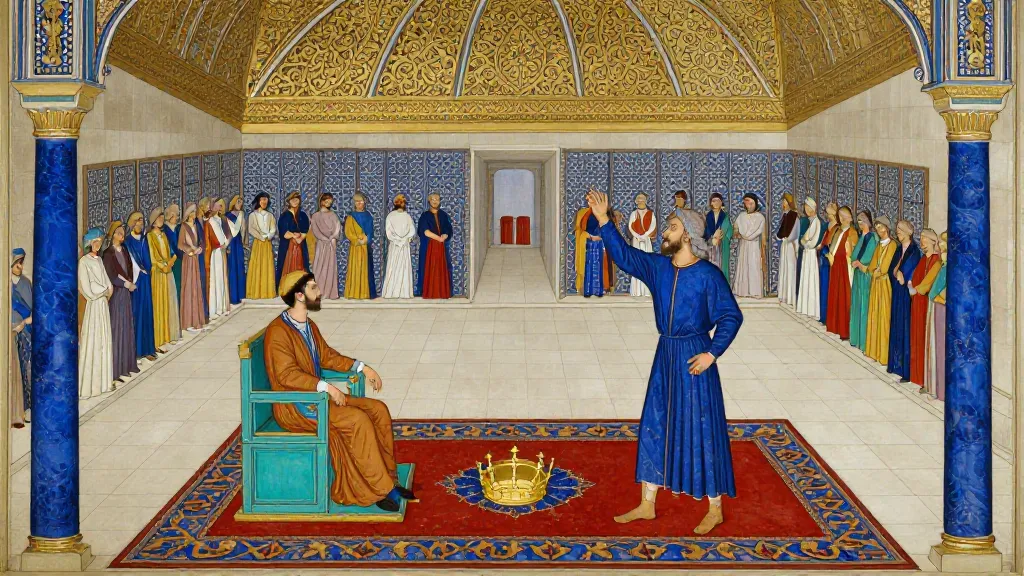
مناظرهی خسرو و بهرام
The Confrontation of Words: Khosrow and Bahram
چو بینیم چهر تو وبخت تو سپاه وکلاه تو وتخت تو بیازم بدین کار ساسانیان چوآشفته شیری که گردد ژیان زدفتر همه نامشان بسترم سر تخت ساسانیان بسپرم بزرگی مر اشکانیان را سزاست اگر بشنود مرد داننده راست چنین پاسخ آورد خسرو بدوی کهای بیهده مرد پیکار جوی اگر پادشاهی زتخم کیان بخواهد شدن تو کیی درجهان همه رازیان از بنه خود کنید دو رویند وز مردمی برچیند نخست از ری آمد سپاه اندکی که شد با سپاه سکندر یکی میان را ببستند با رومیان گرفتند ناگاه تخت کیان ز ری بود ناپاکدل ماهیار کزو تیره شد تخم اسفندیار ازان پس ببستند ایرانیان بکینه یکایک کمر بر میان نیامد جهان آفرین را پسند ازیشان به ایران رسید آن گزند کلاه کیی بر سر اردشیر نهاد آن زمان داور دستگیر بتاج کیان او سزاوار بود اگر چند بیگنج ودینار بود کنون نام آن نامداران گذشت سخن گفتن ماهمه بادگشت کنون مهتری را سزاوار کیست جهان را بنوی جهاندار کیست بدو گفت بهرام جنگی منم که بیخ کیان را زبن برکنم چنین گفت خسرو که آن داستان که داننده یادآرد ازباستان که هرگز بنادان وبیراه وخرد سلیح بزرگی نباید سپرد که چون بازخواهی نیاید بدست که دارنده زان چیزگشتست مست چه گفت آن خردمند شیرین سخن که گر بیبنانرا نشانی ببن بفرجام کارآیدت رنج ودرد بگرد درناسپاسان مگرد دلاور شدی تیز وبرترمنش ز بد گوهر آمد تو را بدکنش تو را کرد سالار گردنکشان شدی مهتر اندر زمین کشان بران تخت سیمین وآن مهرشاه سرت مست شد بازگشتی ز راه کنون نام چوبینه بهرام گشت همان تخت سیمین تو را دام گشت بران تخت برماه خواهی شدن سپهبد بدی شاه خواهی شدن سخن زین نشان مرد دانا نگفت برآنم که با دیو گشتی تو جفت بدو گفت بهرام کای بدکنش نزیبد همی بر تو جز سرزنش تو پیمان یزدان نداری نگاه همی ناسزا خوانی این پیشگاه نهی داغ بر چشم شاه جهان سخن زین نشان کی بود درنهان همه دوستان بر تو بر دشمنند به گفتار با تو به دل بامنند بدین کار خاقان مرا یاورست همان کاندر ایران وچین لشکرست بزرگی من از پارس آرم بری نمانم کزین پس بود نام کی برافرازم اندر جهان داد را کنم تازه آیین میلاد را من از تخمهی نامور آرشم چو جنگ آورم آتش سرکشم نبیره جهانجوی گرگین منم هم آن آتش تیز برزین منم به ایران بران رای بد ساوهشاه که نه تخت ماند نه مهر وکلاه کند با زمین راست آتشکده نه نوروز ماند نه جشن سده همه بنده بودند ایرانیان برین بوم تا من ببستم میان تو خودکامه را گر ندانی شمار بروچارسد بار بشمر هزار زپیلان جنگی هزار و دویست که گفتی که بر راه برجای نیست هزیمت گرفت آن سپاه بزرگ من از پس خروشان چودیو سترگ چنان دان که کس بیهنر درجهان بخیره نجوید نشست مهان همی بوی تاج آید ازمغفرم همی تخت عاج آید از خنجرم اگر با تو یک پشه کین آورد زتختت بروی زمین آورد
Bahram spoke first: "When I look at your face and your fortune, your army and your crown and your throne, I will rise against the house of Sasan like a lion gone mad with rage. I will erase their names from every register and trample the Sasanian throne underfoot. Greatness belongs to the Arsacids, if any honest man will hear the truth."
Khosrow answered him: "You idle, quarrel-seeking man. If the kingship should pass from the seed of the Kayanids, who are you in this world? Your Razian kinsmen are all double-faced — they invented their own pedigree and stripped themselves of humanity. First a small army came from Ray and joined forces with Alexander's host. They allied with the Romans and seized the Kayanid throne by treachery. It was the foul-hearted Mahyar of Ray who darkened the line of Esfandiar. After that the Iranians girded themselves for vengeance one by one, and God did not approve of those usurpers — through them great harm came to Iran. Then the Lord placed the Kayanid crown upon the head of Ardeshir, who was worthy of the royal diadem even though he had neither treasury nor coin. Now the names of those worthies have passed. All our talk is wind. Who is fit for sovereignty? Who is the world's new master?"
Bahram said: "I am the one who fights. I will tear up the root of the Kayanids from its foundation."
Khosrow replied: "There is an old proverb the wise recall from ancient times — that you must never entrust the weapons of power to a fool who lacks judgment, for when you want them back they will not come to hand, since the holder has grown drunk on what he was given. The sweet-tongued sage said it well: if you seat a man of no lineage in a seat of honor, in the end you will reap only pain and grief. Do not go near the door of the ungrateful. You became bold, sharp, and arrogant. From bad stock came bad conduct. I made you commander of champions — you became chief among warriors on the earth. That silver throne and the king's seal went to your head, and you strayed from the path. Now the name Chobin has turned into 'Bahram the King,' and that silver throne has become your trap. You were a general; now you want to be king. No wise man would speak this way. I believe you have taken the devil for your companion."
Bahram shot back: "You evil-doer — nothing suits you but reproach. You do not keep your covenant with God and you call this throne unworthy. You branded the eyes of the king of the world — how can such a thing remain secret? All your friends are your enemies in truth; they speak with you but their hearts are with me. In this enterprise the Khagan himself supports me, along with every army in Iran and China. I will strip greatness from Persia and leave no memory of the Kayanid name. I will raise justice high across the world and revive the ways of Milad. I am of the famous line of Arash. When I fight I am a raging fire. I am grandson of the world-conquering Gorgin, that fierce flame of Borzin. In Iran, the Saveh Shah had planned to leave neither throne nor crown nor seal — to level the fire temples, abolish Nowruz and the Sadeh feast. All Iran would have been enslaved had I not girded my waist. If you cannot count the self-serving dead, try four hundred thousand. Twelve hundred war elephants — there was no room left on the road. That enormous army broke and fled, and I came roaring after them like a monstrous demon. Know this: no man without merit idly seeks the seat of kings. The scent of the crown rises from my helmet; the ivory throne rises from my sword. If a single mosquito made war on you, it would bring you from your throne down to the dirt."
Notes
Bahram VI Chobin, the rebel general of Mihranid lineage who claimed descent from the Arsacid dynasty to legitimize his bid for the throne.
Khosrow II Parviz, the reigning Sasanian king, son of Hormozd IV.
The Arsacids (Ashkanians) ruled Iran before the Sasanians (c. 247 BC–224 AD). Bahram claims Arsacid descent to argue that the Sasanians are usurpers and that the throne rightfully belongs to his line.
Ardeshir I (r. 224–242 AD), founder of the Sasanian dynasty, who overthrew the last Arsacid king. Khosrow argues Ardeshir's legitimacy came from divine favor, not wealth.
The Saveh Shah — the Turkic Khagan whose massive invasion Bahram defeated, his greatest military achievement and the basis of his claim to the throne.
Bahram's reference to Arash (the legendary archer) and Gorgin (a Shahnameh hero) is meant to assert noble Iranian lineage predating the Sasanians.