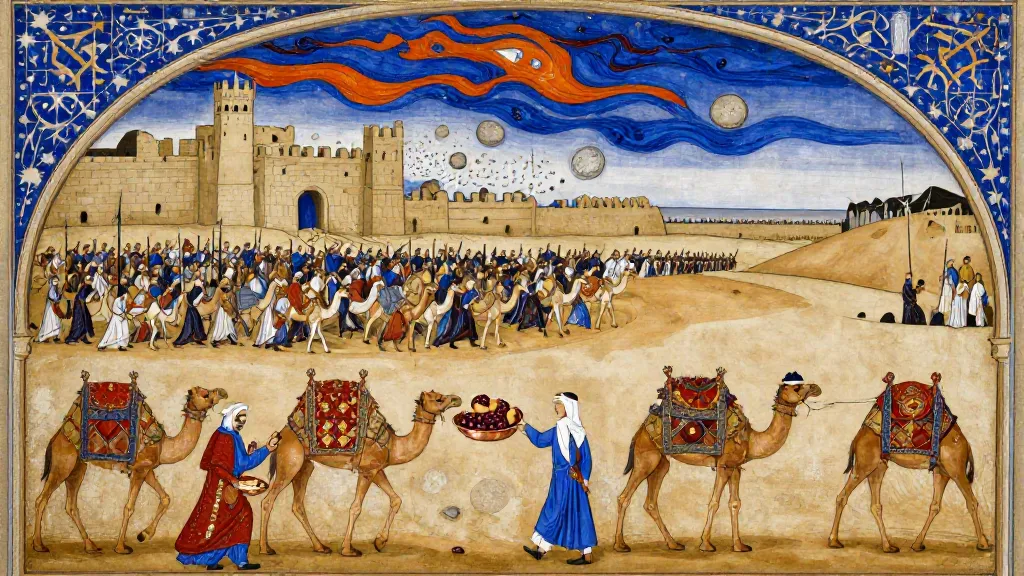
کاروان عرب و رسیدن به مرز روم
The Arab Caravan and the March to Roman Territory
چوخسرو به پیش اندرون بیشه دید سپه را بران سبزه اندر کشید شده گرسنه مرد ناهاروسست کمان را بزه کرد نخچیر جست ندیدند چیزی بجایی دوان درخت و گیا بود و آب روان پدید آمد اندر زمان کاروان شتر بود و پیش اندرون ساروان چو آن ساربان روی خسرو بدید بدان نامدار آفرین گسترید بدو گفت خسرو که نام توچیست کجا رفت خواهی و کام تو چیست بدو گفت من قیس بن حارثم ز آزادگان عرب وارثم ز مصر آمدم با یکی کاروان برین کاروان بر منم ساروان به آب فراتست بنگاه من از انجا بدین بیشه بد راه من بدو گفت خسروکه از خوردنی چه داری هم از چیز گستردنی که ما ماندگانیم و هم گرسنه نه توشست ما را نه بار و بنه بدو گفت تازی که ایدر بایست مرا با تو چیز و تن جان یکیست چو بر شاه تازی بگسترد مهر بیاورد فربه یکی ماده سهر بکشتند و آتش بر افروختند ترو خشک هیزم همیسوختند بر آتش پراگند چندی کباب بخوردن گرفتند یاران شتاب گرفتند واژ آنک بد دین پژوه بخوردن شتابید دیگر گروه بخوردند بینان فراوان کباب بیاراست هر مهتری جای خواب زمانی بخفتند و برخاستند یکی آفرین نو آراستند بدان دادگر کو جهان آفرید توانایی و ناتوان آفرید ازان پس به یاران چنین گفت شاه که هرکس که او بیش دارد گناه به پیش من آنکس گرامی ترست وزان کهتران نیز نامی ترست هرآنکس کجا بیش دارد بدی بگشت از من و از ره بخردی بما بیش باید که دارد امید سراسر به نیکی دهیدش نوید گرفتند یاران برو آفرین که ای پاک دل خسرو پاک دین بپرسید زان مرد تازی که راه کدامست و من چون شوم با سپاه بدو گفت هفتاد فرسنگ بیش شما را بیابان و کوهست پیش چودستور باشی من ازگوشت و آب به راه آورم گر نسازی شتاب بدو گفت خسرو جزین نیست رای که با توشه باشیم و با رهنمای هیونی بر افگند تازی به راه بدان تا برد راه پیش سپاه همیتاخت اندر بیابان و کوه پر از رنج و تیمار با آن گروه یکی کاروان نیز دیگر به راه پدید آمد از دور پیش سپاه یکی مرد بازارگان مایه دار بیامد هم آنگه بر شهریار بدو گفت شاه از کجایی بگوی کجا رفت خواهی چنین پوی پوی بدو گفت کز خرهی اردشیر یکی مرد بازارگانم دبیر بدو گفت نامت چه کرد آنک زاد چنین داد پاسخ که مهران ستاد ازو توشه جست آن زمان شهریار بدو گفت سالار کای نامدار خورش هست چندانک اندازه نیست اگر چهره بازارگان تازه نیست بدو گفت خسرو که مهمان به راه بیابی فزونی شود دستگاه سر بار بگشاد بازارگان درمگان به آمد ز دینارگان خورش بر دو بنشست خود بر زمین همیخواند بر شهریار آفرین چونان خورده شد مرد مهمان پرست بیامد گرفت آبدستان بدست چو از دور خراد بر زین بدید ز جایی که بد پیش خسرو دوید ز بازارگان بستد آن آب گرم بدن تا ندارد جهاندار شرم پس آن مرد بازارگان پر شتاب میآورد برسان روشن گلاب دگر باره خراد بر زین ز راه ازو بستد آن جام و شد نزد شاه پرستش پرستنده را داشت سود بران برتری برتریها فزود ازان پس ببازارگان گفت شاه که اکنون سپه را کدامست راه نشست تو در خره اردشیر کجا باشد ای مرد مهمانپذیر بدو گفت کای شاه با داد ورای ز بازارگانان منم پاک رای نشانش یکایک به خسرو بگفت همه رازها برگشاد از نهفت بفرمود تا نام برنا و ده نویسد نویسندهی روزبه ببازارگان گفت پدرود باش خرد را به دل تار و هم پود باش چو بگذشت لشکر بران تازه بوم بتندی همیراند تا مرز روم چنین تا بیامد بران شارستان که قیصر ورا خواندی کارستان چواز دور ترسا بدید آن سپاه برفتند پویان ببی راه و راه بدان باره اندر کشیدند رخت در شارستان را ببستند سخت فروماند زان شاه گیتی فروز به بیرون بماندند لشکر سه روز فرستاد روز چهارم کسی که نزدیک ما نیست لشکر بسی خورشها فرستید و یاری کنید چه برما همی کامگاری کنید به نزدیک ایشان سخن خوار بود سپاهش همه سست و ناهار بود هم آنگه برآمد یکی تیره ابر بغرید برسان جنگی هژبر وز ابر اندران شارستان باد خاست بهر بر زنی بانگ و فریاد خاست چونیمی ز تیره شب اندر کشید ز باره یکی بهره شد ناپدید همه شارستان ماند اندر شگفت به یزدان سقف پوزش اندر گرفت بهر بر زنی بر علف ساختند سه پیر سکوبا برون تاختند ز چیزی که بود اندران تازه بوم همان جامه هایی که خیزد ز روم ببردند بالا به نزدیک شاه که پیدا شد ای شاه برما گناه چو خسرو جوان بود و برتر منش بدیشان نکرد از بدی سرزنش
When Khosrow spotted a thicket ahead, he led his army onto the green. His men were hungry, exhausted, unfed. He strung his bow and went looking for game, but found nothing moving anywhere -- just trees, grass, and running water.
Then a caravan appeared on the horizon, camels led by a cameleer. When the cameleer saw Khosrow's face, he poured blessings upon the famous man. Khosrow asked: "What is your name? Where are you headed, and what do you seek?"
The man answered: "I am Qays ibn Harith, of the noble Arabs. I have come from Egypt with this caravan, and I am its master. My base is on the Euphrates; from there my road brought me to this thicket."
Khosrow said: "What food do you carry? What provisions for spreading a camp? We are stranded and starving -- no supplies, no baggage, nothing."
The Arab replied: "Stay right here. My goods and my very life are one with yours." He opened his heart to the king and brought out a fat she-camel. They slaughtered it, lit a fire, and burned green and dry wood together. Kebabs were scattered over the flames, and the companions fell upon the food. The devout among them recited prayers; the rest rushed straight to eating. They ate heaps of kebab without bread, and each lord prepared a place to sleep.
They rested a while, then rose and offered a fresh blessing to the just Creator who made the world, who made the strong and the weak alike.
Afterward, the king said to his companions: "Whoever bears the greatest guilt -- that man is dearest to me, and the most renowned among the lesser men. Whoever has done the most wrong and turned away from me and from the path of wisdom -- he is the one who should place the most hope in us. Give him assurance of nothing but goodness."
His companions blessed him: "O pure-hearted Khosrow, king of pure faith!"
He asked the Arab which road to take with his army. The man said: "More than seventy farsangs, and desert and mountains lie before you. If you will let me lead, I can supply meat and water on the road, provided you do not press too fast." Khosrow answered: "There is no other plan. We need both provisions and a guide." The Arab put a swift camel on the road to lead the army, and they rode hard through desert and mountain, weary and troubled.
Another caravan appeared in the distance. A wealthy merchant came at once before the king. Khosrow asked: "Tell me where you are from, and where you are going in such haste."
The man replied: "I am from the district of Khorreh-ye Ardashir, a merchant-scribe by trade." Khosrow asked his name. "Mehran-Setad," he answered. The king asked him for provisions. The merchant said: "O lord, I have food beyond measure, even if a merchant's face shows no freshness."
Khosrow said: "A guest on the road is a gain; your wealth will only increase." The merchant opened his bales -- the silver coins proved better than gold dinars. He laid out the food for two settings and sat on the ground himself, calling blessings upon the king. When the meal was done, the hospitable man came forward with a basin for hand-washing. But Khorrad-Borzin, spotting him from afar, ran to Khosrow's side and snatched the warm water from the merchant's hands, so the lord of the world would not be shamed. Then the merchant hurried to bring wine as clear as rosewater, and again Khorrad-Borzin intercepted the cup and carried it to the king. Service brought the servant advantage, and his high rank grew higher still.
Then the king asked the merchant which road the army should take, and where his home in Khorreh-ye Ardashir lay. The merchant, calling Khosrow a just and wise king, described the route in detail and revealed every secret. Khosrow ordered his scribe Ruzbeh to record the young man's name and village. He said farewell to the merchant: "Go in peace, and weave wisdom into the warp and weft of your heart."
The army crossed that green country and drove hard toward the Roman frontier, until they reached a walled town that Caesar called Karestan. When the Christians saw the army from afar, they ran in every direction, hauled their goods behind the walls, and barred the city gates.
The king was baffled. His army waited outside for three days. On the fourth day he sent a message: "Our force is small. Send food and give us aid -- why do you lord it over us?" But the townspeople treated his words with contempt, and his army remained weak and unfed.
Then a dark cloud rolled in, roaring like a war-lion, and a gale rose from the cloud over the town. Shrieks and cries erupted on every side. By midnight, a section of the wall had simply vanished. The whole town was struck with awe. They begged forgiveness before God. On every side they prepared fodder, and three elder bishops rushed out, bringing whatever that green land produced -- including garments of Roman make -- and carried it all up to the king, saying: "O king, our guilt stands plain before you."
Because Khosrow was young and generous of spirit, he did not reproach them for their malice.
Notes
An Arab cameleer who encountered Khosrow's starving army in the wilderness and provided food and guidance.
The Euphrates River (فرات), the great river of Mesopotamia, here marking the Arab's home territory.
A merchant-scribe from the district of Khorreh-ye Ardashir (modern Fars province) who provided provisions to Khosrow's army.
Khorreh-ye Ardashir (خرهی اردشیر), a district in Fars province founded by Ardashir I, the first Sasanian king.
Khorrad-Borzin, a courtier in Khosrow's retinue who zealously guards royal protocol, intercepting servants to ensure the king is attended only by proper hands.
A Roman (Byzantine) frontier town called Karestan (کارستان) by the Caesar. Its identity is uncertain but it lies on the route between Mesopotamia and Byzantine Anatolia.
The miraculous storm that destroys part of the town wall is a classic Shahnameh motif: divine intervention on behalf of a legitimate king. The Christians' immediate capitulation signals heaven's endorsement of Khosrow's cause.