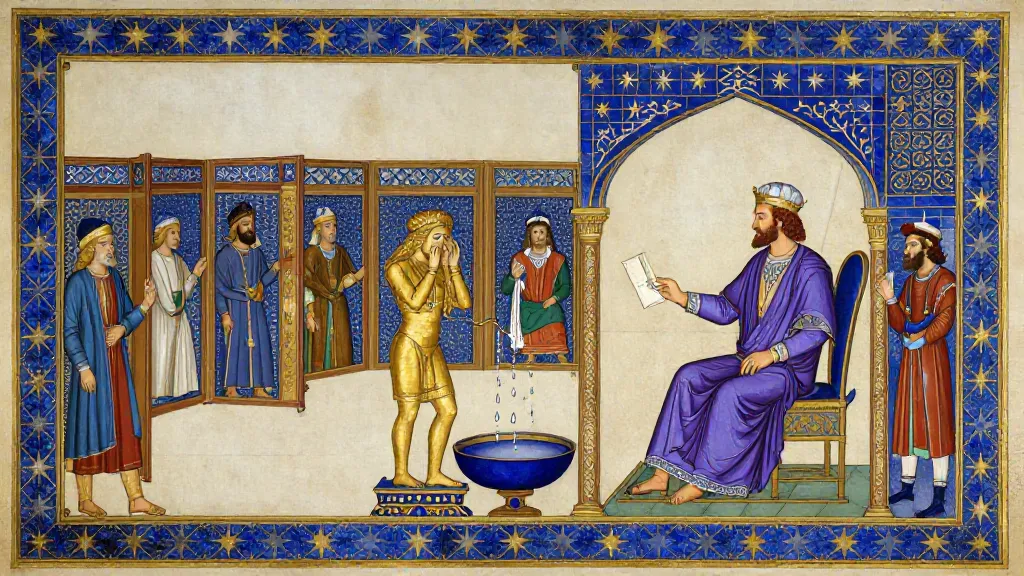
پاسخ خسرو به نامهی قیصر و پیمان صلح
Khosrow's Reply to Caesar's Letter and the Peace Covenant
تو برنایی و نوز نادیده کار چو خواهی که بر یابی از روزگار مکن یاری مرد پیمان شکن که پیمان شکن کس نیرزد کفن بدان شاه نفرین کند تاج و گاه که پیمان شکن باشد و کینه خواه کنون نامهی من سراسر بخوان گر انگشتها چرب داری مخوان سخنها نگه دار و پاسخ نویس همه خوبی اندیش و فرخ نویس نخواهم که این راز داند دبیر تو باشی نویسندهی تیز و یر چو برخوانم این پاسخ نامه را ببینم دل مرد خود کامه را همانا سلیح و سپاه و درم فرستیم تا دل نداری دژم هرآنکس که برتو گرامی ترست وگر نزد تو نیز نامی ترست ابا آنک زو کینه داری به دل به مردی ز دل کینهها برگسل گناهش بیزدان دارنده بخش مکن روز بر دشمن و دوست دخش چو خواهی که داردت پیروزبخت جهاندار و با لشکر و تاج و تخت زچیزکسان دست کوتاه دار روان را سوی راستی راه دار چو عنوان آن نامه برگشت خشک برو برنهادند مهری زمشک بران مهر بنهاد قیصر نگین فرستاده را داد وکرد آفرین چو آن نامه نزدیک خسرو رسید زپیوستن آگاهی نو رسید به ایرانیان گفت کامروز مهر دگرگونه گردد همی برسپهر زقیصر یک نامه آمد بلند سخن گفتنش سر به سر سودمند همی راه جوید که دیرینه کین ببرد ز روم و ز ایران زمین چنین یافت پاسخ زایرانیان که هرگز نه برخاست کین ازمیان چواین راست گردد بهنگام تو نویسند برتاجها نام تو چوایشان بران گونه دیدند رای بپردخت خسرو زبیگانه جای دوات و قلم خواست وچینی حریر بفرمود تا پیش او شد دبیر یکی نامه بنوشت بر پهلوی برآیین شاهان خط خسروی که پذرفت خسرو زیزدان پاک ز گردنده خورشید تا تیره خاک که تا او بود شاه در پیشگاه ورا باشد ایران و گنج و سپاه نخواهد ز دارندگان باژ روم نه لشکر فرستد بران مرز وبوم هران شارستانی کزان مرز بود اگر چند بیکار و بیارز بود بقیصر سپارد همه یک بیک ازین پس نوشته فرستیم و چک همان نیز دختر کزان مادرست که پاکست وپیوستهی قیصرست بهمداستان پدرخواستیم بدین خواستن دل بیاراستیم هران کس که در بارگاه تواند ازایران و اندر پناه تواند چوگستهم و شاپور و چون اندیان چو خراد بر زین زتخم کیان چو لشکر فرستی بدیشان سپار خرد یافته دختر نامدار بخویشی چنانم کنون باتو من چو از پیش بود آن بزرگ انجمن نخستین گیومرت با جمشید کزو بود گیتی ببیم وامید دگر هرچ هستند ایرج نژاد که آیین و فر فریدون نهاد بدین همنشان تا قباد بزرگ که از داد او خویش بدمیش وگرگ همه کینه برداشتیم از میان یکی گشت رومی و ایرانیان ز قیصر پذیرفتم آن دخترش که از دختران باشد او افسرش ازین بر نگردم که گفتم یکی ز کردار بسیار تا اندکی تو چیزی که گفتی درنگی مساز که بودن درین شارستان شد دراز چو کرد این سخنها برین گونه یاد نوشته بخورشید خراد داد سپهبد چو باد اندر آمد زجای باسپ کمیت اندر آورد پای همیتاخت تا پیش قیصر چوباد سخنهای خسرو بدو کرد یاد
Caesar's letter continued with counsel to the young king: "You are young and have not yet seen the workings of the world. If you wish to gain anything from fortune, do not ally yourself with a covenant-breaker -- a man who breaks pacts is not worth a burial shroud. Crown and throne curse the king who breaks his word and seeks vengeance.
"Now read my letter from beginning to end. If your fingers are greased, do not read it. Guard these words and write your answer. Think only of what is good, and write what is auspicious. I do not want any secretary to know this secret -- you yourself be the sharp-eyed scribe. When I read your reply, I will see the heart of the self-willed man.
"We will certainly send arms, army, and silver, so you need not be grim. Whoever is dearest to you, whoever is most renowned in your eyes -- even the one against whom you hold a grudge in your heart -- tear those grudges away with manly resolve. Leave his sins to God, the Sustainer. Do not deal bitterly with enemy or friend alike. If you want fortune to keep you victorious, master of the world with army, crown, and throne -- keep your hands short from other men's property. Steer your soul toward righteousness."
When the ink on that letter had dried, they placed a seal of musk upon it. The Caesar pressed his signet into the seal, gave it to the envoy, and blessed him.
When the letter reached Khosrow, fresh news of alliance arrived with it. He told the Iranians: "Today, love turns differently in the heavens. A great letter has come from the Caesar -- every word of it useful. He seeks a way to cut the ancient feud between Rome and the land of Iran."
The Iranians answered: "The feud has never been lifted from between us. If you set this right in your time, they will inscribe your name on every crown."
When Khosrow saw their minds were aligned, he cleared the hall of outsiders. He called for ink, pen, and Chinese silk, and summoned the scribe before him. He wrote a letter in Pahlavi, in the royal script of kings:
"Khosrow has sworn before the pure God, from the turning sun to the dark earth: as long as he is king upon the throne, Iran and its treasury and army shall be his alone. He will demand no tribute from the holders of Rome. He will send no army against that land and soil. Every city that belonged to those borderlands, however idle and worthless, he will hand back to the Caesar, one by one -- henceforth we shall send deeds and writs.
"As for the daughter whose mother is pure and of Caesar's own blood -- with her father's consent we have asked for her, and our heart is adorned by this request. All those in your court who are from Iran and under your protection -- Gostaham, Shapur, Andian, Khorrad-Borzin of the Kayanian seed -- when you send the army, entrust it to them, along with the wise and noble daughter.
"In kinship I am now to you as the great assembly was of old -- first Gayomart and Jamshid, from whom the world stood between fear and hope, then all who are of the line of Iraj, upon whom Feridun bestowed custom and glory, and so onward to Qobad the Great, under whose justice the sheep lay down with the wolf.
"All enmity we have lifted from between us. Roman and Iranian have become one. I accept the Caesar's daughter, who is the crown among all daughters. I will not turn back from anything I have said, from the greatest deed to the smallest. What you have promised, do not delay -- the stay in this city has grown long."
When he had set down these words, he gave the letter to Khorrad-Borzin, the sun-like general. The commander leapt from his place like the wind, set foot to his dark bay horse, and rode like a gale until he reached the Caesar and recounted every word of Khosrow's.
Notes
Caesar's closing counsel is a masterclass in diplomatic mentorship: he instructs Khosrow to write the reply in his own hand (no secretary), to forgive even personal enemies, and to keep his hands off other men's property. These are conditions disguised as advice.
The letter is written 'in Pahlavi, in the royal script of kings' (بر پهلوی / برآیین شاهان خط خسروی) -- Middle Persian was the administrative language of the Sasanian Empire, and its use here signals formal sovereign authority.
Jamshid (جمشید), the legendary king of the Pishdadian dynasty who ruled a golden age before falling to pride. Khosrow invokes him as part of the shared mythic lineage binding Iran and Rome.
Qobad the Great (قباد بزرگ), likely Kay Qobad, founder of the Kayanian dynasty, whose justice was so perfect that 'the sheep lay down with the wolf' -- an image of cosmic harmony.