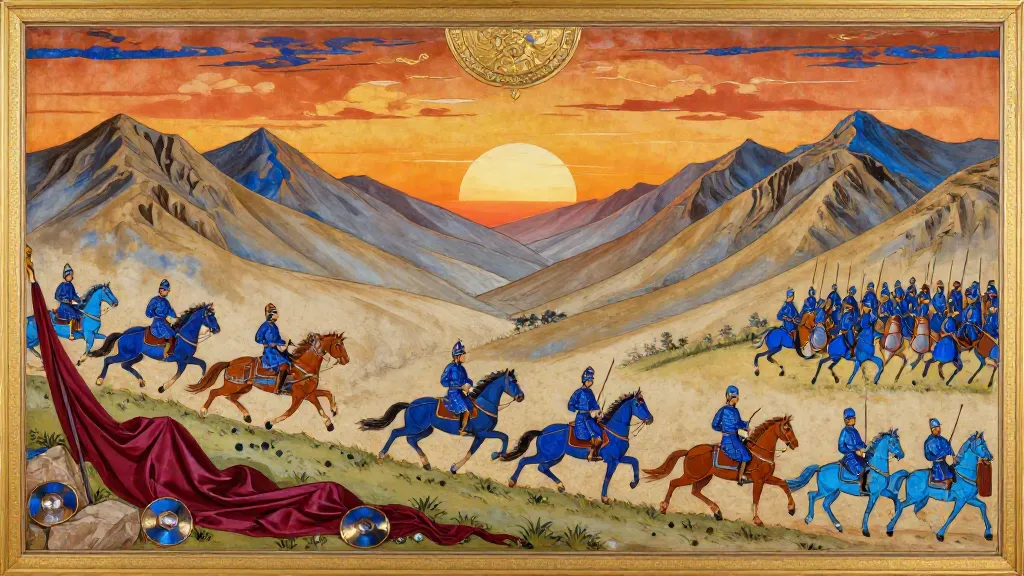
The Reign of Khosrow Parviz (Part 6) — Persian miniature painting

Shahnameh · Fall of the Sasanians

The Reign of Khosrow Parviz (Part 6)

پادشاهی خسرو پرویز ۶

View:

پاسخ خاقان به بهرام و آغاز نبرد

The Khaqan's Reply to Bahram and the Onset of Battle

جهاندار چون نامه‌ها را بخواند مر او را بکرسی زرین نشاند بدو گفت کای مرد بسیاردان تو بهرام را نزد من خوار دان کنون ز آنچ کردی رسیدی بکام فزون‌تر مجو اندرین کار نام بفرمود تا نزد او شد دبیر مران پاسخ نامه را ناگزیر نوشت اندران نامه‌های دراز که این مهتر گرد گردن فراز همه نامه‌های تو برخواندیم فرستاده را پیش بنشاندیم به گفتار بیکار با خسرویم به دل با تو همچون بهار نویم چولشکر بیاری بدین مرز وبوم که اندیشد از گرز مردان روم همه پاک شمشیرها برکشیم به جنگ اندورن رومیان را کشیم چو خسرو ببیند سپاه تو را همان مردی و پایگاه تو را دلش زود بیکار ولرزان شود زپیشت چو روبه گریزان شود بدان نامه‌ها مهر بنهاد شاه ببرد ان پسندیده‌ی نیک خواه بدو گفت شاه ای خردمند مرد برش گنج یابی ازین کارکرد مرو را گهر داد و دینار داد گرانمایه یاقوت بسیار داد بدو گفت کاین نزد چوبینه بر شنیده سخنها برو بر شمر بیامد به نزدیک چوبینه مرد شنیده سخنها همه یادکرد چو مرد جهانجوی نامه بخواند هوارا بخواند وخرد را براند ازان نامه‌ها ساز رفتن گرفت بماندند ایرانیان درشگفت برفتند پیران به نزدیک اوی چودیدند کردار تاریک اوی همی‌گفت هرکس کز ایدر مرو زرفتن کهن گردد این روز نو اگر خسرو آید به ایران زمین نبینی مگر گرز و شمشیر کین برین تخت شاهی مخور زینهار همی‌خیره بفریبدت روزگار نیامد سخنها برو کارگر بفرمود تا رفت لشکر بدر همی‌تاخت تا آذر آبادگان سپاهی دلاور ز آزادگان سپاه اندر آمد بتنگ سپاه ببستند بر مور و بر پشه راه چنین گفت پس مهتر کینه خواه که من کرد خواهم به لشکر نگاه ببینم که رومی سواران کیند سپاهی کدامند و گردان کیند همه برنشستند گردان براسپ یلان سینه و مهتر ایزد گشسپ بدیدار آن لشکر کینه خواه گرانمایگان برگرفتند راه چولشکر بدیدند باز آمدند به نزدیک مهتر فراز آمدند که این بی کرانه یکی لشکرند ز اندیشه ما همی‌بگذرند وزان روی رومی سواران شاه برفتند پویان بدان بارگاه ببستند بر پیش خسرو میان که ما جنگ جوییم زایرانیان بدان کار همداستان گشت شاه کزو آرزو خواست رومی سپاه چوخورشید برزد سراز تیره کوه خروشی برآمد زهر دو گروه که گفتی زمین گشت گردان سپهر گر از تیغها تیره شد روی مهر بیاراسته میمن و میسره زمین کوه گشت آهنین یکسره از آواز اسپان و بانگ سپاه بیابان همی‌جست بر کوه راه

When the lord of the world had read the letters, he seated the envoy on a golden chair. He said: "O man of great knowledge, consider Bahram beneath contempt in my eyes. You have achieved your aim by what you have done — seek no further glory in this affair."

He ordered his secretary to compose the inevitable reply. In those lengthy letters he wrote: "O proud and lofty chieftain — we have read all your letters and received your envoy. In idle talk we stand with Khosrow, but in our hearts we are with you, fresh as spring. When you bring your army to this land and frontier, let Roman warriors worry about the mace. We shall draw our swords clean and cut down the Romans in battle. When Khosrow sees your army, your valor, your standing — his heart will turn idle and trembling. He will flee before you like a fox."

The king sealed the letters. The worthy well-wisher carried them away. The king said to him: "O wise man, from this service you will find the reward of treasure." He gave the man jewels, gold coins, and a great quantity of precious rubies. He said: "Take these to Chobin. Recount to him everything you have heard."

The man went to Chobin and recounted all the things he had heard. When the world-seeker read the letters, he summoned desire and banished reason. From those letters he took up preparations to march. The Iranians were left in astonishment. The elders went to him when they saw his dark course of action. Everyone said: "Do not go from here. By going, this fresh day will grow old. If Khosrow comes to the land of Iran, you will see nothing but the mace and the sword of vengeance. Do not stake everything on this royal throne — time is blindly deceiving you."

Their words had no effect on him. He ordered the army to march out. He rode hard toward Azerbaijan with a valiant army of noblemen. The armies closed in so tightly that they blocked the path of ants and gnats.

The war-seeking chieftain said: "I will inspect the enemy forces. Let me see who these Roman cavalrymen are, what kind of soldiers they have, who their champions are." The warriors mounted their horses — Yalan Sineh and the chief Izad Gushasp. The nobles set out to observe the battle-hungry army. When they had seen the forces, they returned to their leader and reported: "This is a boundless army. They exceed anything we imagined."

From the other side, the Roman horsemen of the king rode swiftly to the court and girded themselves before Khosrow: "We seek battle against the Iranians." The king agreed to this, for the Roman army desired it of him.

When the sun raised its head above the dark mountain, a roar went up from both sides. You would have said the earth had become the spinning heavens, or that the face of the sun had darkened from the blades. The right and left wings were drawn up in order. The whole earth became an iron mountain. From the neighing of horses and the clamor of the army, the desert sought a path up the mountainside.

Notes

1personخاقانKhaqan

The Khaqan of the Turks, who has been in correspondence with Bahram Chobin and is playing both sides of the conflict.

2personبهرام چوبینBahram Chobin

Bahram Chobin, the usurper general. The Khaqan's letter encourages him to march against Khosrow with promises of Turkish support.

3personیلان سینهYalan Sineh

One of Bahram's senior commanders.

4personایزد گشسپIzad Gushasp

Another of Bahram's senior commanders.

5place

Azerbaijan (Adurbadagan), the northwestern Iranian province where the decisive battle takes place.

6context

The Roman (Byzantine) forces are fighting on Khosrow's side, sent by Emperor Maurice (Qaysar) under the terms of their alliance.

نبرد کوت با بهرام و کشته شدن کوت

The Duel of Kut and Bahram: Kut Is Slain

چو بهرام جنگی بدان بنگرید یکی خنجر آبگون برکشید نیامد به دل‌ش اندرون ترس وبیم دل شیر دربیشه شد بد و نیم به ایرانیان گفت صف برکشید همه کشور دوک لشکر کشید همی‌گشت گرد سپه یک تنه که دارد نگه میسره ومیمنه یلان سینه را گفت برقلبگاه همی‌باش تا پیش روی سپاه که از لشکر امروز جنگی منم بگاه گریزش درنگی منم نگه کرد خسرو بدان رزمگاه جهان دید یکسر زلشکر سیاه رخ شید تابان چوکام هژبر همی تیغ بارید گفتی ز ابر نیاتوس و بندوی و گستهم وشاه ببالا گذشتند زان رزمگاه نشستند بر کوه دوک آن سران نهاده دو دیده بفرمانبران ازان کوه لشکر همی‌دید شاه چپ وراست و قلب و جناح سپاه چوبرخاست آواز کوس از دو روی برفتند مردان پر خاشجوی تو گفتی زمین کوه آهن شدست سپهر ا زبر خاک دشمن شدست چو خسرو بران گونه پیکار دید فلک تار دید و زمین قار دید به یزدان همی‌گفت برپهلوی که از برتو ران پاک وبرتر توی که برگردد امروز از رزم شاد که داند چنین جز تو ای پاک وراد کرابخت خواهد شدن کندرو سر نیزه که شود خار و خو دل و جان خسرو پراندیشه بود جهان پیش چشمش یکی بیشه بود که بگسست کوت ازمیان سپاه ز آهن بکردار کوهی سیاه بیامد دمان تامیان گروه چو نزدیک ترشد بران برز کوه به خسرو چنین گفت کای سرفراز نگه کن بدان بنده دیوساز که بااو برزم اندر آویختی چواو کامران شد تو بگریختی ببین از چپ لشکر ودست راست که تا از میان دلیران کجاست کنون تا بیاموزمش کارزار ببیند دل و رزم مردان کار چو بشنید خسرو زکوت این سخن دلش گشت پردرد و کین کهن کجا گفت کز بنده بگریختی سلیح سواران فروریختی ورا زان سخن هیچ پاسخ نداد دلش گشت پرخون و سر پر ز باد چنین گفت پس کوت را شهریار که روپیش آن مرد ابلق سوار چوبیند تو را پیشت آید به جنگ تومگریز تا لب نخایی زننگ چوبشنید کوت این سخن بازگشت چنان شد که با باد انباز گشت همی‌رفت جوشان ونیزه بدست به آوردگه رفت چون پیل مست چو نزدیک شد خواست بهرام را برافراخت زانگونه زونام را یلان سینه بهرام را بانگ کرد که بیدارباش ای سوار نبرد که آمد یکی دیو چون پیل مست کمندی بفتراک و نیزه بدست چو بهرام بشنید تیغ از نیام برآهخت چون باد و برگفت نام چوخسرو چنان دید برپای خاست ازان کوه‌سر سر برآورد راست نهاده بکوت و به بهرام چشم دو دیده پر از آب و دل پر ز خشم چو رومی به نیزه درآمد زجای جهانجوی بر جای بفشارد پای چو نیزه نیامد برو کارگر بر وی اندر آورد جنگی سپر یکی تیغ زد بر سر و گردنش که تاسینه ببرید تیره تنش

When Bahram the warrior surveyed the field, he drew a blue-steel dagger. No fear or dread entered his heart — the lion's heart in the thicket split in two with envy. He told the Iranians: "Draw up the line. Spread the army across the whole region." He rode alone around the host: "Who holds the left wing? Who holds the right?"

To Yalan Sineh he said: "Stay at the center, at the head of the army. Today I am the fighter of this host. When the time comes to retreat, I will be the last to leave."

Khosrow looked out at the battlefield. The world was black with troops in every direction. The face of the shining sun was like a lion's maw; you would have said swords were raining from the clouds. Niatus, Banduy, Gostaham, and the king climbed to a height above the battlefield. Those leaders sat upon Mount Duk, their eyes fixed on the warriors below. From that mountain the king surveyed the army — left, right, center, and flanks.

When the sound of drums rose from both sides, the battle-hungry men advanced. You would have said the earth had become an iron mountain, and the sky above had become the enemy of the dust. When Khosrow saw the fighting unfold in this way — the heavens dark, the earth black as pitch — he prayed to God in Pahlavi: "You who are pure and exalted above all, who knows which man will return from battle today in joy? Who can know this except You, O pure and generous one? Whose fortune will turn sluggish? Whose spear-point will become thorn and thistle?"

Khosrow's heart and soul were full of anxiety. The world before his eyes was a dark forest. Then Kut broke free from the center of the army — clad in iron like a black mountain. He came charging toward the middle of the fray. When he drew near the high mountain where the king sat, he called up to Khosrow: "O proud king, look at that demon-possessed slave — the one you fought and fled from when he gained the upper hand. See where he stands, left or right among the champions. Now let me teach him the art of war. Let him see the heart and the fighting of real warriors."

When Khosrow heard these words from Kut, his heart filled with old pain and bitterness — for Kut had said "you fled from a slave" and "you dropped the warriors' weapons." The king gave him no answer. His heart filled with blood, his head with storm. Then the king said to Kut: "Go before that piebald-horsed warrior. When he sees you, he will come to fight. Do not flee, so that you need not bite your lip in shame."

Kut heard these words and turned back. He became one with the wind. He rode out seething, lance in hand, and entered the dueling ground like a maddened elephant. As he drew near, he challenged Bahram and raised his war cry. Yalan Sineh shouted to Bahram: "Be alert, O mounted warrior! A demon has come, like a maddened elephant, with a lasso at his saddle-strap and a lance in his fist."

Bahram heard this. He drew his sword from its scabbard swift as the wind and called out his name. When Khosrow saw this, he rose to his feet and raised his head from that mountaintop, his eyes fixed on Kut and Bahram — his eyes full of tears, his heart full of fury.

The Roman charged with his lance, but the world-seeker held his ground. When the lance proved useless against him, Bahram brought his war-shield crashing in, and struck one blow with his sword across head and neck — he cleaved Kut's dark body down to the chest.

Notes

1personکوتKut

Kut (also Kut Hezareh) — a champion of the Roman/Byzantine forces fighting alongside Khosrow. His boastful taunt about Khosrow's earlier flight from Bahram angers the king.

2personنیاتوسNiatus

Niatus — the Byzantine commander leading the Roman contingent on Khosrow's behalf.

3place

Mount Duk — the vantage point above the battlefield from which Khosrow and his commanders observe the fighting.

4context

Khosrow prays in Pahlavi (Middle Persian), the liturgical and court language of the Sasanian Empire.

واکنش خسرو و حمله‌ی مسیحیان

Khosrow's Reaction and the Christian Assault

چو آواز تیغش به خسرو رسید بخندید کان زخم بهرام دید نیاتوس جنگی بتابید چشم ازان خنده‌ی خسرو آمد بخشم به خسرو چنین گفت کای نامدار نه نیکو بود خنده درکارزار تو رانیست از روم جز کیمیا دلت خیره بینم بکین نیا چو کوت هزاره به ایران و روم نبینند هرگز به آباد بوم بخندی کنون زانک اوکشته شد چنان دان که بخت تو برگشته شد بدو گفت خسرو من از کشتنش نخندم همی وز بریده تنش چنان دان که هرکس که دارد فسوس همو یابد از چرخ گردنده کوس مرا گفت کز بنده بگریختی نبودت هنر تا نیاویختی ازان بنده بگریختن نیست ننگ که زخمش بدین سان بود روز جنگ وزان روی بهرام آواز داد که‌ای نامداران فرخ نژاد یلان سینه و رام و ایزد گسسپ مرین کشته را بست باید بر اسپ فرستید ز ایدر به لشکر گهش بدان تابریده ببیند شهش تن کوت رازود برپشت زین بتنگی ببستند مردان کین دوان اسپ با مرد گردن فراز همی‌شد به لشکر گه خویش باز دل خسرو ازکوت شد دردمند گشادند زان کشته بند کمند بران زخم او بر پراگند مشک بفرمود پس تا بکردند خشک به کرباس بر دوختش همچنان زره دربر و تنگ بسته میان به نزدیک قیصر فرستاد باز که شمشیر این بنده‌ی دیوساز برین گونه برد همی روز جنگ ازو گر هزیمت شدم نیست ننگ همه رو میان دلشکسته شدند به دل پاک بی‌جنگ خسته شدند همی‌ریخت بطریق خونین سرشک همی رخ پر از آب و دل پر ز رشک بیامد ز گردنکشان ده هزار همه جاثلیقان گرد و سوار یکی حمله بردند زان سان که کوه بدرید ز آواز رومی گروه چکاچک برخاست و بانگ سران همان زخم شمشیر و گرز گران توگفتی که دریا بجوشد همی سپهر روان بر خروشد همی ز بس کشته اندر میان سپاه بماندند بر جای بربسته راه ازان رومیان کشته شد لشکری هرآنکس که بود از دلیران سری دل خسرو از درد ایشان بخست تن خسته زندگان راببست همه کشتگان رابهم برفکند تلی گشت برسان کوه بلند همی‌خواندندیش بهرام چید ببرید خسرو ز رومی امید

When the sound of Bahram's blade reached Khosrow, he laughed — he had seen the quality of that blow. The warrior Niatus turned away his eyes. He was enraged by Khosrow's laughter.

"O famous king," Niatus said to Khosrow, "laughter is unseemly on the battlefield. You have received nothing from Rome but alchemy and gold. Yet I see your heart set blindly on ancestral vengeance. A man like Kut of the Thousand — in all of Iran and Rome, in any civilized land, they will never see his equal. You laugh now that he has been killed? Know that your fortune has turned."

Khosrow replied: "I do not laugh at his death, nor at his severed body. Know this: whoever mocks others receives the same blow from the turning wheel. He said to me, 'You fled from a slave — you had no valor to stand and fight.' But there is no shame in fleeing from a slave whose blow on the day of battle is like this."

From the other side, Bahram called out: "O nobles of blessed lineage — Yalan Sineh, Ram, Izad Gushasp — bind this dead man upon a horse and send him back to his camp, so that his king may see him cut in two." The men of war quickly strapped Kut's body tight across the saddle. The horse galloped back with its proud rider to its own camp.

Khosrow's heart was stricken with grief for Kut. They unbound the lasso from the dead man and scattered musk upon his wounds, then ordered the body dried. They sewed him in linen cloth just as he was, mail-coat on his body and belt cinched at his waist, and sent him back to the Caesar with this message: "The sword of this demon-possessed slave struck thus on the day of battle. If I was routed by him, there is no shame in it."

All the Romans were heartbroken. Without even fighting, their spirits were wounded. The patriarch wept bloody tears, his face wet and his heart burning with jealousy and grief. Then ten thousand of the Christian champions came forward — Catholicos warriors, all mounted and battle-hardened. They launched a charge so fierce that the mountains seemed to split from the roar of the Roman host. The clashing of steel rose up, and the shouts of commanders, and the blows of swords and heavy maces. You would have said the sea was boiling and the moving heavens were screaming.

So many were killed in the space between the armies that the dead blocked the road where they lay. An entire legion of Romans was slaughtered — every man among the brave who held rank. Khosrow's heart was pierced with grief for them. He bound the wounds of the living. All the dead were heaped together into a mound as high as a tall mountain. They called it "Bahram's harvest." Khosrow lost all hope in the Romans.

Notes

1context

Khosrow laughs not out of cruelty but out of vindication — Kut had just mocked him for fleeing Bahram, and Bahram's killing blow proved the point that flight was the rational choice.

2personبطریقBatriq

A Christian bishop (بطریق, 'patriarch') accompanying the Roman forces, who mourns the losses.

3context

The Catholicos (جاثلیق) warriors — Christian clerical-military leaders. Their massive charge results in catastrophic losses, forming the corpse-mound called 'Bahram's harvest' (بهرام چید).

نبرد دوم و حمله‌ی خسرو بر بهرام

The Second Day's Battle and Khosrow's Charge Against Bahram

همی‌گفت اگر نیز رومی دو بار کند همی برین گونه بر کارزار جهان را تو بی‌لشکر روم دان همان تیغ پولاد را موم دان به سرگس چنین گفت پس شهریار که فردا مبر جنگیان را به کار تو فردا بیاسای تا من سپاه بیارم ز ایرانیان کینه خواه بایرانیان گفت فردا به جنگ شما را بباید شدن بی‌درنگ همه ویژه گفتند کایدون کنیم که کوه و بیابان پر از خون کنیم چو بر زد ز دریا درفش سپید ستاره شد از تیرگی ناامید تبیره زنان از دو پرده سرای برفتند با پیل و باکرنای خروش آمد و ناله‌ی گاودم هم از کوهه‌ی پیل رویینه خم تو گفتی بجنبد همی دشت وراغ شده روی خورشید چون پر زاغ چو ایرانیان برکشیدند صف همه نیزه و تیغ هندی بکف زمین سر به سر گفتی ازجوشنست ستاره ز نوک سنان روشنست چو خسرو بیاراست بر قلبگاه همه دل گرفتند یکسر سپاه ورامیمنه دار گردوی بود که گرد ودلیر وجهانجوی بود بدست چپش نامدار ارمنی ابا جوشن وتیغ آهرمنی مبارز چوشاپور وچون اندیان بران جنگ بر تنگ بسته میان همی‌بود گستهم بردست شاه که دارد مر او را ز دشمن چوبهرام یل رومیان راندید درنگی شد وخامشی برگزید بفرمود تاکوس برپشت پیل ببستند وشد گرد لشکر چونیل نشست ازبرپشت پیل سپید هم آوردش ازبخت شد ناامید همی‌راند آن پیل تامیمنه بشاپور گفت ای بد بدتنه نه پیمانت این بد به نامه درون که پیش من آیی بدین دشت خون نه این باشد آیین پرمایگان همی تن بکشتن دهی رایگان بدو گفت شاپور کای دیوفش سرخویش دربندگی کرده کش ازین نامه کی بود نام ونشان که گویی کنون پیش گردنکشان گرانمایه خسرو بشاپور گفت من آن نامه با رای او بود جفت به نامه توپاداش یابی زمن هم ازنامداران این انجمن چوهنگام باشد بگویم تو را زاندیشه بد بشویم تو را چوبهرام آواز خسرو شنید باندیشه آن جادوی را بدید برآشفت وزان کار تنگ آمدش چوارغنده شد رای جنگ آمدش جفا پیشه برپیل تنها برفت سوی قلب خسرو خرامید تفت چوخسرو چنان دید با اندیان چین گفت کای نره شیر ژیان برین پیل برتیرباران کنید کمان را چوابر بهاران کنید از ایرانیان آنک بد روزبه کمان برنهادند یکسر بزه زپیکان چنان گشت خرطوم پیل توگفتی شد از خستگی پیل نیل هم آنگاه بهرام بالای خواست یکی مغفر خسرو آرای خواست همان تیرباران گرفتند باز برآشفت بهرام گردن فراز پیاده شد آن مرد پرخاشخر زره دامنش رابزد برکمر سپر برسرآورد وشمشیر تیر برآورد زان جنگیان رستخیز پیاده زبهرام بگریختند کمانهای چاچی فروریختند یکی باره بردند هم درزمان سپهبد نشست از بر اودمان خروشان همی‌تاخت تا قلبگاه بجایی کجا شاه بد بی‌سپاه همه قلبگه پاک برهم درید درفش جهاندار شد ناپدید وزان جایگه شد سوی میسره پس پشتش آزادگان یکسره نگهبان آن دست گردوی بود که مردی دلیر وجهانجوی بود برادر چوروی برادر بدید کمان را بزه کرد واندرکشید دوخونی بران سان برآویختند که گفتی بهمشان برآمیختند بدین سان زمانی برآمد دراز همی یک زدیگر نگشتند باز بدو گفت بهرام کای بی‌پدر به خون برادر چه بندی کمر بدو گفت گردوی کای پیسه گرگ تونشنیدی آن داستان بزرگ که هرکو برادر بود دوست به چو دشمن بود بی پی و پوست به تو هم دشمن و بد تن و ریمنی جهان آفرین را به دل دشمنی به پیش برادر برادر به جنگ نیاید اگر باشدش نام و ننگ چوبشنید بهرام زو بازگشت برآشفت و با او دژم ساز گشت همی‌راند گردوی نا نزد شاه ز آهن شده روی جنگی سیاه برو آفرین کرد خسرو به مهر که پاداش بادت ز گردان سپهر

Khosrow said: "If the Romans fight like this even one more time, you might as well count the world as having no Roman army — consider their steel swords no better than wax."

He said to Sargas: "Tomorrow, do not send your fighters into action. Rest tomorrow while I bring the Iranian warriors to seek vengeance." To the Iranians he said: "Tomorrow you must go to battle without delay." They all answered as one: "We will do it. We will fill the mountains and the desert with blood."

When the white banner of dawn rose from the sea and the stars lost hope in the darkness, the drummers marched out from both camps with elephants and trumpets. A roar went up, and the wail of ox-hide horns, and the bronze kettledrums from the backs of elephants. You would have said the plain and the meadows were shaking. The face of the sun turned black as a crow's wing.

When the Iranians drew up their line — lances and Indian swords in every hand — the whole earth seemed made of mail-coats, and the stars shone bright from the tips of spear-points. When Khosrow took his place at the center, the entire army took heart. His right wing was commanded by Gorduy, who was brave, bold, and ambitious. On his left stood a famous Armenian lord, clad in mail with a demonic blade. Champions like Shapur and Andian had girded themselves tight for the fight. Gostaham remained at the king's side to guard him from the enemy.

When Bahram the champion saw no Romans on the field, he paused and chose silence. He ordered the war-drums tied to the backs of elephants, and a dark pall spread over the army. He mounted a white elephant — his opponents lost hope at the sight. He drove the elephant toward the right wing and called out to Shapur: "You vile wretch! Was this not your covenant in those letters — that you would come before me on this field of blood? This is not the way of men of worth. You are throwing your life away for nothing."

Shapur replied: "O demon-faced one, you have bowed your own head in servitude. When was there any name or sign in those letters for what you now proclaim before these champions?"

The noble Khosrow said to Shapur: "I was the one who paired that letter with his counsel. Through that letter you will receive your reward from me, and from the lords of this assembly. When the time comes I will tell you, and wash evil thoughts from your mind."

When Bahram heard Khosrow's voice, he perceived the sorcery in it. He flew into a rage. The situation closed in on him. Fury took hold and battle became his only thought. The ruthless man rode his elephant alone, straight and fast toward Khosrow's center.

When Khosrow saw this, he said to Andian: "O fierce raging lion, rain arrows upon this elephant! Make your bows like the clouds of spring." Every Iranian who was blessed with good fortune strung his bow at once. Arrowheads struck the elephant's trunk so thickly that you would have said the beast had turned blue-black from its wounds.

Bahram instantly called for a horse. He called for a royal helm. The arrow-storm resumed. Bahram, the proud-necked champion, flew into a rage. The battle-seeker dismounted, tucked the skirt of his mail-coat into his belt, raised his shield overhead, and — sword flashing — raised a storm of destruction among the warriors. The foot soldiers fled from Bahram. They dropped their Chachi bows.

A warhorse was brought to him at once. The commander mounted, breathing fire. Roaring, he charged toward the center — the very place where the king stood without troops. He tore the center apart completely. The sovereign's banner vanished from sight.

From there he swept toward the left wing, all the noblemen at his back. The guardian of that flank was Gorduy, a brave and ambitious warrior — and Bahram's own brother. When brother saw brother's face, he strung his bow and drew. The two blood-relatives fought so savagely you would have said they were fused together. For a long time it went on like this, neither one breaking away from the other.

Bahram said to him: "You fatherless wretch — why do you gird yourself with your brother's blood?" Gorduy answered: "You piebald wolf — have you not heard the great proverb? When a brother is your friend, he is better than all. But when he is your enemy, he is better off skinned and boneless. You are an enemy, foul of body, full of treachery — an enemy of God in your heart. A brother does not come to fight his brother if he has any sense of honor or shame."

When Bahram heard this, he wheeled away. He was enraged, but turned from him in dark fury. Gorduy rode back to the king, his warrior's face blackened by iron. Khosrow blessed him with affection: "May the turning heavens reward you."

Notes

1personسرگسSargas

Sargas — a Roman/Byzantine officer. Khosrow tells him to rest his troops after the devastating losses of Day 1.

2personگردویGorduy

Gorduy (Gorduya) — Bahram Chobin's own brother, who fights on Khosrow's side. Their duel is one of the most dramatic fraternal confrontations in the Shahnameh.

3context

Shapur had apparently been in secret correspondence with Bahram, making promises. Khosrow reveals he knew about and authorized the letters — a piece of royal espionage.

4context

Chachi bows (کمانهای چاچی) — bows from Chach (Tashkent), famous for quality. The Iranian archers abandon them in their panic flight from Bahram on foot.

نبرد تن به تن خسرو و بهرام و یاری سروش

Khosrow Duels Bahram Alone and Sorush Intervenes

فرستاده خسرو به شاپور کس که موسیل راباش فریادرس بکوشید تا پشت پشت آورید مگر بخت روشن به مشت آورید به گستهم گفت آن زمان شهریار که گر هیچ رومی کند کارزار چو بهرام جنگی شکسته شود وگر نیز در جنگ خسته شود همه رومیان سر به گردون برند سخنها ز اندازه بیرون برند نخواهم که رومی بود سرفراز به ما برکنند اندرین جنگ ناز بدیدم هنرهای رومی همه بسان رمه روزگار دمه هم آن به که من با سپاه اندکی ز چوبینه آورد خواهم یکی نخواهم درین کار یاری ز کس امیدم به یزدان فریادرس بدو گفت گستهم کای شهریار به شیرین روانت مخور زینهار چو رایت چنین است مردان کین بخواه و مکن تیره روی زمین بدو گفت خسرو که اینست روی که گفتی ز لشکر کنون یار جوی گزین کرد گستهم ز ایران سوار ده و چار گردنکش نامدار نخستین ازین جنگیان نام خویش نوشت و بیاورد و بنهاد پیش دگر گرد شاپور با اندیان چو بند وی و گردوی پشت کیان چو آذرگشسپ و دگر شیر ذیل چو زنگوی گستاخ با شیر و پیل تخواره که در جنگ غمخواره بود یلان سینه را زشت پتیاره بود فرخ زاد و چون خسرو سرفراز چو اشتاد پیروز دشمن گداز چو فرخنده خورشید با اور مزد که دشمن بدی پیش ایشان فرزد چومردان گزین کرد ز ایران دو هفت ز لشکر بیک سو خرامید تفت چنین گفت خسرو بدین مهتران که ای سرفرازن و فرمانبران همه پشت را سوی یزدان کنید دل خویش را شاد و خندان کنید جز از خواست یزدان نباشد سخن چنین بود تا بود چرخ کهن برزم اندرون کشته بهتر بود که در خانه‌ات بنده مهتر بود نگهدار من بود باید به جنگ بهنگام جنبش نسازم درنگ همه هم زبان آفرین خواندند ورا شهریار زمین خواندند بکردند پیمان که از شهریار کسی برنگردد ازین کارزار سپهدار بشنید و آرام یافت خوش آمدش وز مهتران کام یافت سپه رابه بهرام فرخ سپرد همی‌رفت با چارده مرد گرد هم آنگه خروش آمد از دیده‌گاه به بهرام گفتند کامد سپاه جهان جوی بیدار دل برنشست کمندی به فتراک و تیغی بدست ز بالا چو آن مایه مردم بدید تنی چند زان جنگیان برگزید یلان سینه راگفت کاین بد نژاد به جنگ اندرون دادمردی بداد که من دانم کنون جزو نیست این که یارد چمیدن برین دشت کین برین مایه مردم به جنگ آمدست وگر پیش کام نهنگ آمدست فزون نیست با او سرافراز بیست ازیشان کسی را ندانم که کیست اگر پیشم آید جهان را بسم اگر بر نیایم ازو ناکسم به ایزد گشسپ ویلان سینه گفت که مردان ندارند مردی نهفت نباید که ما بیش باشیم چار به خسرو مرا کس نیاید به کار یکی بد کجا نام او جان فروز که تیره شبان برگزیدی به روز سپه را بدو داد و خود پیش رفت همی تاخ با این سه بیدار تفت چو بهرام را دید خسرو ز راه به ایرانیان گفت کامد سپاه کنون هیچ دل را مدارید تنگ که آمد مرا روزگار درنگ من و گرز و چوبینه بدنشان شما رزم سازید با سرکشان شما چارده یار و ایشان سه تن مبادا که بینید هرگز شکن نیاتوس با لشکر رومیان ببستند ناچار یکسر میان برفتند زان رزمگه سوی کوه که دیدار بودی بهر دو گروه همی‌گفت هرکس که پر مایه شاه چرا جان فروشد ز بهر کلاه بماند بدین دشت چندین سوار شود خیره تنها سوی کارزار همه دست برآسمان داشتند که او را همه کشته پنداشتند چو بهرام جنگی برانگیخت اسپ یلان سینه و گرد ایزد گشسپ بدیدند یاران خسروهمه شد او گرگ و آن نامداران رمه بماند آنگهی شاه ز آویختن وزان شورش و باره انگیختن جهاندار ناکام برگاشت اسپ پس اندر همی‌رفت ایزدگشسپ چوگستهم وبندوی وگردوی ماند گوتاجور نام یزدان بخواند بگستهم گفت آن زمان شهریار که تنگ اندرآمد بد روزگار چه بایست این بیهده رستخیز بدیدند پشت من اندر گریز بدو گفت گستهم کامد سوار توتنهاشدی چون کنی کارزار نگه کرد خسرو پس پشت خویش ازان چار بهرام را دید پیش همی‌داشت تن رازدشمن نگاه ببرید برگستوان سیاه ازوبازماندند هردوسوار پس پشت اودشمن کینه دار به پیش اندر آمد یکی غار تنگ سه جنگی پس اندر بسان پلنگ بن غارهم بسته آمد زکوه بماند آن جهاندار دور ازگروه فرود آمد از اسپ فرخ جوان پیاده بران کوه برشد دوان پیاده شد وراه اوبسته شد دل نامداران ازو خسته شد نه جای درنگ ونه جای گریز پس اندر همی‌رفت بهرام تیز بخسرو چنین گفت کای پرفریب به پیش فراز توآمد نشیب برمن چراتاختی هوش خویش نهاده برین گونه بردوش خویش چوشد زان نشان کار برشاه تنگ پس پشت شمشیر و در پیش سنگ به یزدان چنین گفت کای کردگار توی برتر از گردش روزگار بدین جای بیچارگی دست گیر تو باشی ننالم به کیوان و تیر هم آنگه چو از کوه برشد خروش پدید آمد از راه فرخ سروش همه جامه‌اش سبز و خنگی به زیر ز دیدار او گشت خسرو دلیر چو نزدیک شد دست خسرو گرفت ز یزدان پاک این نباشد شگفت چواز پیش بدخواه برداشتش به آسانی آورد و بگذاشتش بدو گفت خسرو که نام تو چیست همی‌گفت چندی و چندی گریست فرشته بدو گفت نامم سروش چو ایمن شدی دور باش از خروش کزین پس شوی بر جهان پادشا نباید که باشی جز از پارسا بدین زودی اندر بشاهی رسی بدین سالیان بگذرد هشت و سی بگفت این سخن نیز و شد ناپدید کس اندر جهان این شگفتی ندید چو آن دید بهرام خیره بماند جهان آفرین را فراوان بخواند همی‌گفت تا جنگ مردم بود مبادا که مردی ز من گم بود برآنم که جنگم کنون با پریست برین تخت تیره بباید گریست نیاتوس زان روی بر کوهسار همی‌خواست از دادگر زینهار خراشید مریم دو رخسار خویش ز تیمار جفت جهاندار خویش سپه بود برکوه و هامون وراغ دل رومیان زو پر از درد و داغ نیاتوس چون روی خسرو ندید عماری زرین به یکسو کشید بمریم چنین گفت کاندر نشین که ترسم که شد شاه ایران زمین هم آنگاه خسرو بران روی کوه پدید آمد از راه دور از گروه همه لشکر نامور شاد شد دل مریم از درد آزاد شد

Khosrow sent word to Shapur: "Be a rescuer for Mosul. Fight until you bring your backs together — perhaps you will seize bright fortune in your fist."

Then the king said to Gostaham: "If any Roman fights in this battle and Bahram is broken or even wounded, the Romans will raise their heads to the sky and boast beyond all measure. I do not want Romans to hold their heads high and lord their valor over us in this fight. I have seen all the Romans' skill — they are like a flock in a blizzard. Better that I, with a small force, seek single combat with Chobin. I want no one's help in this. My hope is in God alone."

Gostaham said: "O king, by your sweet soul, do not stake everything on this. If this is your resolve, then summon warriors for vengeance — do not darken the face of the earth."

Khosrow replied: "That is just what you said — now seek companions from the army." Gostaham selected fourteen renowned Iranian champions. First he wrote his own name and placed it at the head of the list. Then the warrior Shapur with Andian; Banduy and Gorduy, the pillars of the dynasty; Adur Gushasp and Shir Dhil; Zanguya the Bold with his lion-and-elephant emblem; Takhvareh, who was a terror in battle and a nightmare to Yalan Sineh; Farrokhzad; the proud Khosrow; Eshtad the Victorious, destroyer of enemies; blessed Khorshid with Ormozd, before whom foes would wither.

When he had chosen fourteen men from Iran, the king rode swiftly apart from the army. He said to these lords: "O proud warriors and loyal followers — turn your backs toward God. Make your hearts glad and laughing. Nothing happens except by God's will; so it has been since the ancient wheel began to turn. Better to die in battle than to live as a slave in your own house. Be my guardians in the fight. When the moment comes, I will not hesitate."

They all spoke blessings in one voice and called him lord of the earth. They swore an oath that none would turn back from the king in this battle. The commander heard and found peace. He was pleased, and gained what he wished from the lords. He entrusted the army to the blessed Bahram and rode out with fourteen warriors.

A shout came from the lookout post. They told Bahram: "An army is coming." The wakeful-hearted world-seeker mounted — a lasso at his saddle-strap, a sword in his hand. From his height, when he saw how few men there were, he selected a handful of fighters. He said to Yalan Sineh: "This ill-born man once proved his valor in battle — I know him. No one else would dare to stride onto this field of vengeance. He has come to fight with this handful of men — or else he has walked into the jaws of a crocodile. There are no more than twenty champions with him. I do not know who any of them are. If he comes before me, I will be enough for the world. If I cannot best him, I am nothing."

To Izad Gushasp and Yalan Sineh he said: "True men do not hide their manhood. We need not be more than four. Against Khosrow, I need no one's help." There was one man called Janforuz, who could turn dark nights bright as day. Bahram gave his army to this man and rode forward himself, galloping hard with his three companions.

When Khosrow saw Bahram from the road, he told the Iranians: "The army is coming. Do not let your hearts grow tight. My hour of reckoning has arrived. It is between me, my mace, and that accursed Chobin. You fight the champions — you are fourteen, they are three. May you never see defeat."

Niatus and the Roman army girded themselves reluctantly and withdrew from the battlefield toward the mountain, where they could watch both sides. Everyone said: "Why does the precious king sell his life for a crown? He leaves all these horsemen on this plain and goes blindly alone to battle." They all raised their hands to heaven, for they thought him already dead.

When Bahram the warrior spurred his horse — with Yalan Sineh and the great Izad Gushasp — Khosrow's companions all saw them. Bahram was the wolf; those champions were the flock. The king then held back from engaging, from the tumult and the charging of horses. The lord of the world turned his horse unwillingly. Izad Gushasp followed behind.

Gostaham, Banduy, and Gorduy fell back. The hero Tajvar called upon the name of God. Gostaham said to the king at that moment: "Evil times have closed in. What was the point of this futile upheaval? They have seen my back in flight."

Gostaham replied: "The horseman has come. You were alone — how can you make war?" Khosrow looked behind him. Of the four pursuers, Bahram was in the lead. He kept his body watchful against the enemy and slashed through the black horse-armor. Two riders fell behind him. The vengeful enemy was at his back.

Ahead lay a narrow cave. Three fighters behind him like leopards. The back of the cave was sealed by the mountain. The lord of the world was cut off from his men. The fortunate young man dismounted and ran on foot up the mountain. He went on foot, and his path was blocked. The hearts of the champions ached for him. No place to stand, no place to flee — and Bahram was coming fast behind.

Bahram called to Khosrow: "O master of deception — before your rise has come your fall. Why did you rush your wits against me, loading them upon your own shoulders like this?"

When the situation closed in on the king — a sword behind and stone before — he said to God: "O Creator, You who are above the turning of time, in this place of helplessness be my help. You alone — I will not cry out to Saturn or Jupiter."

At that very moment, as a cry rose from the mountain, the blessed Sorush appeared upon the road. His garments were all green, and beneath him was a white horse. At the sight of him, Khosrow's heart grew bold. When Sorush drew near, he took Khosrow's hand — from the pure God, this is no wonder. He lifted Khosrow away from the enemy's presence and carried him to safety with ease.

Khosrow said to him: "What is your name?" He spoke for a while, and wept for a while. The angel said to him: "My name is Sorush. Now that you are safe, be far from clamor. From this day forward you will be king of the world. But you must be nothing other than righteous. You will swiftly reach the throne, and in these years you will reign for thirty-eight."

He spoke these words and vanished from sight. No one in the world had ever witnessed such a marvel.

When Bahram saw this, he stood dumbfounded. He called upon the Creator again and again. He said: "So long as the fight was among men, let no one say that manhood was lost in me. But I believe my fight now is with spirits. Over this dark throne I must weep."

On the other side, Niatus on the mountainside was begging God for mercy. Maryam tore at her own cheeks in anguish for her royal husband. The army was spread across mountain, plain, and meadow, and the Romans' hearts were full of grief and anguish. When Niatus could no longer see Khosrow's face, he drew the golden litter aside and said to Maryam: "Get in. I fear the king of Iran is gone."

At that very moment, Khosrow appeared on the far side of the mountain, emerging from the road, far from the crowd. The whole illustrious army rejoiced. Maryam's heart was freed from pain.

Notes

1context

Khosrow's decision to fight Bahram with only fourteen men is driven by political calculation — he does not want a Roman victory that would give Constantinople leverage over Iran.

2personسروشSorush

Sorush (سروش, Sraosha) — the Zoroastrian angel of divine obedience and protection. His miraculous intervention to save Khosrow from Bahram is the theological climax of the civil war narrative.

3personمریمMaryam

Maryam — Khosrow's Christian wife, daughter of the Byzantine Emperor Maurice (Qaysar). Her presence embodies the Sasanian-Roman alliance.

4context

Bahram's conclusion — 'my fight is with spirits' — marks his psychological defeat. He recognizes divine favor has chosen Khosrow over him.

پیروزی خسرو و فرار بهرام

Khosrow's Victory and Bahram's Flight

چوآمد به مریم بگفت آنچ دید وزان کوه خارا سر اندر کشید چنین گفت کای ماه قیصر نژاد مرا داور دادگر داد داد نه از کاهلی بدنه از بد دلی که در جنگ بد دل کند کاهلی بدان غار بی‌راه در ماندم به دل آفریننده را خواندم نهان داشت دارنده کارجهان برین بنده گشت آشکارا نهان فریدون فرخ ندید این به خواب نه تورو نه سلم و نه افراسیاب که امروز من دیدم ای سرکشان ز پیروزی و شهریاری نشان بدیشان بگفت آن کجا دید شاه از آن پس به فرمود تا آن سپاه همه جنگ را تاختن نوکنند برزم اندرون یاد خسرو کنند وزان روی بهرام شد پر ز درد پشیمان شده زان همه کارکرد هم آنگه ز کوه اندر آمد سپاه جهان شد ز گرد سواران سیاه وزان روی بهرام لشکر براند به روز اندرون روشنایی نماند همی‌گفت هرکس که راند سپاه خرد باید و مردی و دستگاه دلیران که دیدند خشت مرا همان پهلوانی سرشت مرا مرا برگزیدند بر خسروان به خاک افگنم نام نوشین روان ز لشکر بر شاه شد خیره خیر کمان را بزه کرد و یک چوبه تیر بزد ناگهان بر کمرگاه شاه بکژ اندر آویخت پیکان به راه یکی بنده چون زخم پیکان بدید بیامد ز دیباش بیرون کشید سبک شهریار اندر آمد دمان به بهرام چوبینه‌ی بد نشان بزد نیزه‌یی بر کمربند اوی زره بود نگسست پیوند اوی سنان سر نیزه شد به دونیم دل مرد بی‌راه شد پر ز بیم چو بشکست نیزه بر آشفت شاه بزد تیغ بر مغفر کینه خواه سراسر همه تیغ برهم شکست بدان پیکر مغفر اندر نشست همی آفرین کرد هرکس که دید هم آنکس که آواز آهن شنید گرانمایگان از پس اندر شدند چنان لشکری را بهم بر زدند خرامید بندوی نزدیک شاه که‌ای تاج تو برتو راز چرخ ماه یکی لشکرست این چومور وملخ گرفته بیابان همه ریگ و شخ نه والا بود خیره خون ریختن نه این شاه با بنده آویختن هر آنکس که خواهد ز ما زینهار به از کشته یا خسته در کارزار بدو گفت خسرو که هرگز گناه بپیچید برو من نیم کینه خواه همه پاک در زینهار منند به تاج اندرون گوشوار منند برآمد هم آنگه شب از تیره کوه سپه بازگشتند هر دو گروه چوآمد غوپاسبان و جرس ز لشکر نبد خفته بسیار کس جهان جوی بندوی ز آنجا برفت میان دو لشکر خرامید تفت ز لشکر نگه کرد کنداوری خوش آواز و گویا منا دیگری بفرمود تا بارگی برنشست به بیدار کردن میان را ببست چنین تا میان دولشکر براند کزو تا بدشمن فراوان نماند خروشی برآورد کای بندگان گنه کرده و بخت جویندگان هران کز شما او گنهکارتر به جنگ اندرون نامبردارتر به یزدانش بخشید شاه جهان گناهی‌که کرد آشکار و نهان به تیره شبان چون برآمد خروش نهادند هرکس به آواز گوش همه نامداران بهرامیان برفتن ببستند یک سر میان چو برزد سر از کوه گیتی فروز زمین را به ملحم بیاراست روز همه دشت بی‌مرد و خرگاه بود که بهرام زان شب نه آگاه بود بدان خیمه‌ها در ندیدند کس جز از ویژه یاران بهرام و بس چو بهرام زان لشکر آگاه گشت بیامد بران خیمه‌ها برگذشت به یاران چنین گفت کاکنون گریز به آید ز آرام با رستخیز شتر خواست از ساروان سه هزار هیو نان کفک افگن و نامدار ز چیزی که در گنج بد بردنی ز گستردنیها و از خوردنی ز زرین و سیمین وز تخت عاج همان یاره و طوق زرین وتاج همه بار کردند و خود برنشست میان از پی بازگشتن ببست چو خورشید روشن بیاراست گاه طلایه بیامد ز نزدیک شاه به پرده سرای اندرون کس ندید همان خیمه بر پای بر بس ندید طلایه بیامد بگفت این به شاه دل شاه شد تنگ زان رزمخواه گزین کرد زان جنگیان سه هزار زره دار و برگستوان ور سوار به نستود فرمود تا برنشست میان یلی تاختن را ببست همی‌راند نستود دل پر ز درد نبد مرد بهرام روز نبرد همان نیز بهرام با لشکرش نبود ایمن از راه وز کشورش همی‌راند بی‌راه دل پر ز بیم همی‌برد با خویشتن زر و سیم یلان سینه و گرد ایزد گشسپ ز یک سوی لشکر همی‌راند اسپ به بی‌راه لشکر همی‌راندند سخنهای شاهان همی‌خواندند پدید آمد از دور یک پاره ده کجا ده نبود از در مرد مه همی‌راند بهرام پیش اندرون پشیمان شده دل پر از درد و خون چو از تشنگی خشک شدشان دهن بیامد به خان یکی پیرزن زبان را به چربی بیاراستند وزان پیرزن آب و نان خواستند زن پیر گفتار ایشان شنید یکی کهنه غربیل پیش آورید برو بر به گسترده یک پاره مشک نهاده به غربیل بر نان کشک یلان سینه به رسم به بهرام داد نیامد همی در غم از واژ یاد گرفتند واژ و بخوردند نان نظاره بدان نامداران زنان چو کشکین بخوردند می خواستند زبانها به زمزم بیاراستند زن پیر گفت ار میت آرزوست میست و یکی نیز کهنه که دوست بریدم کدو را که نوبد سرش یکی جام کردم نهادم برش بدو گفت بهرام چون می بود ازان خوبتر جامها کی بود زن پیر رفت و بیاورد جام ازان جام بهرام شد شادکام یکی جام پر بر کفش برنهاد بدان تا شود پیرزن نیز شاد

When Khosrow came to Maryam, he told her everything he had seen and how he had escaped from that flint-hard mountain. He said: "O moon of the Caesar's lineage, the righteous Judge has given me justice. It was not from cowardice or faintheartedness — in war, the faint of heart become lazy. I was trapped in that pathless cave. In my heart I called upon the Creator. The keeper of the world's affairs concealed me — He made the hidden manifest for this servant. The blessed Fereydun never saw such a thing even in a dream, nor Tur, nor Salm, nor Afrasiyab. What I saw today, O proud ones, was a sign of victory and kingship."

He told them all that the king had witnessed. Then he ordered the army to renew their charge and invoke Khosrow's name in battle.

From the other side, Bahram was filled with pain, regretting all he had done. At once the army descended from the mountain. The world turned black with the dust of horsemen. From the far side Bahram drove his forces forward — in broad daylight, the light vanished. Everyone was saying: "To lead an army requires wisdom, valor, and resources. The champions who saw my javelin-throw and my warrior's nature — they chose me over all the kings. I will cast the name of Anushirvan into the dust."

From the army, one man rushed recklessly toward the king. He strung his bow and loosed a single arrow. It struck Khosrow suddenly in the waist — the arrowhead lodged at an angle. A servant saw the wound of the arrowhead, came forward, and drew it from the king's silk garment. The king instantly charged, breathing fury, at Bahram Chobin the accursed.

He drove a lance into Bahram's belt. The mail held — the links did not break. The lance-head split in two. The heart of the wayward man filled with dread. When the lance broke, the king flew into rage and struck his sword upon the enemy's helm. The sword shattered entirely against the face of the helmet and lodged in its frame. Everyone who saw it — and everyone who heard the clash of iron — called down blessings.

The nobles charged after them and smashed into Bahram's army. Banduy rode up to the king: "O you whose crown outshines the moon — this army is like ants and locusts, covering every sandhill and cliff in the desert. It is not noble to spill blood recklessly, nor fitting for a king to grapple with a slave. Anyone who seeks quarter from us is better off than dying or being wounded in battle."

Khosrow replied: "I will never hold their sins against them. I seek no vengeance. They are all under my protection. They are jewels in the crown's ear."

Night rose from the dark mountain. Both armies withdrew. When the watchman's cry and the night-bells sounded, scarcely anyone in the army was asleep. The world-seeker Banduy left his position and rode swiftly between the two armies. From the army he found a herald — sweet-voiced, eloquent, without equal. He ordered the man to mount a horse and gird himself for the task of waking souls.

The herald rode into the space between the two armies until he was close enough for the enemy to hear. He cried out: "O servants — sinners and fortune-seekers! Whoever among you is most guilty, most famous in battle — the king of the world has forgiven him through God, every sin committed openly or in secret."

In the dark night, when the cry went up, everyone leaned in to listen. All the renowned men of Bahram's army girded themselves to leave as one.

When the sun that lights the world raised its head above the mountain and day draped the earth in silk, the whole plain was empty of men — only tents remained. Bahram had known nothing of the night's defection. Inside those pavilions they found no one except Bahram's closest personal companions.

When Bahram learned what had happened to his army, he rode past those empty tents. He said to his companions: "Flight is better now than comfort followed by catastrophe." He called for three thousand camels from the caravan-master — frothing, renowned pack-beasts. Everything portable from the treasury — carpets, provisions, gold and silver vessels, ivory thrones, bracelets, golden torques, and crowns — they loaded it all. He mounted and girded himself for retreat.

When the bright sun took its throne, the scouts came from the king's side. Inside the enemy camp they found no one. Those tents that still stood were nearly gone. The scouts reported this to the king. The king's heart tightened against the battle-seeker.

He chose three thousand warriors — mail-clad, armored, and mounted. He ordered Nastud to ride in pursuit, girded for a champion's chase. Nastud rode hard, his heart full of grief — but he was no match for Bahram on the day of battle.

Bahram likewise, with his forces, was not safe on the road or in the land. He rode off the roads, his heart full of fear, carrying gold and silver with him. Yalan Sineh and the warrior Izad Gushasp rode at one side of the army. Through trackless country they drove the host, reciting the tales of kings.

A small village appeared in the distance — a hamlet, not the seat of any great man. Bahram rode at the front, full of regret, his heart bleeding with pain. When their mouths grew dry with thirst, they came to the house of an old woman. They spoke to her with honeyed tongues and asked for bread and water.

The old woman heard their words. She brought out a battered old sieve. On it she had spread a piece of leather, and on the sieve she had placed barley bread with dried curds. Yalan Sineh, observing the custom, served it to Bahram. In their misery no one remembered the ritual prayer. They said the blessing and ate the bread, the women watching the famous men.

When they had eaten the curd bread, they asked for wine. They set their tongues to murmuring prayers. The old woman said: "If you want wine, there is some — and also an old gourd that will do for a cup. I cut the top off the gourd when it was fresh and made a goblet of it; I set it before you."

Bahram said to her: "How perfect wine can be — when could one find a finer cup than this?" The old woman went and brought the goblet. From that cup Bahram found contentment. He placed a cup full of gold coins in her palm, so that the old woman too might find a moment of joy.

Notes

1context

Banduy's night-time amnesty proclamation is a masterstroke of psychological warfare — he offers Bahram's soldiers God-backed forgiveness, causing mass defection overnight.

2personنستودNastud

Nastud — an Iranian commander sent to pursue Bahram. Ferdowsi notes plainly that he was not Bahram's equal in battle.

3context

The scene of the fallen warlord eating barley bread from a sieve and drinking wine from a gourd cup at an old peasant woman's house is one of Ferdowsi's most poignant reversals of fortune — the man who would be king reduced to a fugitive's hospitality.

4person

Fereydun, Tur, Salm, Afrasiyab — legendary kings and heroes of the mythical section of the Shahnameh, invoked by Khosrow to underscore how extraordinary his divine rescue was.

Edition & Source

Author
فردوسی (Ferdowsi, c. 977–1010 AD)
Edition
شاهنامه — Wikisource plain edition