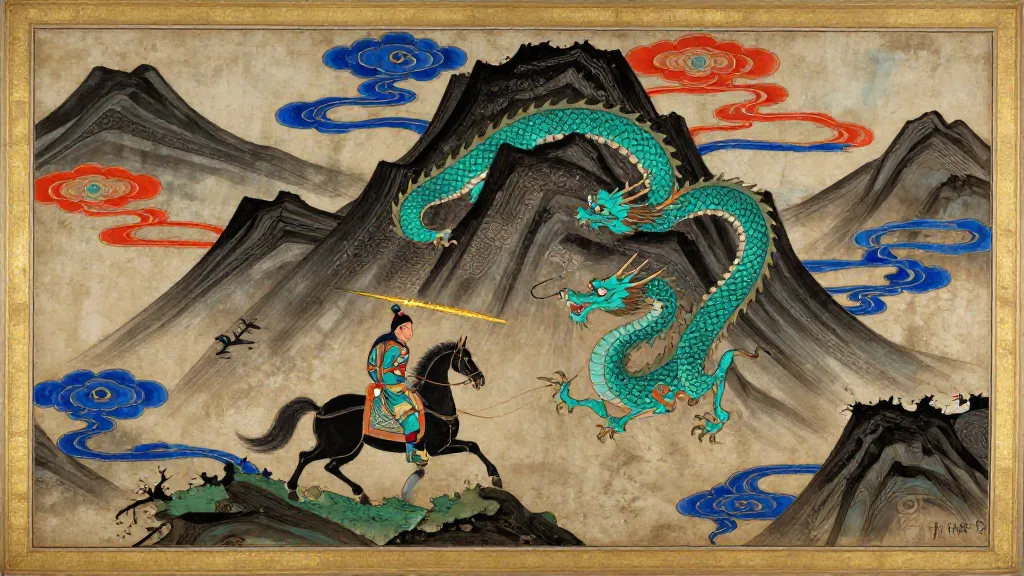
خاتون و آرزوی کین از اژدها
The Khatun's Plea and the Dragon of the Mountain
کنون تا بیامد ز ایران بچین به لرزد همی زیر اسپش زمین خداوند خواند همی مهترش همی تاج شاهی نهد بر سرش بدو گفت خاتون که با فراوی سز دگر بنازیم در پر اوی یکی آرزو زو بخواهم درست چو خاقان نگردد بدان کارسست بخواهد مگر ز اژدها کین من برو بشنود درد و نفرین من بدو گفت کهتر گر این داستان بخواند برو مهتر راستان تو از شیر کپی نیابی نشان مگر کشته و گرگ پایش کشان چو خاتون شنید این سخن شاد شد ز تیمار آن دختر آزاد شد همیتاخت تا پیش خاقان رسید یکایک بگفت آنچ دید وشنید بدو گفت خاقان که عاری بود بجایی که چون من سواری بود همی شر کپی خورد دخترم بگوییم و ننگی شود گوهرم ندانند کان اژدهای دژم همی کوه آهن رباید به دم اگر دختر شاه نامی بود همان شاه را جان گرامی بود بدو گفت خاتون که من کین خویش بخواهم ز بهر جهان بین خویش اگر ننگ باشد وگر نام من بگویم برآید مگر کام من برآمد برین نیز روز دراز نهانی ز هرکس همیداشت راز چنان بد که خاقان یکی سور کرد جهان را بران سور پر نور کرد فرستاد بهرام یل رابخواند چو آمدش برتخت زرین نشاند چو خاتون پس پرده آوا شنید بشد تیز و بهرام یل را بدید فراوانش بستود وکرد آفرین که آباد بادا بتو ترک و چین یکی آرزو خواهم از شهریار که باشد بران آرزو کامگار بدو گفت بهرام فرمان تو راست برین آرزو کام و پیمان تو راست بدو گفت خاتون کز ایدر نه دور یکی مرغزارست زیبای سور جوانان چین اندران مرغزار یکی جشن سازند گاه بهار ازان بیشه پرتاب یک تیروار یکی کوه بینی سیهتر ز قار بران کوه خارا یکی اژدهاست که این کشور چین ازو در بلاست یکی شیر کپیش خواند همی دگر نیز نامش نداند همی یکی دخترم بد ز خاقان چین که خورشید کردی برو آفرین از ایوان بشد نزد آن جشنگاه که خاقان به نخچیر بد با سپاه بیامد ز کوه اژدهای دژم کشید آن بهار مرا او بدم کنون هر بهاری بران مرغزار چنان هم بیاید ز بهر شکار برین شهر ما را جوانی نماند همان نامور پهلوانی نماند شدند از پی شیرکپی هلاک برانگیخت از بوم آباد خاک سواران چینی ومردان کار بسی تاختند اندران کوهسار چو از دور بینند چنگال اوی برو پشت و گوش و سر و یال اوی بغرد بدرد دل مرد جنگ مر او را چه شیر و چه پیل و نهنگ کس اندر نیارد شدن پیش اوی چوگیرد شمار کم و بیش اوی
Since Bahram had come from Iran to China, the earth trembled beneath his horse's hooves. The Khaqan called him lord and set a royal crown upon his head. The Khatun — the Khaqan's wife — said to her attendant: "We should take pride in him. I will ask one true favor of him. If the Khaqan does not waver in this matter, perhaps Bahram will avenge me against the dragon and hear my grief and curses."
The attendant replied: "If you bring this story before the great man, you will find no trace of the shir-kapi — unless it is dead and wolves are dragging its legs."
The Khatun was glad to hear this. She was freed from her grief over her lost daughter. She rode swiftly to the Khaqan and told him everything she had seen and heard.
The Khaqan said: "It would be a disgrace — in a court where a horseman like me sits — to say that a shir-kapi devoured my daughter. If we speak of it, shame stains my lineage. People do not understand that this fearsome dragon snatches mountains of iron in its jaws. Even if the princess was a king's daughter, a king's life is also precious to him."
The Khatun replied: "I will seek my own vengeance for the sake of my own eyes. Whether it brings me shame or fame, I will speak — perhaps my wish will be fulfilled."
Many days passed, and she kept the secret hidden from everyone. Then it happened that the Khaqan held a great feast and filled the world with its splendor. He sent for Bahram the champion and seated him upon the golden throne. When the Khatun heard voices behind the curtain, she came forward quickly and saw Bahram. She praised him lavishly and blessed him: "May Turk and China flourish through you! I have one desire to ask of the king — may he grant it."
Bahram said: "Your command stands. In this desire, your wish and your pledge are law."
The Khatun told him: "Not far from here lies a meadow fit for celebration, where the young men of China hold a festival each spring. A bowshot from that grove, you will see a mountain blacker than pitch. Upon that rocky mountain dwells a dragon that has brought calamity upon all China. They call it the shir-kapi — none know it by any other name. I had a daughter by the Khaqan of China, whom the sun itself would have praised. She went from the palace to the festival ground while the Khaqan was out hunting with his army. The fearsome dragon came down from the mountain and snatched my flower in its jaws. Now every spring it comes to that meadow to hunt. Because of it, no young man remains in our city, no famous champion survives. They perished going after the shir-kapi. It has raised dust from our settled land. Chinese horsemen and fighting men have ridden hard through those mountains, but when they see its claws from a distance — its back, its ears, its head, its mane — it roars, and the heart of even a warrior is torn apart. Against it, lion, elephant, and whale are nothing. No one dares approach it once they reckon its size."
Notes
Bahram Chobin (Bahram VI), the Sasanian general who fled to China after his failed rebellion against Khosrow II.
The Khaqan — the ruler of China and the Turks in the Shahnameh's geography. Historically a composite figure drawing on Turkic and Central Asian rulers.
The Khaqan's wife, who lost a daughter to the dragon and seeks vengeance.
Literally 'lion-ape' (شیر کپی). A monstrous creature — part dragon, part beast — dwelling on a black mountain. Ferdowsi uses 'dragon' (اژدها) and shir-kapi interchangeably for the same creature.