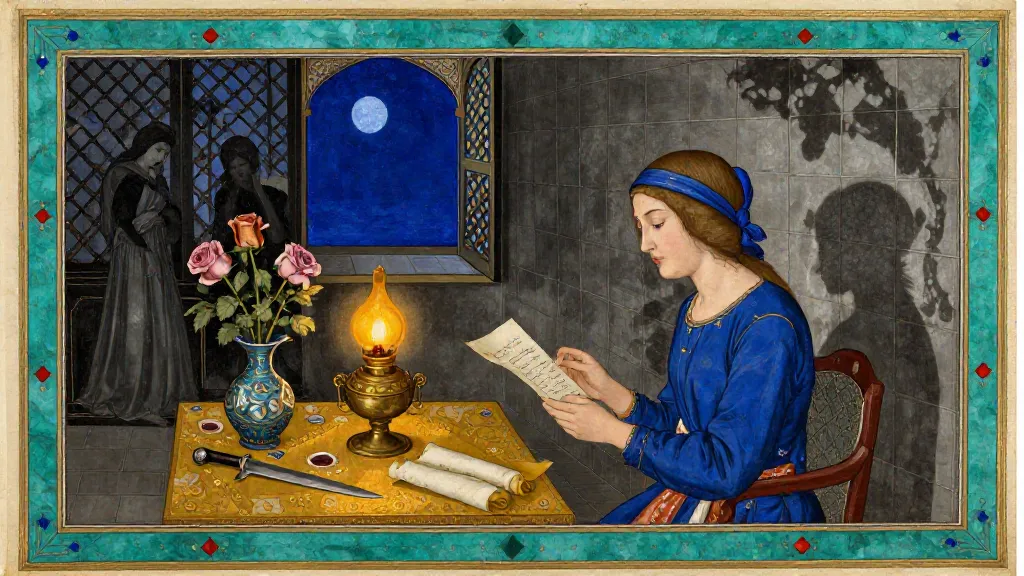
The Reign of Khosrow Parviz (Part 10) — Persian miniature painting

Shahnameh · Fall of the Sasanians

The Reign of Khosrow Parviz (Part 10)

پادشاهی خسرو پرویز ۱۰

View:

کشتن گردیه بهرام را و پیام به خسرو

Gordiyeh Kills Bahram and Sends Word to Khosrow

نهاد آن خط خسرو اندر میان بپیچید برنامه بر پرنیان زن چاره گر بستد آن نامه را شنید آن سخنهای خود کامه را همی‌تاخت تا بیشه‌ی نارون فرستاده‌ی زن به نزدیک زن ازو گردیه شد چو خرم بهار همان رخ پر از بوی و رنگ و نگار زبهرام چندی سخن راندند همی آب مژگان بر افشاندند پس آن نامه‌ی شوی با خط شاه نهانی بدو داد و بنمود راه چو آن شیر زن نامه‌ی شاه دید تو گفتی بر وی زمین ماه دید بخندید و گفت این سخن رابه رنج ندارد کسی کش بود یار پنج بخواند آن خط شاه بر پنج تن نهان داشت زان نامدار انجمن چو بگشاد لب زود پیمان ببست گرفت آن زمان دست او را بدست همان پنج تن را بر خویش خواند به نزدیکی خوابگه برنشاند چو شب تیره شد روشنایی بکشت لب شوی بگرفت ناگه بمشت ازان مردمان نیز یار آمدند به بالین آن نامدار آمدند بکوشید بسیار با مرد مست سر انجام گویا زبانش ببست سپهبد به تاریکی اندر بمرد شب و روز روشن به خسرو سپرد بشهر اندرون بانگ و فریاد خاست بهر بر زنی آتش وباد خاست چو آواز بشنید ناباک زن بخفتان رومی بپوشید تن شب تیره ایرانیان رابخواند سخنهای آن کشته چندی براند پس آن نامه‌ی شاه بنمودشان دلیری و تندی بی‌فزودشان همه سرکشان آفرین خواندند بران نامه برگوهر افشاندند دوان و قلم خواست ناباک زن ز هرگونه انداخت با رای زن یکی نامه بنوشت نزدیک شاه ز بدخواه وز مردم نیک خواه سر نامه کرد آفرین از نخست بر آنکس که او کینه از دل بشست دگر گفت کاری که فرمود شاه بر آمد بکام دل نیک خواه پراگنده گشت آن سپاه سترگ به بخت جهاندار شاه بزرگ ازین پس کنون تا چه فرمان دهی چه آویزی از گوشوار رهی

Khosrow's secret letter was placed inside a roll of silk. The resourceful woman took the message and heard the words she had longed for. She rode hard to the pomegranate grove — a woman's envoy to another woman. When Gordiyeh received her, she bloomed like spring itself, her face radiant with color and life.

They spoke of Bahram for a time, shedding tears, and then the messenger secretly handed over her husband's letter bearing the king's seal, and showed her the way. When that lionhearted woman read the king's letter, it was as if the moon had appeared on earth before her. She laughed and said: "This task is no hardship for someone who has five allies."

She read the king's letter to those five trusted men, keeping it hidden from the wider assembly. As soon as she opened her lips, they swore an oath and clasped her hand. She summoned the five to her own quarters and seated them near the bedchamber.

When the night grew dark, she extinguished the light, seized her drunken husband's lips in her fist. The conspirators came to the bedside of the famed commander. There was a fierce struggle with the intoxicated man, but in the end they silenced his tongue forever. The general died in the darkness, and the bright day and night were delivered to Khosrow.

An uproar of wailing rose throughout the city; fire and wind swept through every quarter. When the fearless woman heard the clamor, she clad herself in a Roman coat of mail. In the black of night she summoned the Iranians and spoke at length about the slain man. Then she showed them the king's letter, and their courage and ferocity redoubled. The warriors called down blessings and scattered jewels upon that letter.

The fearless woman called for ink and pen, and with shrewd deliberation composed a letter to the king — reporting on enemy and ally alike. She opened with praise for the one who had washed hatred from his heart, then wrote: "The task the king commanded has been accomplished to the heart's desire of every well-wisher. That formidable army has scattered, by the fortune of the great world-holding king. From now on, whatever the king commands — whatever earring he hangs upon his servant's ear."

Notes

1personگردیهGordiyeh

Gordiyeh (گردیه), Bahram Chobin's wife and a legendary warrior-woman. She carried out Khosrow's secret order to assassinate her husband.

2personبهرام چوبینBahram Chobin

Bahram Chobin, the rebel general who had seized the throne from Khosrow. He was living in exile among the Turks after his defeat.

3context

Khosrow engineered Bahram's assassination through his own wife. The 'five allies' were trusted conspirators who helped Gordiyeh carry out the killing while Bahram was drunk.

بازگشت گردیه به دربار خسرو

Gordiyeh Returns to Khosrow's Court

چو آن نامه نزدیک خسرو رسید از آن زن و را شادی نو رسید فرستاده‌یی خواست شیرین سخن که داند همه داستان کهن یکی نامه برسان ارژنگ چین نوشتند و کردند چند آفرین گرانمایه زن را به درگاه خواند به نامه و را افسر ماه خواند فرستاده آمد بر زن چوگرد سخنهای خسرو بدو یادکرد زن شیر زان نامه‌ی شهریار چو رخشنده گل شد به وقت بهار سپه را به در خواند و روزی بداد چو شد روز روشن بنه برنهاد چو آمد به نزدیکی شهریار سپاهی پذیره شدش بی‌شمار زره چون بدرگاه شد بار یافت دل تاجور پر ز تیمار یافت بیاورد زان پس نثاری گران هر آنکس که بودند با اوسران همان گنج و آن خواسته پیش برد یکایک به گنج‌ور اوبرشمرد ز دینار وز گوهر شاهوار کس آن را ندانست کردن شمار ز دیبای زر بفت و تاج و کمر همان تخت زرین و زرین سپر نگه کرد خسرو بران زاد سرو برخ چون بهار و برفتن تذرو به رخساره روز و به گیسو چو شب همی در بارد تو گویی ز لب ورا در شبستان فرستاد شاه ز هر کس فزون شد و را پایگاه فرستاد نزد برادرش کس همان نزد دستور فریادرس بر آیین آن دین مر او رابخواست بپذرفت با جان همی‌داشت راست بیارانش بر خلعت افگند نیز درم داد و دینار و هرگونه چیز دو هفته برآمد بدو گفت شاه به خورشید و ماه و به تخت و کلاه که برگویی آن جنگ خاقانیان ببندی کمر همچنان بر میان

When the letter reached Khosrow, fresh joy came to him from that woman. He sent for a silver-tongued envoy who knew all the old tales, and they wrote a letter as splendid as a Chinese painting, laden with blessings. The king summoned the noble woman to court, calling her in his letter the crown of the moon.

The messenger came to Gordiyeh like a whirlwind and recounted Khosrow's words to her. That lioness, reading the king's letter, bloomed like a radiant flower in spring. She summoned the army, distributed pay, and when daylight came she loaded the baggage train.

As she approached the king's domains, a countless host rode out to welcome her. When she was admitted to the court, she found the king's heart full of care. She brought forward a magnificent tribute — all the commanders who were with her presented their gifts. The treasure and wealth were laid before him and counted off one by one to his treasurer: dinars and royal jewels beyond reckoning, gold-woven brocade, crowns and belts, a golden throne and golden shields.

Khosrow gazed upon that tall cypress of noble birth — face like spring, gait like a pheasant's, her countenance bright as day, her hair dark as night, pearls seeming to rain from her lips. He sent her to the royal harem, and her rank rose above all others. He sent word to her brother and to the chief minister, and according to the rites of the faith he took her as his wife, receiving her with his whole soul and keeping her in honor. He bestowed robes of honor upon her companions too — silver, gold, and all manner of gifts.

Two weeks passed. Then the king said to her, swearing by sun and moon and throne and crown: "Tell me of the war against the Khaqan's forces — gird yourself as you did then."

Notes

1context

Khosrow formally married Gordiyeh after her heroic service, elevating her rank in the royal harem above all others.

2personخاقانKhaqan

The Khaqan — ruler of the Turks. Gordiyeh had fought against the Turkic forces while in exile with Bahram beyond the Oxus.

نمایش جنگاوری گردیه و داستان فرماندار ری

Gordiyeh's Display of Horsemanship and the Governor of Ray

بدو گفت شاها انوشه بدی روان را به دیدار توشه بدی بفرمای تا اسپ و زین آورند کمان و کمند و کمین آورند همان نیزه و خود و خفتان جنگ یکی ترکش آگنده تیر خدنگ پرستنده‌یی را بفرمود شاه که درباغ گلشن بیارای گاه برفتند بیدار دل بندگان ز ترک و ز رومی پرستندگان ز خوبان رومی هزار و دویست تو گفتی به باغ اندرون راه نیست چو خورشید شیرین به پیش اندرون خرامان به بالای سیمین ستون بشد گردیه تا به نزدیک شاه زره خواست از ترک و رومی کلاه بیامد خرامان ز جای نشست کمر بر میان بست و نیزه بدست بشاه جهان گفت دستور باش یکی چشم بگشا ز بد دور باش بدان پر هنر زن بفرمود شاه زن آمد به نزدیک اسپ سیاه بن نیزه را بر زمین برنهاد ز بالا بزین اندرآمد چوباد به باغ اندر آورد گاهی گرفت چپ وراست بیگانه راهی گرفت همی هر زمان باره برگاشتی وز ابر سیه نعره برداشتی بدو گفت هنگ‌ام جنگ تبرگ بدین گونه بودم چوغر نده گرگ چنین گفت شیرین که ای شهریار بدشمن دهی آلت کار زار تو با جامه پاک بر تخت زر ورا هر زمان برتو باشد گذر بخنده به شیرین چنین گفت شاه کزین زن جز از دوستداری مخواه همی‌تاخت گرد اندرش گردیه برآورد گاهی برش گردیه بدو مانده بد خسرو اندر شگفت بدان برز و بالا و آن یال و کفت چنین گفت با گردیه شهریار که بی‌عیبی از گردش روزگار کنون تا ببینم که با جام می یکی سست باشی اگر سخت پی بگرد جهان چار سالار من که هستند بر جان نگهبان من ابا هریکی زان ده و دو هزار ز ایران بپای اند جنگی سوار چنین هم به مشکوی زرین من چه در خانه‌ی گوهر آگین من پرستار باشد ده و دو هزار همه پاک با طوق و با گوشوار ازان پس نگهدار ایشان توی که با رنج و تیمار خویشان توی نخواهم که گویند زیشان سخن جز از تو اگر نو بود گر کهن شنید آن سخن گردیه شاد شد ز بیغاره‌ی دشمن آزاد شد همی‌رفت روی زمین را بروی همی آفرین خواند بر فر اوی برآمد برین روزگاری دراز نبد گردیه را به چیزی نیاز چنین می همی‌خورد با بخردان بزرگان و رزم آزموده ردان بدان مجلس اندر یکی جام بود نوشته برو نام بهرام بود بفرمود تا جام بنداختند وزان هرکسی دل بپرداختند گرفتند نفرین به بهرام بر بران جام و آرنده‌ی جام بر چنین گفت که اکنون بر بوم ری به کوبند پیلان جنگی بپی همه مردم از شهر بیرون کنند همه ری بپی دشت و هامون کنند گرانمایه دستور با شهریار چنین گفت کای از کیان یادگار نگه کن که شهری بزرگست ری نشاید که کوبند پیلان بپی که یزدان دران کار همداستان نباشد نه هم بر زمین راستان به دستور گفت آن زمان شهریار که بد گوهری باید و نابکار که یک چند باشد بری مرزبان یکی مرد بی دانش و بد زبان بدو گفت بهمن که گر شهریار بخواهد نشان چنین نابکار بجوییم و این را بجا آوریم نباید که بی‌رهنما آوریم چنین گفت خسرو که بسیارگوی نژند اختری بایدم سرخ موی تنش سرخ و بینی کژ وروی زشت همان دوزخی روی دور از بهشت یکی مرد بدنام و رخساره زرد بد اندیش و کوتاه دل پر ز درد همان بد دل و سفله و بی‌فروغ سرش پر ز کین و زبان پر دروغ دو چشمش کژ و سبز و دندان بزرگ بران اندرون کژ رود همچو گرگ همه موبدان مانده زو در شگفت که تا یاد خسرو چنین چون گرفت همی‌جست هرکس بگرد جهان ز شهر کسان از کهان و مهان چنان بد که روزی یکی نزد شاه بیامد کزین گونه مردی به راه بدیدم بیارم به فرمان کی بدان تا فرستدش خسرو بری بفرمود تا نزد او آورند وزان هرگونه بازی بکو آورند ببردند زین گونه مردی برش بخندید زو کشور و لشکرش بدو گفت خسرو ز کردار بد چه داری بیاد ای بد بی‌خرد چنین گفت با شاه کز کار بد نیاسایم و نیست با من خرد سخن هرچ گویی دگرگون کنم تن و جان مردم پر از خون کنم سرمایه‌ی من دروغست و بس سوی راستی نیستم دست رس بدو گفت خسرو که بد اخترت نوشته مبادا جزین بر سرت به دیوان نوشتند منشور ری ز زشتی بزرگی شد آن شوم پی سپاه پراگنده او را سپرد برفت از درو نام زشتی ببرد چوآمد بری مرد ناتندرست دل و دیده از شرم یزدان بشست بفرمود تا ناودانهای بام بکندند و او شد بران شادکام وزان پس همه گربکان رابکشت دل کد خدایان ازو شد درشت به هرسو همی‌رفت با رهنمای منادیگری پیش او بر بپای همی‌گفت گر ناودانی بجای ببینی و گر گربه‌یی در سرای بدان بوم وبر آتش اندر زنم ز برشان همی سنگ بر سرزنم همی‌جست جایی که بد یک درم خداوند او را فگندی به غم همه خانه از موش بگذاشتند دل از بوم آباد برداشتند چو باران بدی ناودانی نبود به شهر اندرون پاسبانی نبود ازان زشت بد کامه‌ی شوم پی که آمد ز درگاه خسرو بری شد آن شهر آباد یکسر خراب به سر بر همی‌تافتی آفتاب همه شهر یکسر پر از داغ و درد کس اندر جهان یاد ایشان نکرد

Gordiyeh said: "May the king live forever — my soul is nourished by the sight of you. Command them to bring horse and saddle, bow and lasso and ambush-gear, lance and helmet and battle-armor, and a quiver packed with poplar-wood arrows."

The king ordered a servant to prepare a place in the Rose Garden. Attendants came — Turks and Romans — and twelve hundred beautiful Roman women filled the garden until there seemed no room to walk. Shirin walked at their head like the sun itself, swaying on her silver-column frame.

Gordiyeh came before the king, called for a Turkish coat of mail and a Roman helm, rose from her seat, buckled a belt at her waist, and took a lance in hand. She told the king: "Give me leave — open your eyes and stand clear of harm." The king gave the command. The woman went to the black horse, planted the butt of her lance on the ground, and vaulted into the saddle like the wind.

She seized the riding-ground in the garden, wheeling left and right, clearing a path through the onlookers. She turned the horse at every moment, roaring battle-cries from atop that dark steed. "This is how I was at the battle of Tabarg," she said, "like a ravening wolf."

Shirin spoke up: "My lord, you give weapons of war to the enemy! You sit in fine robes on a golden throne while she rides past you at every turn." The king laughed at Shirin and said: "From this woman, expect nothing but devotion."

Gordiyeh galloped circles around the arena. Khosrow watched in amazement at her height, her build, her shoulders and grip. He told her: "You are flawless against the turning of fate. Now let me see whether with a cup of wine you grow soft, or stay firm."

Then Khosrow said: "Around the world I have four commanders who are the guardians of my life. With each one stand twelve thousand mounted warriors of Iran. And in my golden harem, in the jewel-studded chambers, there are twelve thousand handmaidens, all wearing torques and earrings. From this day, you are their overseer — for you are one who knows both hardship and loyalty. I do not want anyone to speak of them except through you, whether the matter is new or old."

Gordiyeh heard these words and was filled with joy, freed at last from the enemy's taunts. She pressed her face to the ground and called down blessings on his glory. A long time passed, and Gordiyeh wanted for nothing.

One day, drinking wine with the wise men and battle-tested lords, a goblet was brought to the gathering with Bahram's name inscribed on it. Khosrow ordered the cup thrown away, and everyone purged it from their hearts. They heaped curses on Bahram, on the cup, and on the one who brought it.

Then Khosrow declared: "Now let the war-elephants trample the district of Ray underfoot. Drive out all the people and flatten the city to open plain." The noble chief minister said: "O heir of the Kayanids, consider — Ray is a great city. It is not right to crush it under elephants. God would not approve of such a thing, nor would righteous men on earth."

The king said to the minister: "Then I need a man of vile nature and wicked character — someone ignorant and foul-tongued — to serve as governor of Ray for a while." Bahman replied: "If the king desires such a wretch, we will search for one and find him. But we should not bring him without proper guidance."

Khosrow said: "I need a loudmouth with a cursed star and red hair. Red-skinned, crooked-nosed, ugly-faced — a hellish visage far from paradise. A man of ill repute with a sallow face, malicious and small-hearted, full of bitterness. Cowardly, base, and dim — his head full of spite and his tongue full of lies. Cross-eyed, green-eyed, with big teeth — crookedly going about like a wolf." All the priests were astonished at what kind of memory the king held.

They searched across the world, through every town, among the low and the great. One day someone came to the king and said: "I saw such a man on the road. I will bring him at the king's command, so Khosrow can send him to Ray." The king ordered him brought, and when they dragged in such a man, the whole court and army laughed.

Khosrow asked him: "What wicked deeds do you recall, you mindless wretch?" The man said: "I never rest from evil, and I have no reason. Whatever anyone says, I twist it. I fill men's bodies and souls with blood. My only stock in trade is lying — I have no way to reach the truth."

Khosrow said: "Your evil star is written on your brow. May nothing else be inscribed above you." They wrote the charter for Ray in the chancery. From sheer ugliness that cursed man rose to greatness. The scattered army was placed under his command, and he set off from court, carrying the name of vileness with him.

When the sick-souled man reached Ray, he washed all shame of God from his eyes and heart. He ordered the rain-gutters torn from every roof, and took pleasure in it. Then he killed every cat in the city, and the householders' hearts turned hard against him. Wherever he went with his escort, a crier stood before him announcing: "If you are seen with a rain-gutter still in place, or a cat in your house, I will set fire to that property and hurl stones upon your heads."

He hunted down every last coin; whoever had one, he cast its owner into grief. Every home was overrun with mice. The people gave up on their once-prosperous land. When it rained there were no gutters; in the city there were no watchmen. All of this from that hideous, cursed governor who had come from Khosrow's court to Ray. The flourishing city was utterly ruined. The sun beat down on bare heads. The whole city was filled with branding and sorrow, and no one in the world remembered them.

Notes

1personشیرینShirin

Shirin, Khosrow's beloved Armenian queen. Her jealousy of Gordiyeh's martial display is a moment of court intrigue.

2placeریRay

Ray (Rhagae), one of the great cities of ancient Iran, near modern Tehran. Khosrow wished to punish it for supporting Bahram Chobin's rebellion.

3personبهمنBahman

Bahman, one of Khosrow's courtiers or ministers.

4context

This darkly comic episode illustrates Khosrow's petty vindictiveness. Rather than destroy Ray by force — which his minister talked him out of — he deliberately appointed the worst man imaginable as governor, achieving the city's ruin through misgovernment.

رهایی ری و سازماندهی امپراتوری

The Rescue of Ray and Organization of the Empire

چنین تا بیامد مه فوردین بیاراست گلبرگ روی زمین جهان از نم ابر پر ژاله شد همه کوه وهامون پراز لاله شد بزرگان به بازی به باغ آمدند همه میش و آهو به راغ آمدند چو خسرو گشاده در باغ دید همه چشمه‌ی باغ پر ماغ دید بفرمود تا دردمیدند بوق بیاورد پس جامهای خلوق نشستند بر سبزه می خواستند به شادی زبان را بیاراستند بیاورد پس گردیه گربکی که پیدا نبد گربه از کودکی بر اسپی نشانده ستامی بزر به زر اندرون چند گونه گهر فروهشته از گوش او گوشوار به ناخن بر از لاله کرده نگار بدیده چوقار و به رخ چون بهار چو می‌خواره بد چشم او پر خمار همی‌تاخت چون کودکی گرد باغ فروهشته از باره زرین جناغ لب شاه ایران پر از خنده شد همه کهتران خنده را بنده شد ابا گردیه گفت کز آرزوی چه باید بگو ای زن خوب روی زن چاره گر برد پیشش نماز بدو گفت کای شاه گردن فراز بمن بخش ری را خرد یاد کن دل غمگنان از غم آزاد کن ز ری مردک شوم رابازخوان ورا مرد بد کیش و بد ساز دان همی گربه از خانه بیرون کند دگر ناودان یک به یک بشکند بخندید خسرو ز گفتار زن بدو گفت کای ماه لشکرشکن ز ری باز خوان آن بد اندیش را چو آهرمن آن مرد بد کیش را فرستاد کس زشت رخ رابخواند همان خشم بهرام با او براند بکشتند او را به زاری و درد کجا بد بد اندیش و بیکار مرد هممی هر زمانش فزون بود بخت ازان تاجور خسروانی درخت ازان پس چو گسترده شد دست شاه سراسر جهان شد ورا نیک خواه همه تاجدارانش کهتر شدند همه کهتران زو توانگر شدند گزین کرد از ایران چل و هشت هزار جهاندیده گردان و جنگی سوار در گنجای کهن برگشاد که بنهاد پیروز و فرخ قباد جهان را ببخشید بر چار بهر یکایک همه نامزد کرد شهر از آن نامدران ده و دو هزار گزین کرد ز ایران و نیران سوار فرستاد خسرو سوی مرز روم نگهبان آن فرخ آزاد بوم بدان تا ز روم اندر ایران سپاه نیاید که کشور شود زو تباه مگر هرکسی برکند مرز خویش بداند سر مایه و ارز خویش هم از نامداران ده و دو هزار سواران هشیار خنجرگزار بدان تا سوی ز ابلستان شوند ز بوم سیه در گلستان شوند بدیشان چنین گفت هرکو ز راه بگردد ندارد زبان را نگاه به خوبی مر او را به راه آورید کزین بگذرد بند و چاه آورید به هرسو فرستید کارآگهان بدان تا نماند سخن در نهان طلایه بباید به روز و شبان مخسپید در خیمه بی‌پاسبان ز لشکر ده و دو هزار دگر دلاور سواران پرخاشخر بخواند و بسی هدیه‌ها دادشان به راه الانان فرستادشان بدیشان سپرد آن در باختر بدان تا نیاید ز دشمن گذر بدان سرکشان گفت بیدار بید همه در پناه جهاندار بید ده ودو هزار دگر برگزید ز مردان جنگی چنان چون سزید به سوی خراسان فرستادشان بسی پند و اندرزها دادشان که از مرز هیتال تا مرزچین نباید که کس پی نهد بر زمین مگر به آگهی و بفرمان ما روان بسته دارد به پیمان ما بهر کشوری گنج آگنده هست که کس را نباید شدن دوردست چو باید بخواهید و خرم بوید خردمند باشید و بی غم بوید

So it went until the month of Farvardin arrived and flower-petals adorned the face of the earth. The world filled with spring rain, and every mountain and plain blazed with tulips. The great men came out to the gardens for pleasure; sheep and deer came down to the meadows.

When Khosrow saw the garden gates open and every spring brimming with frogs, he ordered the trumpets sounded and saffron-scented cups brought out. They sat on the green grass and called for wine, loosening their tongues in joy.

Then Gordiyeh brought in a kitten — so small you could not tell it was a cat — mounted on a little horse with a golden bridle set with jewels of many colors. Earrings hung from its ears, its claws were painted with tulip-designs, its eyes were dark as pitch and its face fresh as spring, and its eyes were drowsy as a wine-drinker's. It galloped around the garden like a child, a golden bell dangling from the saddle.

The king of Iran burst out laughing, and every courtier surrendered to laughter. He said to Gordiyeh: "What is your heart's desire? Speak, beautiful woman." The resourceful woman bowed before him and said: "O proud-necked king — grant me Ray, and be mindful of wisdom. Free the hearts of those grieving people from their sorrow. Recall that cursed man from Ray — know him for a villain of evil faith. He drives every cat from the houses and smashes every rain-gutter one by one."

Khosrow laughed at the woman's words and said: "O moon who breaks armies — recall that demon-like wretch of evil faith from Ray." She sent for the ugly-faced governor, and the wrath that had been meant for Bahram was turned upon him. They killed him in misery and pain, for he was a malicious and worthless man.

From then on, Gordiyeh's fortune grew ever greater from that royal Kayanid tree.

Afterward, when the king's hand had spread wide and the whole world became his well-wisher, all crowned rulers became his subjects and all subjects grew prosperous through him. He selected forty-eight thousand seasoned warriors and battle-tested cavalrymen from Iran. He opened the old treasuries laid down by Piruz and the great Qobad.

He divided the world into four sectors and assigned every city by name. Twelve thousand elite horsemen of Iran and Niran he sent to the Roman frontier, to guard that blessed and free territory so that no Roman army could cross into Iran and lay waste to the realm — each man holding his own border and knowing his own worth.

Another twelve thousand sharp-eyed, sword-wielding cavalry he sent toward Zabulistan, from the dark lands into the garden-country. He told them: "Whoever strays from the path and does not guard his tongue — bring him back gently. If he goes beyond that, bring chains and a pit. Send intelligence agents in every direction so that nothing remains hidden. Post scouts by day and by night. Do not sleep in your tents without a watchman."

Another twelve thousand bold and quarrelsome riders he summoned, gave them generous gifts, and dispatched them to the Alanian passes. He entrusted them with the western gate so no enemy could break through. He told those warriors: "Be vigilant. You are all under the world-holder's protection."

A final twelve thousand he selected from among fighting men, as was fitting, and sent them toward Khorasan with much counsel and instruction: "From the Hephthalite border to the frontier of China, no one shall set foot on the ground except by our knowledge and command, keeping their souls bound by our covenant. In every province there is a packed treasury — no one needs to go far. When you need it, take from it, and be joyful. Be wise and be free from care."

Notes

1context

Gordiyeh's comic petition — presenting a bejeweled kitten on horseback to mock the governor who was killing all cats — is one of the most charming episodes in the Shahnameh. It worked: Khosrow recalled and executed the governor.

2personپیروز و قبادPiruz and Qobad

Piruz (Peroz I, r. 459–484 AD) and Qobad (Kavad I, r. 488–531 AD), earlier Sasanian kings whose treasuries Khosrow now opened.

3placeالانانAlanan

The Alanian passes — the Caucasus passes (notably the Dariel Pass), guarding Iran's northwestern frontier against the Alans and other steppe peoples.

4placeهیتالHital (Hephthalites)

The Hephthalites (White Huns), who had controlled territories in Central Asia. 'From Hephthalite to China' describes the entire northeastern frontier.

اعدام متحدان بندوی و تقسیم زمان شاهانه

Execution of Banduy's Allies and the Royal Division of Time

در گنج بگشاد و چندی درم که بودی ز هرمز برو بر رقم بیاورد و گریان به درویش داد چو درویش پیوسته بد بیش داد از آنکس که او یار بندوی بود به نزدیک گستهم و زنگوی بود که بودند یازان به خون پدر ز تنهای ایشان جدا کرد سر چو از کین و نفرین به پردخت شاه بدانش یکی دیگر آورد راه از آن پس شب و روز گردنده دهر نشست و ببخشید بر چار بهر از آن چار یک بهر موبد نهاد که دارد سخنهای نیکو بیاد ز کار سپاه و ز کار جهان به گفتی به شاه آشکار و نهان چو در پادشاهی به دیدی شکست ز لشکر گر از مردم زیردست سبک دامن داد بر تافتی گذشته بجستی و دریافتی دگر بهر شادی و رامشگران نشسته به آرام با مهتران نبودی نه اندیشه کردی ز بد چنان کز ره نامداران سزد سیم بهره گاه نیایش بدی جهان آفرین را ستایش بدی چهارم شمار سپهر بلند همی بر گرفتی چه و چون و چند ستاره شمر پیش او بر بپای که بودی به دانش ورا رهنمای وزین بهره نیمی شب دیر یاز نشستی همی با بتان طراز همان نیز یک ماه بر چار بهر ببخشید تا شاد باشد ز دهر یکی بهره میدان چوگان و تیر یکی نامور پیش او یادگیر دگر بهره زو کوه و دشت شکار ازان تازه گشتی ورا روزگار هر آنگه که گشتی ز نخچیر باز به رخشنده روز و شب دیر یاز هر آنکس که بودی و را پیش گاه ببستی به شهر اندر آیین و راه دگر بهره شطرنج بودی و نرد سخن گفت از روزگار نبرد سه دیگر هر آنکس که داننده بود فزاینده‌ی چیز و خواننده بود به نوبت و را پیش بنشاندی سخنهای دیرینه برخواندی چهارم فرستادگان را ز راه همی‌خواندندی به نزدیک شاه نوشتی همه پاسخ نامه باز بدادی بدان مرد گردن فراز فرستاده با خلعت و کام خویش ز در بازگشتی به آرام خویش همه روز منشور هر کشوری نوشتی سپردی بهر مهتری چو بودی سر سال نو فوردین که رخشان شدی در دل از هور دین نهادی یکی گنج خسرو نهان که نشناختی کهتری در جهان

He opened the treasury and brought out coins still bearing Hormozd's inscription, and weeping, gave them to the poor — and to those who had long been destitute, he gave even more.

As for those who had been allies of Banduy, who had stood close to Gostaham and Zanguy — those who had stretched their hands toward his father's blood — he severed their heads from their bodies.

When the king had finished with vengeance and curses, he turned to a different path through wisdom. He sat down and divided the turning days and nights into four parts.

The first quarter he assigned to the chief priest, who kept worthy counsel in memory. In this time the mobad would report to the king openly and in private on the state of the army and the state of the world. Whenever he detected a crack in the kingdom — whether from the military or from the common people — he would swiftly take up the hem of justice, seek out the wrong, and set it right.

The second quarter was for joy and musicians — sitting at ease among the great men, free from care and anxiety, as befits the way of the renowned.

The third quarter was the time of prayer and praise of the Creator of the world.

The fourth quarter he would take up the reckoning of the high heavens — how and why and how much. An astronomer stood before him as a guide in knowledge. Half of this portion, in the late-stretching night, he sat with beautiful companions.

He divided each month into four parts as well, to keep himself content with the world. One portion for the polo-field and archery, with a renowned recorder beside him. Another portion for hunting in mountain and plain, which refreshed his spirit. Whenever he returned from the hunt in the bright day or late at night, everyone who held a place at court would maintain proper order and custom in the city.

Another portion was for chess and backgammon and speaking of the days of battle. A third portion was for learned men, scholars and readers, whom he would seat before him in rotation to recite ancient tales. The fourth was for receiving envoys from afar — they would be summoned before the king, and he would write all his replies and hand them to the proud emissary, who would depart with robes of honor and satisfied desires, returning in comfort.

All day long he would write charters for every province, assigning them to each governor. And at the head of the new year, at Nowruz in Farvardin, when the sacred fire blazed bright in the heart, Khosrow would set aside a secret treasury that no lesser man in the world could know of.

Notes

1personبندوی و گستهمBanduy and Gostaham

Banduy and Gostaham, Khosrow's maternal uncles who deposed and blinded his father Hormozd IV. Khosrow eventually avenged his father by executing their allies.

2context

Ferdowsi presents Khosrow's division of time as a model of enlightened kingship — balancing governance, pleasure, devotion, and scholarship. This mirrors the Sasanian ideal of the just and well-rounded monarch.

3context

The reference to Kalila and Dimna (chess and backgammon) and astronomical observation reflects the historical Khosrow II's patronage of learning and his court's cosmopolitan culture.

تولد شیرویه و پیشگویی اختران

The Birth of Shiruyeh and the Star-Gazers' Prophecy

چو بر پادشاهیش شد پنج‌سال به گیتی نبودش سراسر همال ششم سال زان دخت قیصر چو ماه یکی پورش آمد همانند شاه نبود آن زمان رسم بانگ نماز به گوش چنان پروریده بناز یکی نام گفتی مر او را پدر نهانی دگر آشکارا دگر نهانی به گفتی بگوش اندرون همی‌خواندی آشکارا برون بگوش اندرون خواند خسرو قباد همی‌گفت شیر وی فرخ نژاد چو شب کودک آمد گذشته سه پاس بیامد بر خسرو اخترشناس از اخترشناسان بپرسید شاه که هرکس که دارند اختر نگاه بدیدی که فرجام این کار چیست ز زیچ اختر این جهاندار چیست چنین داد پاسخ ستاره شمر که بر چرخ گردان نیابی گذر ازین کودک آشوب گیرد زمین نخواند سپاهت برو آفرین هم از راه یزدان بگردد به نیز ازین بیشتر چون سراییم چیز دل شاه غمگین شد از کارشان وزان ناسزاوار گفتارشان چنین گفت با مرد داننده شاه که نیکو کنید اندر اختر نگاه نگر تا نگردد زبانتان برین به پیش بزرگان ایران زمین همی‌داشت آن اختران را نگاه نهاده بران بسته بر مهر شاه پر اندیشه بد زان سخن شهریار بران هفته کس را ندادند بار ز نخچیر و از می به یکسو کشید بدان چندگه روی کس را ندید همه مهتران سوی موبد شدند ز هر گونه‌یی داستانها زدند بدان تا چه بد نامور شاه را که بربست بر کهتران راه را چو بشنید موبد بشد نزد شاه بدو داد یکسر پیام سپاه چنین داد پاسخ ورا شهریار که من تنگ دل گشتم از روزگار ز گفتار این مرد اخترشناس ز گردون گردان شدم ناسپاس به گنج‌ور گفت آن یکی پرنیان بیاور یکی رقعه اندر میان بیاورد گنجور و موبد بدید دلش تنگ شد خامشی برگزید ازان پس بدو گفت یزدان بس است کجا برتر از دانش هر کس است گر ای دون که ناچار گردان سپهر دگرگون نماید به جوینده چهر به تیمار کی باز گردد ز بد چنین گفته از دانشی کی سزد جز از شادمانیت هرگز مباد ز گفتار ایشان مکن هیچ یاد ز موبد چو بشنید خسرو سخن بخندید و کاری نو افگند بن

When five years of his reign had passed and he had no rival in all the world, in the sixth year a son was born to him from the Caesar's daughter — moon-like, resembling the king himself. In those days it was not the custom to call the prayer into the ear of such a pampered child. The father gave the boy two names — one in secret, another publicly. Secretly, into his ear, Khosrow whispered "Qobad." Publicly he called him Shiruyeh, "of noble lineage."

The child was born at night, after the third watch had passed. The astrologers came before Khosrow. The king asked the star-readers — all those who kept watch on the heavens: "Tell me, what is the end of this matter? From the astronomical tables, what is this world-holder's star?"

The astrologer answered: "You cannot alter the turning wheel. From this child, the earth will know turmoil. Your army will not call down blessings upon him. He will stray from the path of God as well. More than this we cannot say."

The king's heart grew heavy at their words and their unseemly speech. He told the learned men: "Study the stars carefully. But see to it that your tongues do not wag about this before the great men of Iran." He kept those horoscopes under observation, sealed with the king's own seal.

The king was consumed with anxiety. For a whole week he gave no one an audience. He withdrew from hunting and wine, and for some days saw no one's face. All the great men went to the chief priest and debated among themselves what had happened to the king — why he had shut the door on his subjects.

When the mobad heard, he went to the king and delivered the army's message. The king replied: "I have grown heartsick from the times. The words of these astrologers have made me ungrateful toward the turning heavens." He told the treasurer: "Bring that silk — and a note inside it." The treasurer brought it, and the mobad saw it. His heart sank, and he chose silence.

Then the priest spoke: "God is enough — He who is above all human knowledge. If the turning heavens will inevitably show a different face to the seeker, will grief ever turn back what is evil? Such words are unworthy of a man of wisdom. May you know nothing but joy. Pay no heed to what they said."

When Khosrow heard the mobad's words, he laughed and set about a new undertaking.

Notes

1personشیرویهShiruyeh

Shiruyeh (Kavad II), born c. 590 AD, son of Khosrow II and Maryam, the Caesar's daughter. The astrologers' prophecy will prove devastatingly accurate — Shiruyeh will overthrow and murder his father in 628 AD.

2personمریمMaryam

Maryam, daughter of the Byzantine Emperor Maurice (Caesar). Her marriage to Khosrow cemented the Roman-Iranian alliance.

3context

The dual naming — Qobad secretly, Shiruyeh publicly — is significant. Qobad (Kavad) was a royal Sasanian name evoking legitimate succession; Shiruyeh was the name for public use. This duality mirrors the tension between the child's royal destiny and the dark prophecy attached to him.

Edition & Source

Author
فردوسی (Ferdowsi, c. 977–1010 AD)
Edition
شاهنامه — Wikisource plain edition