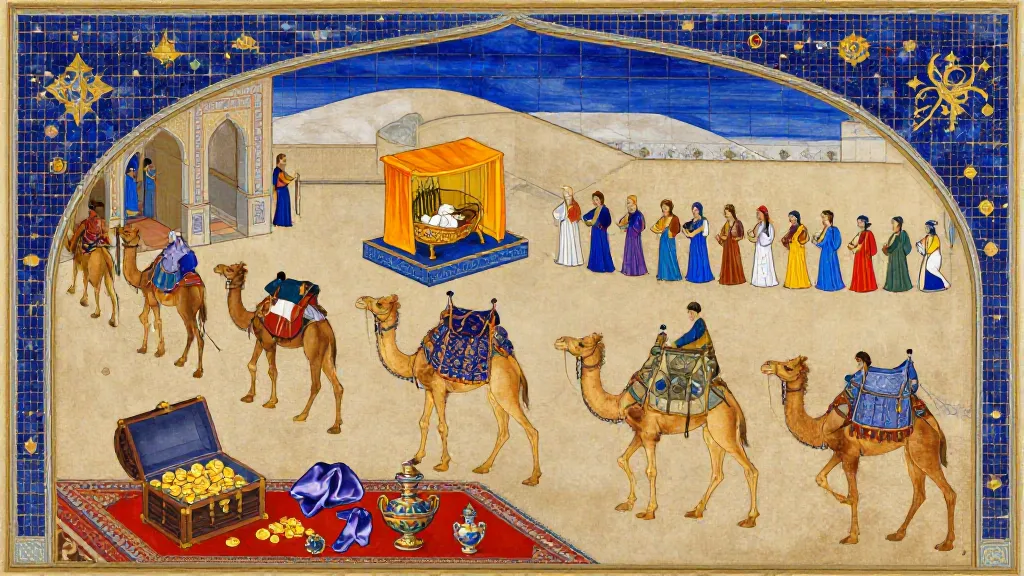
The Reign of Khosrow Parviz (Part 11) — Persian miniature painting

Shahnameh · Fall of the Sasanians

The Reign of Khosrow Parviz (Part 11)

پادشاهی خسرو پرویز ۱۱

View:

نامه خسرو به قیصر و هدایای قیصر

Khosrow's Letter to the Caesar and the Caesar's Gifts

دبیر پسندیده را خواند پیش سخن گفت با او ز اندازه بیش به قیصر یکی نامه فرمود شاه که برنه سزاوار شاهی کلاه که مریم پسر زاد زیبا یکی که هرگز ندیدی چنو کودکی نشاید مگر دانش و تخت را وگر در هنر بخشش و بخت را چو من شادمانم تو شادان بزی که شاهی و گردنکشی را سزی چو آن نامه نزدیک قیصر رسید نگه کرد و توقیع پرویز دید بفرمود تا گاو دم بر درش دمیدند و پر بانگ شد کشورش ببستند آیین به بی‌راه و راه پر آواز شیر وی پرویز شاه برآمد هم آواز رامشگران همه شهر روم از کران تا کران بدرگاه بردند چندی صلیب نسیم گلان آمد و بوی طیب بیک هفته زین گونه با رود و می ببودند شادان ز شیروی کی بهشتم بفرمود تا کاروان بیامد بدرگاه با ساروان سد اشتر ز گنج درم بار کرد چو پنجه شتر بار دینار کرد ز دیبای زربفت رومی دویست که گفتی ز زر جامه با رزیکیست چهل خوان زرین پایه بسد چنان کز در شهر یاران سزد همان چند زرین و سیمین دده بگوهر بر و چشمشان آژده بمریم فرستاد چندی گهر یکی نره طاوس کرده بزر چه از جامه‌ی نرم رومی حریر ز در و زبرجد یکی آبگیر همان باژ کشور که تا چار بار ز دینار رومی هزاران هزار فرستاد چون مرد رومی چهل کجا هر چهل بود بیدار دل گوی پیش رو نام او خانگی که همتا نبودش به فرزانگی همی‌شد برین گونه با ساروان شتربار دینار ده کاروان

Khosrow summoned his chosen scribe and spoke to him at great length. He dictated a letter to the Caesar: "Set the crown of kingship upon your brow, for Maryam has borne a beautiful son — a child the likes of which has never been seen. He is fit only for learning and the throne, for generosity and fortune in every art. As I am filled with joy, may you live in gladness — for you are worthy of sovereignty and pride."

When the letter reached the Caesar and he saw Parviz's seal, he ordered the ox-hide drums beaten at his gates until the whole realm resounded. Decorations were strung across every road and byway, filling the air with cries of "Shiruyeh! Parviz Shah!" Musicians struck up throughout the city of Rome from one end to the other. Crosses were carried to the palace gates; the fragrance of flowers and perfume drifted through the air. For a week they celebrated with music and wine, rejoicing over Shiruyeh the prince.

On the eighth day the Caesar ordered the caravans assembled at court with their camel-drivers. A hundred camels were loaded with silver coin from the treasury; fifty more carried gold dinars. Two hundred bolts of Roman gold-woven brocade — so heavy with gold you would say each garment weighed as much as a basket of grain. Forty golden trays set on coral pedestals, as befits gifts between allied courts. Gold and silver animal-figurines with jeweled bodies and agate eyes. For Maryam he sent a quantity of gems and a golden peacock, along with soft Roman silk garments and a pool made of pearls and emeralds. And the tribute of the realm — four installments of millions upon millions of Roman dinars.

He dispatched forty sharp-witted Roman men as escorts, led by a man named Khanagi, who had no equal in wisdom. Thus the caravan set out with its camel-drivers — ten trains of camels loaded with gold.

Notes

1personقیصرQaysar (Caesar)

The Byzantine Emperor Maurice (Caesar/Qaysar), Maryam's father and Khosrow's father-in-law and patron.

2personخانگیKhanagi

Khanagi, the lead Roman envoy — described as unmatched in wisdom and learning.

3context

The Caesar's extravagant gifts reflect the historical alliance between Khosrow II and Maurice. Maurice had helped restore Khosrow to his throne after the Bahram Chobin revolt. The birth of Shiruyeh — grandson to both rulers — cemented this bond.

رسیدن سفیر روم و نامه‌ی قیصر

Arrival of the Roman Envoy and the Caesar's Letter

چوآگاهی آمد به پرویز شاه که پیغمبر قیصر آمد ز راه به فرخ بفرمود تا برنشست یکی مرزبان بود خسروپرست که سالار او بود بر نیمروز گرانمایه گردی و گیتی فروز برفتند با او سواران شاه به سر برنهادند زرین کلاه چو از دور دید آن سپه خانگی به پیش اندر آمد به بیگانگی چنین تا به نزدیک شاه آمدند بران نامور پیشگاه آمدند چو دیدند زیبا رخ شاه را بران گونه آراسته‌گاه را نهادند همواره سر بر زمین برو بر همی‌خواندند آفرین بمالید پس خانگی رخ بخاک همی‌گفت کای داور داد وپاک ز پیروزگر آفرین بر تو باد مبادی همیشه مگر شاه و راد بزرگانش از جای برخاستند به نزدیک شه جایش آراستند چنین گفت پس شاه را خانگی که چون تو که باشد به فرزانگی ز خورشید بر چرخ تابنده‌تر ز جان سخنگوی پاینده‌تر مبادا جهان بی‌چنین شهریار برومند بادا برو روزگار مبیناد کس روز بی‌کام تو نوشته بخورشید بر نام تو جهان بی سر و افسر تو مباد بر و بوم بی لشکر تو مباد ز قیصر درود و ز ما آفرین برین نامور شهریار زمین کسی کو درین سایه‌ی شاه شاد نباشد ورا روشنایی مباد ابا هدیه و باژ روم آمدم برین نامبردار بوم آمدم برفتیم با فیلسوفان بهم بران تا نباشد کس از ما دژم ز قیصر پذیرد مگر باژ و چیز که با باژ و چیز آفرینست نیز بخندید از آن پر هنر مرد شاه نهادند زرین یکی پیشگاه فرستاد پس چیزها سوی گنج بدو گفت چندین نبایست رنج بخراد بر زین چنین گفت شاه که این نامه برخوان به پیش سپاه به عنوان نگه کرد مرد دبیر که گوینده‌یی بود و هم یادگیر چنین گفت کاین نامه سوی مهست جهاندار پرویز یزدان پرست جهاندار و بیدار و پدرام شهر که یزدانش تاج و خرد داد بهر جهاندار فرزند هرمزد شاه که زیبای تاج است و زیبای گاه ز قیصر پدر مادر شیر نام که پاینده بادا بدو نام و کام ابا فر و با برز و پیروز باد همه روزگارانش نوروز باد به ایران و تورانش بر دست رس به شاهی مباداش انباز کس همیشه به دل شاد و روشن روان همیشه خرد پیر و دولت جوان گران مایه شاهی گیومرتی همان پور هوشنگ تهمورسی پدر بر پدر و پسر بر پسر مبادا که این گوهر آید به سر برین پاک یزدان کند آفرین بزرگان ملک و بزرگان دین نه چون تو خزان و نه چون تو بهار نه چون تو بایوان چین بر نگار همه مردمی و همه راستی مبیناد جانت بد کاستی

When word reached Parviz that the Caesar's envoy was on the road, he ordered Farrokh to ride out to meet him — a border-lord devoted to the king, who commanded the southern frontier, a warrior of great worth and world-illuminating fame. The king's horsemen rode out with him, golden crowns on their heads.

When Khanagi saw the approaching host from a distance, he came forward with the formality of a stranger. They proceeded until they reached the king's renowned audience-hall. When the Romans saw the beauty of the king's face and the splendor of the court's adornment, they pressed their foreheads to the ground again and again, calling down blessings upon him.

Khanagi rubbed his face in the dust and said: "O just and pure lord — may the blessings of the Victorious One be upon you. May you be forever king and generous. More radiant than the sun on its wheel, more enduring than the speaking soul — may the world never be without such a sovereign. May fortune be fruitful upon him. May no one see a day without your will fulfilled. Your name is inscribed upon the sun. May the world never lack your crown and diadem, nor the land your army."

Then he said: "From the Caesar, greetings; from us, blessings — upon this renowned sovereign of the earth. Whoever dwells in the king's shadow and is not glad, may he never see the light. I have come with the tribute and gifts of Rome to this famous land. We have traveled with philosophers in our company so that none among us should be found wanting. May the king accept the Caesar's tribute and gifts — for with the tribute come blessings as well."

The king laughed at the accomplished envoy. They set a golden seat for him and sent the goods to the treasury. Khosrow said: "You need not have gone to such trouble."

Then the king told Kharrad Barzin: "Read this letter before the army." The scribe examined the address — he was a man of eloquence and memory — and read aloud:

"This letter is addressed to the Great One: Parviz, world-holder, worshiper of God. World-holder, vigilant, and city-adorner — to whom God granted crown and wisdom as his portion. World-holding son of Hormozd Shah, who is worthy of crown and throne. From the Caesar, father of the mother of his lion-cub — may name and desire endure through him forever. May he possess glory and grandeur and triumph. May all his days be Nowruz. Over Iran and Turan may his hand reach, and may none be his partner in kingship. May his heart be forever glad and his soul luminous, his wisdom ever old and his fortune ever young.

"A precious kingship of the line of Gayumars, of the sons of Hushang, of the seed of Tahmuras — father upon father, son upon son — may this bloodline never come to an end. Upon this may the pure God call blessings, and the great men of realm and faith. There is no autumn like you, no spring like you, no painted image in a Chinese gallery like you. All humanity, all uprightness — may your soul never see the diminishment of evil."

Notes

1personخراد برزینKharrad Barzin

Kharrad Barzin (خراد برزین), a court scribe or minister who read the Caesar's letter aloud to the assembled court.

2context

The Caesar's letter traces Khosrow's lineage back to the mythical first kings — Gayumars (first man), Hushang, and Tahmuras — establishing Sasanian legitimacy through the deepest roots of Iranian kingship. This diplomatic flattery carries real ideological weight.

3personهرمزدHormozd

Hormozd IV (Hormozd Shah), Khosrow's father, the deposed and blinded king.

ادامه‌ی نامه‌ی قیصر و درخواست صلیب مسیح

The Caesar's Letter Continued: The Request for the True Cross

به ایران و توران و هندوستان همان ترک تا روم و جا دوستان تو را داد یزدان به پاکی نژاد کسی چون تو از پاک مادر نزاد فریدون چو ایران بایرج سپرد ز روم و ز چین نام مردی ببرد برو آفرین کرد روز نخست دلش را ز کژی و تاری بشست همه بی نیازی و نیک اختری بزرگی و مردی و افسونگری تو گویی که یزدان شما را سپرد وزان دیگران نام مردی ببرد هنر پرور و راد و بخشنده گنج ازین تخمه‌ی هرگز نبد کس به رنج نهادند بر دشمنان باژ و ساو بد اندیشتان بارکش همچو گاو ز هنگام کسری نوشین روان که بادا همیشه روانش جوان که از ژرف دریا برآورد پی بران گونه دیوار بیدار کی ز ترکان همه بیشه‌ی نارون بشستند وبی رنج گشت انجمن ز دشمن برستند چندی جهان برو آفرین از کهان و مهان ز تازی و هندی و ایرانیان ببستند پیشش کمر بر میان روا رو چنین تا به مرز خزر ز ارمینیه تا در باختر ز هیتال و ترک و سمرقند و چاچ بزرگان با فر او اورند وتاج همه کهتران شما بوده‌اند برین بندگی بر گوا بوده‌اند که شاهان ز تخم فریدون بدند دگر یکسر از داد بیرون بدند بدین خویشی اکنون که من کرده‌ام بزرگی به دانش برآورده‌ام بدان گونه شادم که تشنه بر آب وگر سبزه‌ی تیره بر آفتاب جهاندار بیدار فرخ کناد مرا اندرین روز پاسخ کناد یکی آرزو خواهم از شهریار کجا آن سخن نزد او هست خوار که دار مسیحا به گنج شماست چو بینید دانید گفتار راست برآمد برین سالیان دراز سزد گر فرستد بما شاه باز بدین آرزو شهریار جهان ببخشاید از ما کهان و مهان ز گیتی برو بر کنند آفرین که بی تو مبادا زمان و زمین بدان من ز خسرو پذیرم سپاس نیایش کنم روز و شب در سه پاس همان هدیه و باژ و ساوی که من فرستم به نزدیک آن انجمن پذیرد پذیرم سپاسی بدان مبیناد چشم تو روی بدان شود فرخ این جشن و آیین ما درخشان شود در جهان دین ما همان روزه‌ی پاک یک شنبدی ز هر در پرستنده‌ی ایزدی برو سوکواران بمالند روی بروبر فراوان بسایند موی شود آن زمان بر دل ما درست که از کینه دلها بخواهیم شست که بود از گه آفریدون فراز که با تور و سلم اندر آمد براز شود کشور آسوده از تاختن بهر گوشه‌یی کینها ساختن زن و کودک رومیان برده‌اند دل ما ز هر گونه آزرده‌اند برین خویشی ما جهان رام گشت همه کار بیهوده پدرام گشت درود جهان آفرین بر تو باد همان آفرین زمین بر تو باد

The letter continued: "In Iran and Turan and Hindustan, from the Turks all the way to Rome and the lands of friends — God gave you pure lineage. No one like you was ever born of a pure mother. When Fereydun entrusted Iran to Iraj, he erased the name of manliness from Rome and China. On the first day he blessed Iraj and cleansed his heart of crookedness and darkness. All self-sufficiency and good fortune, greatness and valor and enchantment — one would say God entrusted it all to your line and stripped the name of manliness from all others.

"Talent-nurturing, generous, treasure-bestowing — from this bloodline no one has ever known want. They laid tribute and tax upon their enemies; the ill-wishers bore their yoke like oxen. From the time of Kasra Anushirvan — may his soul be forever young — who raised a wall from the depths of the sea, that vigilant king. They swept the Turks from every pomegranate grove and the assembly was freed from trouble. For a time the world was delivered from the enemy, and blessings rained from high and low. Arabs and Indians and Iranians all girded themselves in service before him. And so it went to the Khazar frontier, from Armenia to the western gate, from Hephthalites and Turks and Samarkand and Chach — the great men bore his glory, crown and throne. All have been your subjects, and have borne witness to this servitude. The kings of Fereydun's seed have ruled; all others have been outside the pale of justice.

"With this kinship that I have now forged, I have raised greatness through wisdom. I am as glad as a thirsty man at water, or dark grass under the sun. May the vigilant world-holder grant me blessing, and give me his reply in this matter."

Then came the request: "I have one desire of the king — a matter he may consider trivial. The Cross of Christ is in your treasury. If you look, you will know my words are true. Many long years have passed. It would be fitting if the king sent it back to us. With this wish, may the sovereign of the world show mercy to our great and small, and may the whole world call blessings upon him. May time and earth never exist without you. For this I would receive thanks from Khosrow, and I would pray day and night through the three watches.

"And the tribute and gifts and taxes that I send to your court — may you accept them, and I will accept gratitude in return. May your eyes never see evil. Our festival and our faith will be made glorious; our religion will shine throughout the world. That pure fast of Sunday — from every door, worshipers of God — upon it the mourners rub their faces and wear away their hair. Then it will be established in our hearts that we have washed hatred from our souls — the hatred that has stood since the time of Fereydun, when Tur and Salm came to treachery.

"Let the realm rest from raiding, and from the kindling of feuds in every corner. They have taken the women and children of the Romans captive and have wounded our hearts in every way. Through this kinship of ours the world has grown tame, and all that futile strife has grown calm.

"The greeting of the Creator of the world be upon you. The blessing of the earth be upon you."

Notes

1context

The True Cross (دار مسیحا) — the relic of Christ's crucifixion. Historically, the Sasanians captured it from Jerusalem in 614 AD during Khosrow II's invasion of Byzantine territories. The Caesar's request for its return is a major diplomatic ask.

2personفریدونFereydun

Fereydun, Iraj, Tur, and Salm — mythical Iranian kings. Fereydun divided the world among his three sons: Iran to Iraj, Turan to Tur, and Rome/the West to Salm. Tur and Salm murdered Iraj out of jealousy, creating the primal feud between Iran, Turan, and Rome.

3personکسری نوشین روانKasra Anushirvan

Kasra Anushirvan — Khosrow I (r. 531–579 AD), Khosrow II's grandfather. The 'wall from the sea' refers to the Wall of Gorgan or the Derbent fortifications against steppe nomads.

پاسخ خسرو به قیصر و ردّ صلیب

Khosrow's Reply to the Caesar and Refusal of the Cross

چو آن نامه‌ی قیصر آمد ببن جهاندار بشنید چندان سخن ازان نامه شد شاه خرم نهان برو تازه شد روزگار مهان بسی آفرین کرد برخانگی بدو گفت بس کن ز بیگانگی گرانمایه را جایگه ساختند دو ایوان فرخ بپرداختند ببردند چیزی که بایست برد به نزدیک آن مرد بیدار گرد بیامد بدید آن گزین جایگاه وزان پس همی‌بود نزدیک شاه بخوان و نبید و شکار و نشست همی‌بود با شاه مهتر پرست برین گونه یک ماه نزدیک شاه همی‌بود شادان دل و نیک خواه چویک ماه شد نامه پاسخ نوشت سخنهای با مغز و فرخ نوشت سرنامه گفت آفرین مهان بران باد کو باد دارد جهان بد و نیک بیند ز یزدان پاک وزو دارد اندر جهان بیم و باک کند آفرین بر خداوند مهر کزین گونه بر پای دارد سپهر نخست آنک کردی ستایش مرا به نامه نمودی نیایش مرا بدانستم و شاد گشتم بدان سخن گفتن تاجور بخردان پذیرفتم آن نامور گنج تو نخواهم که چندان بود رنج تو ازی را جهاندار یزدان پاک برآورد بوم تو را بر سماک ز هند و ز سقلاب و چین و خزر چنین ارجمند آمد آن بوم و بر چه مردی چه دانش چه پرهیز و دین ز یزدان شما را رسید آفرین چو کار آمدم پیش یارم بدی بهر دانشی غمگسارم بدی چنان شاد گشتم ز پیوند تو بدین پر هنر پاک فرزند تو که کهتر نباشد به فرزند خویش ببوم و بر و پاک پیوند خویش همه مهتران پشت برگاشتند مرا در جهان خوار بگذاشتند تو تنها بجای پدر بودیم همان از پدر بیشتر بودیم تو را همچنان دارم اکنون که شاه پدر بیند آزاده و نیک خواه دگر هرچ گفتی ز شیروی من ازان پاک تن پشت و نیروی من بدانستم و آفرین خواندم بران دین تو را پاک دین خواندم دگر هرچ گفتی ز پاکیزه دین ز یک شنبدی روزه‌ی به آفرین همه خواند بر ما یکایک دبیر سخنهای بایسته و دلپذیر بما بر ز دین کهن ننگ نیست به گیتی به از دین هوشنگ نیست همه داد و نیکی و شرمست و مهر نگه کردن اندر شمار سپهر به هستی یزدان نیوشان ترم همیشه سوی داد کوشان ترم ندانیم انباز و پیوند و جفت نگردد نهان و نگردد نهفت در اندیشه‌ی دل نگنجد خدای به هستی همو با شدت رهنمای دگر کت ز دار مسیحا سخن بیاد آمد از روزگار کهن مدان دین که باشد به خوبی بپای بدان دین نباشد خرد رهنمای کسی را که خوانی همی سوگوار که کردند پیغمبرش را بدار که گوید که فرزند یزدان بد اوی بران دار بر کشته خندان بد اوی چو پور پدر رفت سوی پدر تو اندوه این چوب پوده مخور ز قیصر چو بیهوده آمد سخن بخندد برین کار مرد کهن همان دار عیسی نیرزد به رنج که شاهان نهادند آن را به گنج از ایران چو چوبی فرستم بروم بخندد بما بر همه مرز و بوم به موبد نباید که ترسا شدم گر از بهر مریم سکوبا شدم دگر آرزو هرچ باید بخواه شمار سوی ما گشادست راه

When the Caesar's letter reached its end and the world-holder had heard all those words, the king was secretly delighted — the age of the great ones felt fresh again. He heaped blessings upon Khanagi and told him: "Enough of this formality between strangers." They prepared splendid quarters for the distinguished envoy, clearing out two fine halls. Everything needful was brought to the alert and worthy man. He came and saw the choice lodgings, and from then on remained near the king — at table, at wine, at the hunt, in every sitting — the greatest man's guest. For a full month he stayed near the king, glad-hearted and well-disposed.

When the month was up, Khosrow wrote his reply — words full of substance and good fortune:

"The heading of the letter: May the blessings of the great rest upon the one who holds the world by the wind. He sees good and evil from the pure God and holds awe and fear of Him in the world. He calls blessings upon the Lord of Love who upholds the heavens in this fashion.

"First — you offered me praise and showed me reverence in your letter. I understood it and was glad: the speech of crowned wise men. I have accepted your renowned treasure. I do not wish you to bear such burden — for the world-holding pure God has raised your land to the heights of Arcturus. From India and the Slavs and China and Khazaria, how honored that land and realm has become — in manliness, in learning, in piety and faith. God's blessings have reached you.

"When trouble came upon me, you were my ally. In every matter of knowledge, you eased my grief. I was as glad of our kinship — of this pure, talented child of yours — as a lesser man would be of his own offspring, in his own land, in his own pure line. When all the great men turned their backs and left me abandoned in the world, you alone stood in a father's place. You were even more than a father. I hold you now as a king holds the noble and well-wishing father he sees before him.

"As for what you said of my Shiruyeh — that pure-bodied one, my support and strength — I understood it and called blessings upon it, and on your faith I called you pure in religion."

Then came the refusal: "As for what you said of the pure faith, of the Sunday fast and its blessings — the scribe read it all to us, point by point, those worthy and heart-pleasing words. But we bear no shame from our ancient faith. In all the world there is nothing better than the religion of Hushang. It is all justice and goodness and modesty and love, and the observation of the heavenly reckoning. In God's existence I am the more attentive listener. I ever strive more toward justice. We acknowledge no partner, no kin, no spouse for God. He is not hidden and is not concealed. God does not fit within the thought of the heart. In existence, He alone is your guide.

"As for your mention of the Cross of Christ, recalled from ancient times — do not consider a religion that stands by beauty alone. Reason is not the guide to that faith. The one you call a mourner — whose prophet they put on a cross — who says he was the son of God, and that he died laughing on that cross? Since the son went to the father, to the father, do not grieve over this rotting wood. When such idle talk comes from the Caesar, an old wise man would laugh at it. That cross of Jesus is not worth the trouble that kings have stored it in their treasury. If I send a piece of wood from Iran to Rome, every land and border will laugh at us.

"The chief priest should not fear that I have become a Christian, or that for Maryam's sake I have become a bishop.

"Any other desire you have — ask for it. The road between us is open."

Notes

1context

Khosrow's blunt theological rejection of Christianity is one of the most theologically charged passages in the Shahnameh. He defends Zoroastrianism ('the religion of Hushang') on grounds of pure monotheism and reason, and mocks the veneration of the Cross as worship of 'rotting wood.' Historically, Khosrow II was actually tolerant of Christians — his queen Shirin was Christian — but Ferdowsi presents him as a champion of Iranian religion.

2context

The 'religion of Hushang' refers to the ancient Iranian faith — Zoroastrianism traced to the mythical king Hushang, predating Zarathustra in the Shahnameh's chronology.

3personمریمMaryam

Maryam, Khosrow's Christian wife and the Caesar's daughter. Khosrow insists that marrying her has not made him a convert.

هدایای خسرو و داستان شیرین و خسرو

Khosrow's Return Gifts and the Tale of Shirin and Khosrow

پسندیدم آن هدیه های تو نیز کجا رنج بردی ز هر گونه چیز به شیروی بخشیدم این برده رنج پی افگندم او را یکی تازه گنج ز روم و ز ایران پر اندیشه‌ام شب تیره اندیشه شد پیشه‌ام بترسم که شیروی گردد بلند ز ساند بروم و به ایران گزند نخست اندر آید ز سلم بزرگ ز اسکندر آن کینه دار سترگ ز کین نو آیین و کین کهن مگر در جهان تازه گردد سخن سخنها که پرسیدم از دخترت چنان دان که او تازه کرد افسرت بدین مسیحا بکوشد همی سخنهای ما کم نیوشد همی به آرام شادست و پیروزبخت بدین خسروانی نو آیین درخت همیشه جهاندار یار تو باد سر اختر اندر کنار تو باد نهادند بر نامه بر مهر شاه همی‌داشت خراد برزین نگاه گشادند زان پس در گنج باز کجا گرد کرد او به روز دراز نخستین سد و شست بند اوسی که پند او سی خواندش پارسی به گوهر بیاگنده هر یک چو سنگ نهادند بر هر یکی مهر تنگ بران هر یکی دانه ها سد هزار بها بود بر دفتر شهریار سیسد شتر سرخ موی سیه چشم و آراسته راه جوی مران هر یکی را درم دو هزار بها داده بد نامور شهریار ز دیبای چینی سد و چل هزار ازان چند زربفت گوهرنگار دگر پانسد در خوشاب بود که هر دانه یی قطره‌ی آب بود سد و شست یاقوت چون ناردان پسندیده‌ی مردم کاردان ز هندی و چینی و از بربری ز مصری و از جامه‌ی پهلوی ز چیزی که خیزد ز هر کشوری که چونان نبد در جهان دیگری فرستاد سیسد شتروار بار از ایران بر قیصر نامدار یکی خلعت افگند بر خانگی فزون‌تر ز خویشی و بیگانگی همان جامه و تخت و اسب و ستام ز پوشیدنیها که بردیم نام بدینسان چنین سد شتر بارکرد از آن ده شتربار دینار کرد ببخشید بر فیلسوفان درم ز دینار و هرگونه‌یی بیش وکم برفتند شادان ازان مرز وبوم به نزدیک قیصر ز ایران بروم همه مهتران خواندند آفرین بران پر هنر شهریار زمین کنون داستان کهن نو کنیم سخنهای شیرین و خسرو کنیم کهن گشته این نامه‌ی باستان ز گفتار و کردار آن راستان همی نوکنم گفته‌ها زین سخن ز گفتار بیدار مرد کهن بود بیست شش بار بیور هزار سخنهای شایسته و غمگسار نبیند کسی نامه‌ی پارسی نوشته به ابیات سدبار سی اگر بازجویی درو بیت بد همانا که کم باشد از پانسد چنین شهریاری و بخشنده‌یی به گیتی ز شاهان درخشنده‌یی نکرد اندرین داستانها نگاه ز بدگوی و بخت بد آمد گناه حسد کرد بدگوی در کار من تبه شد بر شاه بازار من چو سالار شاه این سخنهای نغز بخواند ببیند به پاکیزه نغز ز گنجش من ایدر شوم شادمان کزو دور بادا بد بدگمان وزان پس کند یاد بر شهریار مگر تخم رنج من آید ببار که جاوید باد افسر و تخت اوی ز خورشید تابنده‌تر بخت اوی

"I have also approved your gifts, for which you went to such trouble of every kind. I have bestowed these hard-won gifts upon Shiruyeh and founded a new treasury in his name.

"Yet I am full of anxious thought about Rome and Iran. In the dark night, worry has become my occupation. I fear that Shiruyeh will grow great and bring harm to both Rome and Iran. First the old pattern will repeat — from Salm the great, from Alexander that formidable grudge-bearer. From new enmity and old hatred, perhaps fresh speech will arise in the world.

"As for the questions I asked about your daughter — know that she has refreshed your crown. She strives in the faith of the Messiah and pays little heed to our words. But she is content and fortunate — a new-growing branch on this royal Kayanid tree.

"May the world-holder be forever your ally. May the head of your star rest in your embrace."

They set the king's seal upon the letter, and Kharrad Barzin kept watch over it. Then they opened the treasury gates — all the wealth he had gathered over long years.

First: a hundred and sixty bundles of 'ounce-weights' — called pandosi in Persian — each stuffed with gems like stones, sealed tight, each containing a hundred thousand gems valued in the king's ledger. Three hundred red-haired camels, black-eyed and trail-ready, each valued at two thousand dirhams by the renowned king. A hundred and forty thousand bolts of Chinese brocade, many of them gold-woven and jewel-patterned. Five hundred lustrous pearls, each drop like water. A hundred and sixty rubies like pomegranate seeds, prized by men of discernment. Indian, Chinese, Berber, Egyptian goods, and Pahlavi garments — products from every country, the like of which existed nowhere else in the world.

He dispatched three hundred camel-loads from Iran to the renowned Caesar. Upon Khanagi he bestowed a robe of honor surpassing what was due to either kin or stranger — garments, a throne, horses and harness, and every kind of finery. A hundred camels were loaded in this fashion, ten of them carrying gold dinars alone. He distributed coins to the philosophers — gold in various amounts, more to some and less to others.

They departed in gladness from that land and realm, returning to the Caesar from Iran to Rome. All the great men called blessings upon that talented sovereign of the earth.

Now let us make the old tale new again and tell the story of Shirin and Khosrow. This ancient book has grown old — the words and deeds of those righteous ones. I make these speeches fresh from the words of the vigilant old man. There are twenty-six times ten thousand worthy and sorrowful verses. No one will see a Persian book written in thirty hundred couplets. If you search for a bad verse in it, there will surely be fewer than five hundred.

Such a king — such a giver — shining among all monarchs of the world — yet he paid no heed to these tales. The fault came from slanderers and ill fortune. The envious slandered me in my work; my standing was ruined before the king. When the king's commander reads these elegant words and sees their pure beauty, may I be made glad from his treasury — may evil suspicion be far from him. And afterward may he bring my name before the king, so that the seed of my toil may bear fruit. May his crown and throne endure forever — his fortune more radiant than the sun.

Notes

1context

Ferdowsi breaks the fourth wall here, lamenting his own neglect by the court. He complains that slanderers have ruined his standing with Sultan Mahmud of Ghazni, and hopes that a patron will bring his work to the king's attention. This is one of several autobiographical interjections in the Shahnameh.

2context

Khosrow's ominous prophecy about Shiruyeh harming both Rome and Iran is dramatically ironic — the reader knows Shiruyeh will indeed overthrow his father and plunge the empire into the chaos that enables the Arab conquest.

3personسلم و اسکندرSalm and Alexander

Salm and Alexander (Eskandar) — archetypal enemies of Iran in the Shahnameh. Salm murdered his brother Iraj; Alexander destroyed the Achaemenid Empire. Khosrow fears his half-Roman son will repeat this pattern.

شکار شاهانه و دیدار با شیرین

The Royal Hunt and Reunion with Shirin

چنین گفت داننده دهقان پیر که دانش بود مرد را دستگیر غم و شادمانی بباید کشید ز هر شور و تلخی بباید چشید جوانان داننده و باگهر نگیرند بی آزمایش هنر چو پرویز ناباک بود و جوان پدر زنده و پور چون پهلوان ورا در زمین دوست شیرین بدی برو بر چو روشن جهان بین بدی پسندش نبودی جزو در جهان ز خوبان وز دختران مهان ز شیرن جدا بود یک روزگار بدان گه که بد در جهان شهریار بگرد جهان در بی‌آرام بود که کارش همه رزم بهرام بود چو خسرو به پردخت چندی به مهر شب و روز گریان بدی خوب‌چهر چنان بد که یک روز پرویز شاه همی آرزو کرد نخچیرگاه بیاراست برسان شاهنشهان که بوند ازو پیشتر در جهان چو بالای سیسد به زرین ستام ببردند با خسرو نیک نام هزار و سد و شست خسرو پرست پیاده همی‌رفت ژوپین بدست هزار و چهل چوب و شمشیر داشت که دیبای در بر زره زیر داشت پس اندر بدی پانسد بازدار هم از واشه و چرغ و شاهین کار ازان پس برفتند سیسد سوار پس بازداران با یوزدار به زنجیر هفتاد شیروپلنگ به دیبای چین اندرون بسته تنگ پلنگان و شیران آموخته به زنجیر زرین دهن دوخته قلاده بزر بسته سد بود سگ که دردشت آهو گرفتی بتگ پس اندر ز رامشگران دوهزار همه ساخته رود روز شکار به زیر اندرون هریکی اشتری به سر برنهاده ز زر افسری ز کرسی و خرگاه و پرده سرای همان خیمه و آخر چارپای شتر بود پیش اندرون پانسد همه کرده آن بزم را نامزد ز شاهان برنای سیسد سوار همی‌راند با نامور شهریار ابا یاره و طوق و زرین کمر بهر مهره‌یی در نشانده گهر دوسد برده تامجمر افروختند برو عود و عنبر همی‌سوختند دوسد مرد برنای فرمانبران ابا هریکی نرگس و زعفران همه پیش بردند تا باد بوی چو آید ز هر سو رساند بدوی همه پیش آنکس که با بوی خوش همی‌رفت با مشک سد آبکش که تا ناورد ناگهان گرد باد نشاند بران شاه فرخ نژاد

Thus spoke the wise old landowner: "Knowledge is a man's support. One must endure both grief and joy, and taste every bitter and harsh thing. Young men of learning and noble blood do not acquire skill without trial."

When Parviz was bold and young — his father still alive, the son already a warrior — his beloved on earth was Shirin. She was to him like the bright eye through which one sees the world. He wanted no one else among all the beauties and daughters of the great. He had been separated from Shirin for a time — in the days when he was king of the world — restless across the globe, for his whole business was the war against Bahram. When Khosrow finally had leisure for love, the beautiful one wept day and night.

It happened one day that Parviz desired the hunting grounds. He arrayed himself in the manner of the great kings who had come before him in the world.

Some three hundred horses in golden harness were led out with the well-named Khosrow. Thirteen hundred and sixty king-worshiping foot-soldiers marched with javelins in hand. A thousand and forty men carried clubs and swords, wearing brocade over chainmail. Behind them came five hundred falconers with sparrowhawks, goshawks, and hunting-falcons. After those rode three hundred mounted men behind the falconers, along with cheetah-handlers. Seventy lions and leopards on chains, bound tight in Chinese silk, trained beasts with their jaws sewn shut with golden chains. A hundred gold-collared hounds that could catch gazelles at a sprint on the plain.

Behind them came two thousand musicians, all with instruments tuned for the day's hunt, each mounted on a camel wearing a golden crown. Five hundred camels went ahead loaded with thrones, pavilions, curtained enclosures, tents, and stables for the animals — all designated for the feast.

Three hundred young princes rode alongside the renowned king, wearing armlets and torques and golden belts, jewels set in every bead. Two hundred servants carried burning censers, filling the air with aloe-wood and ambergris. Two hundred young attendants carried narcissus-water and saffron, walking ahead so that every breeze would carry fragrance to the king. Before all these walked men bearing sweet perfume with a hundred musk-sprinklers, so that no sudden dust-devil might settle upon the king of noble lineage.

Notes

1personشیرینShirin

Shirin, Khosrow's beloved — an Armenian princess in the romance tradition. Their love story is one of the great narratives of Persian literature, later immortalized by Nizami.

2context

This passage is one of the most elaborate descriptions of royal magnificence in the entire Shahnameh. The hunting procession — with its thousands of soldiers, falconers, chained lions, musicians on camels, perfume-bearers, and dust-prevention teams — is meant to convey the apex of Sasanian imperial splendor before the coming fall.

Edition & Source

Author
فردوسی (Ferdowsi, c. 977–1010 AD)
Edition
شاهنامه — Wikisource plain edition