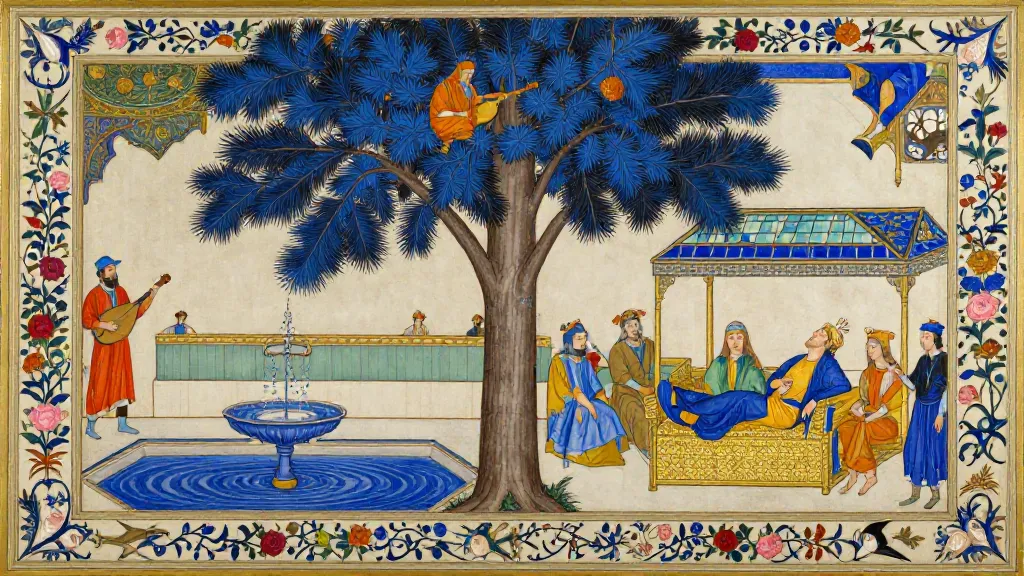
The Reign of Khosrow Parviz (Part 12) — Persian miniature painting

Shahnameh · Fall of the Sasanians

The Reign of Khosrow Parviz (Part 12)

پادشاهی خسرو پرویز ۱۲

View:

داستان باربد رامشگر

The Story of Barbad the Musician

بدو گفت مرد وی کایدون کنم ز مغز تو اندیشه بیرون کنم چو خسرو همی‌خواست کاید بباغ دل میزبان شد چو روشن چراغ بر باربد شد بگفت آنک شاه همی‌رفت خواهد بران جشنگاه همه جامه را بار بد سبز کرد همان به ربط و رود ننگ و نبرد بشد تابجایی که خسرو شدی بهاران نشستن گهی نو شدی یکی سرو بد سبز و برگش گشن ورا شاخ چون رزمگاه پشن بران سرو شد به ربط اندر کنار زمانی همی‌بود تا شهریار ز ایوان بیامد بدان جشنگاه بیاراست پیروزگر جای شاه بیامد پری چهره‌ی میگسار یکی جام بر کف بر شهریار جهاندار بستد ز کودک نبید بلور از می سرخ شد ناپدید بدانگه که خورشید برگشت زرد همی‌بود تاگشت شب لاژورد زننده بران سرو برداشت رود همان ساخته پهلوانی سرود یکی نغز دستان بزد بر درخت کزان خیره شد مرد بیداربخت سرودی به آواز خوش برکشید که اکنون تو خوانیش داد آفرید بماندند یک مجلس اندر شگفت همی هرکسی رای دیگر گرفت بدان نامداران بفرمود شاه که جویند سرتاسر آن جشنگاه فراوان بجستند و باز آمدند به نزدیک خسرو فراز آمدند جهاندیده آنگه ره اندر گرفت که از بخت شاه این نباشد شگفت که گردد گل سبز را مشگرش که جاوید بادا سر و افسرش بیاورد جامی دگر میگسار چو از خوب رخ بستد آن شهریار زننده دگرگون بیاراست رود برآورد ناگاه دیگر سرود که پیکار گردش همی‌خواندند چنین نام ز آواز او را ندند چو آن دانشی گفت و خسرو شنید به آواز او جام می در کشید بفرمود کاین رابجای آورید همه باغ یک سر به پای آورید بجستند بسیار هر سوی باغ ببردند زیر درختان چراغ ندیدند چیزی جز از بید و سرو خرامان به زیر گل اندر تذرو شهنشاه پس جام دیگر بخواست بر آواز سربرآورد راست برآمد دگر باره بانگ سرود همان ساخته کرده آواز رود همی سبز در سبز خوانی کنون برین گونه سازند مکر و فسون چوبشنید پرویز برپای خاست به آواز او بر یکی جام خواست که بود اندر آن جام یک من نبید به یکدم می روشن اندر کشید چنین گفت کاین گر فرشته بدی ز مشک و زعنبر سرشته بدی چو بشنید رامشگر آواز اوی همان خوب گفتار دمساز اوی فرود آمد از شاخ سرو سهی همی‌رفت با رامش و فرهی بیامد بمالید برخاک روی بدو گفت خسرو چه مردی بگوی بدو گفت شاهایکی بنده‌ام به آواز تو در جهان زنده‌ام سراسر بگفت آنچ بود از بنه که رفت اندر آن یک دل و یک تنه بدیدار او شاد شد شهریار بسان گلستان به ماه بهار به سرکش چنین گفت کای بد هنر تو چون حنظلی بار بد چون شکر چرا دور کردی تو او را ز من دریغ آمدت او درین انجمن به آواز او شاد می درکشید همان جام یاقوت بر سرکشید برین گونه تا سرسوی خواب کرد دهانش پر از در خوشاب کرد ببد بار بد شاه رامشگران یکی نامدارای شد از مهتران سر آمد کنون قصه‌ی بارید مبادا که باشد تو را یار بد

The man told him: "This is what I will do — I will drive the worry from your mind." When word came that Khosrow intended to visit the garden, the host's heart lit up like a bright lamp. He went to Barbad and told him the king was heading to the festival grounds.

Barbad dressed entirely in green — his clothes, his barbat, his lute, everything. He made his way to the place where Khosrow would come each spring to sit in a freshly prepared garden-seat. There stood a great cypress, green and thick-leafed, its branches spreading like a dense battlefield. Barbad climbed that cypress with his barbat in his arms and waited.

The king came from the palace to the festival ground. The victorious attendants arranged his seat. A fairy-faced cupbearer appeared, a goblet in hand for the sovereign. The world-holder took wine from the boy — the crystal vanished beneath the red. As the sun turned gold and evening deepened into lapis, the hidden player struck up a melody on the cypress — a Pahlavi tune, composed and ready. He played a brilliant piece upon the tree that left the fortunate king stunned. He raised a song in a sweet voice — the one they now call "Dad Afarid."

The whole court sat in amazement. Everyone had a different theory. The king ordered his notables to search the festival grounds end to end. They searched everywhere and came back empty-handed. A wise courtier then offered: "Given the king's fortune, this is no surprise — even the green rose gains a musky scent. May his crown endure forever."

The cupbearer brought another goblet. When the fair-faced servant handed it to the king, the hidden player shifted his tuning and launched into a different song — the one they called "Peykar-e Gardesh," the Turn of Battle. When Khosrow heard it, he drained his cup to the sound of the music and ordered: "Find this player! Search every corner of the garden!" They searched everywhere with torches under the trees. They found nothing but willows and cypresses and pheasants strutting beneath the flowers.

The king called for yet another cup. The voice rose up again — song and lute together. "Green hidden in green — that is how they work their spell." When Parviz heard this he stood up and called for a goblet to match the voice — a cup holding a full man's measure of wine. He drained the bright wine in a single breath.

"If this were an angel," he said, "it would be kneaded from musk and ambergris. If it were a demon, it would not know song, and it would not know the stroke of the lute."

When the musician heard the king's voice — those fine, welcoming words — he climbed down from the tall cypress and walked forward with grace and dignity. He came before Khosrow and rubbed his face in the dust. "What manner of man are you?" asked the king. "My lord — I am a slave. I am alive in this world only for the sound of your voice." He told the whole story from the beginning, everything that had happened, single-hearted and devoted.

The sight of him made the king as happy as a rose garden in spring. Khosrow turned to Sarkash and said: "You wretch — you are bitter as colocynth while he is sweet as sugar. Why did you drive him away from me? You begrudged this man a place in my court?"

The king drank joyfully to Barbad's music and raised the ruby cup again and again, on into the night until sleep came — and filled the musician's mouth with fine pearls. From that day Barbad became the king of minstrels, a man of renown among the great.

So ends the tale of Barbad. May you never have a treacherous friend.

Notes

1personباربدBarbad

Barbad (باربد), the legendary court musician of Khosrow Parviz. In the Shahnameh tradition he is the greatest musician in Persian history, inventor of the royal modal system and numerous melodies.

2personسرکشSarkash

Sarkash (سرکش), the jealous chief musician who had blocked Barbad's access to the king. His name literally means 'rebellious' or 'insolent.'

3context

The named melodies — Dad Afarid ('Justice Created'), Peykar-e Gardesh ('Turn of Battle'), and Sabz dar Sabz ('Green in Green') — belong to the traditional repertoire attributed to Barbad. Persian musical tradition credits him with thirty melodies (si lahn), seven royal modes (khosravani), and 360 compositions for each day of the year.

4translation

'Green in green' (سبز در سبز) — Barbad dressed in green and hid in the green cypress, camouflaging himself. The phrase became proverbial in Persian for concealment or trickery through perfect blending.

ایوان خسرو و ساختن طاق کسری

The Palace of Khosrow and the Building of the Taq-e Kasra

از ایوان خسرو کنون داستان بگویم که پیش آمد از راستان جهان بر کهان و مهان بگذرد خردمند مردم چرا غم خورد بسی مهتر و کهتر از من گذشت نخواهم من از خواب بیدار گشت هماناکه شد سال بر شست و شش نه نیکو بود مردم پیرکش چواین نامور نامه آید ببن زمن روی کشور شود پر سخن ازان پس نمیرم که من زنده‌ام که تخم سخن من پراگنده‌ام هر آنکس که دارد هش و رای و دین پس از مرگ بر من کند آفرین کنون از مداین سخن نو کنم صفتهای ایوان خسرو کنم چنین گفت روشن دل پارسی که بگذاشت با کام دل چارسی که خسرو فرستاد کسها بروم به هند و به چین و به آباد بوم برفتند کاری گران سه هزار ز هر کشوری آنک بد نامدار ازیشان هر آنکس که استاد بود ز خشت و ز گچ بر دلش یاد بود چو سد مرد بیرون شد از رومیان ز ایران و اهواز وز هر میان ازیشان دلاور گزیدند سی ازان سی دو رومی و دو پارسی بر خسرو آمد جهاندیده مرد برو کار و زخم بنایاد کرد گرانمایه رومی که بد هندسی به گفتار بگذشت از پارسی بدو گفت شاه این ز من درپذیر سخن هرچ گویم ز من یادگیر یکی جای خواهم که فرزند من همان تا دو سدسال پیوند من نشیند بدو در نگردد خراب ز باران وز برف وز آفتاب مهندس بپذیرفت ایوان شاه بدو گفت من دارم این دستگاه فرو برد بنیاد ده شاه رش همان شاه رش پنج کرده برش ز سنگ و ز گچ بود بنیاد کار چنین باید آن کو دهد داد کار چودیوار ایوانش آمد به جای بیامد به پیش جهان کد خدای که گر شاه بیند یکی کاردان گذشته برو سال و بسیاردان فرستد تنی سد بدین بارگاه پسندیده با موبد نیک خواه بدو داد زان گونه مردم که خواست برفتند و دیدند دیوار راست بریشم بیاورد تا انجمن بتابند باریک تابی رسن ز بالای آن تا به داده رسن به پیموده در پیش آن انجمن رسن سوی گنج شهنشاه برد ابا مهر گنجور او را سپرد وزان پس بیامد به ایوان شاه که دیوار ایوان برآمد به ماه چو فرمان دهد خسرو زود یاب نگیرم برین کار کردن شتاب چهل روز تا کار بنشیندم ز کاری گران شاه بگزیندم چو هنگامه‌ی زخم ایوان بود بلندی ایوان چو کیوان بود بدان زخم خشمت نباید نمود مرا نیز رنجی نباید فزود بدو گفت خسرو که چندین زمان چرا خواهی از من توای بدگمان نباید که داری ازین دست باز به آزرم بودن بیامد نیاز بفرمود تا سی هزارش درم بدادند تا او نباشد دژم بدانست کاری گر راست گوی که عیب آورد مرد دانا بروی که گیرد بران زخم ایوان شتاب اگر بشکند کم کند نان و آب شب آمد بشد کارگر ناپدید چنان شد کزان پس کس او را ندید چو بشنید خسور که فرعان گریخت بگوینده به رخشم فرعان بریخت چنین گفت کان را که دانش نبود چرا پیش ما در فزونی نمود بفرمود تا کار او بنگرند همه رومیان را به زندان برند دگر گفت کاری گران آورید گچ و خشت و سنگ گران آورید بجستند هرکس که دیوار دید ز بوم و بر شاه شد ناپدید به بیچارگی دست ازان بازداشت همی گوش و دل سوی اهواز داشت کزان شهر کاری گر آید کسی نماند چنان کار بی بر بسی همی‌جست استاد آن تا سه سال ندیدند کاریگری بی‌همال بسی یاد کردند زان کارجوی به سال چهارم پدید آمد اوی یکی مرد بیدار با فرهی به خسرو رسانید زو آگهی هم آنگاه رومی بیامد چو گرد بدو گفت شاه‌ای گنهکار مرد بگو تا چه بود اندرین پوزشت چه گفتی که پیش آمد آموزشت چنین گفت رومی که گر شهریار فرستد مرا با یکی استوار بگویم بدان کاردان پوزشم به پوزش بجا آید افروزشم فرستاد و رفتند ز ایوان شاه گران مایه استاد با نیک خواه همی‌برد دانای رومی رسن همان مرد را نیز با خویشتن به پیمود بالای کار و برش کم آمد ز کار از رسن هفت رش رسن باز بردند نزدیک شاه بگفت آنک با او بیامد به راه چنین گفت رومی که ار زخم کار برآورد می بر سر ای شهریار نه دیوار ماندی نه طاق ونه کار نه من ماندمی بر در شهریار بدانست خسرو که او راست گفت کسی راستی را نیارد نهفت رها کرد هر کو به زندان بدند بد اندیش گر بی‌گزندان بدند مراو را یکی به دره دینار داد به زندانیان چیز بسیار داد بران کار شد روزگار دراز به کردار آن شاه را بد نیاز چوشد هفت سال آمد ایوان بجای پسندیده‌ی خسرو پاک رای مر او را بسی آب داد و زمین درم داد و دینار و کرد آفرین

Now I will tell the story of Khosrow's palace, as it came down from truthful men. The world passes over the small and the great alike — why should a wise man eat his heart with grief? Many greater and lesser men than I have passed. I do not expect to wake from this sleep. My years have reached sixty-six. It does not suit an old man to struggle against his age. But when this renowned book reaches its end, the face of the land will fill with my words. I will not die, for I am alive — I have scattered the seed of speech. Whoever possesses sense and judgment and faith will call blessings upon me after my death.

Now I turn to Ctesiphon — to describe the palace of Khosrow.

A clear-hearted Persian who had lived four-score years to his heart's content told it thus: Khosrow sent agents to Rome, to India, to China, and to every flourishing land. Three thousand master-builders came from every kingdom — every one of renown. From among them, those who were true masters, who carried brick and plaster in their blood, were sorted. A hundred were selected from the Romans, others from Iran and Ahvaz and every region. From these, thirty champions were chosen — among them two Romans and two Persians.

A world-traveled man came before Khosrow and set about discussing the construction. The distinguished Roman, who was an engineer, surpassed the Persians in his proposals. The king told him: "Accept this commission from me. Whatever I say, remember it. I want a structure where my children and my line for two hundred years can sit in it and it will not crumble — not from rain, nor snow, nor sun."

The engineer accepted the commission for the king's palace. "I have the skill for this," he said. He sank the foundation ten royal cubits deep, its width five royal cubits. The foundation was stone and plaster — as it should be when a man gives proper account of his work.

When the walls of the palace were in place, the engineer came before the world-lord: "If the king sees fit, let him send a hundred experienced men to this site — men of age and learning, along with a trusted priest." The king gave him the men he asked for. They came and inspected the walls — straight and true.

The engineer had silk rope twisted — fine-spun cord — and measured the full height and dimensions before the assembly. He took the rope to the king's treasury and entrusted it to the treasurer under seal.

Then he returned to the king: "The walls have risen to the sky. If the king commands — I will not rush this work. Forty days, for the structure to settle. The king should release me from the heavy labor for that time. When the moment comes to strike the vault, the height of the palace will rival Saturn itself. At that blow, you must not show anger, and no one must add to my burden."

Khosrow replied: "Why do you need so much time from me, you suspicious man? Do not hold back your hand. Courtesy has become a cover for delay." He ordered thirty thousand dirhams paid to the engineer to keep him content.

But the truthful builder knew that any wise man would see the flaw — that if he rushed the vault and it cracked, it would cost him his bread and his life. Night came, and the builder vanished. He was never seen again.

When Khosrow heard the engineer had fled, he rained fury on those who reported it: "A man without real knowledge — why did he put on airs before us?" He ordered the work inspected and all the Romans thrown in prison. "Bring other builders! Bring plaster and brick and heavy stone!" They searched, but every craftsman who saw those walls disappeared from the king's realm.

In desperation, Khosrow withdrew his hand from the project. He kept his ear turned toward Ahvaz, hoping some builder might come from that city. He searched for a master for three years and found no one without equal.

In the fourth year, the fugitive reappeared. A sharp-witted man of dignity brought word of him to Khosrow. The Roman came at once, fast as dust. The king said: "You guilty man — tell me, what was your excuse? What did you have to say for yourself?"

The Roman replied: "If the king sends me with a trusted witness, I will explain my apology to that witness, and my excuse will become my vindication." The king sent them. The master and the witness went from the royal palace. The Roman took the silk rope — and the witness — with him. He measured the height and width of the structure. The rope came up seven royal cubits short of the building's dimensions.

"The structure had settled," the Roman explained when they returned the rope to the king. "If I had struck the vault before this, my lord — no wall would have stood, no arch, no structure. And I would not have remained at the king's gate."

Khosrow understood the man had spoken the truth. No one can conceal what is right. He freed everyone in prison — the guilty and the innocent alike. He gave the engineer ten thousand dinars and gave generously to the prisoners as well.

The work took a long time after that, and the king needed it done exactly right. After seven years, the palace was complete — approved by Khosrow of pure judgment. He gave the builder land and water, silver and gold, and called blessings upon him.

Notes

1context

The famous personal aside where Ferdowsi, aged sixty-six, reflects on his mortality and the immortality of his poem. 'I will not die, for I am alive — I have scattered the seed of speech.' This is one of the most celebrated passages in all of Persian literature.

2place

The Taq-e Kasra (ایوان خسرو) at Ctesiphon (Mada'in/مداین), the great vaulted hall of the Sasanian palace. Its ruins still stand near modern Baghdad — the largest single-span vault of unreinforced brickwork in the world. Though the poem attributes it to Khosrow II, the historical structure was likely built under Khosrow I (Anushirvan).

3translation

'Shah-rash' (شاه رش) — the royal cubit, a unit of measurement. Ten shah-rash deep and five wide gives the foundation's massive proportions. The seven-rash settling of the walls over forty days vindicates the Roman engineer's caution.

4place

Ahvaz (اهواز), capital of Khuzestan in southwestern Iran, known historically as a center of engineering and construction talent.

آیین نوروز در ایوان خسرو

The Nowruz Ceremony at Khosrow's Palace

همی‌کرد هرکس به ایوان نگاه به نوروز رفتی بدان جایگاه کس اندر جهان زخم چونین ندید نه ازکاردانان پیشین شنید یکی حلقه زرین بدی ریخته ازان چرخ کار اندر آویخته فروهشته زو سرخ زنجیر زر به هر مهره‌یی در نشانده گهر چو رفتی شهنشاه بر تخت عاج بیاویختندی ز زنجیر تاج به نوروز چون برنشستی به تخت به نزدیک او موبد نیک بخت فروتر ز موبد مهان را بدی بزرگان و روزی دهان را بدی به زیر مهان جای بازاریان بیاراستندی همه کاریان فرومایه‌تر جای درویش بود کجا خوردش ازکوشش خویش بود فروتر بریده بسی دست و پای بسی کشته افگنده در زیرجای ز ایوان ازان پس خروشد آمدی کز آوازها دل به جوش آمدی که ای زیردستان شاه جهان مباشید تیره دل و بدگمان هر آنکس که او سوی بالا نگاه کند گردد اندیشه او تباه ز تخت کیان دورتر بنگرید هر آنکس که کهتر بود بشمرید وزان پس تن کشتگان را به راه کزان بگذری کرد باید نگاه وزان پس گنهگار و گر بیگناه نماندی کسی نیز دربند شاه به ارزانیان جامه‌ها داد نیز ز دیبا و دینار و هرگونه چیز هرآنکس که درویش بودی به شهر که او را نبودی ز نوروز بهر به درگاه ایوانش بنشاندند در مهای گنجی بر افشاندند پر از بیم بودی گنهکار از وی شده مردم خفته بیدار از وی منادیگری دیگر اندر سرای برفتی گه بازگشتن به جای که ای نامور پر هنر سرکشان ز بیشی چه جویید چندین نشان به کار اندر اندیشه باید نخست بدان تا شود ایمن و تن درست سگالید هر کاروزان پس کنید دل مردم کم سخن مشکنید بر انداخت باید پس آنگه برید سخنهای داننده باید شنید ببینید تا از شما ریز کیست که بر جان بدبخت باید گریست هرآنکس که او راه دارد نگاه بخسپد برین گاه ایمن ز شاه دگر هرک یازد به چیز کسان بود چشم ما سوی آنکس رسان

Everyone who gazed upon the palace went there at Nowruz. No one in the world had ever seen a vault like it, nor heard of one from the masters of old. A golden ring had been cast and hung from the vault's crown, and from it descended a red chain of gold, each link set with gems. When the king of kings ascended his ivory throne, they hung the crown from the chain above him.

At Nowruz, when the king took his seat upon the throne, the chief Mobed sat nearest to him. Below the Mobed sat the great nobles. Below them, the grandees and the providers of sustenance. Below the grandees, the merchants and tradesmen had their place — all arrayed in their stations. Lower still sat the poor, those who lived by the labor of their own hands.

And at the very bottom — severed hands and feet, bodies of the executed, cast beneath everything.

Then a cry would rise from the palace that set every heart to pounding: "O subjects of the king of the world — be neither dark of heart nor suspicious. Whoever looks upward toward the heights, let his ambition be destroyed. Look from a distance at the throne of kings. Count yourselves among the lesser. And then — the bodies of the slain along the path. As you pass them, you must look."

After that, guilty and innocent alike — no one remained any longer in the king's chains. He gave robes to the worthy: brocade, gold coin, goods of every kind. Every poor man in the city who had no share of Nowruz was seated at the palace gate, and the locks of the treasury were thrown open before them.

The guilty lived in terror of him. The sleeping were jolted awake by him.

Then a second herald would pass through the palace as the court prepared to disperse: "O renowned and talented lords — why do you seek so many tokens of excess? Think first before you act, so that you may be safe and sound. Plan every task, then execute it. Do not break the heart of the quiet man. Measure before you cut. Listen to the words of the wise. Look among yourselves to see who is corrupt — for one must weep over the soul of the wretched. Whoever keeps to the path will sleep in this hall, safe from the king. But whoever reaches for another man's property — our eye is upon him."

Notes

1context

The Nowruz ceremony as described here is a carefully staged theater of power: the crown suspended from the vault above the king (so he does not bear its weight on his head — a symbol of divine mandate rather than personal ambition), strict hierarchical seating from Mobed down to pauper, and the executed displayed at the lowest tier. The message is unmistakable: behold the full spectrum from glory to annihilation.

2personموبدMobed

The Mobed (موبد), the chief Zoroastrian priest, seated closest to the king — reflecting the Sasanian fusion of royal and religious authority.

3translation

'Measure before you cut' (بر انداخت باید پس آنگه برید) — a proverbial expression equivalent to 'measure twice, cut once.' The herald's speech is a masterclass in Sasanian statecraft: generosity paired with menace.

گنج‌ها و شکوه خسرو پرویز

The Treasures and Glory of Khosrow Parviz

کنون از بزرگی خسرو سخن بگویم کنم تازه روز کهن بران سان بزرگی کس اندر جهان ندارد بیاد از کهان و مهان هر آنکس که او دفتر شاه خواند ز گیتیش دامن بباید فشاند سزد گر بگویم یکی داستان که باشد خردمند هم داستان مبادا که گستاخ باشی به دهر که از پای زهرش فزونست زهر مساایچ با آز و با کینه دست ز منزل مکن جایگاه نشست سرای سپنجست با راه و رو تو گردی کهن دیگر آرند نو یکی اندر آید دگر بگذرد زمانی به منزل چمد گر چرد چو برخیزد آواز طبل رحیل به خاک اندر آید سر مور وپیل ز پرویز چون داستانی شگفت ز من بشنوی یاد باید گرفت که چندی سزاواری دستگاه بزرگی و اورنگ و فر و سپاه کزان بیشتر نشنوی در جهان اگر چند پرسی ز دانا مهان ز توران وز هند وز چین و روم ز هرکشوری کان بد آباد بوم همی باژ بردند نزدیک شاه به رخشنده روز و شبان سیاه غلام و پرستنده از هر دری ز در و ز یاقوت و هر گوهری ز دینار و گنجش کرانه نبود چنو خسرو اندر زمانه نبود ز شاهین وز باز و پران عقاب ز شیر و پلنگ و نهنگ اندر آب همه برگزیدند پیمان اوی چو خورشید روشن بدی جان اوی نخستین که بنهاد گنج عروس ز چین و ز برطاس وز روم و روس دگر گنج پر در خوشاب بود که بالاش یک تیر پرتاب بود که خضرا نهادند نامش ردان همان تازیان نامور بخردان دگر گنج باد آورش خواندند شمارش بکردند و در ماندند دگر آنک نامش همی‌بشنوی تو گویی همه دیبه‌ی خسروی دگر نامور گنج افراسیاب که کس را نبودی به خشکی و آب دگر گنج کش خواندی سوخته کزان گنج بد کشور افروخته دگر آنک بد شادورد بزرگ که گویند رامشگران سترگ به زر سرخ گوهر برو بافته به زر اندرون رشته‌ها تافته ز رامشگران سرکش ور بار بد که هرگز نگشتی به آواز بد به مشکوی زرین ده و دوهزار کنیزک به کردار خرم بهار دگر پیل بد دو هزار و دویست که گفتی ازان بر زمین جای نیست فغستان چینی و پیل و سپاه که بر زین زرین بدی سال و ماه دگر اسب جنگی ده و شش هزار دو سد بارگی کان نبد در شمار ده و دوهز را اشتر بارکش عماری کش وگام زن شست وشش چنویی به دست یکی پیشکار تبه شد تو تیمار و تنگی مدار تو بی رنجی از کارها برگزین چو خواهی که یابی بداد آفرین که نیک و بد اندر جهان بگذرد زمانه دم ما همی‌بشمرد اگر تخت یابی اگر تاج و گنج وگر چند پوینده باشی به رنج سرانجام جای تو خاکست و خشت جز از تخم نیکی نبایدت کشت

Now I will speak of the greatness of Khosrow. I will make the old days fresh again. Such greatness — no one in the world remembers its like from the small or the great. Whoever reads the king's register must shake the dust of the world from his hem.

Let me tell a tale that a wise man would agree with: do not grow bold with fate — the poison in its foot exceeds all poison. Never shake hands with greed or malice. Do not make a permanent seat of a wayside inn. This is a five-day lodging with a door at each end: you grow old, and they bring in someone new. One enters, another departs. For a moment you graze or browse at the station. When the drum of departure sounds, the heads of ant and elephant alike go into the dust.

Hear from me this astonishing tale of Parviz — and mark it well. His wealth, his throne, his glory, and his army exceeded anything you will hear of in this world, no matter how many wise elders you ask.

From Turan and India and China and Rome — from every flourishing realm — they carried tribute to the king, by shining day and black night. Slaves and servants from every door, pearls and rubies and every gem. His gold and treasure had no limit. There was no sovereign like him in his age. From falcons and hawks and soaring eagles, from lions and leopards and crocodiles in the water — all submitted to his pact. His soul was as radiant as the sun.

First was the Treasury of the Bride, filled from China, Bartas, Rome, and Rus. Next was a treasury heaped with lustrous pearls, stacked an arrow's flight in height — they named it the Khazra, and the Arabs, those renowned wise men, knew it well. Another they called the Wind-Gathered Treasury — they tried to count it and gave up. Another whose name you will hear — you would say it was all royal brocade. Another was the renowned Treasury of Afrasiyab, which had no equal on land or sea. Another they called the Burned Treasury — from that treasury whole kingdoms had been lit ablaze. And the Great Shadurvard, which the master musicians spoke of in awe — red gold with gems woven into it, threads spun within the gold.

Among the musicians, Sarkash and Barbad — who never struck a false note.

In the golden harem: twelve thousand handmaidens, each like joyful spring. War elephants: two thousand two hundred and fifty — you would say there was no room left on earth for them. Chinese war-howdahs and elephants and armies in golden saddles year-round. War horses: sixteen thousand. Two hundred royal mounts beyond all counting. Pack camels: twelve thousand. Palanquin-bearers and ambling she-camels: sixty-six.

All this was undone by a single steward. Do not trouble yourself with grief or hardship. Choose the painless course in your affairs if you want to earn the blessing of justice. Good and evil pass through this world alike. Time is counting our breaths. Whether you win throne or crown or treasure, however hard you strive — in the end your place is dust and brick. You need sow nothing but the seed of goodness.

Notes

1context

The catalogue of Khosrow's treasures is a set piece in the Shahnameh — an inventory of almost mythical wealth designed to make the coming fall all the more devastating. Each named treasury (Bride, Khazra, Wind-Gathered, Afrasiyab, Burned, Shadurvard) represents a distinct category of accumulated imperial plunder spanning centuries.

2personافراسیابAfrasiyab

Afrasiyab (افراسیاب), the legendary Turanian king and arch-enemy of Iran in the mythological cycles. That his treasury ended up in Sasanian hands signals the totality of Iran's triumph over its ancient foe.

3translation

'This is a five-day lodging with a door at each end' (سرای سپنجست با راه و رو) — Ferdowsi's metaphor for the transience of worldly life. The 'drum of departure' (طبل رحیل) is the signal for a caravan to move on. The entire passage is a moral frame: the greatest empire ever assembled was still just a wayside inn.

4place

Bartas (برطاس) — a Turkic people north of the Caucasus, near the Volga. Their mention alongside China, Rome, and Rus shows the reach of Sasanian tributary networks (or at least the Shahnameh's imagination of them).

بیداد خسرو و آغاز شورش

Khosrow's Tyranny and the Beginning of Revolt

بدان نامور تخت و جای مهی بزرگی و دیهیم شاهنشهی جهاندار هم داستانی نکرد از ایران و توران برآورد گرد چو آن دادگر شاه بیداد گشت ز بیدادی کهتران شادگشت بیامد فرخ زاد آزرمگان دژم روی با زیردستان ژکان ز هرکس همی خواسته بستدی همی این بران آن برین بر زدی به نفرین شد آن آفرینهای پیش که چون گرگ بیدادگر گشت میش بیاراست بر خویشتن رنج نو نکرد آرزو جز همه گنج نو چو بی‌آب و بی‌نان و بی تن شدند ز ایران سوی شهر دشمن شدند هر آنکس کزان بتری یافت بهر همی دود نفرین برآمد ز شهر یکی بی‌هنر بود نامش گراز کزو یافتی خواب و آرام و ناز که بودی همیشه نگهبان روم یکی دیو سر بود بیداد و شوم چو شد شاه با داد بیدادگر از ایران نخست او بپیچید سر دگر زاد فرخ که نامی بدی به نزدیک خسرو گرامی بدی نیارست کس رفت نزدیک شاه همه زاد فرخ بدی بار خواه شهنشاه را چون پرآمد قفیز دل زاد فرخ تبه گشت نیز یکی گشت با سالخورده گراز ز کشور به کشور به پیوست راز گراز سپهبد یکی نامه کرد به قیصر و را نیز بدکامه کرد بدو گفت برخیز و ایران بگیر نخستین من آیم تو را دستگیر چو آن نامه برخواند قیصر سپاه فراز آورید از در رزمگاه بیاورد لشکر هم آنگه ز روم بیامد سوی مرز آباد بوم

Upon that renowned throne and seat of power — that greatness, that diadem of the king of kings — the world-holder would brook no equal. He raised dust from Iran and Turan alike. When that just king turned unjust, his injustice became a source of joy to lesser men.

Farrokh-zad came — a man of cruel face, ill-tempered with his subordinates. He seized property from everyone, played one man against another. The blessings of earlier days turned to curses, for the sheep had become a wolf. Khosrow heaped fresh suffering upon his people and wanted nothing but new treasure. When the people were left without water, without bread, without bodies to call their own, they fled Iran for the cities of the enemy. From every quarter that had tasted oppression, the smoke of curses rose over the towns.

There was a talentless man named Goraz, from whom the king had always taken his ease and comfort. He had served as warden of the Roman frontier — a demon-headed creature, unjust and ill-omened. When the king turned from justice to tyranny, Goraz was the first in Iran to turn his head away.

The other was Zad-Farrokh, a man of reputation who had been dear to Khosrow. No one could approach the king without Zad-Farrokh acting as gatekeeper. When the king's measure overflowed, Zad-Farrokh's heart curdled too. He joined forces with the aged Goraz, and from province to province they wove their conspiracy.

Goraz the general wrote a letter to the Caesar and turned him against Khosrow: "Rise and take Iran. I will be the first to support you." When the Caesar read that letter, he mustered his army for war and marched from Rome toward the flourishing frontier.

Notes

1personگرازGoraz

Goraz (گراز), the military commander of the Roman frontier (i.e., the western marches facing Byzantium). He becomes the first defector, inviting the Caesar to invade Iran.

2personزاد فرخZad-Farrokh

Zad-Farrokh (زاد فرخ), Khosrow's gatekeeper and trusted courtier who controlled access to the king. His defection is particularly damaging because of his intimate knowledge of court politics.

3context

The structural irony is deliberate: the catalogue of Khosrow's unmatched treasures in the previous section is immediately followed by the collapse of his regime. The pivot from justice to tyranny is presented as a moral law — not a political accident. The phrase 'the sheep became a wolf' (چون گرگ بیدادگر گشت میش) marks the exact moment of transformation.

4personقیصرQaysar (Caesar)

The Caesar (قیصر) here likely corresponds to the Byzantine Emperor Heraclius (r. 610–641 AD), who launched a devastating counter-offensive against the Sasanian Empire starting in 622 AD.

نیرنگ خسرو به قیصر و شورش لشکر

Khosrow's Stratagem Against the Caesar and the Army's Mutiny

چو آگاه شد زان سخن شهریار همی‌داشت آن کار دشوار خوار بدانست کان هست کارگر از که گفته ست با قیصر رزمساز بدان کش همی‌خواند و او چاره‌جست همی‌داشت آن نامور شاه سست ز پرویز ترسان بد آن بدنشان ز درگاه او هم ز گردنکشان شهنشاه بنشست با مهتران هر آنکس که بودند ز ایران سران ز اندیشه پاک دل رابشست فراوان زهر گونه‌یی چاره جست چو اندیشه روشن آمد فراز یکی نامه بنوشت نزد گراز که از تو پسندیدم این کارکرد ستودم تو را نزد مردان مرد ز کردارها برفزودی فریب سر قیصر آوردی اندر نشیب چواین نامه آرند نزدیک تو پراندیشه کن رای تاریک تو همی‌باش تا من بجنبم زجای تو با لکشر خویش بگذار پای چو زین روی و زان روی باشد سپاه شود در سخن رای قیصر تباه به ایران و را دستگیر آوریم همه رومیان را اسیر آوریم ز درگه یکی چاره گر برگزید سخن دان و گویا چناچون سزید بدو گفت کاین نامه اندر نهان همی بر بکردار کارآگهان چنان کن که رومیت بیند کسی بره بر سخن پرسد از تو بسی بگیرد تو را نزد قیصر برد گرت نزد سالار لشکر برد بپرسد تو را کز کجایی مگوی بگویش که من کهتری چاره‌جوی به پیمودم این رنج راه دراز یکی نامه دارم بسوی گراز تواین نامه بربند بردست راست گر ایدون که بستاند از تو رواست برون آمد از پیش خسرو نوند به بازو مر آن نامه را کرد بند بیامد چو نزدیک قیصر رسید یکی مرد به طریق او را بدید سوی قیصرش برد سر پر ز گرد دو رخ زرد و لبها شده لاژورد بدو گفت قیصر که خسرو کجاست ببایدت گفت بما راه راست ازو خیره شد کهتر چاره جوی ز بیمش باسخ دژم کرد روی بجویید گفت این بلاجوی را بداندیش و بدکام و بدگوی را بجستند و آن نامه از دست اوی گشاد آنک دانا بد و راه جوی ازان مرز دانا سری را بجست که آن پهلوانی بخواند درست چو آن نامه برخواند مرد دبیر رخ نامور شد به کردار قیر به دل گفت کاین بد کمین گر از دلیر آمدستم به دامش فراز شهنشاه و لشکر چو سیسد هزار کس از پیل جنگش نداند شمار مرا خواست افگند در دام اوی که تاریک بادا سرانجام اوی وازن جایگه لشکر اندر کشید شد آن آرزو بر دلش ناپدید چو آگاهی آمد به سوی گراز که آن نامور شد سوی روم باز دلش گشت پر درد و رخساره زرد سواری گزید ازدلیران مرد یکی نامه بنوشت با باد و دم که بر من چرا گشت قیصر دژم از ایران چرا بازگشتی بگوی مرا کردی اندر جهان چاره‌جوی شهنشاه داند که من کردم این دلش گردد از من پر از درد وکین چو قیصر نگه کرد و آن نامه دید ز لشکر گرانمایه‌یی برگزید فرستاد تازان به نزد گراز کزان ایزدت کرده‌بد بی نیاز که ویران کنی تاج و گاه مرا به آتش بسوزی سپاه مرا کز آن نامه جز گنج دادن بباد نیامد مرا از تو ای بد نژاد مرا خواستی تا به خسرو دهی که هرگز مبادت بهی و مهی به ایران نخواهند بیگانه‌یی نه قیصر نژادی نه فرزانه‌یی به قیصر بسی کرد پوزش گراز به کوشش نیامد بدامش فراز گزین کرد خسرو پس آزاده یی سخن گوی و دانا فرستاده یی یکی نامه بنوشت سوی گراز که‌ای بی بها ریمن دیو ساز تو را چند خوانم برین بارگاه همی دورمانی ز فرمان و راه کنون آن سپاهی که نزد تواند بسال و به ماه اور مزد تواند برای و به دل ویژه با قیصرند نهانی به اندیشه دیگرند برما فرست آنک پیچیده‌اند همه سرکشی رابسیچیده‌اند چواین نامه آمد بنزد گراز پر اندیشه شد کهتر دیوساز گزین کرد زان نامداران سوار از ایران و نیران ده و دو هزار بدان مهتران گفت یک دل شوید سخن گفتن هرکسی مشنوید بباشید یک چند زین روی آب مگیرید یک سر به رفتن شتاب چو هم پشت باشید با همرهان یکی کوه کندن ز بن بر توان سپه رفت تاخره‌ی اردشیر هر آنکس که بودند برنا و پیر کشیدند لشکر بران رودبار بدان تا چه فرمان دهد شهریار چو آگاه شد خسرو از کارشان نبود آرزومند دیدارشان بفرمود تا زاد فرخ برفت به نزدیک آن لشکر شاه تفت چنین بود پیغام نزد سپاه که از پیش بودی مرا نیک خواه چرا راه دادی که قیصر ز روم بیاورد لشکر بدین مرز و بوم که بود آنک از راه یزدان بگشت ز راه و ز پیمان ما برگذشت چو پیغام خسرو شنید آن سپاه شد از بیم رخسار ایشان سیاه کس آن راز پیدا نیارست کرد بماندند با درد و رخساره زرد پیمبر یکی بد به دل با گراز همی‌داشت از آب وز باد راز بیامد نهانی به نزدیکشان برافروخت جانهای تاریکشان مترسید گفت ای بزرگان که شاه ندید از شما آشکارا گناه مباشید جز یک دل و یک زبان مگویید کز ما که شد بدگمان وگر شد همه زیر یک چادریم به مردی همه یاد هم دیگریم همان چون شنیدند آواز اوی بدانست هر مهتری راز اوی مهان یکسر از جای برخاستند بران هم نشان پاسخ آراستند بر شاه شد زاد فرخ چو گرد سخنهای ایشان همه یاد کرد بدو گفت رو پیش ایشان بگوی که اندر شما کیست آزار جوی که به فریفتش قیصر شوم بخت به گنج و سلیح و به تاج و به تخت که نزدیک ما او گنهکار شد هم از تاج و ارونگ بیزار شد فرستید یک سر بدین بارگاه کسی راکه بودست زین سرگناه بشد زاد فرخ بگفت این سخن رخ لشکر نو ز غم شد کهن نیارست لب را گشود ایچ کس پر از درد و خامش بماندند و بس سبک زاد فرخ زبان برگشاد همی‌کرد گفتار نا خوب یاد کزین سان سپاهی دلیر و جوان نبینم کس اندر میان ناتوان شما را چرا بیم باشد ز شاه به گیتی پراگنده دارد سپاه بزرگی نبینم به درگاه اوی که روشن کند اختر و ماه اوی شما خوار دارید گفتار من مترسید یک سر ز آزار من به دشنام لب را گشایید باز چه بر من چه بر شاه گردن فراز هر آنکس که بشنید زو این سخن بدانست کان تخت نوشد کهن همه یکسر از جای برخاستند به دشنام لبها بیاراستند بشد زاد فرخ به خسرو بگفت که لشکر همه یار گشتند و جفت مرا بیم جانست اگر نیز شاه فرستد به پیغام نزد سپاه بدانست خسرو که آن کژگوی همی آب و خون اندر آرد به جوی ز بیم برادرش چیزی نگفت همی‌داشت آن راستی در نهفت که پیچیده بد رستم از شهریار بجایی خود و تیغ زن ده هزار دل زاده فرخ نگه داشت نیز سپه را همه روی برگاشت نیز بدانست هم زاد فرخ که شاه ز لشکر همه زو شناسد گناه چو آمد برون آن بد اندیش شاه نیارست شد نیز در پیشگاه بدر بر همی‌بود تا هرکسی همی‌کرد زان آزمایش بسی همی‌ساخت همواره تا آن سپاه به پیچید یکسر ز فرمان شاه همی‌راند با هر کسی داستان شدند اندر آن کار همداستان که شاهی دگر برنشیند به تخت کزین دور شد فرو آیین و بخت

When the king learned what had happened, he treated the grave matter lightly. He knew it was Goraz who had spoken with the battle-ready Caesar. He summoned the traitor, but Goraz was looking for an exit — the king kept him on a loose leash. The wretch was terrified of Parviz, of the court, and of the other grandees.

The king of kings sat with his nobles — every Iranian chief was present. He washed his mind clear of doubt and searched for a stratagem. When a bright idea came to him, he wrote a letter to Goraz:

"I am pleased with what you have done. I praised you among men of valor. Through your deceptions you have brought the Caesar's head low. When this letter reaches you, sharpen your dark counsel. Wait until I move from my position — then hold your ground with your army. When we have forces on both sides, the Caesar's strategy will collapse. We will seize him in Iran and take every Roman prisoner."

From the court he selected a resourceful agent — eloquent and clever, as the job required. He told him: "Carry this letter in secret, like a spy. But arrange it so that a Roman patrol spots you. They will question you on the road, seize you, and bring you before the Caesar — or before his army commander. When they ask where you are from, say nothing. Tell them: 'I am a lowly man seeking my fortune. I endured this long hard road. I carry a letter for Goraz.' Bind the letter to your right arm. If they take it from you — so be it."

The courier left Khosrow's presence with the letter bound to his arm. When he neared the Caesar's lines, a Roman scout spotted him and hauled him before the Caesar — head covered in dust, cheeks yellow, lips gone blue. The Caesar demanded: "Where is Khosrow? You will tell us the truth."

The agent acted stunned, his face twisted with feigned terror. "Search this troublemaker," the Caesar ordered. "This schemer, this man of ill will." They searched him and found the letter bound to his arm. A wise man opened it. They found a local scholar to read the Pahlavi.

When the scribe read the letter aloud, the Caesar's face turned black as pitch. He thought: "This cursed Goraz — I walked right into his trap. The king of kings with an army of three hundred thousand, his war elephants beyond counting — Goraz meant to deliver me into Khosrow's hands. May his end be darkness."

He withdrew his army on the spot. The dream of conquest vanished from his heart.

When word reached Goraz that the Caesar had turned back toward Rome, his heart filled with anguish and his face went pale. He chose a bold rider and wrote a frantic letter: "Why has the Caesar turned against me? Why did you leave Iran? Tell me! You have made me a fugitive in this world. The king will find out what I have done — his heart will fill with hatred and pain."

The Caesar read Goraz's letter, then selected a distinguished man from his army and sent him galloping back: "God should have spared you the need to ruin my crown and throne — to burn my army with fire. From your letter I gained nothing but wasted treasure, you wretch. You meant to hand me over to Khosrow. May you never see honor or greatness. In Iran they want no foreigner — no one of the Caesar's blood, no sage."

Goraz tried every apology with the Caesar. His efforts gained no ground.

Then Khosrow selected a wellborn envoy — eloquent, wise, a proper emissary — and wrote a letter to Goraz: "You filthy, worthless, demon-spawned creature. How many times have I summoned you to this court? You keep your distance from command and duty. The army under your charge — on your payroll month by month — their hearts and minds are with the Caesar. Secretly they think other thoughts. Send me those who have turned. Send me every one who has prepared for rebellion."

When this letter reached Goraz, the demon-maker grew full of dread. He selected twelve thousand horsemen from among the notables — from Iran and the fire-lands — and told them: "Be of one heart. Do not listen to anyone else's talk. Stay on this side of the river for a while. Do not be hasty to march. If you stand together with your comrades, you can uproot a mountain."

The army marched to the ruins of Ardeshir. Young and old alike, they drew up along the riverbank to await the king's orders.

When Khosrow learned of their movements, he had no desire to see them. He ordered Zad-Farrokh to ride out to the army with a message: "Once you were my loyal supporters. Why did you allow the Caesar to bring his army from Rome into this land? Who was it that strayed from God's path and broke our covenant?"

When the army heard Khosrow's message, their faces went black with fear. No one dared reveal the secret. They sat in pain and silence, faces drained of color.

But one messenger was secretly aligned with Goraz, guarding the conspiracy through wind and water. He came to them in secret and rekindled their darkened spirits: "Do not be afraid, O great ones — the king has seen no open guilt from you. Be of one heart and one tongue. Do not say which of you turned disloyal. If it comes to it — we are all under one tent. In valor, we remember one another."

When they heard his voice, every chief understood the game. The nobles rose as one and gave their answer in that same vein.

Zad-Farrokh rode back to the king like dust and reported every word. The king told him: "Go back. Tell them: who among you is the agitator? Who was seduced by the ill-starred Caesar with treasure and weapons and crown and throne? In our eyes, that man is guilty — he has renounced the crown and the throne. Send every one of them to this court — whoever bears the stain of this crime."

Zad-Farrokh went and delivered the message. The army's faces aged with grief. No one dared open his mouth. They sat in pain and silence.

Then Zad-Farrokh opened his own mouth and began speaking treacherous words: "I see a brave young army here — I see no weaklings among you. Why should you fear the king? His forces are scattered across the world. I see no great man at his court who could brighten his star and moon. Disregard my words if you like. Do not fear my displeasure. Open your mouths to curses — whether against me or against that proud-necked king."

Everyone who heard these words understood: the old throne was finished. They rose as one and opened their lips in curses against the king.

Zad-Farrokh went to Khosrow and reported: "The army has united against you. If the king sends me again with a message to that army, I fear for my life."

Khosrow understood that this liar was channeling water and blood into the same ditch. But out of fear of his brother he said nothing — he kept the truth hidden. For Rostam had also turned against the king, camped separately with ten thousand swordsmen of his own. Khosrow held his tongue about Zad-Farrokh as well. The army had turned its face entirely from the king.

Zad-Farrokh knew the king held him responsible for the army's guilt. Once the ill-wisher of the king came out from court, he dared not return to the royal presence. He lingered at the gate, testing everyone's loyalty. He worked ceaselessly until the entire army had turned from the king's obedience. He told the same story to every man, and they all agreed: a new king must sit upon the throne. Fortune and ceremony had departed from this one.

Notes

1context

Khosrow's forged letter is a masterpiece of intelligence tradecraft: he writes to Goraz as if Goraz were a loyal double agent who lured the Caesar into a trap. By ensuring the Romans intercept it, he poisons the alliance between Goraz and the Caesar without striking a blow. The stratagem succeeds tactically — the Caesar withdraws — but it cannot stop the internal rot.

2personزاد فرخZad-Farrokh

Zad-Farrokh (زاد فرخ) reveals his true colors here. Sent as the king's envoy to interrogate the army, he instead incites them to open mutiny — telling them to curse the king to his face. He then reports back to Khosrow that the army is lost, manufacturing the very crisis he engineered.

3personرستمRostam (Farrokhzad)

Rostam (رستم) — not the mythical hero, but Rostam Farrokhzad, the great Sasanian general. His separate encampment with ten thousand men signals that the military establishment has fractured beyond repair.

4place

The 'ruins of Ardeshir' (خره‌ی اردشیر) — likely Ardeshir-Khwarrah (modern Firuzabad), the circular city founded by Ardeshir I, founder of the Sasanian dynasty. That rebel troops muster at the dynasty's birthplace is heavy with irony.

توطئه تخوار و رهایی شیرویه از زندان

The Conspiracy of Takhawar and the Liberation of Shiruyeh from Prison

بر زاد فرخ یکی پیر بود که برکارها کردن آژیر بود چنین گفت بازاد فرخ که شاه همی از تو بیند گناه سپاه کنون تا یکی شهریاری پدید نیاری فزون زین نباید چخید که این بوم آباد ویران شود از اندوه ایران چونیران شود نگه کرد باید به فرزند اوی کدامست با شرم و بی‌گفت و گوی ورا شاد بر تخت باید نشاند بران تاج دینار باید فشاند چو شیروی بیدار مهتر پسر به زندان بود کس نباید دگر همی رای زد زین نشان هرکسی برین روز و شب برنیامد بسی که برخاست گرد سپاه تخوار همه کارها زو گرفتند خوار پذیره شدنش زاد فرخ به راه فراوان برفتند با او سپاه رسیدند پس یک بدیگر فراز سخن رفت چند آشکارا و راز همان زاد فرخ زبان برگشاد بدیهای خسرو همه کرد یاد همی‌گفت لشکر به مردی و رای همی‌کرد خواهند شاهی بپای سپهبد چنین داد پاسخ بدوی که من نیستم چامه‌ی گفت وگوی اگر با سپاه اندر آیم به جنگ کنم بر بدان جهان جای تنگ گرامی بد این شهریار جوان به نزد کنارنگ و هم پهلوان چو روز چنان مرد کرد او سیاه مبادا که بیند کسی تاج و گاه نژند آن زمان شد که بیداد شد به بیدادگر بندگان شاد شد سخنهاش چون زاد فرخ شنید مر او را ز ایرانیان برگزید بدو گفت کاکنون به زندان شویم به نزدیک آن مستمندان شویم بیاریم بی‌باک شیروی را جوان و دلیر جهانجوی را سپهبد نگهبان زندان اوست کزو داشتی بیشتر مغز و پوست ابا شش هزار آزموده سوار همی‌دارد آن بستگان را به زار چنین گفت با زاد فرخ تخوار که کار سپهبد گرفتیم خوار گرین بخت پرویز گردد جوان نماند به ایران یکی پهلوان مگر دار دارند گر چاه وبند نماند به ایران کسی بی‌گزند بگفت این و از جای برکند اسپ همی‌تاخت برسان آذر گشسپ سپاه اندر آورد یکسر به جنگ سپهبد پذیره شدش بی درنگ سر لشکر نامور گشته شد سپهبد به جنگ اندرون کشته شد پراگنده شد لشکر شهریار سیه گشت روز و تبه گشت کار به زندان تنگ اندر آمد تخوار بدان چاره با جامه‌ی کارزار

At Zad-Farrokh's side there was an old man, shrewd in the handling of affairs. He told Zad-Farrokh: "The king sees the army's guilt as yours. Now — until you can produce a king, you must not push any further. This flourishing land will turn to ruins. From grief, Iran will become like the land of fire. Look to the king's sons. Which one has modesty and is free of controversy? Set him gladly on the throne and shower gold coins upon his crown. Shiruyeh, the alert eldest son — he sits in prison. No other candidate is needed."

Every man offered his counsel along these lines. Not many days and nights passed before the dust of Takhawar's army rose on the horizon. Everyone took heart from his approach. Zad-Farrokh rode out to meet him on the road with a large escort.

They came face to face. Words passed — some open, some secret. Zad-Farrokh opened his mouth and recounted all of Khosrow's crimes. "The army," he said, "by courage and counsel, intends to establish a new kingship."

The general gave his answer: "I am not a man of idle chatter. If I bring my army into battle, I will make the world tight for the wicked. This young king was once dear to us — to the border-lords and the commanders alike. But since he darkened the days of such men, may no one ever see crown and throne from him again. He grew wretched the moment he turned unjust. His servants rejoiced in his injustice."

When Zad-Farrokh heard these words, he chose Takhawar above all Iranians and said: "Now let us go to the prison. Let us go to those wretched captives. We will bring out fearless Shiruyeh — young, bold, a seeker of the world. The prison commander holds the prisoners in misery with six thousand veteran horsemen."

Takhawar replied: "We have taken the commander's measure lightly enough. If Parviz's fortune revives, no commander in Iran will survive — it will be the gallows, or the pit, or chains. No one in Iran will be left unharmed."

He said this and tore his horse from its place, galloping like the fire of Azargoshasp. He brought his whole army into battle. The prison commander rode out to meet him without delay. The head of the renowned army was turned. The commander was killed in the fighting. The king's garrison scattered. The day went black. The cause was lost.

Takhawar entered the narrow prison in his battle-armor.

Notes

1personتخوارTakhawar

Takhawar (تخوار), the military commander who executes the coup. He storms the prison, kills the garrison commander, and frees Shiruyeh — the decisive act that ends Khosrow's reign.

2personشیرویهShiruyeh (Kavad II)

Shiruyeh (شیرویه), Khosrow's eldest son, imprisoned by his own father. He will be enthroned as Kavad II (Qobad). Historically, Kavad II seized power in February 628 AD in a palace coup, had Khosrow executed, and made peace with Byzantium — but died of plague within months.

3context

The fire of Azargoshasp (آذر گشسپ) — one of the three great sacred fires of Zoroastrianism, associated with the warrior class. Comparing Takhawar's charge to this fire underlines the martial-religious gravity of the act: this is not mere rebellion but a warrior fulfilling his caste duty against a king who has broken the covenant of justice.

Edition & Source

Author
فردوسی (Ferdowsi, c. 977–1010 AD)
Edition
شاهنامه — Wikisource plain edition