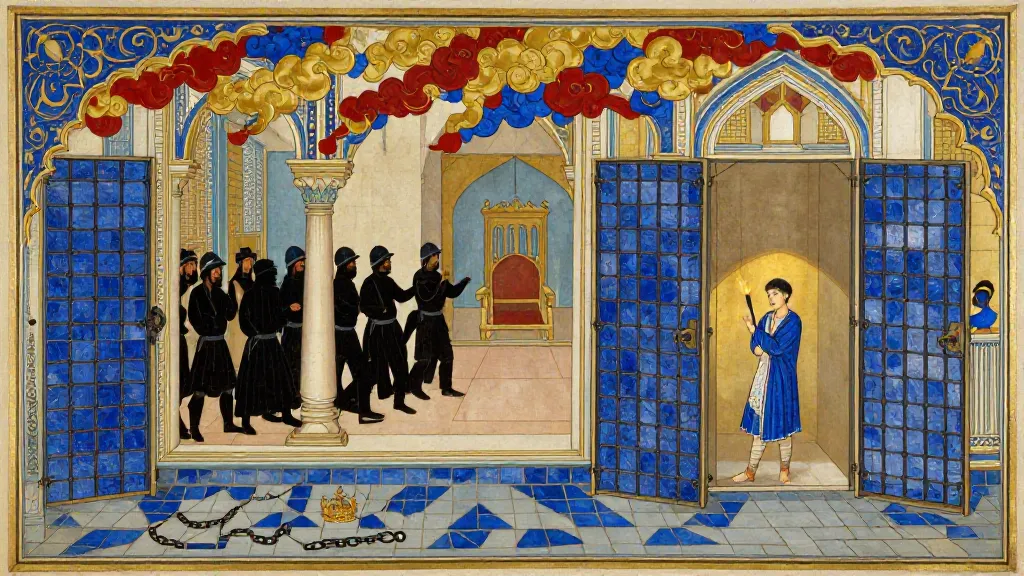
The Reign of Khosrow Parviz (Part 13 — The Fall) — Persian miniature painting

Shahnameh · Fall of the Sasanians

The Reign of Khosrow Parviz (Part 13 — The Fall)

پادشاهی خسرو پرویز ۱۳

View:

تخوار و شیروی

The Conspiracy — Takhvar's Ultimatum

به شیروی گردنکش آواز داد سبک پاسخش نامور باز داد بدانست شیروی کان سرفراز بدانگه به زندان چرا شد فراز چو روی تخوار او فروزان بدید از اندوه چندان دلش بردمید بدو گفت گریان که خسرو کجاست رها کردن مانه کار شماست چنین گفت با شاه‌زاده تخوار که گر مردمی کام شیران مخوار اگر تو بدین کار همداستان نباشی تو کم گیر زین راستان یکی کم بود شاید از شانزده برادر بماند تو را پانزده بشایند هرکس به شاهنشهی بدیشان بود شاد تخت مهی فروماند شیروی گریان بجای ازان خانه‌ی تنگ بگذارد پای

Takhvar called out to the defiant Shiruyeh, and the prince answered at once. Shiruyeh already knew why that proud man had come to the prison. When he saw Takhvar's burning face, grief swelled in his heart. 'Where is Khosrow?' he asked, weeping. 'Setting us free is not in your hands.'

Takhvar spoke plainly to the prince: 'If you want to live, stop feeding yourself to lions. If you refuse to join this cause, then count yourself short from these ranks. One fewer from sixteen — you still have fifteen brothers. Any of them would do for the throne. The crown will sit just as happily on another head.'

Shiruyeh stood frozen in place, tears on his face, then stepped out of that cramped cell.

Notes

1personتخوارTakhvar

A nobleman and conspirator who orchestrated the coup against Khosrow Parviz. He recruited Shiruyeh from prison and coordinated the palace takeover.

2personشیرویShiruyeh

Khosrow Parviz's son, also known as Qobad (Kavad II). Khosrow had imprisoned him, but the conspirators freed him to seize the throne. He reigned for only seven months.

3context

Shiruyeh had fifteen brothers — Takhvar's threat is blunt political arithmetic. If Shiruyeh refuses to lead the coup, they will simply find another prince. His cooperation is a courtesy, not a necessity.

شب کودتا — پاسبانان نام قباد خوانند

The Night of the Coup — The Watchmen Call a New King's Name

همان زاد فرخ بدرگاه بر همی‌بود و کس را ندادی گذر که آگه شدی زان سخن شهریار به درگاه بر بود چون پرده دار چو پژمرده شد چادر آفتاب همی‌ساخت هر مهتری جای خواب بفرمود تا پاسبانان شهر هر آنکس که از مهتری داشت بهر برفتند یکسر سوی بارگاه بدان جای شادی و آرام شاه بدیشان چنین گفت کامشب خروش دگرگونه‌تر کرد باید ز دوش همه پاسبانان بنام قباد همی‌کرد باید بهر پاس یاد چنین داد پاسخ که ای دون کنم ز سر نام پرویز بیرون کنم

Zad Farrukh stationed himself at the palace gate, letting no one pass, ensuring the king heard nothing of the plot. He stood there like a curtain-keeper, blocking all access.

When the sun's veil faded and the nobles settled in for the night, he summoned the city watchmen — every one of them who held rank. They gathered at the royal court, that place of the king's ease and pleasure.

He told them: 'Tonight, change the cry. It must sound different from last night. On every watch, you will call the name of Qobad — not Parviz.'

The watchmen answered: 'It will be done. We will strike the name of Parviz from the call.'

Notes

1personزاد فرخZad Farrukh

A court official and co-conspirator. He controlled access to the palace during the coup night and directed the watchmen to announce the new king's name.

2context

In Sasanian cities, night watchmen patrolled and called out the reigning king's name at each watch interval. Changing the name in the call was a public declaration of regime change — the entire city would hear it before dawn.

3personقبادQobad (Kavad)

Shiruyeh's secret second name. Khosrow had privately named him Qobad at birth but kept it hidden, using only 'Shiruyeh' publicly. The conspirators used this royal name for the proclamation.

خسرو و شیرین — آوای پاسبانان

Khosrow and Shirin Hear the Watchmen

چو شب چادر قیرگون کرد نو ز شهر و ز بازار برخاست غو همه پاسبانان بنام قباد چو آواز دادند کردند یاد شب تیره شاه جهان خفته بود چو شیرین به بالینش بر جفته بود چو آواز آن پاسبانان شنید غمی گشت و زیشان دلش بردمید بدو گفت شاها چه شاید بدن برین داستانی بباید زدن از آواز او شاه بیدار شد دلش زان سخن پر ز آزار شد به شیرین چنین گفت کای ماه روی چه داری بخواب اندرون گفت وگوی بدو گفت شیرین که بگشای گوش چو خسرو بدان گونه آوا شنید به رخساره شد چون گل شنبلید چنین گفت کز شب گذشته سه پاس که این بد گهر تا ز مادر بزاد نهانی و را نام کردم قباد به آواز شیرویه گفتم همی دگر نامش اندر نهفتم همی ورا نام شیروی بد آشکار قبادش همی‌خواند این پیشکار

When night drew its pitch-black curtain fresh across the sky, a roar rose from the city and the bazaar. The watchmen called out the name of Qobad at every station.

In the dark, the king of the world lay sleeping, Shirin curled beside him at the pillow. She heard the watchmen's voices and her heart clenched with dread. 'My king,' she said, 'what can this mean? We must read this sign.'

Her voice woke Khosrow. His heart filled with pain. 'Moon-faced one,' he murmured, 'why are you talking in your sleep?'

'Open your ears and listen,' Shirin told him.

When Khosrow heard the call clearly, his face went pale as a saffron flower. 'Three watches of the night have passed,' he said. 'That ill-born one — when he was born, I secretly named him Qobad. In public I always called him Shiruyeh and kept the other name hidden. His open name was Shiruyeh; only the household servants called him Qobad.'

Notes

1personشیرینShirin

Khosrow Parviz's beloved queen, one of the most celebrated figures in Persian literature. Her love story with Khosrow is the subject of Nezami's romance 'Khosrow and Shirin.' Here she is the first to sense danger.

2translation

'His face went pale as a saffron flower' (به رخساره شد چون گل شنبلید) — saffron-colored/yellow is the Persian literary convention for a face drained of color by shock, equivalent to 'going white' in English.

3context

Khosrow's revelation about the secret name is his moment of recognition. The conspirators knew the hidden royal name — proof that the betrayal came from deep within the court, not from outsiders.

خسرو در باغ — گوهر و نان

The King in the Garden — Jewels for Bread

شب تیره باید شدن سوی چین وگر سوی ما چین و مکران زمین بریشان به افسون بگیریم راه ز فغفور چینی بخواهم سپاه ازان کاخترش به آسمان تیره بود سخنهای او بر زمین خیره بود شب تیره افسون نیامد به کار همی‌آمدش کار دشوار خوار به شیرین چنین گفت که آمد زمان بر افسون ما چیره شد بدگمان بدو گفت شیرین که نوشه بدی همیشه ز تو دور دست بدی بدانش کنون چاره‌ی خویش ساز مبادا که آید به دشمن نیاز چو روشن شود دشمن چاره جوی نهد بی‌گمان سوی این کاخ روی هم آنگه زره خواست از گنج شاه دو شمشیر هندی و رومی کلاه همان ترکش تیرو زرین سپر یکی بنده‌ی گرد و پرخاشخر شب تیره‌گون اندر آمد به باغ بدان گه که برخیزد ازخواب زاغ به باغ بزرگ اندر از بس درخت نبد شاه را در چمن جای تخت بیاویخت از شاخ زرین سپر بجایی کزو دور بودی گذر نشست از برنرگس و زعفران یکی تیغ در زیر زانو گران چو خورشید برزد سنان از فراز سوی کاخ شد دشمن دیوساز یکایک بگشتند گرد سرای تهی بد ز شاه سرافراز جای به تاراج دادند گنج ورا نکرد ایچ کس یاد رنج ورا همه باز گشتنددیده پرآب گرفته ز کار زمانه شتاب چه جوییم ازین گنبد تیزگرد که هرگز نیاساید از کارکرد یک را همی تاج شاهی دهد یکی رابه دریا به ماهی دهد یکی را برهنه سر و پای و سفت نه آرام و خورد و نه جای نهفت یکی را دهد نوشه و شهد و شیر بپوشد به دیبا و خز و حریر سرانجام هردو به خاک اندرند به تاریک دام هلاک اندرند اگر خود نزادی خردمند مرد نبودی ورا روز ننگ و نبرد ندیدی جهان از بنه به بدی اگر که بدی مرد اگر مه بدی کنون رنج در کار خسرو بریم همی‌بود خسرو بران مرغزار درخت بلند ازبرش سایه دار چو بگذشت نیمی ز روز دراز بنان آمد آن پادشا رانیاز به باغ اندرون بد یکی پایکار که نشناختی چهره‌ی شهریار پرستنده راگفت خورشید فش که شاخی گهر زین کمر بازکش بران شاخ برمهره‌ی زر پنج ز هرگونه مهره بسی برده رنج چنین گفت با باغبان شهریار که این مهره‌ها تا کت آید به کار به بازار شو بهره‌یی گوشت خر دگر نان و بی‌راه جایی گذر مرآن گوهران را بها سی هزار درم بد کسی را که بودی به کار سوی نانبا شد سبک باغبان بدان شاخ زرین ازو خواست نان بدو نانوا گفت کاین رابها ندانم نیارمت کردن رها ببردند هر دو به گوهر فروش که این را بها کن بدانش بکوش چو داننده آن مهره‌ها رابدید بدو گفت کاین را که یارد خرید چنین شاخ در گنج خسرو بدی برین گونه هر سال سد نوبدی تو این گوهران از که دزدیده‌ای گر از بنده خفته ببریده‌ای سوی زاد فرخ شدند آن سه مرد ابا گوهر و زر و با کارکرد چو آن گوهران زاد فرخ بدید سوی شهریار نو اندر کشید

Khosrow spoke of fleeing — to China, perhaps, or to Makran. 'We will find a way through by sorcery. I will ask the Faghfur of China for an army.' But his star had darkened in the sky, and his words scattered uselessly on the ground. In that black night, no spell could help him. He mistook desperate trouble for something manageable.

'The hour has come,' he told Shirin. 'The traitor has overcome my magic.'

'May you live long,' she answered, 'and may evil hands stay far from you. But use your wits now — make a plan for yourself. Do not let it come to begging your enemy for mercy. When dawn breaks, the enemy will come straight for this palace.'

At once Khosrow called for armor from the royal treasury: a coat of mail, two Indian swords, a Roman helmet, a quiver of arrows, a golden shield, and one brave armed servant. In the black hour before dawn, when the crows still slept, he slipped into the great garden.

The garden was dense with trees — no throne room, no royal seat. He hung his golden shield from a branch in a far corner away from any path, then sat down among the narcissus and saffron, a heavy sword laid across his knees.

When the sun raised its spear-point above the horizon, the enemy made for the palace like demons. They swept through every room. The king was gone. They looted his treasury. No one paused to remember his labors.

The poet reflects: What do we seek from this spinning vault of heaven that never rests from its work? To one it gives a crown; to another, a fish in the sea. One man walks barefoot and bare-headed with no shelter, no food, no place to hide. Another gets honey, milk, brocade, and silk. In the end, both lie in the dust, caught in death's dark trap.

Khosrow sat in that meadow, tall trees casting shade above him. By midday, the king needed bread. In the garden there was a groundskeeper who did not know the king's face. Khosrow's servant — radiant as the sun even in hiding — told him: 'Pull a branch of jewels from this belt.' The branch held five golden beads and gems of every kind, painstakingly worked.

The king told the gardener: 'Take these jewels — they are yours for the trouble. Go to the bazaar and buy some bread and a bit of meat, and take a roundabout way back.' Those gems were worth thirty thousand dirhams to anyone who knew their value.

The gardener went straight to a baker and held out the golden branch for a loaf of bread. The baker stared at it. 'I cannot price this,' he said. 'I cannot let you walk away.' The two of them went to a jewel dealer to get an appraisal.

The dealer took one look at the gems and said: 'Who would dare buy these? A branch like this belongs in Khosrow's treasury. A hundred such pieces are made there every year. Where did you steal these? Did you cut them from some sleeping servant?'

The three men — gardener, baker, jewel dealer — were marched with the gems and gold straight to Zad Farrukh. When Zad Farrukh saw the jewels, he brought them directly to the new king.

Notes

1placeچینChin (China)

Khosrow's desperate plan to flee to China or Makran (Baluchistan) and raise a foreign army. The 'Faghfur' is the Persian title for the Chinese emperor.

2translation

'His star had darkened in the sky, and his words scattered uselessly on the ground' — Ferdowsi signals that Khosrow's fate is already sealed. His plans are not just impractical but cosmically doomed; the heavens have turned against him.

3context

The jewel-for-bread scene is one of the Shahnameh's most famous reversals of fortune. A king whose treasury held hundreds of such ornaments cannot buy a single loaf of bread because the jewels themselves betray his identity. His wealth becomes the instrument of his capture.

4translation

The poet's meditation on fortune ('What do we seek from this spinning vault...') is a signature Ferdowsi device — he pauses the action for a philosophical aside on the indifference of fate, then returns to the narrative.

دستگیری خسرو

The Capture — Soldiers Who Weep for Their King

به شیروی بنمود زان سان گهر بریده یکی شاخ زرین کمر چنین گفت شیروی با باغبان که گر زین خداوند گوهر نشان نگویی هم اکنون ببرم سرت همان را که او باشد از گوهرت بدو گفت شاها به باغ اندرست زره پوش مردی کمانی بدست ببالا چو سرو و به رخ چون بهار بهر چیز ماننده‌ی شهریار سراسر همه باغ زو روشنست چو خورشید تابنده در جوشنست فروهشته از شاخ زرین سپر یکی بنده در پیش او با کمر برید این چنین شاخ گوهر ازوی مراداد و گفتا کز ایدر بپوی ز بازار نان آور و نان خورش هم اکنون برفتم چو باد از برش بدانست شیروی کو خسروست که دیدار او در زمانه نوست ز درگاه رفتند سیسد سوار چو باد دمان تا لب جویبار چو خسرو ز دور آن سپه را بدید به پژمرد و شمشیر کین برکشید چو روی شهنشاه دید آن سپاه همه باز گشتند گریان ز راه یکایک بر زاد فرخ شدند بسی هر کسی داستانی زدند که ما بندگانیم و او خسروست بدان شاه روز بد اکنون نوست نیارد برو زد کسی باد سرد چه در باغ باشد چه اندر نبرد

Zad Farrukh showed Shiruyeh the jeweled branch cut from the golden belt. Shiruyeh turned to the gardener: 'Tell me who owns these gems. If you do not speak right now, I will take your head — and the head of whoever sent you.'

The gardener talked. 'My king, he is in the garden. A man in chain mail with a bow in his hand. Tall as a cypress, face like springtime — in every way he looks like a king. The whole garden is lit up by him. He blazes in his armor like the sun. He has a golden shield hanging from a branch, and an armed servant standing before him. He cut this jeweled branch from his belt, gave it to me, and said: Go to the bazaar, bring back bread and food. I ran from him like the wind.'

Shiruyeh knew it was Khosrow. There was no one else in the world with that presence.

Three hundred horsemen rode from the court, fast as a gale, to the edge of the stream. When Khosrow saw the cavalry in the distance, he withered — but drew his sword.

Then the soldiers saw the face of their king. Every one of them turned back, weeping. They rode to Zad Farrukh and each man had the same thing to say: 'We are his servants. He is the king. Even now, in his worst hour, his majesty is undimmed. No one can bring himself to raise a hand against him — whether he stands in a garden or on a battlefield.'

Notes

1translation

'Tall as a cypress, face like springtime' (ببالا چو سرو و به رخ چون بهار) — stock Persian literary imagery for a handsome, noble figure. Even the gardener, who did not recognize the king, describes him in terms reserved for royalty.

2context

The soldiers' refusal is a pivotal moment. Three hundred armed men sent to capture one fugitive king — and they all turn back in tears. Khosrow's personal charisma and the weight of royal authority still hold, even after the coup. Zad Farrukh must come himself to finish the job.

پیشگویی به حقیقت پیوست — فیل و زندان

The Prophecy Fulfilled — The Elephant Ride to Prison

بشد زاد فرخ به نزدیک شاه ز درگاه او برد چندی سپاه چو نزدیک او رفت تنها ببود فراوان سخن گفت و خسرو شنود بدو گفت اگر شاه بارم دهد برین کرده‌ها زینهارم دهد بیایم بگویم سخن هرچ هست وگرنه بپویم به سوی نشست بدو گفت خسرو چه گفتی بگوی نه انده گساری نه پیکارجوی چنین گفت پس مرد گویا به شاه که درکار هشیاتر کن نگاه بران نه که کشتی تو جنگی هزار سرانجام سیرآیی از کارزار همه شهر ایران تو را دشمنند به پیکار تو یک دل و یک تنند بپا تا چه خواهد نمودن سپهر مگر کینها بازگردد به مهر بدو گفت خسرو که آری رواست همه بیمم از مردم ناسزاست که پیش من آیند و خواری کنند بیم بر مگر کامگاری کنند چو بشنید از زاد فرخ سخن دلش بد شد از روزگار کهن که او را ستاره شمر گفته بود ز گفتار ایشان برآشفته بود که مرگ توباشد میان دو کوه بدست یکی بنده دور از گروه یکی کوه زرین یکی کوه سیم نشسته تو اندر میان دل به بیم ز بر آسمان تو زرین بود زمین آهنین بخت پرکین بود کنون این زره چون زمین منست سپر آسمان زرین منست دو کوه این دو گنج نهاده به باغ کزین گنجها بد دلم چون چراغ همانا سرآمد کنون روز من کجا اختر گیتی افروز من کجا آن همه کام و آرام من که بر تاجها بر بدی نام من ببردند پیلی به نزدیک اوی پر از درد شد جان تاریک اوی بران کوهه‌ی پیل بنشست شاه ز باغش بیاورد لشکر به راه چنین گفت زان پیل بر پهلوی که ای گنج اگر دشمن خسروی مکن دوستی نیز با دشمنم که امروز در دست آهرمنم به سختی نبودیم فریادرس نهان باش و منمای رویت بکس به دستور فرمود زان پس قباد کزو هیچ بر بد مکن نیز یاد بگو تاسوی طیسفونش برند بدان خانه‌ی رهنمونش برند بباشد به آرام ما روز چند نباید نماید کس او را گزند برو بر موکل کنند استوار گلینوش را با سواری هزار چو گردنده گردون به سر بر بگشت شد آن شاه را سال بر سی و هشت کجا ماه آذر بدی روز دی گه آتش و مرغ بریان و می قباد آمد و تاج بر سر نهاد به آرام بر تخت بنشست شاد ز ایران بر و کرد بیعت سپاه درم داد یک ساله از گنج شاه نبد پادشاهیش جز هفت ماه تو خواهیش ناچیز خوان خواه شاه چنین است رسم سرای جفا نباید کزو چشم داری وفا

Zad Farrukh went to the king himself, taking a detachment from the court. When he drew close, he approached alone. He spoke at length, and Khosrow listened.

'If the king will grant me audience,' Zad Farrukh said, 'and give me safe conduct for what I have done, I will speak plainly about everything. Otherwise I will go back to my post.'

'Say what you have to say,' Khosrow replied. 'I am not looking for comfort, and I am not looking for a fight.'

Zad Farrukh spoke carefully: 'Look at your situation with clearer eyes. You may have killed a thousand warriors in your time, but eventually every man tires of battle. All of Iran's cities are your enemy now. They are united against you, heart and body as one. Wait and see what heaven will show. Perhaps hatred will turn back to love.'

'You are right,' Khosrow said. 'My only fear is from unworthy men — that they will come before me and humiliate me. Bring me in, if you must, but let them at least show some dignity.'

As he heard Zad Farrukh's words, the old prophecy came flooding back. Years ago, an astrologer had told him: 'Your death will come between two mountains, at the hand of a single servant, far from any crowd. One mountain of gold, one mountain of silver. You will sit between them with fear in your heart. Above you, a golden sky. Beneath you, iron ground. And your fate will be full of malice.'

Now Khosrow understood. 'This coat of mail is my iron ground,' he said. 'The golden shield is my golden sky. The two mountains — they are the two treasuries piled here in the garden, the treasures that once lit my heart like a lamp. My time has come. Where now is my world-brightening star? Where is all that ease and pleasure? My name once stood on every crown.'

They brought an elephant to him. His darkened soul filled with pain. The king mounted the elephant's back, and the army led him out of the garden and onto the road.

From atop the elephant, Khosrow spoke to his treasury in a low voice: 'O my treasure, if you are now the enemy of Khosrow, then at least do not befriend my enemies either. I am in the hands of Ahriman today. In my hour of hardship, you were no help to me. Stay hidden. Show your face to no one.'

Afterward, Qobad gave the order through his vizier: 'Speak no more ill of him. Take him to Ctesiphon, to the appointed house. Let him rest there in peace for some days. No one is to harm him. Set a firm guard over him — Galinush with a thousand horsemen.'

When the turning heavens completed their revolution, the king's reign had lasted thirty-eight years. It ended in the month of Azar, on the day of Dey — the season of fire, roasted fowl, and wine.

Qobad came and set the crown on his head. He sat calmly on the throne. The army of Iran swore allegiance to him, and he paid them a full year's wages from the royal treasury. But his reign would last only seven months. Call him insignificant or call him king — it makes no difference. Such is the way of this house of cruelty. Never expect loyalty from it.

Notes

1context

The astrologer's prophecy is a classic Shahnameh motif: a riddle that seems impossible until the moment it comes true. The 'two mountains' were treasure-heaps, the 'iron ground' was chain mail, the 'golden sky' was a shield. Khosrow decodes his own doom only when it is too late.

2personاهریمنAhriman

The Zoroastrian spirit of evil and destruction, the cosmic adversary of Ahura Mazda. Khosrow uses the name metaphorically — he is in the grip of dark fate.

3placeطیسفونCtesiphon (Tisfun)

The Sasanian imperial capital on the Tigris, near modern Baghdad. Khosrow is taken to a designated house there — effectively a royal prison.

4personگلینوشGalinush

The officer assigned to guard the imprisoned Khosrow with a thousand cavalry.

5context

Khosrow Parviz reigned for 38 years (590-628 AD), one of the longest reigns in Sasanian history. His son Kavad II (Shiruyeh) reigned only seven months before dying — likely of plague — a fact Ferdowsi uses to underscore the futility of the coup.

6translation

'The month of Azar, on the day of Dey' — in the Zoroastrian calendar, this falls in late autumn/early winter. 'The season of fire, roasted fowl, and wine' evokes the festival of Azargan, a fire celebration. The detail gives the fall of Khosrow a precise, almost liturgical timestamp.

Edition & Source

Author
فردوسی (Ferdowsi, c. 977–1010 AD)
Edition
شاهنامه — Wikisource plain edition