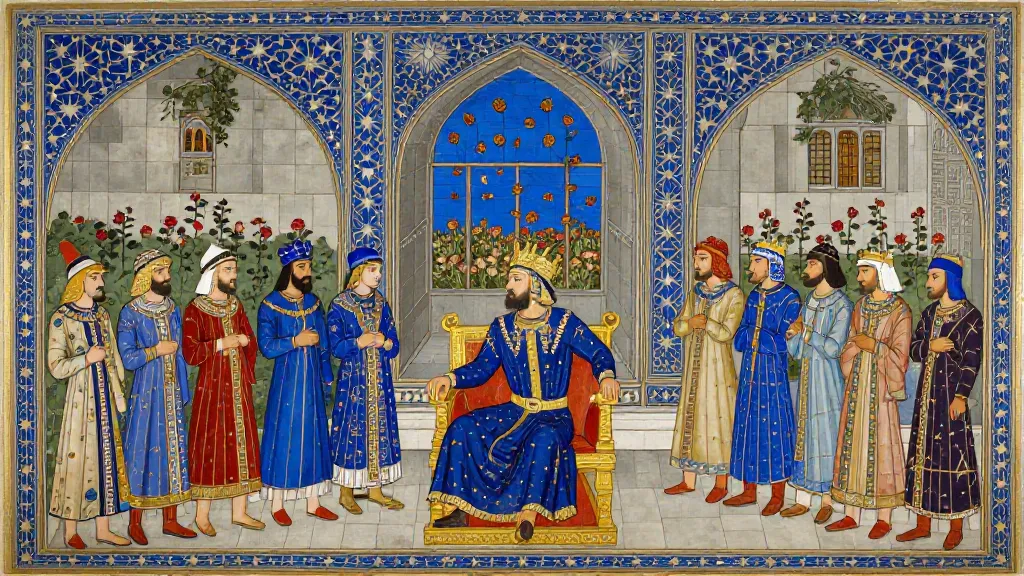
The Reign of Shiruyeh (Part 1) — Persian miniature painting

Shahnameh · Fall of the Sasanians

The Reign of Shiruyeh (Part 1)

پادشاهی شیرویه ۱

View:

تاجگذاری شیرویه و فرستادن پیام به خسرو

Shiruyeh's Coronation and the Message to Khosrow

چو شیروی بنشست برتخت ناز به سر برنهاد آن کیی تاج آز برو خواندند آفرین کیان همی‌گفت هریک به بانگ بلند که ای پر هنر خسرو ارجمند چنان هم که یزدان تو را داد تاج نشستی به آرام بر تخت عاج بماناد گیتی به فرزند تو چنین هم به خویشان و پیوند تو چنین داد پاسخ بدیشان قباد که همواره پیروز باشید و شاد نباشیم تا جاودان بد کنش چه نیکو بود داد باخوش منش جهان رابداریم با ایمنی ز بایسته‌تر کار پیشی مرا که افزون بود فرو خویشی مرا پیامی فرستم به نزد پدر بگویم بدو این سخن در به در ز ناخوب کاری که او را ندست برین گونه کاری به پیش آمدست به یزدان کند پوزش او از گناه گراینده گردد به آیین و راه بپردازم آن گه به کار جهان بکوشم به داد آشکار و نهان به جای نکوکار نیکی کنیم دل مرد درویش رانشکنیم دوتن بایدم راد و نیکوسخن کجا یاد دارم کارکهن بدان انجمن گفت کاین کارکیست ز ایرانیان پاک و بیدار کیست نمودند گردان سراسر به چشم دو استاد را گر نگیرند خشم بدانست شیر وی که ایرانیان کر ابر گزینند پاک از میان چو اشتاد و خراد برزین پیر دو دانا و گوینده و یادگیر بدیشان چنین گفت کای بخردان جهاندیده و کارکرده ردان مدارید کار جهان را به رنج که از رنج یابد سرافراز گنج دو داننده بی‌کام برخاستند پر از آب مژگان بیاراستند چو خراد بر زین و اشتاگشسپ به فرمان نشستند هر دو بر اسپ بدیشان چنین گفت کز دل کنون به باید گرفتن ره طیسفون پیامی رسانید نزد پدر سخن یادگیری همه در بدر بگویی که ما رانبد این گناه نه ایرانیان رابد این دستگاه که بادا فره‌ی ایزدی یافتی چو از نیکوی روی بر تافتی یکی آنک ناباک خون پدر نریزد ز تن پاک زاده پسر نباشد همان نیز هم داستان که پیشش کسی گوید این داستان دگر آنک گیتی پر از گنج تست رسیده بهر کشوری رنج تست نبودی بدین نیز هم داستان پر از درد کردی دل راستان سدیگر که چندان دلیر و سوار که بود اندر ایران همه نامدار نبودند شادان ز فرزند خویش ز بوم و برو پاک پیوند خویش یکی سوی چین بد یکی سوی روم پراگنده گشته بهر مرز و بوم دگر آنک قیصر بجای تو کرد ز هر گونه از تو چه تیمار خورد سپه داد و دختر تو را داد نیز همان گنج و با گنج بسیار چیز همی‌خواست دار مسیحا بروم بدان تا شود خرم آباد بوم به گنج تو از دار عیسی چه سود که قیصر به خوبی همی شاد بود ز بیچارگان خواسته بستدی ز نفرین بروی تو آمد بدی ز یزدان شناس آنچ آمدت پیش بر اندیش زان زشت کردار خویش بدان بد که کردی بهانه منم سخن را نخست آستانه منم به یزدان که از من نبد این گناه نجستم که ویران شود گاه شاه کنون پوزش این همه بازجوی بدین نامداران ایران بگوی ز هر بد که کردی به یزدان گرای کجا هست بر نیکوی رهنمای مگر مر تو را او بود دستگیر بدین رنجهایی که بودت گزیر دگر آنک فرزند بودت دو هشت شب و روز ایشان به زندان گذشت بدر بر کسی ایمن از تو نخفت ز بیم تو بگذاشتندی نهفت

When Shiruyeh seated himself on the throne of ease and placed the royal crown upon his head, the nobles recited the royal blessings over him, each one calling out in a loud voice: "O glorious and worthy king! Just as God has granted you the crown, may you sit in peace upon the ivory throne. May the world endure for your children, and likewise for your kinsmen and kin."

Qobad answered them: "May you be ever victorious and glad. We shall not be evildoers for all time. How fine it is to rule with justice and good temper! We shall hold the world in safety. But most pressing for me now is a matter close to my heart, for my bond to it runs deep. I will send a message to my father and lay out every matter before him -- the ugly deeds that brought us to this point. Let him seek God's pardon for his sins and turn again to the path of righteousness. After that I will attend to the affairs of the world and strive for justice, openly and in secret. Where good has been done, let us repay it with good, and let us not break the hearts of the poor."

"I need two men, wise and well-spoken, who remember the old ways." He asked the assembly: "Who is fit for this task? Who among the Iranians is upright and alert?" The nobles pointed out, to a man, two masters -- provided they would not take offense. Shiruyeh understood that the Iranians would choose none but the purest among them: Ashtad and Khorrad Borzin, two sages, eloquent and gifted with memory.

He said to them: "O men of wisdom, world-experienced and proven counselors, do not think the world's work a burden, for from toil the worthy man finds treasure." The two sages rose reluctantly, their eyes brimming with tears. Khorrad Borzin and Ashtad-Goshasp mounted their horses as commanded.

Shiruyeh told them: "Ride now with all your heart to Ctesiphon. Deliver a message to my father and remember every word of it. Say to him: 'This sin was not ours, nor was this upheaval the Iranians' doing. You lost God's glory when you turned away from goodness.'"

"'First: no pure-born son sheds his father's blood without cause, nor would he consent to hear such a thing proposed. Second: the world is full of your treasure, and your toil has reached every province -- yet you were never content with it, and you filled the hearts of the righteous with pain. Third: all those brave warriors and horsemen, every one of them renowned in Iran -- none was happy with his own children, his own lands and kin. One was sent off toward China, another toward Rome, scattered across every border and territory. Fourth: consider what the Caesar did for you, how he took pains on your behalf in every way. He gave you an army and gave you his daughter too, along with treasure and much wealth besides. He wished only the Cross of Christ to remain in Rome so that the land might flourish. What good did the Cross of Jesus do sitting in your treasury? The Caesar was content with kindness. You seized wealth from the helpless, and from their curses misfortune fell upon you.'"

"'Acknowledge before God what has come upon you. Reflect on your own shameful deeds. Whatever blame has been assigned, I am the pretext for it -- I am the first threshold of this accusation. But I swear by God, this sin was not mine. I did not seek the ruin of the king's throne. Now seek pardon for all these wrongs. Speak of it to the nobles of Iran. Turn toward God for every evil you have done, for He is the guide to goodness. Perhaps He will be your support in these trials that have been your lot.'"

"'And another thing: you had sixteen sons, and they spent their days and nights in prison. At your gate no one slept easy. Out of fear of you they abandoned all they had hidden away.'"

Notes

1personشیرویهShiruyeh

Shiruyeh (شیرویه), also known as Kavad II (Qobad II), son of Khosrow II Parviz. He overthrew his father in a palace coup in 628 AD and reigned for only a few months.

2personقبادQobad

Qobad (قباد), the throne name of Shiruyeh. Not to be confused with the earlier Sasanian king Kavad I.

3personخسرو پرویزKhosrow II Parviz

His father Khosrow II Parviz (خسرو پرویز), the Sasanian king he deposed.

4personاشتادAshtad

Ashtad (اشتاد), also called Ashtad-Goshasp, a sage and courtier.

5personخراد برزینKhorrad Borzin

Khorrad Borzin (خراد برزین), a sage and courtier, paired with Ashtad as envoys.

6placeطیسفونCtesiphon

Ctesiphon (طیسفون), the Sasanian imperial capital near modern Baghdad.

7personقیصرCaesar

Caesar (قیصر), the Byzantine Emperor -- here referring to Emperor Maurice, who had sheltered Khosrow and given him his daughter in marriage.

فرستادگان در طیسفون — دیدار با گلینوش و خسرو

The Envoys at Ctesiphon — Gulinush and the Audience with Khosrow

چو بشنید پیغام او این دو مرد برفتند دلها پر از داغ و درد برین گونه تا کشور طیسفون همه دیده پرآب و دل پر ز خون نشسته بدر بر گلینوش بود که گفتی زمین زو پر از جوش بود همه لشکرش یک سر آراسته کشیده همه تیغ و پیراسته ابا جوشن و خود بسته میان همان تازی اسپان ببر گستوان به جنگ اندرون گرز پولاد داشت همه دل پر از آتش و باد داشت چو خراد به رزین و اشتاگشسپ فرود آمدند این دو دانا ازاسپ گلینوش بر پای جست آن زمان ز دیدار ایشان به بد شادمان بجایی که بایست بنشاندشان همی مهتر نامور خواندشان سخن گوی خراد به رزین نخست زبان را به آب دلیری بشست گلینوش را گفت فرخ قباد به آرام تاج کیان برنهاد به ایران و توران و روم آگهیست که شیروی بر تخت شاهنشهیست تواین جوشن و خود و گبر و کمان چه داری همی کیستت بد گمان گلینوش گفت ای جهاندیده مرد به کام تو بادا همه کارکرد که تیمار بردی ز نازک تنم کجا آهنین بود پیراهنم برین مهر بر آفرین خوانمت سزایی که گوهر برافشانمت نباشد به جز خوب گفتار تو که خورشید بادا نگهدار تو به کاری کجا آمدستی بگوی پس آنگه سخنهای من بازجوی چنین داد پاسخ که فرخ قباد به خسرو مرا چند پیغام داد اگر باز خواهی بگویم همه پیام جهاندار شاه رمه گلینوش گفت این گرانمایه مرد که داند سخنها همه یاد کرد ز لیکن مرا شاه ایران قباد بسی اندرین پند و اندرز داد که همداستانی مکن روز و شب که کس پیش خسرو گشاید دو لب مگر آنک گفتار او بشنوی اگرپارسی گوید ار پهلوی چنین گفت اشتاد کای شادکام من اندر نهانی ندارم پیام پیامیست کان تیغ بار آورد سر سرکشان در کنار آورد تو اکنون ز خسرو برین بارخواه بدان تا بگویم پیامش ز شاه گلینوش بشنید و بر پای جست همه بندها رابهم برشکست بر شاه شد دست کرده بکش چنا چون بباید پرستار فش بدو گفت شاها انوشه بدی مبادا دل تو نژند از بدی چو اشتاد و خراد به رزین به شاه پیام آوریدند زان بارگاه بخندید خسرو به آواز گفت که این رای تو با خرد نیست جفت گرو شهریارست پس من کیم درین تنگ زندان ز بهر چیم که از من همی بار بایدت خواست اگر کژ گویی اگر راه راست بیامد گلینوش نزد گوان بگفت این سخن گفتن پهلوان کنون دست کرده بکش در شوید بگویید و گفتار او بشنوید دو مرد خردمند و پاکیزه‌گوی به دستار چینی بپوشید روی چو دیدند بردند پیشش نماز ببودند هر دو زمانی دراز جهاندار بر شاد و رد بزرگ نوشته همه پیکرش میش و گرگ همان زر و گوهر برو بافته سراسر یک اندر دگر تافته نهالیش در زیر دیبای زرد پس پشت او مسند لاژورد بهی تناور گرفته بدست دژم خفته بر جایگاه نشست چودید آن دو مرد گرانمایه را به دانایی اندر سرمایه را از آن خفتگی خویشتن کرد راست جهان آفریننده را یار خواست به بالین نهاد آن گرامی بهی بدان تا بپرسید ز هر دو رهی بهی زان دو بالش به نرمی بگشت بی‌آزار گردان ز مرقد گذشت بدین گونه تا شاد ورد مهین همی‌گشت تاشد به روی زمین به پویید اشتاد و آن برگرفت به مالیدش از خاک و بر سر گرفت جهاندار از اشتاد برگاشت روی بدان تا ندید از بهی رنگ و بوی بهی رانهادند بر شاد ورد همی‌بود برپای پیش این دو مرد پر اندیشه شد نامدار از بهی ندید اندر و هیچ فال بهی همانگه سوی آسمان کرد روی چنین گفت کای داور راست گوی که برگیرد آن راکه تو افگنی که پیوندد آن را که تو بشکنی چو از دوده‌ام بخت روشن بگشت غم آورد چون روشنایی گذشت به اشتاد گفت آنچ داری پیام ازان بی منش کودک زشت کام وزان بد سگالان که بی‌دانشند ز بی دانشی ویژه بی رامش‌اند همان زان سپاه پراگندگان پر اندیشه و تیره دل بندگان بخواهد شدن بخت زین دودمان نماند درین تخمه‌ی کس شادمان سوی ناسزایان شود تاج وتخت تبه گردد این خسروانی درخت نماند بزرگی به فرزند من نه بر دوده و خویش و پیوند من همه دوستان ویژه دشمن شوند بدین دوده بد گوی و بد تن شوند نهان آشکارا به کرد این بهی که بی توشود تخت شاهی تهی سخن هرچ بشنیدی اکنون بگوی پیامش مرا کمتر از آب جوی

When these two men heard the message, they departed with hearts full of sorrow and pain. They rode on in this fashion until they reached Ctesiphon, their eyes full of water and their hearts full of blood.

Gulinush was seated at the gate. You would have said the ground itself boiled with his presence. His entire force was arrayed in readiness -- swords drawn, armor burnished. They wore mail and helmets with girded waists, and their Arab horses wore barding. In battle he carried a steel mace, and every heart among his men was full of fire and fury.

When Khorrad Borzin and Ashtad-Goshasp dismounted, Gulinush leapt to his feet, pleased to see them. He seated them in the proper place and addressed each as a lord of rank. Khorrad Borzin the orator spoke first, washing his tongue in the waters of courage. He said to Gulinush: "The fortunate Qobad has placed the royal crown in peace. Word has gone to Iran and Turan and Rome that Shiruyeh sits upon the throne of kings. Why do you keep this armor and helmet and coat of mail and bow? Who do you suspect of ill intent?"

Gulinush replied: "O worldly-wise man, may all things go as you wish. You have shown concern for my tender body, though my garment has been iron. For this kindness I bless you -- you deserve to have jewels scattered before you. Nothing but fair words come from you; may the sun be your guardian. Tell me on what errand you have come, and then ask what you will of me."

Khorrad Borzin answered: "The fortunate Qobad has given me several messages for Khosrow. If you wish, I will recite them all -- the message of the world-lord, the shepherd of his people." Gulinush said: "This worthy man knows all the words by heart. But the king of Iran, Qobad, gave me much counsel and instruction: 'Do not consent, day or night, that anyone open his lips before Khosrow unless you first hear what he has to say, whether he speaks in Persian or in Pahlavi.'"

Ashtad said: "O fortunate one, I carry no secret message. My message is one that will bear the fruit of swords and bring the heads of the proud low. Now seek audience with Khosrow on our behalf, so that I may deliver the new king's message to him."

Gulinush heard this and sprang up. He broke through every barrier, went before the king with hands clasped in submission, as a proper servant should, and said: "O king, may you be immortal! May your heart never be darkened by misfortune. Ashtad and Khorrad Borzin have brought a message from the new court."

Khosrow laughed and said aloud: "This plan of yours is not wedded to wisdom. If he is the sovereign, then who am I? Why am I in this narrow prison, that you must come seeking audience with me? Whether you speak crooked or straight, go." Gulinush went back to the envoys and repeated the great king's words: "Now go in with hands clasped in submission. Speak your piece and hear his words."

The two wise and well-spoken men covered their faces with Chinese silk. When they came before him they bowed low and remained prostrate for a long time. The world-lord sat upon a great and noble throne, its surface worked with figures of sheep and wolves, woven throughout with gold and jewels, one pattern twisted into another. Beneath him lay a mattress of yellow brocade, and behind his back a cushion of lapis blue. He held a quince in his powerful hand, lying troubled in the place where he sat.

When he saw these two worthy men -- men of capital worth in wisdom -- he roused himself from that torpor and called upon the Creator of the world. He set the precious quince on the pillow so that he might question the two envoys. The quince rolled gently from the two cushions, passing without harm across the bedding, rolling on in this fashion until it reached the great carpet, and then continued until it fell upon the ground. Ashtad hurried forward, picked it up, brushed the dust from it, and placed it upon his head in reverence.

The world-lord turned his face away from Ashtad, for he did not see in the quince any sign of fragrance or beauty. They placed the quince back on the carpet, and Khosrow stood before these two men. He grew deeply pensive over the quince, for he saw in it no good omen at all. At once he raised his face toward heaven and said: "O just and truthful Judge! Who can raise up what You have cast down? Who can mend what You have broken? When fortune turned away from my house, sorrow came in where brightness had passed."

He said to Ashtad: "Whatever message you carry from that witless child of vile desire, and from those ill-wishers who are without learning -- who in their ignorance are especially without joy -- and from that scattered army of anxious, dark-hearted slaves -- fortune will depart from this dynasty. No one of this lineage will remain happy. The throne and crown will pass to the unworthy. This royal tree will wither. No greatness will remain for my children, nor for my house, my kin, my line. All friends will become outright enemies, speaking ill of this house and working harm against it. The quince made it plain, openly and in secret: without you, the throne of kingship will stand empty."

"Now speak whatever you have heard. His message is worth less to me than brook-water."

Notes

8personگلینوشGulinush

Gulinush (گلینوش), the commander guarding Khosrow in his imprisonment.

9personخسروKhosrow

Khosrow (خسرو), i.e., Khosrow II Parviz, the deposed king.

پاسخ خسرو — دفاع از پادشاهی خویش

Khosrow's Reply — A King Defends His Reign

گشادند گویا زبان این دو مرد برآورد پیچان یکی باد سرد بدان نامور گفت پاسخ شنو یکایک ببر سوی سالار نو به گویش که زشت کسان را مجوی جز آن را که برتابی از ننگ روی سخن هرچ گفتی نه گفتارتست مماناد گویا زبانت درست مگو آنچ بدخواه تو بشنود ز گفتار بیهوده شادان شود بدان گاه چندان نداری خرد که مغزت بدانش خرد پرورد به گفتار بی‌بر چو نیرو کنی روان و خرد را پر آهو کنی کسی کو گنهکار خواند تو را از آن پس جهاندار خواند تو را نباید که یابد بر تو نشست بگیرد کم و بیش چیزی بدست میندیش زین پس برین سان پیام که دشمن شود بر تو بر شادکام به یزدان مرا کار پیراستست نهاده بران گیتی‌ام خواستست بدین جستن عیبهای دروغ به نزد بزرگان نگیری فروغ بیارم کنون پاسخ این همه بدان تا بگویید پیش رمه پس از مرگ من یادگاری بود سخن گفتن راست یاری بود چو پیدا کنم بر تو انبوه رنج بدانی که از رنج ماخاست گنج نخستین که گفتی ز هرمز سخن به بیهوده از آرزوی کهن ز گفتار بدگوی ما را پدر برآشفت و شد کار زیر و زبر از اندیشه او چو آگه شدیم از ایران شب تیره بی ره شدیم هما راه جستیم و بگریختیم به دام بلا بر نیاویختیم از اندیشه‌ی او گناهم نبود جز از جستن او شاه را هم نبود شنیدم که بر شاه من بد رسید ز بردع برفتم چو گوش آن شنید گنهکار بهرام خود با سپاه بیاراست در پیش من رزمگاه ازو نیز بگریختم روز جنگ بدان تا نیایم من او را به چنگ ازان پس دگر باره باز آمدم دلاور به جنگ‌ش فراز آمدم نه پرخاش بهرام یکباره بود جهانی بران جنگ نظاره بود به فرمان یزدان نیکی فزای که اویست بر نیک و بد رهنمای چو ایران و توران به آرام گشت همه کار بهرام ناکام گشت چو از جنگ چوبینه پرداختم نخستین بکین پدر تاختم چو بند وی و گستهم خالان بدند به هر کشوری بی‌همالان بدند فدا کرده جان را همی پیش من به دل هم زبان و به تن خویش من چو خون پدر بود و درد جگر نکردیم سستی به خون پدر بریدیم بند وی را دست و پای کجا کرد بر شاه تاریک جای چو گستهم شد در جهان ناپدید ز گیتی یکی گوشه‌یی برگزید به فرمان ما ناگهان کشته شد سر و رای خونخوارگان گشته شد دگر آنک گفتی تو از کار خویش از آن تنگ زندان و بازار خویش بد آن تا ز فرزند من کار بد نیاید کزان بر سرش بد رسد به زندان نبد بر شما تنگ و بند همان زخم خواری و بیم گزند بدان روزتان خوار نگذاشتم همه گنج پیش شما داشتم بر آیین شاهان پیشین بدیم نه بی‌کار و بر دیگر آیین بدیم ز نخچیر و ز گوی و رامشگران ز کاری که اندر خور مهتران شمارا به چیزی نبودی نیاز ز دینار وز گوهر و یوز و باز یکی کاخ بد کرده زندانش نام همی زیستی اندرو شادکام همان نیز گفتار اخترشناس که ما را همی از تو دادی هراس که از تو بد آید بدین سان که هست نینداختم اخترت را زدست وزان پس نهادیم مهری بر وی به شیرین سپردیم زان گفت و گوی چو شاهیم شد سال بر سی و شش میان چنان روزگاران خوش تو داری بیاد این سخن بی‌گمان اگر چند بگذشت بر ما زمان مرا نامه آمد ز هندوستان بدم من بدان نیز همداستان ز رای برین نزد مانامه بود گهر بود و هر گونه‌یی جامه بود یکی تیغ هندی و پیل سپید جزین هرچ بودم به گیتی امید ابا تیغ دیبای زربفت پنج ز هر گونه‌یی اندرو برده رنج سوی تو یکی نامه بد بر پرند نوشته چو من دیدم از خط هند بخواندم یکی مرد هندی دبیر سخن‌گوی و داننده و یادگیر چوآن نامه را او به من بر بخواند پر از آب دیده همی‌سرفشاند بدان نامه در بد که شادان بزی که با تاج زر خسروی را سزی که چون ماه آذر بد و روز دی جهان را تو باشی جهاندار کی شده پادشاهی پدر سی و هشت ستاره برین گونه خواهد گذشت درخشان شود روزگار بهی که تاج بزرگی به سر برنهی مرا آن زمان این سخن بد درست ز دل مهربانی نبایست شست من آگاه بودم که از بخت تو ز کار درخشیدن تخت تو نباشد مرا بهره جز درد و رنج تو را گردد این تخت شاهی وگنج ز بخشایش و دین و پیوند و مهر نکردم دژم هیچ‌زان نامه چهر به شیرین سپردم چو برخواندم ز هر گونه اندیشه‌ها را ندم بر اوست با اختر تو بهم نداند کسی زان سخن بیش و کم گر ای دون که خواهی که بینی به خواه اگر خود کنی بیش و کم را نگاه برانم که بینی پشیمان شوی وزین کرده‌ها سوی درمان شوی

The two men opened their eloquent tongues. Khosrow heaved a bitter, twisting sigh.

He said to those worthy men: "Hear my answer and carry it, point by point, to the new lord. Tell him: 'Do not seek to shame people -- seek only what you yourself would not blush to face. Every word you spoke was not your own; may your eloquent tongue not long endure. Do not say what your enemy would hear and rejoice at, making him glad with idle talk. At such times you lack the wit for your brain to nourish wisdom. When you spend your strength on fruitless speech, you fill your soul and your reason with faults. Whoever first calls you a sinner and then calls you world-lord -- such a man should never find a seat near you, nor get his hands on anything great or small. Do not think of sending messages like this again, for your enemy will only rejoice at your expense.'"

"'My affairs are in God's hands. He has set my gaze on the world to come. By seeking out these false accusations you will gain no luster among the great. Let me now answer every charge, so that you may speak it before the assembly -- and after my death it may serve as a memorial, for truthful speech is a lasting ally.'"

"'When I lay bare the mass of hardships before you, you will understand that from hardship our treasure arose. First, you spoke of Hormizd. You dragged up an old grievance for nothing. It was on the word of slanderers that my father raged against me, and everything was thrown into confusion. When I learned of his designs, I fled from Iran in the dark of night. I sought the road and escaped so that I would not be snared in the trap of calamity. His suspicion was not my fault. For him, too, there was nothing but pursuit. I heard that evil had befallen my king. When that news reached my ears, I came from Bardaa. The criminal Bahram, with his army at his back, drew up his line of battle before me. I fled from him too on the day of battle, so that I would not fall into his clutches. After that I came back a second time and rode boldly to meet him in war. The fight against Bahram was no simple affair -- the whole world watched that battle. By the command of God, the increaser of good, who is the guide to both good and evil, when Iran and Turan were brought to peace and Bahram's cause came to nothing -- when I was done with the war against Chobin, my first act was to ride out for my father's vengeance.'"

"'Banduy and Gostaham were my maternal uncles. In every province they were without peer. They had given their lives freely for me -- in heart they were my tongue, in body my own kin. But because it was my father's blood and the anguish of my heart, I showed no weakness in avenging my father. I cut off Banduy's hands and feet, for he had made the king's world dark. And when Gostaham vanished from the world and chose a hidden corner of the earth, by my command he was struck down without warning. So ended the counsel of the blood-seekers.'"

"'As for what you said about my keeping you imprisoned and in hardship -- that was only so that no evil deed would come from my sons that might bring ruin on their own heads. In your prison there was no harshness or chains, no blows of humiliation, no threat of injury. I did not neglect you in those days; I placed all my treasure before you. We followed the customs of the kings before us; we did nothing idle or out of order. Hunting, polo, entertainers -- everything befitting great men -- you lacked nothing, whether gold coins, gems, falcons, or hawks. It was a palace that bore the name of prison, yet in it you lived in comfort.'"

"'There was also the matter of the astrologer who filled us with dread of you, who said that from you would come evil of the very kind that has now come to pass. I did not cast your horoscope aside. Afterward I sealed it and entrusted the whole matter to Shirin. In the thirty-sixth year of my reign, amid such pleasant times -- you surely remember this, though much time has passed over us -- a letter came to me from India. I agreed to it. From the great king of India came a letter with jewels and garments of every kind: a sword of Indian steel and a white elephant, and everything else I could wish for in the world, along with the sword five bolts of gold-woven brocade, each worked with great skill.'"

"'Addressed to you there was a letter on silk. When I saw the Indian script I summoned an Indian scribe, eloquent, learned, and sharp of memory. When he read that letter to me, he kept shaking his head, his eyes full of tears. In that letter it said: "Live in happiness, for you are worthy of kingship with a golden crown. When it is the month of Azar and the day of Dey, you shall be the world's sovereign lord. Your father's reign will have reached thirty-eight years, and thus the stars will turn. A radiant age of goodness will dawn when you place the crown of greatness on your head."'"

"'At that time I knew this was true. I could not wash the affection from my heart. I knew that from your fortune and the brightening of your throne, my own share would be nothing but pain and toil -- that the throne and treasure of kingship would pass to you. Out of mercy, faith, kinship, and love I did not darken my face at that letter. I read it and entrusted it to Shirin. I pondered every angle of it. It rests with her alongside your horoscope. No one else knows any detail of it. If you wish to see it, ask for it; or examine the matter yourself, the greater and the lesser of it. I believe that if you see it you will be filled with remorse and will seek a cure for what you have done.'"

Notes

10personهرمزHormizd

Hormizd (هرمز), Hormizd IV, father of Khosrow Parviz. He was blinded and deposed by the nobles Banduy and Gostaham, leading to Khosrow's flight and eventual return.

11placeبردعBardaa

Bardaa (بردع), a city in the Caucasus region (modern Azerbaijan), where Khosrow was based before returning to fight Bahram.

12personبهرامBahram

Bahram (بهرام), i.e., Bahram Chobin (بهرام چوبینه), the general who usurped the Sasanian throne, forcing Khosrow to flee to Byzantine territory.

13personچوبینهChobin

Chobin (چوبینه), the epithet of Bahram VI, the usurper general.

14personبندوی و گستهمBanduy and Gostaham

Banduy and Gostaham (بندوی و گستهم), Khosrow's maternal uncles who had helped depose Hormizd IV. Khosrow later executed them to avenge his father.

15personشیرینShirin

Shirin (شیرین), Khosrow's beloved queen, to whom he entrusted sensitive documents.

16context

The month of Azar and the day of Dey (ماه آذر و روز دی) -- a date in the Zoroastrian calendar indicating the prophesied moment of Shiruyeh's accession.

خسرو از گنج و سپاه و قیصر سخن می‌گوید

Khosrow on Treasury, Army, and the Caesar

دگر آنک گفتی ز زندان و بند گر آمد ز ما برکسی برگزند چنین بود تا بود کارجهان بزرگان و شاهان و رای مهان اگر تو ندانی به موبد بگوی کند زین سخن مر تو را تازه روی که هرکس که او دشمن ایزدست ورا در جهان زندگانی بدست به زندان ما ویژه دیوان بدند که نیکان ازیشان غریوان بدند چو ما را نبد پیشه خون ریختن بدان کار تنگ اندر آویختن بدان را به زندان همی‌داشتم گزند کسان خوار نگذاشتم بسی گفت هرکس که آن دشمنند ز تخم بدانند و آهرمنند چو اندیشه ایزدی داشتیم کنون من شنیدم که کردی رها مرد آن را که بد بتر از اژدها ازین بد گنهکار ایزد شدی به گفتار و کردارها بد شدی چو مهتر شدی کار هشیار کن ندانی تو داننده را یار کن مبخشای بر هر که رنجست زوی اگر چند امید گنجست زوی بر آنکس کزو در جهان جزگزند نبینی مر او را چه کمتر ز بند دگر آنک از خواسته گفته‌ای خردمندی و رای بنهفته‌ای ز کس مانجستیم جز باژ و ساو هر آنکس که او داشت با باژ تاو ز یزدان پذیرفتم آن تاج و تخت فراوان کشیدم ازان رنج سخت جهان آفرین داور داد وراست همی روزگاری دگرگونه خواست نیم دژمنش نیز درخواست او فزونی نجوییم درکاست او به جستیم خشنودی دادگر ز بخشش ندیدم بکوشش گذر چو پرسد ز من کردگار جهان بگویم بو آشکار و نهان بپرسد که او از توداناترست بهر نیک و بد بر تواناترست همین پرگناهان که پیش تواند نه تیماردار و نه خویش تواند ز من هرچ گویند زین پس همان شوند این گره بر تو بر بد گمان همه بنده‌ی سیم و زرند و بس کسی را نباشند فریادرس ازیشان تو را دل پر آسایش است گناه مرا جای پالایش است نگنجد تو را این سخن در خرد نه زین بد که گفتی کسی برخورد ولیکن من از بهر خود کامه را که برخواند آن پهلوی نامه را همان در جهان یادگاری بود خردمند را غمگساری بود پس از ماهر آنکس که گفتار ما بخوانند دانند بازار ما ز برطاس وز چین سپه راندیم سپهبد بهر جای بنشاندیم ببردیم بر دشمنان تاختن نیارست کس گردن افراختن چو دشمن ز گیتی پراگنده شد همه گنج ما یک سر آگنده شد همه بوم شد نزد ما کارگر ز دریا کشیدند چندان گهر که ملاح گشت از کشیدن ستوه مرا بود هامون و دریا و کوه چو گنج در مها پراگنده شد ز دینار نو به دره آگنده شد ز یاقوت وز گوهر شاهوار همان آلت و جامه‌ی زرنگار چو دیهیم ما بیست وشش ساله گشت ز هر گوهری گنجها ماله گشت درم را یکی میخ نو ساختم سوی شادی و مهتری آختم بدان سال تا باژ جستم شمار چوشد باژ دینار بر سد هزار پراگنده افگند پند او سی همه چرم پند او سی پارسی بهر به دره‌یی در ده و دو هزار پراگنده دینار بد شاهوار جز از باژ و دینار هندوستان جز از کشور روم و جا دوستان جز از باژ وز ساو هر کشوری ز هر نامداری و هر مهتری جز از رسم و آیین نوروز و مهر از اسپان وز بنده‌ی خوب چهر جز از جوشن و خود و گوپال و تیغ ز ما این نبودی کسی را دریغ جز از مشک و کافور و خز و سمور سیاه و سپید و ز کیمال بور هران کس که ما را بدی زیردست چنین باژها بر هیونان مست همی‌تاختند به درگاه ما نپیچید گردن کس از راه ما ز هر در فراوان کشیدیم رنج بدان تا بیا گند زین گونه گنج دگر گنج خضرا و گنج عروس کجا داشتیم از پی روز بوس فراوان ز نامش سخن را ندیم سرانجام باد آورش خواندیم چنین بیست و شش سال تا سی و هشت به جز به آرزو چرخ بر ما نگشت همه مهتران خود تن آسان بدند بد اندیش یک سر هراسان بدند همان چون شنیدم ز فرمان تو جهان را بد آمد ز پیمان تو نماند کس اندر جهان رامشی نباید گزیدن به جز خامشی همی‌کرد خواهی جهان پرگزند پراز درد کاری و ناسودمند همان پرگزندان که نزد تواند که تیره شبان اور مزد تواند همی‌داد خواهند تختت بباد بدان تا نباشی به گیتی تو شاد چو بودی خردمند نزدیک تو که روشن شدی جان تاریک تو به دادن نبودی کسی رازیان که گنجی رسیدی به ارزانیان ایا پور کم روز و اندک خرد روانت ز اندیشه رامش برد چنان دان که این گنج من پشت تست زمانه کنون پاک در مشت تست هم آرایش پادشاهی بود جهان بی‌درم در تباهی بود شود بی‌درم شاه بیدادگر تهی دست را نیست هوش و هنر به بخشش نباشد ورا دستگاه بزرگان فسوسیش خوانند شاه ار ای دون که از تو به دشمن رسد همی بت بدست بر همن رسد ز یزدان پرستنده بیزار گشت ورا نام و آواز تو خوار گشت چو بی‌گنج باشی نپاید سپاه تو را زیردستان نخوانند شاه سگ آن به که خواهنده‌ی نان بود چو سیرش کنی دشمن جان بود دگر آنک گفتی ز کار سپاه که در بو مهاشان نشاندم به راه ز بی‌دانشی این نیاید پسند ندانی همی راه سود از گزند چنین است پاسخ که از رنج من فراز آمد این نامور گنج من ز بیگانگان شهرها بستدم همه دشمنان را به هم بر زدم بدان تا به آرام برتخت ناز نشینیم بی‌رنج و گرم و گداز سواران پراگنده کردم به مرز پدید آمد اکنون ز ناارز ارز چو از هر سوی بازخوانی سپاه گشاده ببیند بد اندیش راه که ایران چوباغیست خرم بهار شکفته همیشه گل کامگار پراز نرگس و نار و سیب و بهی چو پالیز گردد ز مردم تهی سپر غم یکایک ز بن برکنند همه شاخ نارو بهی بشکنند سپاه و سلیحست دیوار اوی به پرچینش بر نیزه‌ها خار اوی اگر بفگنی خیره دیوار باغ چه باغ و چه دشت و چه دریاچه راغ نگر تا تو دیوار او نفگنی دل و پشت ایرانیان نشکنی کزان پس بود غارت و تاختن خروش سواران و کین آختن زن و کودک و بوم ایرانیان به اندیشه‌ی بد منه در میان چو سالی چنین بر تو بر بگذرد خردمند خواند تو را بی‌خرد من ای دون شنیدم کجا تو مهی همه مردم ناسزا رادهی چنان دان که نوشین روان قباد به اندرز این کرد در نامه یاد که هرکو سلیحش به دشمن دهد همی خویشتن رابه کشتن دهد که چون بازخواهد کش آید به کار بداندیش با او کند کارزار دگر آنک دادی ز قیصر پیام مرا خواندی دو دل و خویش کام سخنها نه از یادگار تو بود که گفتار آموزگار تو بود وفا کردن او و از ما جفا تو خود کی شناسی جفا از وفا بدان پاسخش ای بد کم خرد نگویم جزین نیز که اندر خورد تو دعوی کنی هم تو باشی گوا چنین مرد بخرد ندارد روا چو قیصر ز گرد بلا رخ بشست به مردی چو پرویز داماد جست هر آنکس که گیتی ببد نسپرد به مغز اندرون باشد او را خرد بدانم که بهرام بسته میان ابا او یکی گشته ایرانیان به رومی سپاهی نشاید شکست نساید روان ریگ با کوه دست بدان رزم یزدان مرا یاربود سپاه جهان نزد من خوار بود شنیدند ایرانیان آنچ بود تو را نیز زیشان بباید شنود مرا نیز چیزی که بایست کرد به جای نیاتوس روز نبرد ز خوبی و از مردمی کرده‌ام به پاداش او روز بشمرده‌ام بگوید تو را زاد فرخ همین جهان را به چشم جوانی مبین گشسپ آنک بد نیز گنجور ما همان موبد پاک دستور ما که از گنج ما به دره بد سد هزار که دادم بدان رومیان یادگار نیاتوس را مهره دادم هزار ز یاقوت سرخ از در گوشوار کجا سنگ هر مهره‌یی بد هزار ز مثقال گنجی چو کردم شمار همان در خوشاب بگزیده سد درو مرد دانا ندید ایچ بد که هرحقه‌یی را چو پنجه هزار به دادی درم مرد گوهر شمار سد اسپ گرانمایه پنجه به زین همه کرده از آخر ما گزین دگر ویژه با جل دیبه بدند که در دشت با باد همره بدند به نزدیک قیصر فرستادم این پس از خواسته خواندمش آفرین ز دار مسیحا که گفتی سخن به گنج اندر افگنده چوبی کهن نبد زان مرا هیچ سود و زیان ز ترسا شنیدی تو آواز آن شگفت آمدم زانک چون قیصری سر افراز مردی و نام آوری همه گرد بر گرد او بخردان همش فیلسوفان و هم موبدان که یزدان چرا خواند آن کشته را گرین خشک چوب وتبه گشته را گر آن دار بیکار یزدان بدی سرمایه‌ی اور مزد آن بدی برفتی خود از گنج ما ناگهان مسیحا شد او نیستی در جهان

"'As for what you said about prison and chains, and whether any harm came from us to anyone: so it has been since the world began, among great men, kings, and the counsel of lords. If you do not understand, ask the chief priest -- he will enlighten you on this point. Whoever is an enemy of God finds life itself a misery. In our prisons, specifically, it was demons who were kept, beings from whom the righteous cried out in anguish. Since bloodshed was never our custom -- plunging into that grim business -- I held the wicked in prison and did not let the harm of men go unanswered. Many said, "These are enemies, of evil seed, of demonic stock." But we kept a godly disposition. Now I hear you have set them free -- those who were worse than dragons. In this you have become a sinner before God and have become wicked in word and deed.'"

"'Now that you are lord, act with vigilance. If you do not understand, make the wise your allies. Show no mercy to any man from whom harm flows, however much you hope for treasure from him. For anyone from whom you see nothing in the world but injury, what is less than chains?'"

"'As for what you said about treasure and wealth -- you hid your wisdom and your judgment. From no one did I seek more than tax and tribute, from any who had the strength for tribute. I received the crown and throne from God. I bore much hard toil for them. The Creator of the world is a just and righteous judge; He simply willed a different turn of days. I am not angry at His will; I do not seek excess where He decrees diminishment. I sought the pleasure of the Just One; I saw no escape from His decree through effort. When the Creator of the world questions me, I will tell Him everything, openly and in secret. He will ask -- for He is wiser than you, and in all things good and evil more powerful. These very sinners who stand before you are neither your guardians nor your kin. Whatever they say of me from now on, these same men will turn against you in suspicion. They are slaves of silver and gold, nothing more. They will be no one's deliverer. Their company brings you ease of heart while my sins are given their cleansing. But this does not sit well in your mind. No one profits from the evil you have spoken.'"

"'Yet for my own sake, so that someone may read this testament in Pahlavi -- it too will be a memorial in the world, a comfort to the wise. After us, whoever reads our words will understand our reckoning.'"

"'We led armies against Bartas and against China. We stationed commanders in every place. We drove our raids upon our enemies; none dared raise his neck. When the enemy was scattered from the world, our every treasury was filled to the brim. Every land became productive under our hand. From the sea they drew so many gems that the sailors were exhausted from the hauling. Mountains, plains, and oceans were mine.'"

"'When the treasury of pearls was distributed and the coffers were filled with fresh-minted coin -- rubies, royal gems, golden vessels, and gold-worked garments -- by the twenty-sixth year of our reign, the treasuries were overflowing with every kind of jewel. I struck a new stamp for the coinage and turned my hand toward joy and sovereignty. In that year, when I took stock of the tribute, the tribute in gold coin came to a hundred thousand -- and scattered across that, another thirty purses, all counted in Persian hides. In each purse, twelve thousand gold coins were distributed in royal fashion.'"

"'This is apart from the tribute and gold of India, apart from the territories of Rome and its dependencies, apart from the tribute and taxes of every province, from every chieftain and every lord, apart from the customary gifts of Nowruz and Mehregan -- horses and beautiful slaves -- apart from armor, helmets, maces, and swords. None of this did we begrudge anyone. Apart from musk, camphor, sable and ermine, black and white, and bays of the finest breed -- every vassal loaded these tributes onto fierce camels and sent them galloping to our court. No one turned his neck from our road. We bore much toil at every front so that treasure of this kind might be amassed.'"

"'Beyond this there was the Khazra Treasury and the Bride Treasury, which I kept for days of need. We gave it many names; in the end we called it the Wind-Borne Treasury. For twenty-six years until thirty-eight, fortune turned only toward our desire. All the great men were at ease, and every ill-wisher trembled in fear.'"

"'Now I have heard of your decrees. Evil has come to the world from your promises. No peace will remain for anyone in the world. One should choose nothing but silence. You will fill the world with harm -- painful, profitless work. Those very evildoers who stand at your side, who are your companions in the dark of night, will give your throne to the wind so that you may never be happy in this world.'"

"'If a wise man had been near you to illuminate your darkened soul, you would not have needed to give so much away, for treasure would have reached those who deserved it. O son of few days and little wit -- may your spirit steal every joy from your thoughts! Know that this treasury of mine is your backbone. For now the age is entirely in your fist. It is the ornament of kingship. A world without coin falls into ruin. A king without coin becomes unjust. An empty hand has neither sense nor virtue. Without means there is no station for generosity. The great will mock such a man and call him king in jest. If this reaches the enemy's hands, it is as though an idol falls into a Brahmin's hands -- the worshiper of God turns away; your name and fame become worthless to him. Without treasure, no army endures. Your subjects will not call you king. A dog is better off when it begs for bread; once you feed it to fullness, it becomes the enemy of your life.'"

"'As for what you said about the army -- that I stationed them across the frontiers -- this is not something any wise man would approve. You do not know the road from profit to ruin. Here is the answer: from my toil this renowned treasure was gathered. From foreigners I took back the cities. I struck all my enemies together so that we might sit in comfort and ease on the throne of delight, free from toil and heat and cold. I stationed horsemen on the borders, and what was once worthless became precious. When you recall the army from every frontier, the ill-wisher will see the road wide open.'"

"'Iran is like a garden, green in spring, where the flower of desire blooms always. It is full of narcissus and pomegranate and apple and quince. But when a garden is emptied of gardeners, sorrow will uproot every tree; they will break every branch of pomegranate and quince. The army and its arms are its wall; the spears along the fence are its thorns. If you tear down the garden's wall for nothing, then garden and field and coast and highland are all the same. Take care not to tear down its wall, not to break the heart and spine of the Iranians -- for after that there will be plunder and raiding, the war-cry of horsemen, and the unleashing of vengeance. The women and children and lands of the Iranians -- do not consign them to evil designs. When a year passes over you in this fashion, the wise will call you witless.'"

"'I have also heard that you, the ruler, give everything to undeserving men. Know well that Nushinravan Qobad recorded this in his testament: whoever gives his weapons to his enemy is in truth giving himself over to slaughter, for when he needs them back, the ill-wisher will make war on him with his own arms.'"

"'As for your message about the Caesar and calling me two-faced and self-serving -- those words were not from your own memory; they were your tutor's speech. His loyalty against our ingratitude -- you yourself, when do you know ingratitude from loyalty? The answer to this, O witless wretch -- I will say nothing more than is fitting: you make the accusation, and you yourself are the witness. No wise man considers this acceptable. When the Caesar washed his face of the dust of calamity, he sought a son-in-law as valiant as Parviz. Anyone who has not traversed the world through evil possesses wisdom in his brain. Know that Bahram had girded his waist and all the Iranians had joined him. A Roman army alone could not have broken them -- sand does not wear away mountain with its hand. In that battle God was my ally; the armies of the world were nothing before me. The Iranians heard what happened. You too must hear it from them. As for what I needed to do, in repaying Niyatus on the day of battle -- the kindness and humanity I showed -- I have counted every day of recompense.'"

"'Zad-Farrokh will tell you the same. Do not look upon the world with the eyes of youth. And Goshasp, who was my treasurer and the pure-handed chief priest of my court -- from my treasury one hundred thousand purses in gold I gave as a memorial to those Romans. To Niyatus I gave a thousand gems of red ruby, fit for earrings, each gem weighing a thousand mithqals when I reckoned the treasure. And a hundred choice pearls of the finest water, in which a knowing man could find no flaw -- for each box of which a gem-appraiser would have given fifty thousand silver coins. One hundred fine horses, fifty with saddles, all chosen from my own stables. Others wore blankets of brocade and ran with the wind across the plain. All this I sent to the Caesar, and after the wealth I sent him blessings.'"

"'As for the Cross of Christ you spoke of -- an old piece of wood tossed into the treasury -- it brought me neither profit nor loss. You heard of it from a Christian. I marveled at how a man who is a Caesar, a noble and renowned man, surrounded on all sides by wise men, philosophers, and priests, would call that crucified one God -- this dry wood, this decayed thing. If that useless cross were truly God, the very wellspring of divine reward, it would have departed from my treasury of its own accord; Christ would have risen and left this world behind.'"

Notes

17context

Bartas (برطاس), a people of the northern steppes, possibly the Volga region. The reference indicates Khosrow's campaigns on the northern frontiers.

18context

Nowruz and Mehregan (نوروز و مهر), the two great Iranian festivals: the spring new year and the autumn harvest festival.

19context

The Khazra Treasury and the Bride Treasury (گنج خضرا و گنج عروس), two of Khosrow's legendary named treasuries, later nicknamed the "Wind-Borne Treasury" (باد آورش).

20personنوشین روان قبادNushinravan Qobad

Nushinravan Qobad (نوشین روان قباد), i.e., Khosrow I Anushirvan, the famous just king of Iran, grandson of Kavad I. His testament was a celebrated guide for rulers.

21personپرویزParviz

Parviz (پرویز), the epithet of Khosrow II, meaning "the Victorious."

22personنیاتوسNiyatus

Niyatus (نیاتوس), i.e., Niyatous/Niketas, a Byzantine commander or envoy who aided Khosrow.

23personزاد فرخZad-Farrokh

Zad-Farrokh (زاد فرخ), a courtier or commander who could confirm Khosrow's generosity to the Romans.

24personگشسپGoshasp

Goshasp (گشسپ), Khosrow's treasurer and chief priest.

خسرو از توبه و بدرود سخن می‌گوید

Khosrow's Repentance, Farewell, and the Roll of the Dead

دگر آنک گفتی که پوزش بگوی کنون توبه کن راه یزدان بجوی ورا پاسخ آن بد که ریزنده باد زبان و دل و دست و پای قباد مرا تاج یزدان به سر برنهاد پذیرفتم و بودم از تاج شاد بپردان سپردیم چون بازخواست ندانم زبان در دهانت چراست به یزدان بگویم نه با کودکی که نشناسد او بد ز نیک اندکی همه کار یزدان پسندیده‌ام همان شور و تلخی بسی دیده‌ام مرا بود شاهی سی و هشت سال کس از شهر یاران نبودم همال کسی کاین جهان داد دیگر دهد نه بر من سپاسی همی‌برنهد برین پادشاهی کنم آفرین که آباد بادا به دانا زمین چو یزدان بود یار و فریادرس نیازد به نفرین ما هیچ‌کس بدان کودک زشت و نادان بگوی که ما را کنون تیره گشت آب روی که پدرود بادی تو تا جاودان سر و کار ما باد با به خردان شما ای گرامی فرستادگان سخن گوی و پر مایه آزادگان ز من هر دو پدرود باشید نیز سخن جز شنیده مگویید چیز کنم آفرین بر جهان سر به سر که او را ندیدم مگر برگذر بمیرد کسی کو ز مادر بزاد ز کیخسرو آغاز تا کی قباد چو هوشنگ و تهمورس و جمشید کزیشان بدی جای بیم وامید که دیو و دد و دام فرمانش برد چو روشن سرآمد برفت و بمرد فریدون فرخ که او از جهان بدی دور کرد آشکار و نهان ز بد دست ضحاک تازی ببست به مردی زچنگ زمانه نجست چو آرش که بردی به فرسنگ تیر چو پیروزگر قارن شیرگیر قباد آنک آمد ز البرز کوه به مردی جهاندار شد با گروه که از آبگینه همی خانه کرد وزان خانه گیتی پر افسانه کرد همه در خوشاب بد پیکرش ز یاقوت رخشنده بودی درش سیاوش همان نامدار هژیر که کشتش به روز جوانی دبیر کجا گنگ دژ کرد جایی به رنج وزان رنج برده ندید ایچ گنج کجا رستم زال و اسفندیار کزیشان سخن ماندمان یادگار چو گودرز و هفتاد پور گزین سواران میدان و شیران کین چو گشتاسپ شاهی که دین بهی پذیرفت و زو تازه شد فرهی چو جا ماسپ کاندر شمار سپهر فروزنده‌تر بد ز گردنده مهر شدند آن بزرگان و دانندگان سواران جنگی و مردانگان که اندر هنر این ازان به بدی به سال آن یکی از دگر مه بدی به پرداختند این جهان فراخ بماندند میدان و ایوان و کاخ ز شاهان مرا نیز همتانبود اگر سال را چند بالا نبود

"'As for what you said -- "Speak of repentance, repent now, seek the way of God" -- my answer to that is: May the tongue and heart and hands and feet of Qobad be destroyed! God Himself placed the crown on my head. I accepted it and I was glad of it. I surrendered it to God when He asked it back. I do not know why you still have a tongue in your mouth. I will speak to God, not to a child who cannot tell bad from good even a little. I have accepted every act of God. I have tasted much bitterness and hardship. Kingship was mine for thirty-eight years. Among all kings, none was my equal. He who gave this world will give another; He places no burden of gratitude on me. I bless this sovereignty: may the earth flourish under the wise.'"

"'When God is one's ally and deliverer, no one will stoop to curse us. Say to that ugly, ignorant child -- for now our face has darkened -- farewell to you forever. Our dealings henceforth are with the wise. And you, my dear envoys, eloquent and worthy noblemen -- farewell from me as well. Speak nothing beyond what you have heard.'"

"'I bless this world entire, for I have known it only in passing. All who are born of mothers must die -- from Kay Khosrow down to Kay Qobad. Consider Hushang, Tahmuras, and Jamshid -- in whom there was cause for both fear and hope -- who commanded demons, beasts, and animals. When his bright time ended, he too departed and died. Consider the fortunate Fereydun, who drove evil from the world, open and hidden. He bound the hand of Zahhak the Arab from doing harm, yet by valor alone he could not escape the clutch of time. Consider Arash, who could shoot an arrow a league's distance, and the victorious Qaren the lion-slayer. Qobad, who came down from the Alborz Mountains and by valor became world-lord with his host -- who built a palace of crystal and filled the world with legends of it, its form all worked in fine pearl, its door of gleaming ruby. Siavash, that renowned and noble prince, whom a scribe killed in his youth -- who built Gang-Dezh with such labor, yet reaped no treasure from all that toil. Where are Rostam son of Zal and Esfandiyar, from whom words remain with us as memorials? Consider Gudarz and his seventy chosen sons, horsemen of the field and lions of battle. Goshtasp, the king who accepted the true faith, and from whom glory was renewed. Jamasp, who in reckoning the celestial spheres shone brighter than the turning sun.'"

"'They have all gone -- those great ones and sages, those warlike horsemen and men of valor -- among whom one surpassed the other in skill, and in years one was elder to the next. They have departed this wide world and left behind only arenas, halls, and palaces. Among all the kings, none was my equal, though my allotted years were not so many.'"

Notes

25personکیخسروKay Khosrow

Kay Khosrow (کیخسرو), the legendary king of the Kayanian dynasty who abdicated and vanished from the world.

26personکی قبادKay Qobad

Kay Qobad (کی قباد), founder of the Kayanian dynasty.

27personهوشنگ و تهمورس و جمشیدHushang, Tahmuras, and Jamshid

Hushang, Tahmuras, and Jamshid (هوشنگ و تهمورس و جمشید), the earliest kings of the Pishdadian dynasty in Iranian mythology.

28personفریدونFereydun

Fereydun (فریدون), the legendary king who overthrew the tyrant Zahhak.

29personضحاکZahhak

Zahhak (ضحاک), the serpent-shouldered tyrant of the Shahnameh, called "the Arab" (تازی).

30personآرشArash

Arash (آرش), the legendary archer whose arrow determined Iran's boundary.

31personقارنQaren

Qaren (قارن), a legendary warrior known as "the lion-slayer."

32personقبادQobad (Kay Kavad)

Qobad (قباد), i.e., Kay Kavad, who descended from the Alborz Mountains to claim the throne. Not to be confused with Shiruyeh's throne name.

33personسیاوشSiavash

Siavash (سیاوش), the noble prince betrayed and killed while in Turan.

34placeگنگ دژGang-Dezh

Gang-Dezh (گنگ دژ), the legendary fortress Siavash built in Turan.

35personرستم و اسفندیارRostam and Esfandiyar

Rostam and Esfandiyar (رستم و اسفندیار), the two greatest heroes of the Shahnameh, whose fatal duel is one of its central tragedies.

36personگودرزGudarz

Gudarz (گودرز), a great warrior whose seventy sons fought and many fell in the wars against Turan.

37personگشتاسپGoshtasp

Goshtasp (گشتاسپ), the king who accepted Zoroaster's faith (the "true religion," دین بهی).

38personجاماسپJamasp

Jamasp (جاماسپ), the sage and astronomer of Goshtasp's court.

Edition & Source

Author
فردوسی (Ferdowsi, c. 977–1010 AD)
Edition
شاهنامه — Wikisource plain edition