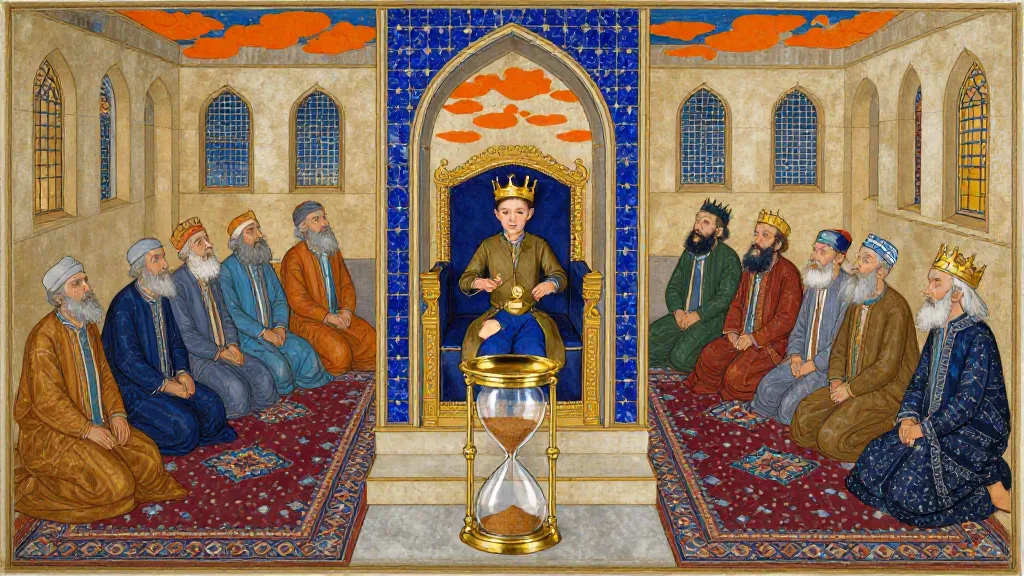
آغاز پادشاهی یزدگرد
The Accession of Yazdegerd
چو بگذشت زو شاه شد یزدگرد به ماه سفندار مذ روز ارد چه گفت آن سخنگوی مرد دلیر چو از گردش روز برگشت سیر که باری نزادی مرا مادرم نگشتی سپهر بلند از برم به پرگار تنگ و میان دو گوی چه گویم جز از خامشی نیست روی نه روز بزرگی نه روز نیاز نماند همی برکسی بر دراز زمانه زمانیست چون بنگری ندارد کسی آلت داوری به یارای خوان و به پیمای جام ز تیمار گیتی مبر هیچ نام اگر چرخ گردان کشد زین تو سرانجام خاکست بالین تو دلت را به تیمار چندین مبند بس ایمن مشو بر سپهر بلند که با پیل و با شیربازی کند چنان دان که از بینیازی کند تو بیجان شوی او بماند دراز درازست گفتار چندین مناز تو از آفریدون فزونتر نه ای چو پرویز باتخت و افسر نه ای به ژرفی نگه کن که با یزدگرد چه کرد این برافراخته هفت گرد چو بر خسروی گاه بنشست شاد کلاه بزرگی به سر برنهاد چنین گفت کز دور چرخ روان منم پاک فرزند نوشین روان پدر بر پدر پادشاهی مراست خور و خوشه و برج ماهی مراست بزرگی دهم هر که کهتر بود نیازارم آن راکه مهتر بود نجویم بزرگی و فرزانگی همان رزم و تندی و مردانگی که برکس نماند همی زور و بخت نه گنج و نه دیهیم شاهی نه تخت همی نام جاوید باید نه کام بنداز کام و برافراز نام برین گونه تا سال شد بر دو هشت همی ماه و خورشید بر سر گذشت
When the throne passed to him, Yazdegerd became king in the month of Esfandarmaz, on the day of Ard. As a wise poet once said, weary of the turning of fate: "Would that my mother had never given me birth, that the high heavens had never turned above me. Caught between the narrow compass and the two poles, what can I say? Silence is the only way. Neither days of greatness nor days of need last long for anyone. Time is but a moment, when you look at it clearly, and no one holds the tools of judgment. So drink from the feast table and fill your cup -- do not even speak the name of the world's sorrows. Even if the turning wheel tears the saddle from under you, in the end dust is your pillow. Do not bind your heart with so much grief, and do not grow too confident under the high heavens, for when fortune plays games with elephants and lions, know that it does so from sheer indifference. You will die and it will endure -- the tale is long, so do not boast so much. You are no greater than Feridun, nor do you sit with crown and throne like Parviz."
Look closely at what the seven turning spheres did to Yazdegerd. When he sat joyfully upon the royal throne and placed the crown of greatness on his head, he spoke thus: "By the turning of the heavens, I am the pure descendant of Nushin-Ravan. Kingship is mine, father upon father. The sun, the star-cluster, and the zodiac house are mine. I will exalt whoever is lesser, and I will not trouble whoever is greater. I do not seek grandeur, wisdom, battle, fierceness, or valor -- for neither strength nor fortune, neither treasure nor royal crown nor throne endures for anyone. What endures is an everlasting name, not fleeting pleasure. Cast aside desire and raise up your name."
In this manner sixteen years passed, with the sun and moon revolving over his head.
Notes
Yazdegerd III (r. 632-651 AD), the last Sasanian king of kings. He ascended the throne at roughly age eight and spent his entire reign fleeing the advancing Arab armies.
The Zoroastrian calendar reckoned months and days by name. Esfandarmaz (اسفندارمذ) is the twelfth month; Ard (ارد) is a day-name associated with the yazata of blessings.
Feridun (Thraetaona), the legendary king who overthrew the tyrant Zahhak in the mythological section of the Shahnameh.
Khosrow Parviz (Khosrow II, r. 590-628 AD), the last great Sasanian king, whose reign ended in overthrow and murder -- as recounted in earlier sections of this text.
Nushin-Ravan, i.e., Khosrow I Anushirvan (r. 531-579 AD), considered the greatest Sasanian king and a byword for justice in Persian literature.
"Two-eights" (دو هشت) = sixteen years. Historically, Yazdegerd reigned approximately 20 years (632-651 AD), though the last decade was spent in flight.