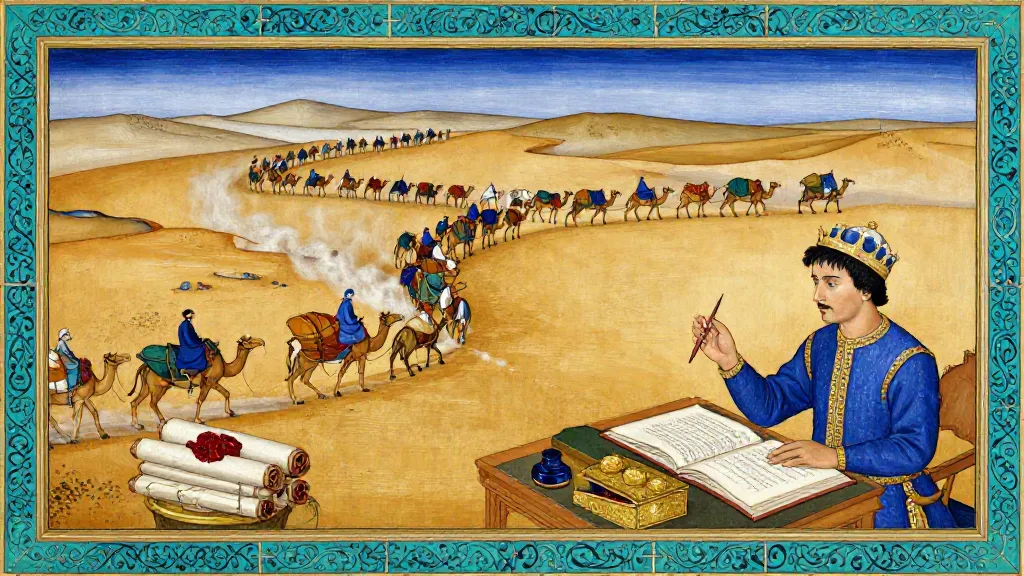
نامه یزدگرد به ماهوی و توس
Yazdegerd's Letter to Mahouy and to Tus
بگفت آنک ما را چه آمد بروی وزین پادشاهی بشد رنگ و بوی ز رستم کجا کشته شد روز جنگ ز تیمار بر ما جهان گشت تنگ بدست یکی سعد وقاص نام نه بوم و نژاد و نه دانش نه کام کنون تا در طیسفون لشکرست همین زاغ پیسه به پیش اندرست تو با لشکرت رزم را سازکن سپه را برین برهم آواز کن من اینک پس نامه برسان باد بیایم به نزد تو ای پاک وراد فرستادهی دیگر از انجمن گزین کرد بینا دل و رای زن یکی نامه بنوشت دیگر بتوس پر از خون دل و روی چون سندروس نخست آفرین کرد بر دادگر کزو دید نیرو و بخت و هنر خداوند پیروزی و فرهی پی پشه تا پر و چنگ عقاب به خشکی چو پیل و نهنگ اندر آب ز پیمان و فرمان او نگذرد دم خویش بی رای او نشمرد ز شاه جهان یزدگرد بزرگ پدر نامور شهریار سترگ نگهبان جنبده و بوم و بر ز تخم بزرگان یزدان شناس که از تاج دارند از اختر سپاس کزیشان شد آباد روی زمین فروزندهی تاج و تخت و نگین سوی مرزبانان با گنج و گاه که با فرو برزند و با داد و راه شمیران و رویین دژ و رابه کوه کلات از دگر دست و دیگر گروه نگهبان ما باد پروردگار شما بیگزند از بد روزگار مبادا گزند سپهر بلند مه پیکار آهرمن پرگزند خنیده شد اندر جهان این نشان که بر کارزای و مرد نژاد دل ما پر آزرم و مهرست و داد به ویژه نژاد شما را که رنج فزونست نزدیک شاهان ز گنج چو بهرام چوبینه آمد پدید ز فرمان دیهیم ما سرکشید شما را دل از شهر ای فراخ به پیچید وز باغ و میدان و کاخ برین باستان راع و کوه بلند کده ساختید از نهیب گزند گر ای دون که نیرو دهد کردگار به کام دل ما شود روزگار ز پاداش نیکی فزایش کنیم برین پیش دستی نیایش کنیم همانا که آمد شما را خبر که ما را چه آمد ز اختر به سر ازین مارخوار اهرمن چهرگان ز دانایی و شرم بی بهرگان نه گنج و نه نام و نه تخت و نژاد همیداد خواهند گیتی بباد بسی گنج و گوهر پراگنده شد بسی سر به خاک اندر آگنده شد چنین گشت پرگار چرخ بلند که آید بدین پادشاهی گزند ازین زاغ ساران بیآب و رنگ نه هوش و نه دانش نه نام و نه ننگ که نوشین روان دیده بود این به خواب کزین تخت به پراگند رنگ و آب چنان دید کز تازیان سد هزار هیونان مست و گسسته مهار گذر یافتندی با روند رود نماندی برین بوم بر تار و پود به ایران و بابل نه کشت و درود به چرخ زحل برشدی تیره دود هم آتش به مردی به آتشکده شدی تیره نوروز و جشن سده از ایوان شاه جهان کنگره فتادی به میدان او یکسره کنون خواب راپاسخ آمد پدید ز ما بخت گردن بخواهد کشید شود خوار هرکس که هست ارجمند فرومایه را بخت گردد بلند پراگنده گردد بدی در جهان گزند آشکارا و خوبی نهان بهر کشوری در ستمگارهیی پدید آید و زشت پتیارهیی نشان شب تیره آمد پدید همی روشنایی بخواهد پرید کنون ما به دستوری رهنمای همه پهلوانان پاکیزه رای به سوی خراسان نهادیم روی بر مرزبانان دیهیم جوی ببینیم تا گردش روزگار چه گوید بدین رای نا استوار پس اکنون ز بهر کنارنگ توس بدین سو کشیدیم پیلان وکوس فرخ زاد با ما ز یک پوستست به پیوستگی نیز هم دوستست بالتونیهست او کنون رزمجوی سوی جنگ دشمن نهادست روی کنون کشمگان پور آن رزمخواه بر ما بیامد بدین بارگاه بگفت آنچ آمد ز شایستگی هم ازبندگی هم ز بایستگی شیندیم زین مرزها هرچ گفت بلندی و پستی و غار و نهفت دژ گنبدین کوه تا خرمنه دگر لاژوردین ز بهر بنه ز هر گونه بنمود آن دل گسل ز خوبی نمود آنچ بودش به دل وزین جایگه شد بهر جای کس پژوهنده شد کارها پیش وپس چنین لشکری گشن ما را که هست برین تنگ دژها نشاید نشست نشستیم و گفتنیم با رای زن همه پهلوانان شدند انجمن ز هر گونه گفتیم و انداختیم سر انجام یکسر برین ساختیم که از تاج و ز تخت و مهر و نگین همان جامهی روم و کشمیر و چین ز پر مایه چیزی که آمد بدست ز روم و ز طایف همه هرچ هست همان هرچه از ماپراگند نیست گر از پوشش است ار ز افگند نیست ز زرینه و جامهی نابرید ز چیزی که آن رانشاید کشید هم از خوردنیها ز هر گونه ساز که ما را بیاید برو بر نیاز ز گاوان گردون کشان چل هزار که رنج آورد تا که آید به کار به خروار زان پس ده و دو هزار به خوشه درون گندم آرد ببار همان ارزن و پسته و ناردان بیارد یکی موبدی کاردان شتروار زین هریکی ده هزار هیونان بختی بیارند بار همان گاو گردون هزار از نمک بیارند تا بر چه گردد فلک ز خرما هزار و ز شکر هزار بود سخته و راست کرده شمار ده و دو هزار انگبین کندره بدژها کشند آن همه یکسره نمک خورده سرپوست چون چل هزار بیارند آن راکه آید به کار شتروار سیسد ز زربفت شاه بیارند بر بارها تا دو ماه بیاید یکی موبدی با گروه ز گاه شمیران و از را به کوه به دیدار پیران و فرهنگیان بزرگان کهاند از کنارنگیان به دو روز نامه به دژها نهند یکی نامه گنجور ما را دهند دگر خود بدارند با خویشتن بزرگان که باشند زان انجمن همانا بران راغ و کوه بلند ز ترک و ز تازی نیاید گزند شما را بدین روزگار سترگ یکی دست باشد بر ما بزرگ هنرمند گوینده دستور ما بفرماید اکنون به گنجور ما که هرکس این را ندارد به رنج فرستد ورا پارسی جامه پنج یکی خوب سربند پیکر به زر بیابند فرجام زین کار بر بدین روزگار تباه و دژم بیابد ز گنجور ما چل درم به سنگ کسی کو بود زیردست یکی زین درمها گر اید بدست از آن شست بر سرش و چاردانگ بیارد نبشته بخواند به بانگ بیک روی برنام یزدان پاک کزویست امید و زو ترس وباک دگر پیکرش افسر و چهر ما زمین بارور گشته از مهر ما به نوروز و مهر آن هم آراستست دو جشن بزرگست و با خواستست درود جهان بر کم آزار مرد کسی کو ز دیهیم ما یاد کرد
The king told Mahouy what had befallen them -- how the color and fragrance had gone from this kingdom. He wrote of Rostam, who was slain on the day of battle, and how the world had grown narrow upon them with grief. He had fallen at the hand of one called Sa'd ibn Waqqas -- a man of no homeland, no lineage, no learning, no ambition.
"Now as far as the gates of Ctesiphon, the enemy's army presses in, and this same speckled crow stands before us. You, with your army, make ready for war. Rally your forces to this cause. I myself will come on the heels of this letter, swift as the wind. I will come to you, O pure and worthy lord."
He chose another envoy from the assembly -- a man of clear mind and sound counsel -- and wrote a second letter, this one to Tus. His heart was full of blood and his face the color of sandalwood.
First he praised the just Creator, from whom he had seen strength, fortune, and merit -- the Lord of victory and royal glory, who rules from the leg of the mosquito to the wing and talon of the eagle, on dry land the elephant and in water the crocodile. Nothing passes beyond His covenant and command; not a breath is drawn without His will.
"From the king of the world, Yazdegerd the Great, whose father was a renowned and mighty king, protector of all that moves and all the land, from the seed of great men who know God, who give thanks to the stars for their crown, through whom the face of the earth was made prosperous, who lit up crown and throne and signet ring --
"To the wardens of the marches who hold treasure and rank, who possess glory and stature, justice and right ways. Shamiran and Ruyin Dezh and Ra'ba Kuh, Kalat on the other side, and the rest of your company. May the Creator be our guardian. May you be unharmed from the evils of the age. May the harm of the high heavens not reach you, nor the assault of the malicious Ahriman.
"This sign has become famous throughout the world -- that our hearts are full of respect, compassion, and justice toward men of noble birth and lineage. Especially your lineage, whose labors on behalf of kings exceed any treasury.
"When Bahram Chubin appeared and drew his head from obedience to our crown, your hearts were tormented and you left your broad cities, your gardens, fields, and palaces. On these ancient highlands and tall mountains you built strongholds against the threat of harm. If God grants us strength and our days turn according to our heart's desire, we will increase your reward for this goodness and offer prayers for this initiative.
"Surely the news has already reached you of what the stars have brought upon our heads -- from these snake-eating demons with their inhuman faces, devoid of wisdom and shame, with neither treasure nor name nor throne nor lineage, who would give the world to the wind. Much treasure and many jewels have been scattered. Many heads have been pressed into the dust. Such has become the compass of the high wheel of heaven -- that ruin should come to this kingdom.
"From these crow-faced men without luster or substance, without sense, without learning, without name, without shame. Nushin-Ravan had seen this in a dream -- that color and luster would drain from this throne. He dreamed that a hundred thousand Arab warriors on drunken camels with broken reins would cross the Arvand River, and not a thread of the old fabric would remain upon this land. In Iran and Babylon there would be neither sowing nor harvest. Dark smoke would rise to the sphere of Saturn. The fire in the fire-temples would dim to near death. The feast of Nowruz and the festival of Sadeh would grow dark. From the palace of the king, the battlements would fall into the field, every one.
"Now the answer to that dream has appeared. Fortune means to withdraw its neck from us. Everyone who is honored will be made low. The lowborn will find fortune rising. Evil will spread across the world -- harm in the open, goodness hidden. In every province, a tyrant will appear, and with him an ugly monster. The signs of the dark night have come. The light is about to flee.
"Now, by the guidance of our counselors and all the commanders of pure judgment, we have set our face toward Khorasan, toward the wardens of the marches who seek the crown. Let us see what the turning of fate will say to this uncertain course.
"For the sake of the Kanarang of Tus, we have brought our elephants and war-drums in this direction. Farrukhzad is of one flesh with us and is our kinsman and friend besides. He is now at war in Altuniyeh, his face turned toward battle with the enemy.
"Now Keshmagan, the son of that battle-seeker, has come to us at this court. He has spoken of what is fitting -- both of service and of obligation. We have heard from him everything about these frontier regions: the heights and the lowlands, the caves and the hidden places. The castle of the domed mountain as far as Kharmaneh, and the lapis-colored fortress for storing provisions. He showed us everything that heartened us, all the good qualities that lay in his mind.
"We sent men from here to inspect every place and investigate matters front and back. But for so dense an army as ours, it is not possible to sit in these narrow fortresses. We sat and deliberated with our counselors. All the commanders assembled. We discussed and calculated from every angle, and in the end agreed unanimously:
"From crown and throne and signet ring and seal, from garments of Rum and Kashmir and China, from precious things that have come to hand, from Rum and Taif -- everything we possess, everything from us that has not been dispersed, whether clothing or furnishings, gold items and uncut cloth, things that cannot be easily transported -- and also provisions of every kind that we will need:
"Forty thousand oxen to pull the carts, bearing the burden until it reaches its destination. Then twelve thousand donkey-loads of wheat in sheaves, brought to us as grain. Also millet, pistachios, and pomegranate seeds -- let a capable priest bring these. Ten thousand camel-loads of each of these items, carried by Bactrian camels. A thousand cart-loads of salt as well -- let us see what fate decrees. A thousand loads of dates and a thousand of sugar, counted and reckoned precisely. Twelve thousand loads of honeycomb -- let it all be hauled to the fortresses at once. And forty thousand salted hides -- bring whatever will be needed.
"Three hundred camel-loads of royal gold-brocade -- let them bring it on pack-animals over two months. Let a priest come with a retinue from the stronghold of Shamiran and from Ra'ba Kuh, together with their elders and learned men -- the great ones who belong to the Kanarangid families. Within two days let them deposit the letter-inventories at the fortresses, giving one copy to our treasurer and keeping another for the great men of that assembly.
"Surely on those highlands and tall mountains, no harm will come from Turk or Arab. In these dire times, you will be a mighty arm for us.
"Let our eloquent and skilled vizier command our treasurer: whoever does not begrudge the labor for this, let him send five suits of Persian garments, and a fine gold-patterned headband. They will see the reward of this effort in the end. In these ruinous and grim times, let each receive forty dirhams from our treasury. By the standard of anyone who is a subordinate, even if one of these coins comes to hand -- it bears on one side sixty units and four dangs. Let him bring it inscribed and read aloud: on one face, the name of God the Pure, from whom comes hope and from whom comes awe. On the other face, the image of our crown and our likeness -- the earth made fertile by our grace. At Nowruz and Mehregan it is likewise adorned -- two great festivals, celebrated with generosity.
"Peace upon the world, upon the man of few desires, upon whoever remembers our crown."
Notes
Rostam (Rostam Farrokhzad), the Sasanian general slain at the Battle of Qadisiyyah (636 AD), as recounted in Part 1.
Sa'd ibn Abi Waqqas, the Arab commander at Qadisiyyah.
Tisfun (Ctesiphon), the Sasanian imperial capital on the Tigris, near modern Baghdad. By the time of this letter, it has fallen or is about to fall to the Arabs.
"Speckled crow" (زاغ پیسه) -- a derogatory Shahnameh epithet for the Arab invaders.
Tus, a major city in Khorasan (near modern Mashhad, Iran), and also the name of the frontier district and its ruling families.
Shamiran, Ruyin Dezh ("the Bronze Fortress"), Ra'ba Kuh, and Kalat -- a series of mountain fortresses in the Khorasan highlands. Kalat is likely Kalat-e Naderi, a natural fortress in northeastern Iran. These strongholds later served as refuges for Iranian resistance to Arab rule.
Bahram Chubin (Bahram VI, r. 590-591 AD), a Sasanian general who rebelled and briefly seized the throne from Khosrow II. His revolt forced many eastern nobles to abandon their cities and retreat to mountain strongholds.
"Snake-eating demons with inhuman faces" (مارخوار اهرمن چهرگان) -- another derogatory characterization of the Arab invaders, echoing the Shahnameh's association of snake-eating with the evil Zahhak.
Nushin-Ravan (Khosrow I Anushirvan), who in the Shahnameh tradition had a prophetic dream foretelling the Arab conquest of Iran.
Arvand Rud, the Tigris (or Shatt al-Arab waterway).
Nowruz (the Persian New Year, spring equinox) and Sadeh (a midwinter fire festival) -- the two great Zoroastrian-Iranian celebrations whose extinction symbolizes the end of Iranian civilization.
Khorasan, the northeastern province to which Yazdegerd is fleeing.
The Kanarang of Tus, the hereditary military governor of the Tus frontier district. The Kanarangid family was one of the Seven Great Houses of Iran.
Altuniyeh, a location where Farrukhzad is fighting -- possibly a frontier post in the Alborz or Khorasan region.
Keshmagan, son of the Kanarang, who has come to Yazdegerd's court as an envoy from the Tus fortress commanders.
Yazdegerd is assessing the mountain fortresses of Khorasan as potential refuges but concludes they are too small for his large army.
Rum (روم), the Eastern Roman (Byzantine) Empire, source of luxury textiles.
Taif, a city in the Hejaz (modern Saudi Arabia), known for its trade goods.
Yazdegerd is issuing detailed logistical orders for provisioning the mountain fortresses and paying the garrison troops -- administrative minutiae that underscore his desperate attempt to maintain the machinery of empire even as it collapses.
A description of the Sasanian silver dirham: sixty units and four dangs (a dang being one-sixth of a dirham by weight), with Zoroastrian inscriptions on one face and the royal portrait on the other.
Nowruz (spring equinox) and Mehregan (autumn equinox festival honoring Mithra) -- the two poles of the Zoroastrian-Iranian festival calendar.