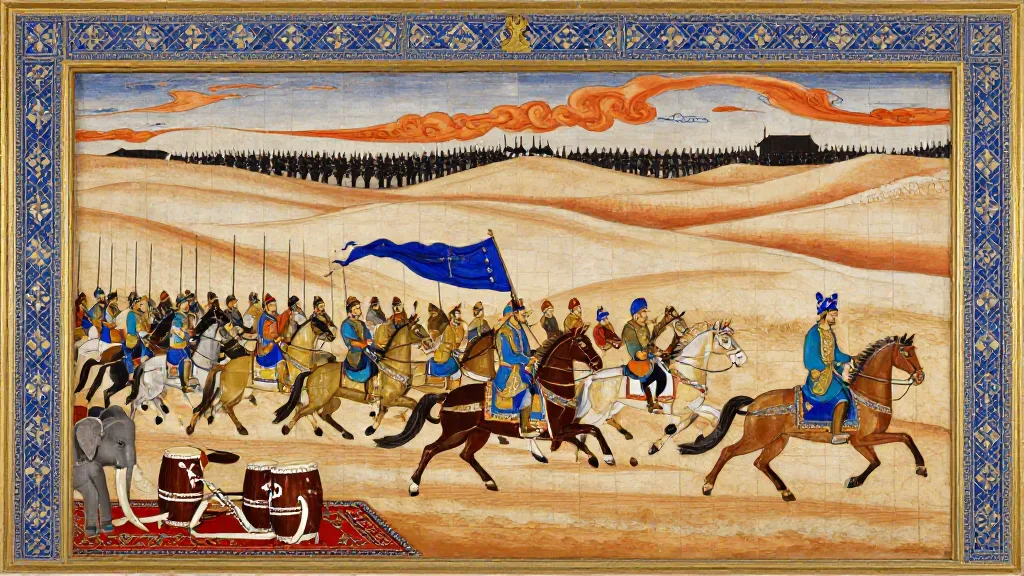
The Invasion of Sa'd ibn Abi Waqqas and Yazdegerd Sends Rostam to Battle — Persian miniature painting

Shahnameh · Fall of the Sasanians

The Invasion of Sa'd ibn Abi Waqqas and Yazdegerd Sends Rostam to Battle

تاختن سعد وقاص بایران و فرستادن یزدگرد رستمرا بجنگ او

View:

فرستادن یزدگرد رستمرا بجنگ

Yazdegerd Sends Rostam to War

عمر سعد وقاص را با سپاه فرستاد تا جنگ جوید ز شاه چو آگاه شد زان سخن یزدگرد ز هر سو سپاه اندر آورد گرد بفرمود تا پور هرمزد راه بپیماید و بر کشد با سپاه که رستم بدش نام و بیدار بود خردمند و گرد و جهاندار بود ستاره شمر بود و بسیار هوش بگفتار موبد نهاده دو گوش چو آگاه شد زان سخن پهلوان بیآمد بر شاه روشن روان زمینرا ببوسید و بردش نماز همی بود پیشش زمانی دراز برو آفرین خواند بس شهریار که ای از کیان جهان یادگار که داری تن پیل و چنگال شیر نهنگ دمان اندر آری بزیر سر سرکشانرا بهنگام جنگ ببرّی چو تو تیغ گیری بچنگ شنیدم که از تازیان بی شمار سپاهی همه رخ بکردار قار بدین مرز ما رزمخواه آمدند اگر چند بی‌گنج و شه آمدند سپهدارشان سعد وقّاص نام که جویای گاهست و جویای کام درفش بزرگی و گنج و سپاه ترا دادم ای پهلو نیکخواه سپهرا بیارای و بر ساز جنگ نباید که گیری زمانی درنگ از ایدر چو رفتی چنین جنگجوی سپه را چو روی اندر آید بروی تو خود را نگه دار این تازیان بهر کار بنگر بسود و زیان بدو گفت رستم که من بنده‌ام بپیش تو ایدر پرستنده‌ام ببرّم سر دشمن شاه را ببند آورم جان بدخواه را زمین را ببوسید و آمد بدر همه شب همی بود پر اندیشه سر چو خورشید تابنده بنمود روی بیامد دمان رستم کینه جوی برفت و گرانمایگانرا ببرد هر آنکس که بودند بیدار و گرد

Umar sent Sa'd ibn Abi Waqqas with an army to seek battle against the King of Kings. When Yazdegerd learned of this, he gathered forces from every quarter. He commanded the son of Hormizd to take the road and march with the army -- this was Rostam, a man who was wakeful and wise, a warrior and a ruler of men. He was learned in the stars and sharp of intellect, and he kept his ear turned to the counsel of the Mobads.

When the champion learned of the matter, he came before the radiant-souled king. He kissed the ground and paid his respects, and stood before him for a long while. The king showered blessings upon him: "You who are the last remembrance of the Kayanian kings! You have the body of an elephant and the claws of a lion; you could bring a raging sea-dragon to its knees. When you take sword in hand, you sever the heads of the defiant."

"I have heard that a countless host of Arabs, their faces dark as pitch, have come seeking battle in our lands -- though they come with neither treasury nor king. Their commander is one called Sa'd Waqqas, who hunts for throne and glory. The banner of command, the treasury, and the army -- I give them all to you, loyal champion. Array your forces and prepare for war. There must be no delay. When you ride out and the armies come face to face, guard yourself against these Arabs. In every matter, weigh the gain against the cost."

Rostam replied: "I am your servant. I stand here as your devoted man. I will cut the head from the king's enemy and bring his ill-wishers to you in chains." He kissed the ground and departed. But all that night, his mind was full of dark thoughts. When the shining sun showed its face, Rostam the avenger rode out in fury. He marched, and brought with him every nobleman, every man who was seasoned and battle-ready.

Notes

1personیزدگردYazdegerd

Yazdegerd III (یزدگرد), r. 632–651 AD, the last Sasanian emperor. He ascended the throne at age eight amid civil war and spent his entire reign in retreat from the Arab conquests. He was murdered by a miller near Merv in 651.

2personسعد وقّاصSa'd ibn Abi Waqqas

Sa'd ibn Abi Waqqas (سعد وقّاص), one of the earliest companions of the Prophet Muhammad. Umar appointed him commander of the Muslim forces at al-Qadisiyyah. He later served as governor of Kufa.

3personرستمRostam Farrokhzad

Rostam Farrokhzad (رستم), son of Hormizd, the Sasanian general-in-chief (spahbed). Not the legendary hero of the Shahnameh's earlier books, but a late Sasanian military commander named after him. He led the Persian army at al-Qadisiyyah and was killed in the battle.

4context

The Mobads (موبد) were Zoroastrian high priests who served as both religious authorities and political advisors to the Sasanian court. That Rostam listens to their counsel marks him as a man of the old order.

5translation

'Dark as pitch' (رخ بکردار قار) -- Ferdowsi's stock epithet for the Arabs. The word qar means tar or pitch. This is a literary convention of the epic rather than a neutral description.

6translation

'Though they come with neither treasury nor king' (بی‌گنج و شه) -- Yazdegerd's contempt for the Arab forces: they have no royal lineage and no state treasury. From the Sasanian perspective, they are an army without legitimacy.

نبرد در قادسی و اختر شماری رستم

The Battle at Qadisiyyah and Rostam Reads the Stars

برین گونه تا ماه بگذشت سی همی رزم جستند در قادسی بدانست رستم شمار سپهر ستاره شمر بود با داد و مهر همی گفت کین رزمرا روی نیست ره آب شاهان بدین جوی نیست بیاورد صلّاب و اختر گرفت ز روز بلا دست بر سر گرفت یکی نامه سوی برادر بدرد نبشت و سخنها همه یاد کرد نخست آفرین کرد بر کردگار کزو دید نیک و بد روزگار دگر گفت کز گردش آسمان پژوهنده مردم شود بدگمان گنهگارتر در زمانه منم که این خانه از پادشاهی تهیست نه هنگام فیروزی و فرّهیست ز چارم همی بنگرد آفتاب کزین جنگ ما را بد آید شتاب ز بهرام و زهره است ما را گزند نشاید گذشتن ز چرخ بلند همان تیر و گیوان برابر شدست عطارد ببرج دو پیکر شدست چنینست و کاری بزرگست پیش همی سیر گردد دل از جان خویش همه بودنیها ببینم همی وزو خامشی برگزیم همی بر ایرانیان زارگریان شدم ز ساسانیان نیز بریان شدم دریغ آن سر تاج و آن تخت و داد دریغ آن بزرگی و فرّ و نژاد کزین پس شکست آید از تازیان ستاره نگردد مگر بر زیان برین سالیان چارصد بگذرد کزین تخمه گمتی کسی نسپرد

In this manner thirty months passed, and they fought on at Qadisiyyah. Rostam knew the reckoning of the heavens -- he was an astrologer, a man of justice and compassion. He kept saying: "This war has no future. The channel of royal fortune does not flow this way." He brought out his astrolabe and cast the stars, and when he saw the day of calamity, he clutched his head in despair.

In anguish he wrote a letter to his brother, setting down everything he knew. First he praised the Creator, from whom he had seen both the good and the evil of the age. Then he said: "The turning of the heavens makes even the wisest man despair. I am the most accursed man alive, for this house has been emptied of kingship -- this is no time for victory or royal glory."

"The sun gazes down from the fourth house, and from this battle only ruin will come swiftly upon us. Mars and Venus bring us harm, and there is no escaping the high wheel of heaven. Mercury and Jupiter stand in opposition; Mercury has entered the sign of Gemini. This is the alignment, and a great matter lies ahead. The heart grows weary of its own life."

"I see all that is fated to be, and I choose silence over speech. I have wept bitterly for the Iranians. I am consumed with grief for the Sasanians. Alas for the crowned heads, for the throne and its justice! Alas for that greatness, that royal glory, that lineage! For after this, defeat will come from the Arabs, and the stars will turn toward nothing but ruin. Four hundred years will pass before anyone of this bloodline sets foot upon the earth again."

Notes

1place

Qadisiyyah (قادسی) was a settlement south of modern Hillah in Iraq, near Kufa. The Battle of al-Qadisiyyah (636 AD) was the decisive engagement that broke Sasanian power in Mesopotamia and opened the Iranian plateau to the Arab conquest.

2context

The 'thirty months' is Ferdowsi's poetic compression. The historical Battle of al-Qadisiyyah lasted three or four days in November 636 AD. The extended timeframe in the poem encompasses the full period of skirmishing and negotiation before the decisive clash.

3translation

'He brought out his astrolabe and cast the stars' (بیاورد صلّاب و اختر گرفت) -- The astrolabe (اصطرلاب, here صلّاب) was a Greek instrument adopted by Persian astronomers. Rostam's astrological reading is Ferdowsi's way of expressing the Sasanian general's rational certainty that defeat is inevitable -- it is written in the heavens, not merely feared in the gut.

4translation

'The sun gazes from the fourth house' -- In Persian-Islamic astrology, the fourth house governs endings, foundations, and the grave. The sun in this position during a military campaign is deeply inauspicious. Mars (بهرام, Bahram) and Venus (زهره, Zohreh) in harmful aspect, and Mercury (تیر/عطارد) in Gemini (دو پیکر, 'the two-bodied') complete a chart of catastrophe.

5context

'Four hundred years will pass' -- Rostam's prophecy points to the eventual reassertion of Iranian identity and political power, which many scholars read as a reference to the rise of Iranian dynasties like the Buyids (934–1062 AD) and Samanids (819–999 AD) who restored Persian culture under nominal Islamic sovereignty.

نامه رستم به برادر — وصیت و اندرز

Rostam's Letter to His Brother — Testament and Instructions

ازیشان فرستاده آمد بمن سخن رفت هرگونه بر انجمن که از قادسی تا لب رودبار زمینرا ببخشیم با شهریار وزآنسو یکی برگشایند راه بشهری کجا هست بازارگاه بدان تا خریم و فروشم چیز از آنپس فزونی نجوئیم نیز پذیریم ما ساو و باژ گران شهنشاه را نیز فرمان بریم گر از ما بخواهد گروگان بریم چنینست گفتار کردار نیست جز از گردش کژ پرگار نیست برین نیز جنگی بود هر زمان که کشته شود صد هژبر دمان بزرگان که با من بجنگ اندراند بگفتار ایشان همی ننگرند چو میروی طبری و چون ارمنی بجنگ‌اند با کیش آهرمنی چو کلبوی سوری و این مهتران که گوپال دارند و گرز گران همی سرفرارند کایشان که‌اند بایران و مازندران بر چه‌اند اگر مرز و راهست اگر نیک و بد بگرز و بشمشیر باید ستد بکوشیم و مردی بکار آوریم بریشان جهان تنگ و تار آوریم نداند کسی راز گردان سپهر که جز گونه گشتست بر ما بمهر چو نامه بخوانی خرد را مران بپرداز و برساز با مهتران همه گرد کن خواسته هرچه هست پرستنده و جامهای نشست همی تاز تا آذرآبادگان بجای بزرگان و آزادگان همیدون گله هرچه داری ز اسپ ببر سوی گنجور آذرگشسپ ز زابلستان هم ز ایران سپاه هر آنکس که آیند زنهار خواه بدار و بپوش و بیارای مهر نگه کن بدین گرد گردان سپهر کزو شادمانیم و زو با نهیب زمانی فراز و زمانی نشیب سخن هرچه گفتم بمادر بگوی نبیند همانا مرا نیز روی درودش ده از ما و بسیار پند بده تا نباشد بگیتی نژند ور از من بد آگاهی آرد کسی مباش اندر این کار غمگین بسی چنان دان که اندر سرای سپنج کسی که نهد گنج با دست و رنج بپرداز دل زین سپنجی سرای که آمد بتنگ اندرون روزگار نه‌بیند مرا زین سپس شهریار تو با هر که از دودهٔ ما بود اگر پیر اگر مرد برنا بود همه پیش یزدان نیایش کنید شب تیره او را ستایش کنید بکوشید و بخشنده باشید نیز ز خوردن بفردا ممانید چیز که من با سپاهی بسختی درم برنج و غم و شوربختی درم رهائی نیایم سرانجام ازین خوشا باد نوشین ایران زمین چو گیتی بود تنگ بر شهریار تو گنج و تن و جان گرامی مدار کزین تخمهٔ نامدار ارجمند نماندست جز شهریار بلند بکوشش مکن هیچ سستی بکار بگیتی جز او نیست پروردگار ز ساسانیان یادگار اوست و بس کزین پس نبینید ازین تخمه کس دریغ این سر تاج و این مهر و داد که خواهد شدن تخم شاهی بباد تو پیروز باش و جهاندار باش ز بهر تن شه بتیمار باش گر او را بد آید تو شو پیش اوی

"Their envoys came to me, and much was discussed in council. They proposed: from Qadisiyyah to the riverbank, we will divide the land with the King of Kings. On our side, let them open a road to a city with a marketplace, so that we may buy and sell goods -- and after that, we will seek nothing more. We will accept heavy tribute and tax; we will obey the commands of the King of Kings; if he demands hostages, we will provide them."

"Such are their words, but their deeds are another matter. There is nothing here but the crooked turning of fate's compass. And still the fighting goes on -- every day a hundred roaring lions are slain. The great men who are with me in this war pay no attention to the enemy's offers. Men like Miruy of Tabaristan, the Armenian, Kalbuy the Syrian, and all these chieftains who wield mace and heavy club -- they hold their heads high and say: Who are these people? What claim do they have on Iran and Mazandaran? Whether it is borders or roads, whether the cause is just or not, it must be settled by mace and sword. Let us fight, let us show our manhood, let us make the world dark and narrow upon them."

"No one knows the secret of the turning heavens, which have changed their affection for us."

"When you read this letter, do not abandon reason. Set things in order and make arrangements with the nobles. Gather up all the wealth there is -- the servants, the ceremonial robes. Ride hard for Azerbaijan, to the estates of the great and the freeborn. Take every horse you have in the herds to the treasury of the fire-temple of Adur Gushnasp. Whoever comes seeking refuge from Zabulistan or from the armies of Iran -- shelter them, clothe them, show them kindness."

"Watch the turning of the heavens: from them come both our joys and our terrors, now rising, now falling. Tell our mother everything I have said. She will likely never see my face again. Give her my greetings and much counsel, so that she is not wretched in this world. And if someone brings you bad news of me, do not grieve overmuch. Know that in this way-station of a world, no one who hoards treasure with toil and struggle keeps it long. Free your heart from this transient inn, for time has closed in."

"The King of Kings will not see me again after this. You and everyone of our house -- whether old or young -- pray before Yazdan, praise Him in the dark of night. Strive, and be generous. Do not save today's bread for tomorrow. For I and my army are deep in hardship, in suffering and grief and ill fortune. I will not come free of this in the end. May sweet Iran be blessed."

"When the world closes in on the king, do not hold back treasure, body, or life. Of this illustrious and noble bloodline, none remains but the exalted King of Kings. Do not slacken in your efforts on his behalf -- in all the world there is no other lord. He is the last remnant of the Sasanians. After this, you will never see another of this line. Alas for the crowned head, for this justice and compassion -- the seed of kingship is about to be scattered to the wind. Be victorious, be the world's guardian. Take care of the king's person. If evil comes upon him, go to him."

Notes

1context

The Arab peace terms described here loosely reflect the historical negotiations before al-Qadisiyyah. The Muslim side reportedly offered three choices: convert to Islam, pay the jizya, or fight. Ferdowsi reframes the offer in terms a Sasanian audience would understand -- land division, trade access, and tribute -- omitting the religious dimension.

2personمیروی طبری، کلبوی سوریMiruy-e Tabari, Kalbuy-e Suri

Miruy of Tabaristan (میروی طبری) and Kalbuy the Syrian (کلبوی سوری) are Sasanian military commanders from different provinces. Their presence shows the multi-ethnic composition of the late Sasanian army: Tabaristanis from the Caspian coast, Armenians, and Syrians all served under Persian command.

3place

Azerbaijan (آذرآبادگان, Adharbadhagan) -- the northwestern Iranian province, heartland of Zoroastrian fire-temples. Rostam tells his brother to retreat there with the family's wealth, treating it as a fallback stronghold.

4place

Adur Gushnasp (آذرگشسپ) was one of the three great Zoroastrian sacred fires, associated with the warrior class. Its temple at Takht-e Soleyman in northwestern Iran was a pilgrimage site and royal treasury. Rostam's instruction to send the horse herds there is a last-ditch effort to preserve the empire's military assets in sacred custody.

5place

Zabulistan (زابلستان) is the region around modern Ghazni and Zabul in southeastern Afghanistan, the legendary homeland of the house of Rostam (the original epic hero). That refugees might come from Zabulistan signals the totality of the collapse.

6translation

'This way-station of a world' (سرای سپنج) -- a stock image in Persian poetry. The world is a caravanserai where travelers rest briefly before moving on. Rostam uses it to console his brother: all possession is temporary.

پیشگویی رستم — سقوط ایران

Rostam's Prophecy — The Fall of Iran

چو با تخت منبر برابر شود همه نام بو بکر و عمر شود تبه گردد این رنجهای دراز شود ناسزا شاه گردنفراز نه تخت و نه دیهیم بینی به شهر ز اختر همه تازیان راست بهر چو روز اندر آید بروز دراز نشیب درازست پیش فراز بپوشند ازیشان گروهی سیاه ز دیبا نهند از بر سر کلاه نه تخت ونه تاج و نه زرّینه کفش نه گوهر نه افسر نه بر سر درفش برنجد یکی دیگری بر خورد بداد و ببخشش کسی ننگرد شب آید یکی چشم رخشان کند نهفته کسی را خروشان کند ستانندهٔ روز و شب دیگرست کمر بر میان و کله بر سرست ز پیمان بگردند و از راستی گرامی شود کژّی و کاستی پیاده شود مردم جنگجوی سواری که لاف آرد و گفتگوی کشاورز جنگی شود بی‌هنر نژاد و گهر کمتر آید ببر رباید همی این از آن آن ازین ز نفرین بدانند باز آفرین نهان بتّر از آشکارا شود دل شاه شان سنگ خارا شود بداندیش گردد پسر بر پدر پدر همچنین بر پسر چاره‌گر شود بندهٔ بی‌هنر شهریار نژاد و بزرگی نیاید بکار بگیتی کسیرا نماند وفا روان و زبانها شود پرجفا ز ایران و از ترک وز تازیان نژادی پدید آید اندر میان نه دهقان نه ترک و نه تازی بود سخنها بکردار بازی بود همه گنجها زیر دامن نهند بمیرند و کوشش بدشمن دهند بود دانشومند و زاهد بنام بکوشد ازین تا که آید بدام چنان فاش گردد غم و رنج و شور که شادی بهنگام بهرام گور نه جشن و نه رامش نه کوشش نه کام همه چاره و تنبل و ساز دام پدر با پسر کین سیم آورد خورش کشک و پوشش گلیم آورد زیان کسان از پی سود خویش بجویند و دین اندر آرند پیش نباشد بهار از زمستان پدید نیارند هنگام رامش نبید چو بسیار ازین داستان بگذرد کسی سوی آزادگان ننگرد بریزند خون از پی خواسته شود روزگار مهان کاسته دل من پر از خون شد و روی زرد دهان خشک و لبها شده لاژورد که تا من شدم پهلوان از میان چنین تیره شد بخت ساسانیان چنین بی‌وفا گشت گردان سپهر دژم گشت و از ما ببرّید مهر مرا تیر و پیکانِ آهن گذار همی بر برهنه نیاید بکار همان تیغ کز گردن پیل و شیر نگشتی بزخم اندر آورد سیر نبرّد همی پوست بر تازیان ز دانش زیان آمدم بر زبان مرا کاشکی این خرد نیستی گر اندیشهٔ نیک و بـد نیستی بزرگان که در قادسی با منند درشتند و بر تازیان دشمنند گمانند کین بیش بیرون شود ز دشمن زمین رود جیون شود ز راز سپهری کس آگاه نیست ندانند کین رنج کوتاه نیست چو بر تخمهٔ بگذرد روزگار چه سود آید از رنج و از کارزار ترا ای برادر تن آباد باد دل شاه ایران بتو شاد باد که این قادسی گورگاه منست کفن جوشن و خون کلاه منست چنینست راز سپهر بلند تو دلرا بدرد برادر مبند دو دیده ز شاه جهان بر مدار فدا کن تن خویش در کارزار که زود آید این روز آهرمنی چو گردون گردان کند دشمنی چو نامه بمهر اندر آورد گفت که پیونده را آفرین باد جفت که این نامه نزد برادر برد بگوید جزین هر چه اندر خورد

"When the pulpit stands equal to the throne, all names will become Abu Bakr and Umar. All this long labor will be ruined. The proud king will be made contemptible. You will see neither throne nor diadem in the land -- by the stars, everything belongs to the Arabs now."

"When day follows upon day at length, the long descent comes before the rise. Some among them will dress in black and set caps of brocade upon their heads. No throne, no crown, no golden shoes, no jewels, no diadem, no banner overhead. One man will toil while another reaps the profit. No one will look to justice or generosity. By night, one will flash his eyes in menace and drag the hidden man out screaming. The one who seizes by day is someone different by night -- belt on his waist and cap on his head."

"They will turn from their covenants and from honesty. Crookedness and fraud will be prized. The true warrior will be unhorsed, while the braggart and the talker will ride. The farmer will become a graceless soldier. Lineage and nobility will count for nothing. This one will rob that one, that one this one. They will not know a blessing from a curse. What is hidden will be worse than what is open. The hearts of their kings will be flint. Sons will plot against fathers, and fathers will scheme against sons. Worthless slaves will become kings. Noble blood and greatness will mean nothing. No one in the world will keep faith. Souls and tongues will overflow with cruelty."

"From the Iranians, the Turks, and the Arabs, a mixed race will emerge -- neither landed gentry, nor Turk, nor Arab. Their words will be like a children's game. They will hoard all their treasure under their skirts, then die and leave the fruits of their labor to the enemy. A man will call himself a scholar or an ascetic, but he strives only to set his trap. Grief and suffering and turmoil will spread so openly that even the joy of Bahram Gur's time will be forgotten. No festivals, no music, no striving, no desire -- nothing but scheming, trickery, and the laying of snares. Father and son will bear each other hatred like silver-grudge. Their food will be whey, their clothing rough wool. They will seek the ruin of others for their own profit, and hold up religion as their pretext. Spring will be indistinguishable from winter. No one will bring wine at the hour of celebration. When much of this tale has come to pass, no one will spare a glance for the freeborn."

"They will spill blood for the sake of property. The age of great men will be diminished."

"My heart is full of blood, my face is yellow, my mouth is dry, my lips have gone the color of lapis. Since I became champion and went to war, the fortune of the Sasanians has darkened. The turning heavens have broken faith with us -- they have grown hostile and cut their affection from us. My arrows and iron-piercing points are useless against bare flesh. The same sword that never tired of striking through the necks of elephants and lions -- it will not cut the skin of these Arabs. My knowledge has become a curse upon my tongue. I wish I did not have this reason. I wish I could not think of good and evil."

"The great men with me at Qadisiyyah are fierce and full of hatred for the Arabs. They believe they will drive them out further still -- that the earth will run with enemy blood like the Oxus in flood. But no one knows heaven's secret. They do not understand that this suffering will not be brief. When fate has finished with a dynasty, what good comes from struggle and battle?"

"To you, my brother: may your body prosper. May the heart of the King of Iran be gladdened by you. For this Qadisiyyah is my burial ground. My shroud is my armor, and blood is my crown. Such is the secret of the high heavens. Do not bind your heart to grief, brother. Do not take your eyes from the King of the World. Sacrifice your own body on the field of battle. For soon this demonic day will come, when the turning wheel of heaven makes itself our enemy."

When the letter was sealed, he said: "May blessings be the companion of the one who carries this letter to my brother, and tells him whatever else is fitting beyond what is written here."

Notes

1translation

'When the pulpit stands equal to the throne' (چو با تخت منبر برابر شود) -- The minbar (pulpit of the mosque) replacing the takht (royal throne) is Ferdowsi's most compressed image for the Arab-Islamic conquest: religious authority displacing Iranian royal sovereignty. This couplet is among the most quoted in the entire Shahnameh.

2context

'Some among them will dress in black' -- A clear reference to the Abbasid dynasty (750–1258 AD), whose official color was black, in contrast to the Umayyad white. Ferdowsi puts a prophecy of events two centuries after the conquest into Rostam's mouth, lending them the weight of cosmic inevitability.

3personبهرام گورBahram Gur

Bahram Gur (بهرام گور), Bahram V, r. 420–438 AD, the Sasanian king remembered in legend as a great hunter and lover of pleasure. His reign was a byword for royal magnificence and joy. Rostam invokes it as the golden age that will be erased from memory.

4translation

'Father and son will bear each other hatred like silver-grudge; their food will be whey, their clothing rough wool' (کین سیم آورد / خورش کشک و پوشش گلیم) -- The image of civilizational collapse: from the silk and feasts of the Sasanian court to kashk (dried whey) and gelim (coarse woven cloth). The 'silver-grudge' (کین سیم) may also mean they will feud over small sums of money.

5translation

'It will not cut the skin of these Arabs' -- Rostam does not attribute Arab invincibility to superior arms or tactics, but to cosmic destiny. His weapons, which once felled elephants and lions, are rendered impotent by the turning of the heavens. This is fatalism, not a military assessment.

6place

The Oxus (جیحون, Jayhun) is the Amu Darya river, the great waterway of Central Asia and the traditional northeastern boundary of Iran. 'The earth will run like the Oxus with enemy blood' is a standard Persian hyperbole for apocalyptic slaughter.

7translation

'My shroud is my armor, and blood is my crown' (کفن جوشن و خون کلاه منست) -- Rostam's farewell. His joshan (coat of mail) will serve as his burial cloth, and the blood on his head will be his only crown. He goes to Qadisiyyah knowing it is his grave.

8context

Rostam Farrokhzad was killed at the Battle of al-Qadisiyyah in 636 AD. Arab sources report he was found dead near a canal, possibly drowned or struck down while trying to cross. His death effectively ended organized Sasanian resistance in Iraq.

Edition & Source

Author
فردوسی (Ferdowsi, c. 977–1010 AD)
Edition
شاهنامه — تصحیح ژول مل (Jules Mohl critical edition)