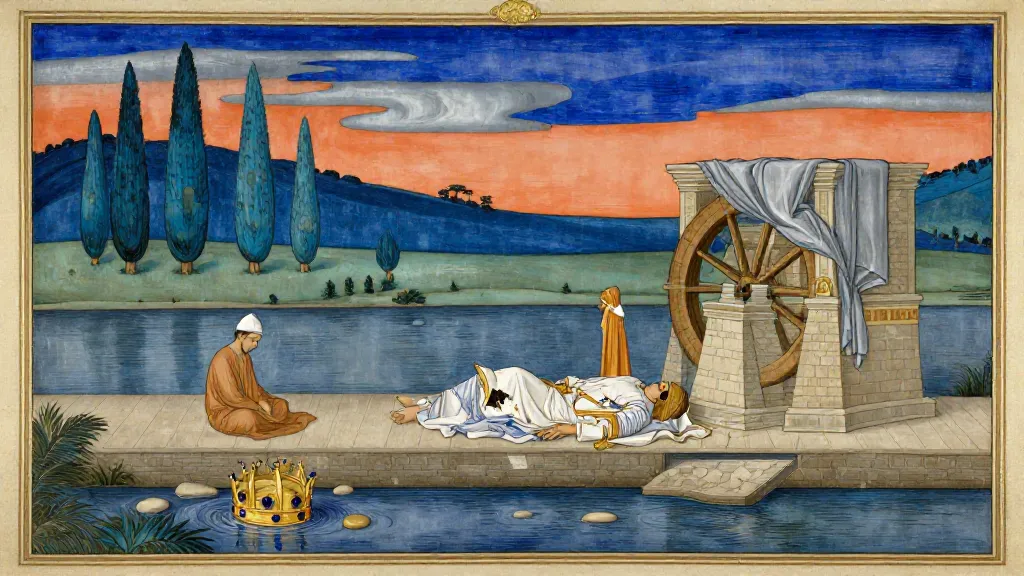
The Reign of Yazdegerd III (Part 3 — The End) — Persian miniature painting

Shahnameh · Fall of the Sasanians

The Reign of Yazdegerd III (Part 3 — The End)

پادشاهی یزدگرد ۳

View:

سوگواری راهبان

The Monks Find the King's Body

برفتند زان سوگواران بسی سکوبا و رهبان ز هر در کسی خروشی بر آمد ز راهب به درد که ای تاجور شاه آزاد مرد چنین گفت راهب که این کس ندید نه پیش ازمسیح این سخن کس شنید که بر شهریاری زند بنده‌یی یکی بدنژادی و افگنده‌یی به پرورد تا بر تنش بد رسد ازین بهر ماهوی نفرین سزد دریغ آن سر و تاج و بالای تو دریغ آن دل و دانش و رای تو دریغ آن سر تخمه‌ی اردشیر دریغ این جوان و سوار هژیر تنومند بودی خرد با روان ببردی خبر زین بنوشین روان که در آسیا ماه روی تو را جهاندار و دیهیم جوی تو را برهنه به آب اندر انداختند

Many mourners came — bishops and monks from every quarter. A cry of anguish rose from a monk:

"O crowned king, O noble man! No one has ever seen such a thing, nor was it heard of even before Christ — that a slave should strike down his sovereign, a wretch of base birth, nurtured only so that evil might befall the king. For this, Mahuy deserves nothing but curses.

Alas for your head and crown and stature. Alas for your heart and wisdom and judgment. Alas for the last scion of Ardashir's line. Alas for this young and gallant horseman.

You were strong in body, wise in spirit — you could have carried word of this to Nushin Ravan himself: that in a mill, your moon-bright face, you who held the world and sought the crown, was stripped bare and cast into the water."

Notes

1personسکوبا و رهبانsākubā va rahbān

The sākubā (سکوبا) are Christian bishops and the rahbān (رهبان) are Christian monks — Nestorian Christians who maintained communities throughout the Sasanian Empire, particularly in Merv and eastern Khorasan. They are the ones who find and honor Yazdegerd's body when no Zoroastrian priest remains to do so.

2context

The murder of Yazdegerd III in 651 AD at a mill near Merv marks the end of the Sasanian dynasty. He was killed by Mahuy Suri's agents — a local governor who had promised him refuge. A king murdered by his own subject, his body dumped in a canal: Ferdowsi presents this as an inversion of the natural order that shocks even Christians who owe no allegiance to the Zoroastrian crown.

3personاردشیرArdashīr

Ardashir I (اردشیر, r. 224–242 AD) founded the Sasanian dynasty by overthrowing the last Parthian king. Yazdegerd III is his last descendant on the throne — a line of over four centuries ending in a canal outside a flour mill.

4personنوشین روانNūshīn Ravān

Nushin Ravan (نوشین روان) is Khosrow I Anushirvan (r. 531–579 AD), the greatest Sasanian king, remembered as the embodiment of just rule. The monk's invocation of his name underscores how far the dynasty has fallen.

5translation

The repeated دریغ (darīgh, 'alas') is a formal Persian lament formula. Four successive 'alas' lines create a rhetorical cascade — each one naming what has been lost: his physical majesty, his wisdom, his lineage, his youth.

شستن و آراستن تن شاه

The Washing and Preparation of the King's Body

سکوبا از آن سوگواران چهار برهنه شدند اندران جویبار گشاده تن شهریار جوان نبیره جهاندار نوشین روان به خشکی کشیدند زان آبگیر بسی مویه کردند برنا و پیر به باغ اندرون دخمه‌یی ساختند سرش را با براندر افراختند سر زخم آن دشنه کردند خشک بدبق و به قیر و به کافور و مشک بیاراستندش به دیبای زرد قصب زیر و دستی ز بر لاژورد می و مشک و کافور و چندی گلاب سکوبا بیندود بر جای خواب

Four of the bishops among those mourners stripped themselves and waded into the canal. They drew out the broken body of the young king — great-grandson of Nushin Ravan, lord of the world — and pulled him onto dry ground. Young and old wept over him.

In a garden they built a tomb and raised his head within it. They dried the dagger wound with pitch and camphor and musk. They dressed him in yellow brocade, with fine linen beneath and a cloth of lapis over him. The bishops anointed his resting place with wine and musk and camphor and rosewater.

Notes

1context

The preparation rites described here blend Christian and Zoroastrian funerary practices. The دخمه (dakhme) is a Zoroastrian term for a funerary structure, while the anointing with wine and rosewater echoes Christian burial customs. These monks are honoring a Zoroastrian king with whatever dignity they can improvise.

2translation

دیبای زرد (dībā-ye zard) is yellow silk brocade — royal fabric. قصب (qasab) is fine linen or gauze. لاژورد (lāzhvard) is lapis lazuli blue cloth. Even in death, they clothe him as a king.

3translation

مویه (muye) means ritual lamentation, keening — the formal mourning cry. The phrase بسی مویه کردند ('they made much lamentation') is restrained in Persian but implies the full weight of communal grief.

سخنان سوگواران بر تن شاه

The Eulogies Over the King's Body

چه گفت آن گرانمایه دهقان مرو که به نهفت بالای آن زاد سرو که بخشش ز کوشش بود درنهان که خشنود بیرون شود زین جهان دگر گفت اگر چند خندان بود چنان دان که از دردمندان بود که از چرخ گردان پذیرد فریب که او را نماید فراز و شیب دگر گفت کان را تو دانا مخوان که تن را پرستد نه راه روان همی‌خواسته جوید و نام بد بترسد روانش ز فرجام بد دگر گفت اگر شاه لب را ببست نبیند همی تاج و تخت نشست نه مهر و پرستنده‌ی بارگاه نه افسر نه کشور نه تاج و کلاه دگر گفت کز خوب گفتار اوی ستایش ندارم سزاوار اوی همی سرو کشت او به باغ بهشت ببیند روانش درختی که کشت دگرگفت یزدان روانت ببرد تنت رابدین سوگواران سپرد روان تو را سودمند این بود تن بد کنش را گزند این بود کنون در بهشتست بازار شاه به دوزخ کند جان بدخواه راه دگر گفت کای شاه دانش پذیر که با شهریاری و با اردشیر درودی همان بر که کشتی به باغ درفشان شد آن خسروانی چراغ دگر گفت کای شهریار جوان بخفتی و بیدار بودت روان لبت خامش و جان به چندین گله برفت و تنت ماند ایدر یله تو بیکاری و جان به کاران درست تن بد سگالت بباراندرست بگوید روان گر زبان بسته شد بیاسود جان گر تنت خسته شد اگر دست بیکار گشت از عنان روانت به چنگ اندر آرد سنان دگر گفت کای نامبردار نو تو رفتی و کردار شد پیش رو تو را در بهشتست تخت این بس است زمین بلا بهردیگر کس است دگر گفت کنکس که او چون توکشت به بیند کنون روزگار درشت سقف گفت ما بندگان تویم نیایش کن پاک جان تویم که این دخمه پرلاله باغ توباد کفن دشت شادی و راغ تو باد

Then the venerable dehqan of Merv spoke — he who concealed the stature of that noble cypress:

"Generosity lies hidden within striving. Blessed is he who leaves this world content."

Another said: "However much a man may laugh, know that he belongs to the grief-stricken — for he has accepted the deceit of the turning wheel, which shows him heights and depths alike."

Another said: "Do not call that man wise who serves the body and not the path of the soul. He seeks wealth and ill fame, and his spirit trembles before a bad end."

Another said: "Though the king's lips are sealed and he will never again see crown and throne — neither the seal-ring nor the attendants of his court, neither diadem nor kingdom nor royal cap — "

Another said: "For his fine words I have no praise worthy of him. He planted cypresses in the garden of paradise. His soul will see the tree that he planted."

Another said: "God has taken your soul and entrusted your body to these mourners. For your spirit, this was gain; for the body of the evildoer, this was ruin. The king's commerce is now in paradise. The soul of his enemy takes the road to hell."

Another said: "O king who embraced wisdom, you are with your forefathers and with Ardashir. You reap what you planted in the garden. That royal lamp has blazed forth."

Another said: "O young king, you have fallen asleep, but your soul is awake. Your lips are silent, yet your spirit has gone forth with all its grievances, and your body is left here abandoned. You are idle now, but your soul is at work. The body of your ill-wisher lies in the dust. The soul speaks though the tongue is bound. The spirit rests though the body is broken. If the hand has lost its grip on the reins, your soul will seize the lance."

Another said: "O you whose fame is new, you have gone and your deeds walk before you. Your throne is in paradise — that is enough. This earth of sorrows belongs to others now."

Another said: "Whoever slew one such as you will see harsh days ahead."

The bishop said: "We are your servants. We who pray for the purity of your soul — may this tomb become a garden full of tulips. May your shroud become a meadow of joy and open country."

Notes

1personدهقان مروdehqān-e Marv

The dehqan (دهقان) of Merv is a local Persian landowner-nobleman — the class that preserved pre-Islamic Iranian memory and tradition. Ferdowsi himself came from dehqan stock. That it is a dehqan who speaks first, not a monk, is significant: this is Persian civilization mourning its own end.

2translation

چرخ گردان (charkh-e gardān) — the turning wheel, the revolving heavens. This is the central metaphor of the Shahnameh: fate as a wheel that raises kings and casts them down. It appears hundreds of times across the poem. Here, at the end, it carries its full weight.

3context

The eulogies form a sequence of eight speakers plus the bishop's closing prayer. Each voice adds a layer: the futility of worldly power, the primacy of the soul over the body, the justice that awaits beyond death. Together they compose a funeral liturgy improvised by men of different faiths for a king none of them served — a last act of civilization before the old order is fully extinguished.

4translation

The سقف (saqf, 'bishop' or 'chief priest') delivers the closing benediction, shifting from reflection to prayer. His image — may the tomb become a garden of tulips, may the shroud become a meadow — transforms death into renewal, the only consolation available.

5translation

زاد سرو (zād-e sarv) — 'noble cypress.' The cypress in Persian poetry is the image of a tall, upright, beautiful person. Calling the dead king a cypress is both physical description and moral praise.

خاکسپاری شاه و تأمل فردوسی

The Burial and Ferdowsi's Meditation

به گفتند و تابوت برداشتند ز هامون سوی دخمه بگذاشتند بران خوابگه رفت ناکام شاه سرآمد برو رنج و تخت و کلاه چنین دادخوانیم بر یزدگرد وگرکینه خوانیم ازین هفت گرد اگر خود نداند همی کین و داد مرا فیلسوف ایچ پاسخ نداد وگر گفت دینی همه بسته گفت بماند همی پاسخ اندر نهفت گرهیچ گنجست ای نیک رای بیار ای و دل را به فردا مپای که گیتی همی بر تو بر بگذرد زمانه دم ما همی‌بشمرد در خوردنت چیره کن برنهاد اگر خود بمانی دهد آنک داد مرا دخل و خرج ار برابر بدی زمانه مرا چون برادر بدی تگرگ آمدی امسال برسان مرگ مرا مگر بهتر بدی از تگرگ در هیزم و گندم و گوسفند ببست این برآورده چرخ بلند می‌آور که از روزمان بس نماند چنین تا بود و برکس نماند

They spoke their words, then raised the coffin and carried him from the plain to the tomb. Unwilling, the king went to his resting place. His suffering was over — and so were throne and crown.

Shall we call this justice upon Yazdegerd, or shall we call it vengeance from the turning heavens? If the world itself does not know justice from revenge, then no philosopher has ever given me an answer. And if a man of religion spoke, he spoke in riddles — the true answer remains hidden.

If you have any treasure, O man of good judgment, bring it out. Do not pin your heart on tomorrow, for the world is passing over you, and time is counting our breaths.

Let generosity master your nature. If you survive, the One who gives justice will provide. If my income matched my expenses, time would treat me like a brother. This year the hail came down like death itself — perhaps death would have been kinder than the hail. The door to firewood, wheat, and sheep has been shut by this exalted turning sky.

Bring wine, for not many of our days remain. It has always been thus — it has never stayed for anyone.

Notes

1context

This is the most extraordinary passage in the Shahnameh. Ferdowsi drops the mask of the narrator and speaks as himself — a man of sixty-five, poor, struggling with hailstorms and the price of firewood, unable to resolve the central question of his own poem: does the universe operate by justice or by blind force? He does not answer. He reaches for wine.

2translation

داد (dād) means both 'justice' and 'what is given/fated.' کینه (kīne) means 'vengeance' or 'grudge.' Ferdowsi's question — دادخوانیم ... وگر کینه خوانیم — is whether Yazdegerd's fate was deserved punishment or cosmic cruelty. He finds no answer from philosophy or religion.

3translation

هفت گرد (haft gard) — 'the seven spheres,' the revolving heavens of Ptolemaic cosmology that govern fate in Persian poetry. The turning sky (چرخ بلند, charkh-e boland) is both the literal heavens and the force of destiny.

4context

Ferdowsi's confession of poverty — hail destroying his crops, the doors to firewood and wheat shut against him — is jarringly personal. He spent thirty years writing the Shahnameh, largely unrewarded. Here, at the death of the last king, his own mortality and poverty break through the narrative surface.

5translation

می‌آور (mey āvar) — 'bring wine.' This is not hedonism but the classic Persian response to the unanswerable: when philosophy fails and religion speaks in riddles, pour wine and acknowledge that time is short. The same gesture appears in Khayyam a century later.

ماهوی و نابودی دخمه

Mahuy Destroys the Tomb

کس آمد به ماهوی سوری بگفت که شاه جهان گشت با خاک جفت سکوبا و قسیس و رهبان روم همه سوگواران آن مرز و بوم برفتند با مویه برنا و پیر تن شاه بردند زان آبگیر یکی دخمه کردند او رابه باغ بلند و بزرگیش برتر ز راغ چنین گفت ماهوی بدبخت و شوم که ایران نبد پش ازین خویش روم فرستاد تا هر که آن دخمه کرد هم آنکس کزان کار تیمار خورد بکشتند و تاراج کردند مرز چنین بود ماهوی را کام و ارز

Word came to Mahuy Suri: "The king of the world has been joined with the earth. Bishops, priests, and monks of Rome — all the mourners of that land — went out with lamentation, young and old. They carried the king's body from the canal and built him a tomb in a garden, high and great, taller than the hillside."

Mahuy, wretched and accursed, said: "Iran was never kin to Rome before this."

He sent men to kill everyone who had built that tomb, and everyone who had taken part in the burial. They were slaughtered and the district was plundered. Such was the desire and worth of Mahuy.

Notes

1personماهوی سوریMāhūy-e Sūrī

Mahuy Suri (ماهوی سوری) was the marzbān (governor) of Merv who betrayed and murdered Yazdegerd III. The Suri family were local power-holders in Khorasan. His destruction of the tomb and murder of the monks who built it is Ferdowsi's final measure of his depravity.

2translation

رهبان روم (rahbān-e Rūm) — 'monks of Rome/Byzantium.' In Persian usage, رُوم (Rūm) refers to the Byzantine/Eastern Roman world, and by extension to Christianity. Mahuy's sneer — 'Iran was never kin to Rome' — is a rejection of the ecumenical compassion the monks showed.

3context

قسیس (qissīs) means 'priest' — from Syriac qashīshā. The three terms سکوبا، قسیس، رهبان (bishop, priest, monk) represent the full hierarchy of the Nestorian Church in Khorasan. Mahuy's massacre of these clerics, who had only buried a dead man with dignity, is presented as an act beyond political calculation — pure malice.

ماهوی بر تخت شاهی

Mahuy Seizes the Throne

ازان پس بگرد جهان بنگرید ز تخم بزرگان کسی را ندید همان تاج با او بد و مهر شاه شبان زاده را آرزو کردگاه همه رازدارانش را پیش خواند سخن هرچ بودش به دل در براند به دستور گفت ای جهاندیده مرد فراز آمد آن روز ننگ و نبرد نه گنجست بامن نه نام و نژاد همی‌داد خواهم سرخود بباد بر انگشتری یزدگردست نام به شمشیر بر من نگردند رام همه شهر ایران ورا بنده بود اگر خویش بد ار پراگنده بود نخواند مرا مرد داننده شاه نه بر مهرم آرام گیرد سپاه جزین بود چاره مرا در نهان چرا ریختم خون شاه جهان همه شب ز اندیشه پر خون بدم جهاندار داند که من چون بدم بدو رای زن گفت که اکنون گذشت ازین کار گیتی پر آواز گشت کنون بازجویی همی کارخویش که بگسستی آن رشته‌ی تار خویش کنون او بدخمه درون خاک شد روان ورا زهر تریاک شد جهاندیدگان را همه گرد کن زبان تیز گردان به شیرین سخن چنین گوی کاین تاج انگشتری مرا شاه داد از پی مهتری چو دانست کامد ز ترکان سپاه چوشب تیره‌تر شد مرا خواند شاه مرا گفت چون خاست باد نبرد که داند به گیتی که برکیست گرد تواین تاج و انگشتری را بدار بود روز کین تاجت آید به کار مرانیست چیزی جزین در جهان همانا که هست این ز تازی نهان تو زین پس به دشمن مده گاه من نگه دار هم زین نشان راه من من این تاج میراث دارم ز شاه به فرمان او بر نشینم به گاه بدین چاره ده بند بد را فروغ که داند که این راستست از دروغ چوبشنید ماهوی گفتا که زه تو دستوری و بر تو بر نیست مه همه مهتران را ز لشکر بخواند وزین گونه چندین سخنها براند بدانست لشکر که این نیست راست به شوخی ورا سر بریدن سزاست یکی پهلوان گفت کاین کار تست سخن گر درستست گر نادرست چوبشنید بر تخت شاهی نشست به افسون خراسانش آمد بدست

After that, Mahuy looked across the world and saw no one remaining of the great bloodlines. He had the crown and the king's seal-ring. The shepherd's son desired the throne.

He summoned all his confidants and laid bare what was in his heart. To his counselor he said: "O man of experience, the day of shame and struggle has arrived. I have no treasury, no name, no lineage. I am throwing my own head to the wind. The name on the seal-ring is Yazdegerd's. No one will submit to me by the sword alone. All the cities of Iran were his servants, whether they were his kin or scattered abroad. No wise man will call me king. No army will rest easy under my seal.

"There must have been another way. Why did I spill the blood of the king of the world? All night I was drenched in anguish — God knows what I have become."

His counselor said: "What is done is done. The world is already full of the noise of it. Now you must look to your own affairs, since you have cut the thread of your own weaving. He is dust in his tomb now. What was poison to his soul has become your antidote.

"Gather all the men of experience. Sharpen your tongue with sweet words. Say this: 'The king gave me this crown and seal-ring for the sake of sovereignty. When he learned the Turks' army was coming, and as the night grew darker, the king summoned me. He said to me: When the storm of battle rises, who knows upon whom the dust will settle? Keep this crown and seal-ring. The day may come when this crown will serve you. I have nothing else in this world. At least this much is hidden from the Arabs. After me, do not give my throne to the enemy. Guard my path and my legacy.'

"Say: 'I hold this crown as inheritance from the king. By his command I take the throne.' With this trick, give the lie a luster — who will know truth from falsehood?"

Mahuy heard this and said: "Excellent. You are the counselor, and none is above you." He summoned all the chiefs of the army and delivered this speech.

The army knew it was not true. By rights his head should have been cut off for such impudence. But one commander said: "This is your affair. Whether the story is true or false."

When Mahuy heard this, he sat upon the royal throne. By trickery, Khorasan came into his hand.

Notes

1translation

شبان زاده (shabān-zāde) — 'son of a shepherd.' Ferdowsi never lets the reader forget Mahuy's lowborn origins. In the Shahnameh's moral universe, a man may rise by merit, but a shepherd's son who murders his king to steal the throne has violated the natural hierarchy (فرّ, farr — the divine glory of kingship).

2context

Mahuy's confession to his counselor is a remarkable psychological portrait. He knows the murder was pointless — the seal-ring bears Yazdegerd's name, not his own, and no one will accept him as king. His counselor's solution is pure realpolitik: fabricate a deathbed bequest. The army sees through it instantly but acquiesces. Power does not require legitimacy, only the absence of opposition.

3translation

بدین چاره ده بند بد را فروغ (bedīn chāre deh band-e bad rā forūgh) — 'with this trick, give the lie a luster.' The counselor is perfectly explicit: this is a fabrication. The question که داند که این راستست از دروغ ('who will know truth from falsehood') is cynical, not philosophical.

ماهوی تقسیم قلمرو

Mahuy Divides the Kingdom

ببخشید روی زمین بر مهان منم گفت با مهر شاه جهان جهان را سراسر به بخشش گرفت ستاره نظاره برو ای شگفت به مهتر پسر داد بلخ و هری فرستاد بر هر سوی لشکری بد اندیشگان را همه برکشید بدانسان که از گوهر او سزید بدان را بهرجای سالار کرد چو زیراندر آمد سر راستی پدید آمد از هر سوی کاستی چولشکر فراوان شد و خواسته دل مرد بی تن شد آراسته سپه را درم داد و آباد کرد سر دوده خویش پرباد کرد به آموی شد پهلو پیش رو ابا لشکری جنگ سازان نو طلایه به پیش سپاه اندرون جهان دیده‌یی نام او گرستون به شهر بخارا نهادند روی چنان ساخته لشکری جنگجوی بدو گفت ما را سمرقند و چاچ بباید گرفتن بدین مهر و تاج به فرمان شاه جهان یزدگرد که سالار بد او بر این هفت گرد ز بیژن بخواهم به شمشیر کین کزو تیره شد بخت ایران زمین

He parceled out the land among the great men. "I hold the seal of the king of the world," he declared. He took the whole world through distribution of favors — the stars themselves looked on in wonder.

To his eldest son he gave Balkh and Herat. He sent armies in every direction. He elevated men of ill intent, as befitted one of his own nature. He made the wicked governors everywhere.

When justice was overturned, decay appeared on every side. When the army grew large and wealth poured in, the heart of this man without substance was adorned with finery. He gave the troops silver and built things up, and filled his own family's head with wind.

He marched to Amuy with a vanguard force and a newly assembled army, with a seasoned scout named Garastun riding ahead. They set their course for the city of Bukhara, a war-ready army on the march.

Mahuy said: "We must take Samarkand and Chach with this seal and crown, by the command of Yazdegerd, king of the world, who was lord over the seven spheres. From Bizhan I will exact vengeance by the sword, for through him the fortune of Iran grew dark."

Notes

1place

Balkh (بلخ, modern Balkh, Afghanistan), Herat (هری/هرات), Amuy (آموی, modern Türkmenabat on the Amu Darya), Bukhara (بخارا), Samarkand (سمرقند), and Chach (چاچ, modern Tashkent). This is the geography of eastern Iran and Transoxiana — the last arena of Sasanian resistance.

2personبیژنBīzhan

Bizhan (بیژن) is a Turkic warlord controlling Transoxiana (the lands beyond the Oxus). He had previously fought Yazdegerd and is now Mahuy's target — though Mahuy's claim to avenge Yazdegerd is grotesque given that he murdered Yazdegerd himself.

3translation

سر دوده خویش پرباد کرد (sar-e dūde-ye khvīsh por-bād kard) — literally 'filled his own clan's head with wind,' meaning he puffed up his family with empty pride. Ferdowsi's contempt is surgical.

بیژن و دستگیری ماهوی

Bizhan Captures Mahuy

چنین تا به بیژن رسید آگهی که ماهوی بگرفت تخت مهی بهر سوی فرستاد مهر و نگین همی رام گردد برو بر زمین کنون سوی جیحون نهادست روی به پرخاش با لشکری جنگجوی بپرسید بیژن که تاجش که داد بروکرد گوینده آن کاریاد بدو گفت برسام کای شهریار چو من بردم از چاچ چندان سوار بیاوردم از مرو چندان بنه بشد یزدگرد از میان یک تنه تو را گفته بد تخت زرین اوی همان یاره‌ی گوهر آگین اوی همان گنج و تاجش فرستم به چاج تو را باید اندر جهان تخت عاج به مرو اندرون رزم کردم سه روز چهارم چو بفروخت گیتی فروز شدم تنگدل رزم کردم درشت جفا پیشه ماهوی بنمود پشت چو ماهوی گنج خداوند خویش بیاورد بی‌رنج و بنهاد پیش چوآگنده شد مرد بی‌تن به چیز مرا خود تو گفتی ندیدست نیز به مرو اندرون بود لشکر دوماه به خوبی نکرد ایچ برمانگاه بکشت او خداوند را در نهان چنان پادشاهی بزرگ جهان سواری که گفتی میان سپاه همی‌برگذارد سر از چرخ ماه ز ترکان کسی پیش گرزش نرفت همی زو دل نامداران بگفت چو او کشته شد پادشاهی گرفت بدین گونه ناپارسایی گرفت

Word reached Bizhan that Mahuy had seized the throne of power, that he was sending the seal-ring in every direction to bring the land under his sway, and that he had now set his face toward the Oxus with a war-ready army.

Bizhan asked: "Who gave him the crown?" The messenger reminded him of what had happened.

Barsam said: "O lord, when I brought all those riders from Chach and carried all that baggage train from Merv, Yazdegerd fled alone. He had told you: 'I will send you his golden throne and his jewel-studded bracelet, his treasury and his crown — to Chach. Yours should be the ivory throne of the world.'

"I fought three days at Merv. On the fourth, when the sun blazed forth, I grew desperate and fought hard. That treacherous Mahuy turned his back and fled. Then Mahuy brought out his own lord's treasury without labor and set it before himself. Once this man of no substance was stuffed with riches, he acted as though he had never laid eyes on me.

"For two months the army was in Merv. He never once showed us proper hospitality. He killed his own lord in secret — such a king, a great sovereign of the world. A horseman who, you would have said, raised his head above the moon amid the army. No Turk dared face his mace. The hearts of champions trembled before him. And when that king was slain, Mahuy seized the kingship — and took up such impiety."

Notes

1personبرسامBarsām

Barsam (برسام) is Bizhan's general and the eyewitness to events at Merv. His account serves as the prosecution's case against Mahuy — a firsthand report of betrayal, murder, and usurpation.

2translation

خداوندکش (khodāvand-kosh) — 'lord-killer,' one who murders his own master. This is one of the worst epithets in Persian: it denotes someone who has violated the most fundamental bond of loyalty. Ferdowsi applies it to Mahuy repeatedly.

نبرد و اعدام ماهوی

The Battle and Execution of Mahuy

طلایه همی‌گوید آمد سپاه نباید که بر ما بگیرند راه چو بدخواه جنگی به بالین رسید نباید تو را با سپاه آرمید چنین گل به پالیز شاهان مباد چو باشد نیاید ز پالیز یاد چو بشنید بیژن سپه گرد کرد ز ترکان سواران روز نبرد ز قجقار باشی بیامد دمان نجست ایچ‌گونه بره بر زمان چونزدیک شهر بخارا رسید همه دشت نخشب سپه گسترید به یاران چنین گفت که اکنون شتاب مدارید تا او بدین روی آب به پیکار ما پیش آرد سپاه مگر باز خواهیم زوکین شاه ازان پس بپرسید کز نامدار که ماند ایچ فرزند کاید به کار جهاندار شه را برادر به دست پسر گر نبود ایچ دختر به دست که او را بیاریم و یاری دهیم به ماهوی بر کامگاری دهیم بدو گفت به رسام کای شهریار سرآمد برین تخمه‌ی بر روزگار بران شهرها تازیان راست دست که نه شاه ماند نه یزدان پرست چو بشنید بیژن سپه برگرفت ز کار جهان دست بر سرگرفت طلایه بیامد که آمد سپاه به پیکند سازد همی رزمگاه سپاهی بکشتی برآمد ز آب که از گرد پیدا نبود آفتاب سپهدار بیژن به پیش سپاه بیامد که سازد همی رزمگاه چو ماهوی سوری سپه را بدید تو گفتی که جانش ز تن برپرید ز بس جوشن و خود و زرین سپر ز بس نیزه و گر ز وچاچی تبر غمی شد برابر صفی برکشید هوا نیلگون شد زمین ناپدید چو بیژن سپه را همه راست کرد به ایرانیان برکمین خواست کرد بدانست ماهوی و از قلبگاه خروشان برفت ازمیان سپاه نگه کرد بیژن درفشش بدید بدانست کو جست خواهد گزید به برسام فرمود کز قلبگاه به یکسو گذار آنک داری سپاه نباید که ماهوی سوری ز جنگ بترسد به جیحون کشد بی‌درنگ به تیزی ازو چشم خود برمدار که با او دگرگونه سازیم کار چو برسام چینی درفشش بدید سپه را ز لشکر به یکسو کشید همی‌تاخت تاپیش ریگ فرب پر آژنگ رخ پر ز دشنام لب مر او را بریگ فرب دربیافت رکابش گران کرد و اندر شتافت چو نزدیک ماهو برابر به بود نزد خنجر او را دلیری نمود کمربند بگرفت و او را ز زین برآورد و آسان بزد بر زمین فرود آمد و دست او را ببست به پیش اندر افگند و خود برنشست

The scouts reported: "The army is coming — they must not cut off our road." And: "When the warlike enemy reaches your pillow, you cannot rest with your army. May such a flower never grow in the garden of kings — and if it does, may the garden forget it."

Bizhan heard this and mustered his forces — Turkic horsemen for the day of battle. He came charging from Qajqar Bashi, wasting not a moment. When he neared the city of Bukhara, he spread his army across the plain of Nakhshab.

To his companions he said: "Make haste now. Before he brings his army across to this side of the river to fight us — perhaps we can exact the king's vengeance from him." Then he asked: "Does any child remain of that famous king? Does the sovereign have a brother, a son, even a daughter, whom we could bring forward and support, and through whom we could break Mahuy's power?"

Barsam said: "O lord, time has run out for that bloodline. The Arabs hold those cities now. No king remains, and no worshiper of God."

When Bizhan heard this, he raised his army and put his hand upon his head in grief at the state of the world.

The scouts came: "The army has arrived. They are setting up their battle line at Paykand." An army crossed the river by boats — so great that the sun was hidden by their dust.

Commander Bizhan rode to the front of his army to set the battle line. When Mahuy Suri saw that host, you would have said his soul fled his body. At the sight of so many hauberks and helmets and gilded shields, so many lances and maces and Chachi axes, he grew sick at heart. He drew up his line. The sky turned indigo and the earth vanished.

Bizhan arrayed his full force and prepared to set an ambush against the Iranians. Mahuy sensed it and broke from the center of his army with a shout. Bizhan looked and saw his banner — he knew Mahuy was trying to flee.

He ordered Barsam: "Move your forces out from the center. Mahuy must not take fright and escape to the Oxus. Keep your eyes fixed on him — we will deal with him differently."

When Barsam saw the Chinese banner, he pulled his troops to one side of the main force and galloped toward the sands of Farab, his face contorted, curses on his lips. He caught Mahuy at the sands of Farab, dug in his stirrups, and surged forward. When he drew close enough, he did not strike with his dagger — instead he showed his valor: he seized Mahuy by the belt, lifted him from the saddle, and dashed him to the ground. He dismounted, bound his hands, threw him forward, and rode on.

Notes

1place

Paykand (پیکند) was a prosperous merchant city near Bukhara, one of the great Silk Road trading posts of Transoxiana. Nakhshab (نخشب) is modern Karshi, Uzbekistan. Farab (فرب) is the desert region where Barsam finally catches Mahuy.

2context

Bizhan's question — does any heir of Yazdegerd survive? — and Barsam's answer — no king remains, no Zoroastrian worshiper — is the political death certificate of the Sasanian dynasty. The line is extinct. The Arabs hold the cities. There is nothing left to restore.

3translation

ز کار جهان دست بر سرگرفت (ze kār-e jahān dast bar sar gereft) — 'he put his hand upon his head at the state of the world.' This gesture of grief — hand on head — is the universal Persian sign of mourning and despair. Even Bizhan, the Turkic warlord with no stake in Sasanian legitimacy, mourns.

مجازات ماهوی

The Punishment of Mahuy

همانگه رسیدند یاران اوی همه دشت ازو شد پر از گفت و گوی ببرسام گفتند کاین را مبر بباید زدن گردنش راتبر چنین داد پاسخ که این راه نیست نه زین تاختن بیژن آگاه نیست همانگه به بیژن رسید آگهی که آمد بدست آن نهانی رهی جهانجوی ماهوی شوریده هش پر آزار و بی‌دین خداوندکش چو بشنید بیژن از آن شادشد ببالید وز اندیشه آزاد شد شراعی زدند از بر ریگ نرم همی‌رفت ماهوی چون باد گردم گنهکار چون روی بیژن بدید خردشد ز مغز سرش ناپدید شد از بیم همچون تن بی‌روان به سر بر پراگند ریگ روان بدو گفت بیژن که ای بدنژاد که چون تو پرستار کس را مباد چرا کشتی آن دادگر شاه را خداوند پیروزی و گاه را پدر بر پدر شاه و خود شهریار ز نوشین روان در جهان یادگار چنین داد پاسخ که از بدکنش نیاید مگر کشتن و سرزنش بدین بد کنون گردن من بزن بینداز در پیش این انجمن بترسید کش پوست بیرون کشد تنش رابدان کینه در خون کشد نهانش بدانست مرد دلیر به پاسخ زمانی همی‌بود دیر چنین داد پاسخ که ای دون کنم که کین از دل خویش بیرون کنم بدین مردی و دانش و رای و خوی هم تاج وتخت آمدت آرزوی به شمشیر دستش ببرید و گفت که این دست را در بدی نیست جفت چو دستش ببرید گفتا دو پا ببرید تا ماند ایدر بجا بفرمود تا گوش و بینیش پست بریدند و خود بارگی برنشست بفرمود کاین را برین ریگ گرم بدارید تا خوابش آید ز شرم منادیگری گرد لشکر بگشت به درگاه هرخیمه‌یی برگذشت که ای بندگان خداوند کش مشورید بیهوده هرجای هش چو ماهوی باد آنکه بر جان شاه نبخشود هرگز مبیناد گاه

His companions arrived at once. The whole plain was buzzing with talk. They said to Barsam: "Don't bring him along — his neck should meet the axe right here."

Barsam answered: "That is not the way. Bizhan is not unaware of this pursuit."

Word reached Bizhan at once: that hidden wretch had been captured — Mahuy the world-seeker, the deranged, the tormentor, the faithless lord-killer.

When Bizhan heard, he was glad. He swelled with satisfaction, freed from worry. They pitched a tent on the soft sand. Mahuy was brought in like a gust of dust.

When the guilty man saw Bizhan's face, the reason drained from his skull. He went stiff with fear, like a body without a soul, and scattered sand upon his own head.

Bizhan said: "You base-born wretch — may no one ever have a servant like you. Why did you kill that just king, the lord of victory and the throne? King after king after king, a sovereign in his own right, a memorial of Nushin Ravan in this world?"

Mahuy answered: "From an evildoer nothing comes but killing and reproach. For this evil, strike my neck now and cast my head before this assembly."

He was afraid Bizhan would flay him alive and drag his body through blood in vengeance. The brave man understood what was hidden in Mahuy's heart. He was silent a long while.

Then he answered: "Am I such a low creature that I would cast vengeance out of my heart? With all your manliness and wisdom and judgment and character, you still desired the crown and throne."

He cut off Mahuy's hands with the sword and said: "These hands have no equal in evil." When the hands were off, he said: "Now the feet — cut them off, so he stays right here." He ordered the ears and nose cut away, then mounted his horse.

He commanded: "Leave him on this hot sand until sleep comes to him from shame."

A herald went around the camp, passing before every tent: "O servants who murder your lords — do not lose your wits and make trouble. May anyone who, like Mahuy, showed no mercy to the life of a king never see the throne."

Notes

1context

Mahuy's execution by mutilation — hands, feet, ears, nose — rather than a clean beheading is deliberate. He begged for a quick death precisely because he feared this. Bizhan understood: Mahuy wanted the dignity of a swift execution, so Bizhan denied it. The punishment mirrors the crime — as Mahuy stripped Yazdegerd of his royal dignity, so Mahuy is stripped of his human form.

2translation

خداوندکش (khodāvand-kosh) — 'lord-killer.' The herald's final proclamation uses this compound as a category: not just Mahuy's crime but a class of sin. The warning is addressed to all servants who might contemplate regicide.

3context

Bizhan's silence — به پاسخ زمانی همی‌بود دیر ('he was a long time in answering') — is the most chilling moment. He is not deliberating justice. He is savoring the moment and choosing the most fitting cruelty.

سوزاندن ماهوی و پسرانش

Mahuy and His Sons Are Burned

سه پور جوانش به لشکر بدند همان هر سه با تخت و افسر بدند همان جایگه آتشی بر فروخت پدر را و هر سه پسر را بسوخت از آن تخمه‌ی کس در زمانه نماند وگر ماند هرکو بدیدش براند بزرگان بارن دوده نفرین کنند سرازکشتن شاه پرکین کنند که نفرین برو باد و هرگز مباد که او را نه نفرین فرستد بداد

Mahuy's three young sons were in the camp, each holding rank and wearing a crown. Right there, Bizhan kindled a fire and burned the father and all three sons.

Of that bloodline, no one remained in the world. And if any did remain, whoever saw them drove them away. The great men of the age curse that house and are filled with rage over the murder of the king:

"May curses be upon him, and may there never come a time when curses are not sent upon him as his just due."

Notes

1context

The burning of Mahuy and his three sons — total extinction of his line — mirrors the extinction of the Sasanian line that Mahuy caused. Ferdowsi structures this as exact retribution: you ended a dynasty, so your dynasty ends. The symmetry is the poem's idea of justice, even if Ferdowsi himself has just confessed he cannot tell justice from fate.

2context

The communal curse — نفرین (nefrīn) — that closes this section is presented as ongoing, not historical. Ferdowsi writes it in the present tense: 'the great men curse that house.' The crime echoes forward through time.

پایان‌بندی فردوسی

Ferdowsi's Epilogue — The Immortality of the Word

کنون زین سپس دور عمر بود چو دین آورد تخت منبر بود چو بگذشت سال ازبرم شست و پنج فزون کردم اندیشه‌ی درد و رنج به تاریخ شاهان نیاز آمدم به پیش اختر دیرساز آمدم بزرگان و با دانش آزادگان نبشتند یکسر همه رایگان نشسته نظاره من از دورشان تو گفتی بدم پیش مزدورشان جزاحسنت ازیشان نبد بهره‌ام به کتف اندراحسنت شان زهره‌ام سربدره‌های کهن بسته شد وزان بند روشن دلم خسته شد ازین نامور نامداران شهر علی دیلمی بود کوراست بهر که همواره کارش بخوبی روان به نزد بزرگان روشن روان حسین قتیب است از آزادگان که ازمن نخواهد سخن رایگان ازویم خور و پوشش و سیم و زر وزو یافتم جنبش و پای و پر نیم آگه از اصل و فرع خراج همی‌غلتم اندر میان دواج جهاندار اگر نیستی تنگ دست مرا بر سرگاه بودی نشست چو سال اندر آمد به هفتاد ویک همی زیر بیت اندر آرم فلک همی گاه محمود آباد باد سرش سبز باد و دلش شاد باد چنانش ستایم که اندر جهان سخن باشد از آشکار ونهان مرا از بزرگان ستایش بود ستایش ورا در فزایش بود که جاوید باد آن خردمند مرد همیشه به کام دلش کارکرد همش رای و هم دانش وهم نسب چراغ عجم آفتاب عرب سرآمد کنون قصه‌ی یزدگرد به ماه سفندار مد روز ارد ز هجرت شده پنج هشتادبار به نام جهانداور کردگار چواین نامور نامه آمد ببن ز من روی کشور شود پرسخن از آن پس نمیرم که من زنده‌ام که تخم سخن من پراگنده‌ام هر آنکس که دارد هش و رای و دین پس از مرگ بر من کند آفرین

From here onward, it is the age of Omar. When the new faith arrived, the throne became a pulpit.

When sixty-five years had passed over me, I deepened my contemplation of pain and sorrow. I came to need the history of the kings. I came before the slow-turning stars.

The great men and the learned nobles — they all wrote for free. I sat watching them from a distance. You would have said I was standing before their hired laborers. My only share from them was 'well done' — and I had barely the courage to carry their 'well done' on my shoulders. The mouths of the old treasure-sacks were tied shut, and from that binding my bright heart grew wounded.

Among the famous notables of the city, Ali Daylami was the one who dealt fairly, whose affairs always went well, held in esteem by men of enlightened spirit. And Hossein Qotayb is among the noble-born — he does not ask for my words for free. From him I have food and clothing, silver and gold. From him I found movement and footing and wings.

I know nothing of the principles and branches of taxation. I toss and turn in my bedding. If the ruler of the world were not so tight-fisted, I would have a seat at the head of the court.

Now that I have entered my seventy-first year, I bring the heavens themselves under my verse.

May the throne of Mahmud be prosperous. May his head be green and his heart glad. I shall praise him so that in all the world, speech will be of things open and hidden. From the great ones I have praise, and praise for him increases ever more. May that wise man endure forever, his heart's desire always fulfilled. He has judgment, and knowledge, and lineage — the lamp of Persia, the sun of the Arabs.

The tale of Yazdegerd is now ended — in the month of Esfand, on the day of Ard, in the year four hundred and five of the Hijra, in the name of God the sovereign creator.

When this renowned book has come to its end, the face of the land will fill with my words.

I shall not die — I am alive, for I have scattered the seed of the word.

Whoever has sense and judgment and faith will bless me after I am gone.

Notes

1context

The date Ferdowsi gives — month of Esfand, day of Ard, year 400 AH (some manuscripts say 385 or 405) — corresponds to approximately 1010 AD. He has been working on the Shahnameh for roughly thirty years, beginning around age thirty-five. He finishes at seventy-one.

2translation

چو دین آورد تخت منبر بود (cho dīn āvarad takht menbar bovad) — 'when the new faith arrived, the throne became a pulpit.' In one line Ferdowsi compresses the entire Arab conquest: political sovereignty (throne/takht) was replaced by religious authority (pulpit/menbar). This is not neutral description — it is an epitaph.

3personمحمودMahmūd

Sultan Mahmud of Ghazna (محمود, r. 998–1030 AD) was Ferdowsi's nominal patron. The praise here is conventional and possibly ironic — tradition holds that Mahmud failed to reward Ferdowsi adequately, and the poet's complaints about poverty in this very passage ('the old treasure-sacks were tied shut') may be directed at Mahmud himself.

4translation

از آن پس نمیرم که من زنده‌ام / که تخم سخن من پراگنده‌ام — 'I shall not die — I am alive, for I have scattered the seed of the word.' This is the most famous couplet in Persian literature. After 50,000 couplets recounting the rise and fall of Iranian civilization, Ferdowsi claims the only true immortality: not kingship, not conquest, but language. A thousand years later, he is right.

5context

Ferdowsi's candid account of his poverty — tossing in bed, ignorant of tax policy, dependent on the patronage of Ali Daylami and Hossein Qotayb for food and clothing — is unprecedented in epic poetry. Homer never mentions his landlord. Virgil never complains about the price of firewood. Ferdowsi, at the end of the greatest poem in Persian, tells you he is cold and broke.

6translation

چراغ عجم آفتاب عرب (cherāgh-e Ajam āftāb-e Arab) — 'the lamp of Persia, the sun of the Arabs.' This formulaic praise of Mahmud bridges the two civilizations whose collision the Shahnameh has just narrated. Whether Ferdowsi means it sincerely or is simply performing the required courtly gesture is one of the enduring questions of Persian literary history.

Edition & Source

Author
فردوسی (Ferdowsi, c. 977–1010 AD)
Edition
شاهنامه — Wikisource plain edition