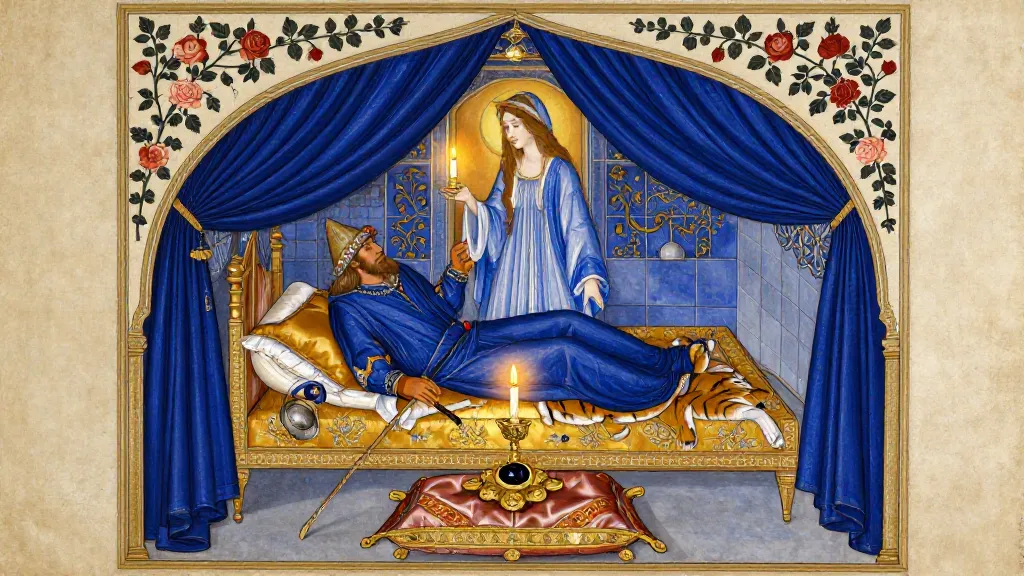
آغاز داستان سهراب
Beginning of the Story of Sohrab
کنون رزم سهراب ورستم شنو دگرها شنیدستی این هم شنو یکی داستان است پر آب چشم دل نازک از رستم آید بخشم اگر تند بادی برآید زگنج بخاک افگند نارسیده ترنج ستمگاره خوانیمش ار دادگر هنرمند گوئیمش ار بی هنر اگر مرگ دادست بی داد چیست زمرگ همه بانگ وفریاد چیست از این راز جان تو آگاه نیست وزین پرده اندر ترا راه نیست همه تا در آز رفته فراز بکس در نشد این در آز باز برفتن اگر بهتر آیدت جای گر آرام گیری بدیگر سرای نخستین بدل مرگ بستایدی دلیر وجوان خاک نیساودی اگر آتشی گاه افروختن بسوزد عجب نیست از سوختن بسوزد چو در سوزش آید درست چو شاخ نو از بیخ کهنه برست دم مرگ چون آتش هولناک ندارد زبرنا وفرتوت باک جوانرا چه باید بگیتی طرب که نی مرگرا هست پیری سبب درین جای رفتن بجای درنگ بر اسپ قضا گر کشد مرگ تنگ چنان دان که دادست بیداد نیست چو داد آمدست جای فریاد نیست جوانی وپیری بنزد اجل یکی دان چو دینرا نخواهی خلل دل از گنج ایمان گر آگندهٔ ترا خامشی به که تو بندهٔ پرستش همان پیشه کن با نیاز همان کار روز پسین را بساز برین کار یزدان ترا کار نیست اگر دیو با جانب انبار نیست بگیتی درین کوش چون بگذری که انجام اسلام با خود بری کنون رزم سهراب گویم درست از آن کین کو با پدر چون بجست
Hear now the tale of Sohrab and Rostam — you have heard other stories, hear this one too. It is a tale brimming with tears; even a tender heart will burn with anger at Rostam when it is told.
If a fierce wind should rise from its treasury and strike down the unripe fruit upon the ground, shall we call it tyranny or justice? Shall we say it is the work of a master or a fool? If death is just, then what is injustice? If death is certain, why do men cry out against it? Your soul knows nothing of this mystery, and through this veil there is no path for you. All have pressed forward to the door of desire, yet that door has never opened for any man.
The poet reflects: Whether your destination be a finer place, or whether you find rest in another dwelling — first you would praise death in your heart, for neither the brave nor the young would have touched the dust. If a fire blazes and then burns, there is nothing strange in the burning. It consumes all when its heat is true, just as a new branch springs from an old root. The breath of death, like a terrible fire, cares nothing for youth or age. Why should a young man rejoice in this world, when old age is not the only cause of death? In this house of departure and delay, when death pulls tight the cinch upon the horse of fate — know that it is justice, not injustice; and where justice has come, there is no place for lamentation.
Now I shall tell the battle of Sohrab in full — of the quarrel that arose between him and his father.
Notes
Ferdowsi opens the Rostam-and-Sohrab episode with an extended meditation on mortality — unusually long for the Shahnameh, foreshadowing the tragedy to come. The poet addresses the reader directly, asking whether death can be called unjust if it is woven into the fabric of creation.
'Unripe fruit struck down by a fierce wind' (نارسیده ترنج — literally 'unripened citron') is Ferdowsi's central metaphor for the death of Sohrab: a young life cut short before it could mature.
Rostam, the greatest champion of Iran, son of Zal and grandson of Sam of the house of Nariman. He serves as the commander-in-chief (pahlevan) of the Iranian armies across multiple generations of kings.
Sohrab, Rostam's son by Tahmineh of Samangan. Raised in Turan, he grows to extraordinary strength and sets out to find his father — with catastrophic consequences.