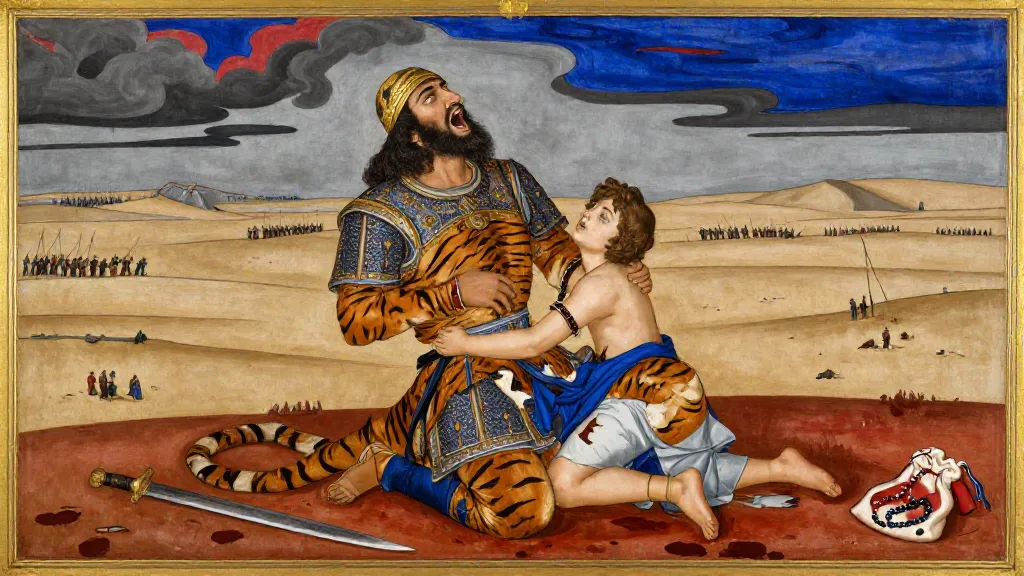
تاختن سهراب بر لشکر کاوس
Sohrab Attacks Kavus's Army
چو بشنید گفتارهای درشت ازو روی برگاشت وبنمود پشت نهان کرد ازو روی وچیزی نگفت بماند خیره از گفتهای نهفت زبالا زدش تند یک مشت دست بیفگندش آمد بجای نشست بسی کرد اندیشهای دراز زهر گونهٔ کرد پیکار ساز ببست از پی کینه آنگه کمر نهاد از سر سروری تاج زر زره بست وخفتان بپوشید شاد یکی ترگ رومی بسر بر نهاد گرفتش سنان وکمان وکمند گران گرز را پهلو دیو بند زتندی بجوش آمدش خون برگ نشست از بر بارهٔ تیز تگ خروشید وبگرفت نیزه بدست به آوردگاه رفت چون پیل مست
Sohrab girded himself for vengeance. He set the golden crown upon his head, fastened his mail, donned his coat of arms, and placed a Roman helm upon his brow. He took up spear, bow, lasso, and the heavy demon-binding mace. His blood boiled with fury. He mounted his swift horse, roared aloud, and charged into the field like a maddened elephant.
He burst through the Iranian lines, and the commanders scattered before him like wild rams fleeing a lion. Not one of the nobles of Iran dared look him in the eye. His lance-work and his reins, his arm and the coil of his spear — all were beyond anything they had seen. The warriors gathered together and said: "This is a champion like an elephant — no man can stand before him in combat."
Sohrab rode to the edge of the royal encampment and shouted: "O Shah, you who call yourself Kay Kavus — what kind of warrior are you? You have no footing among lions in battle. If I twist this lance in my fist, I will sweep your army lifeless from the field. I swore an oath at the feast on the night when Zindeh was slain: I will not leave a single lance-bearer in Iran, and I will hang Kay Kavus alive. Who among the Iranians has the claws to face me on this field of battle?"
He spoke, and silence was his answer. Not one man from Iran replied. Sohrab braced his back, drove his spear forward, and tore out seventy tent-pegs with a single thrust. A section of the royal pavilion collapsed, and the sound of horns rose from every side.
Kay Kavus was stricken. He cried: "Send word to Rostam that this Turk has emptied the minds of all our warriors. I have no rider who is his equal. No one in Iran dares attempt this deed." Tus carried the message. Rostam said: "Every time a king summons me, it is for war — never ease. I have seen nothing from Kavus but the labour of battle."
But he ordered Rakhsh saddled. From his tent he could see Sohrab wreaking havoc on the plain, and Giv already mounting, and the warriors buckling armour in haste. Rostam donned his leopard-skin coat, bound the Kiani belt around his waist, mounted Rakhsh, and rode out with his banner, leaving Zvareh to guard the camp.
When he beheld Sohrab — his stature and broad shoulders like those of Sam — he said: "Let us withdraw from both armies and go apart." Sohrab assented. They stepped out into the empty ground between the two hosts.
Notes
Sohrab's attack on Kavus's camp — tearing out seventy tent-pegs with one thrust — demonstrates the superhuman strength that makes him Rostam's true equal. No other warrior in the Shahnameh performs such a feat.
Zindeh (ژنده), Tahmineh's brother, whom she had sent with Sohrab to identify Rostam on the battlefield. Rostam killed him the previous night while spying on Sohrab's camp — removing the one person who could have identified father to son.
Rostam's leopard-skin coat (ببر بیان) is his iconic garment, equivalent to Herakles' lion-skin. It identifies him on the battlefield and is part of his legendary persona.
The agreement to fight in the empty ground between the armies follows the rules of single combat (همآورد). Both armies watch but may not intervene. The outcome will decide the war.