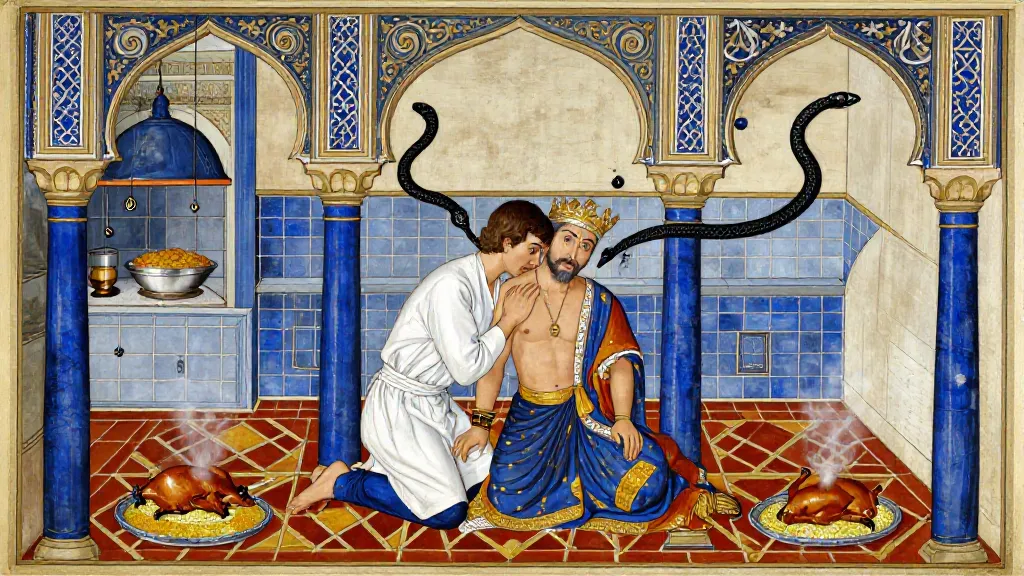
خوالیگری کردن ابلیس
Iblis Becomes a Cook
جوانی برآراست از خویشتن سخن گو و بینا دل و پاک تن همیدون به ضحّاک بنهاد روی نبودش جز از آفرین گفت و گوی بدو گفت اگر شاهرا در خورم یکی نامور پاک خوالیگرم چو بشنید ضحّاک بنواختنش ز بهر خورش جایگه ساختش کلید خورش خانهٔ پادشا بدو داد دستور فرمان روا فراوان نبود آن زمان پرورش که کمتر بد از کشتنیها خورش جز از رستنیها نخوردند چیز زهر چز زمین سر برآورد نیز پس آهرمن بدکنش رای کرد بدل کشتن جانور جای کرد ز هر گونه از مرغ و از چارپای خورش کرد و یکیک بیآورد بجای بخونش بپرورد بر سان شیر بدآن تا کند پادشا را دلیر سخن هر چه گویدش فرمان برد بفرمان او دل گروکان کند خورش زردهٔ خایه دادش نخست بدآن داشتش چند گه تن درست بخورد و برو آفرین کرد سخت مزه یافت از آن خوردنش نیکبخت چنین گفت ابلیس نیرنگ ساز که جاوید زی شاه گردنفراز که فردات از آن گونه سازم خورش کزو باشدت سر بسر پرورش برفت همه شب سگالش گرفت که فردا چه سازد ز خوردن شکفت دگر روز چون گنبد لاجورد برآورد و بنمود یاقوت زرد خورشها ز کبک و تذرو سفید بسازد و آمد دل پر امید شه تازیان چون بخوان دست برد سر کم خرد مهر او را سپرد سوم روز خوانرا بمرغ و بره بیآراستش گونه گون یکسره بروز چهارم چو بنهاد خوان خورش ساخت از پشت گاو جوان بدو اندرون زعفران و گلاب همان سالخورده می و مشکناب چو ضحّاک دست اندر آورد و خورد شکفت آمدش زآن هشیوار مرد بدو گفت بنگر که تا آرزوی چه خواهی بخواه از من ای نیکخوی خورشگر بدو گفت کای پادشا همیشه بزی شاد و فرمان روا مرا دل سراسر پر از مهر تست همه توشهٔ جانم از چهر تست یکی حاجتستم ز نزدیک شاه و گر چه مرا نیست این پایگاه که فرمان دهد تا سر کتف اوی ببوزم بمالم برو چشم و روی چو ضحّاک بشنید گفتار اوی نهانی ندانست بازار اوی بدو گفت دادم من این کام تو بلندی بگیرد مگر نام تو بفرمود تا دیو چون جفت او همی بوسهٔ داد بر کتف او چو بوسید شد در زمین ناپدید کس اندر جهان این شکفتی ندید دو مار سیه از دو کتفش برست غمی گشت و از هر سوی چاره جست سرانجام ببرّید هر دو ز کتف سزد گر بمانی ازو در شکفت چو شاخ درخت آن دو مار سیاه برآمد دگر باره از کتف شاه پزشکان فرزانه گرد آمدند همه یک بیک داستانها زدند ز هر گونه نیرنگها ساختند مر آن درد را چاره نشناختند بسان پزشکی پس ابلیس تفت بفرزانگی نزد ضحّاک رفت بدو گفت کین بودنی کار بود بمان تا چه ماند نباید درود خورش ساز و آرامشان ده بخورد نشاید جز این چارهٔ نیز کرد بجز مغز مردم مده شان خورش مگر خود بمیرند ازین پرورش نگر نرّه دیو اندر آن جست و جو چه جست و چه دید اندرین گفتگو مگر تا یکی چاره سازد نهان که پردخته ماند ز مردم جهان
Iblis fashioned himself into a well-spoken youth, clear of heart and clean of body, and presented himself before Zahhak with nothing but praise on his lips. He said: "If it please the king, I am a cook of some renown." Zahhak heard him gladly and gave him charge of the royal kitchen, and the keys to the king's larder were placed in his hands.
In those days men knew little of fine cookery. Their food was simple, taken only from what grew in the earth — herbs and plants and nothing more. But the wicked Ahriman devised a new path: he turned to the slaughter of living creatures, and from every kind of bird and beast he prepared dishes, and set them one by one before the king. He fed Zahhak on blood and flesh as a lioness feeds her young, so that the king might grow bold and obey his every word.
First he served him the yolk of eggs, and for a time Zahhak thrived on this alone and praised the cook warmly. Then Iblis the trickster said: "Long live the exalted king! Tomorrow I shall prepare for you a feast that will nourish you entirely." He departed and spent the whole night scheming what marvel of cookery he might offer next.
The following day, when the lapis dome of heaven rose and showed its yellow ruby — the sun — he prepared dishes of partridge and white pheasant, and came before the king full of hope. The king of the Arabs stretched his hand to the table, and his foolish heart surrendered its love to the cook. On the third day, the table was adorned with fowl and lamb in every variety. On the fourth, he set the feast and prepared the loin of a young bull, seasoned with saffron and rosewater, with aged wine and musk-scented water.
When Zahhak tasted this and marveled, he said to the cook: "Name your desire — ask of me whatever you wish." The cook replied: "O king, may you live always in joy and command! My heart is full of love for you, and all the sustenance of my soul comes from your face. I have but one request of the king, though I am unworthy of such a station: grant me leave to kiss your shoulders and press my eyes and face upon them."
Zahhak, suspecting no evil, granted the wish. Iblis kissed both his shoulders — and the moment he did so, he vanished into the earth. No one in the world had ever seen such a wonder. Two black serpents sprouted from Zahhak's shoulders. He was stricken with horror and sought every remedy. They cut the snakes away, but like the branches of a tree they grew back from the king's shoulders. Wise physicians gathered and tried every cure and device, but none could heal the affliction.
Then Iblis came again, this time disguised as a learned healer, and spoke to Zahhak with an air of wisdom: "This was fated to be. Let them remain — do not cut what should not be reaped. Prepare food for them and give them ease through nourishment. There is no other remedy. Feed them the brains of men — perhaps they will die from such a diet." But in truth the mighty demon sought through this counsel to empty the world of mankind.
Notes
Iblis (the Devil) in Islamic tradition; in the Shahnameh's Zoroastrian framework, identical with Ahriman, the spirit of evil and destruction. Ferdowsi uses both names interchangeably.
Zahhak (also called Pivorsp/Bēvarasp, meaning 'ten thousand horses' in Pahlavi). An Arab prince who becomes the serpent-shouldered tyrant of Iran. In Avestan tradition he is Aži Dahāka, a three-headed dragon.
The progression from eggs to partridge to lamb to beef mirrors the corruption of mankind's diet from innocence to carnivory — a Zoroastrian moral theme. Each day's feast draws Zahhak further from the path of righteousness.
'The lapis dome rose and showed its yellow ruby' — a Persian poetic convention: the sky (lapis lazuli dome) reveals the sun (yellow ruby/saffron jewel). This astronomical metaphor recurs throughout the Shahnameh as a marker of dawn.
The shoulder-serpents are central to the Zahhak myth. In Avestan sources, Aži Dahāka is a three-headed monster; Ferdowsi rationalizes this into a human tyrant with snake-like growths that must be fed human brains — a metaphor for tyranny consuming its own subjects.