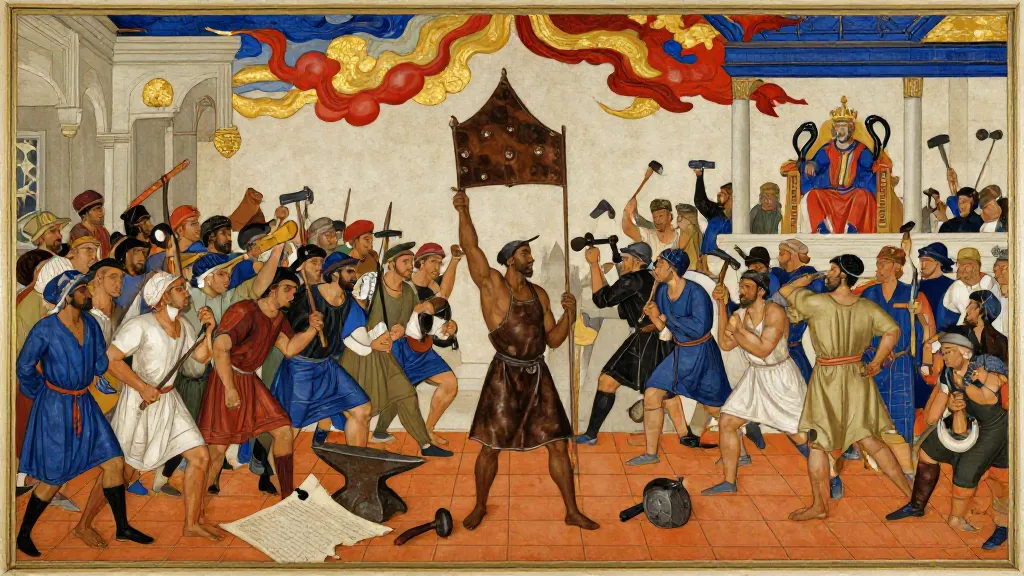
The Story of Zahhak (Part 2) — Persian miniature painting

Shahnameh · Fall of the Sasanians

The Story of Zahhak (Part 2)

داستان ضحاک ۲

Kaveh tears Zahhak's declaration of justice to pieces in the open court and marches into the street with his leather apron on a lance — the marketplace gathers behind him. A single craftsman's act of public defiance breaks the silence that sustained a thousand-year tyranny, and the worthless hide becomes Iran's royal banner.

View:

اندر زادن فریدون

The Birth of Fereydun

پرسیدن فریدون نژاد خود را از مادر بر آمد برین روزگار دراز که شد اژدهافش بتنگی فراز خجسته فریدون ز مادر بزاد جهانرا یکی دیگر آمد نهاد ببالید بر سان سرو سهی همی تافت زو فرّ شاهنشهی جهانجوی با فرّ جمشید بود بکردار تابنده خورشید بود جهانرا چو باران ببایستگی روان را چو دانش بشایستگی بسر بر همی گشت گردان سپهر شده رام با آفریدون بمهر همان کاوکش نام پرمایه بود ز گاوان ورا برترین پایه بود ز مادر جدا شد چو طاوس نر بهر موی بر تازه رنگی دگر شده انجمن بر سرش بخردان ستاره شناسان و هم موبدان که کس در جهان گاو چون آن ندید نه از پیر سر کاردانان شنید زمین کرد ضحّاک پر گفت و گوی بگرد زمین در همین جست و جوی فریدون که بودش پدر آبتین شده تنگ بر آبتین بر زمین گریزان و از خویشتن گشته سیر برآویخت ناگاه در دام شیر از آن روزبانان ناپاک مرد تنی چند روزی بدو باز خورد گرفتند و بردند بسته چو یوز برو بر سرآورد ضحّاک روز خردمند مام فریدون چو دید که بر جفت او بر چنان بد رسید فرانک بدش نام و فرخنده بود بمهر فریدون دل آگنده بود روان گشت و دل خسته از روزگار همی رفت گریان سوی مرغزار کجا نامور گاو پرمایه بود که روشنده بر تنش پیرایه بود به پیش نگهبان آن مرغزار خروشید و بارید خون در کنار بدو گفت کین کودک شیرخوار ز من روزگاری بزنهار دار پدروارش از مادر اندر پذیر وزین گاو نغزش بپرور بشیر وگر باره خواهی روانم تراست گروکان کنم جان بدآن کت هواست پرستندهٔ بیشه و گاو نغز چنین داد پاسخ بدآن پاک مغز که چون بنده بر پیش فرزند تو بباشم پذیرندهٔ پند تو فرانک بدو داد فرزند را بگفتش بدو گفتنی پند را سه سالش پدروار از آن گاو شیر همی داد هشیوار زنهار گیر نشد سیر ضحّاک از آن جست و جوی شد از گاو گیتی پر از گفتگوی دوان مادر آمد سوی مرغزار چنین گفت با مرد زنهار دار که اندیشهٔ در دلم ایزدی فراز آمدست از ره بخردی همی کرد باید کز آن چاره نیست که فرزند و شیرین روانم یکیست ببرّم پی از خاک جادوستان شوم با پسر سوی هندوستان شوم ناپدید از میان گروه مر این را برم تا بالبرز کوه بیآورد فرزند را چون نوند چو غرم ژیان سوی کوه بلند یکی مرد دینی بدآن کوه بود که از کار گیتی بی اندوه بود فرانک بدو گفت کای پاک دین منم سوگواری از ایران زمین بدان کین گرانمایه فرزند من همی بود خواهد سر انجمن ببرّد سر و تاج ضحّاکرا سپارد کمربند او خاکرا ترا بود باید نگهبان اوی پدروار لرزنده بر جان اوی پذیرفت فرزند او نیک مرد نیآورد هرگز بدو باد سرد خبر شد بضحّاک بک روزگار از آن بیشه و گاو آن مرغزار بیآمد پر از کین چون پیل مست مر آن گاو پرمایه را کرد پست همه هر چه دید اندرو چارپای بیفگند ازیشان به پردخت جای سبک سوی خان فریدون شتافت فراوان پژوهید و کسرا نیافت بایوان او آتش اندر فگند ز پای اندر آورد کاخ بلند

A long age passed while the dragon-faced king grew desperate in his search. Then blessed Fereydun was born of his mother, and the world received a new order. He grew tall like a straight cypress, and the glory of kingship shone from him. He possessed the farr of Jamshid and blazed like the radiant sun. He was to the world as rain is to a parched land, and to the soul as knowledge is to the worthy. The turning heavens became gentle in their love for Fereydun.

There was in that time a wondrous cow named Purmayeh, the most precious of all cattle. She was parted from her mother like a male peacock — upon every hair a fresh and different color. Wise men, astrologers, and priests gathered around her in wonder, for no one in the world had seen such a cow, nor had the most experienced elders heard of one like her.

Meanwhile Zahhak filled the earth with his searching, scouring the world for the prophesied child. Fereydun's father was Abtin, and the earth had grown harsh upon him. Abtin fled, weary of his own life, but stumbled at last into the lion's trap. The wicked guards of Zahhak seized him and carried him bound, and Zahhak brought his days to an end.

When Fereydun's wise mother saw what evil had befallen her husband, she was stricken. Her name was Faranak, and she was a blessed woman whose heart was filled with love for Fereydun. She set out, wounded by fate, weeping as she made her way to the meadow where the wondrous cow grazed, her body adorned with a luminous beauty.

Before the guardian of that meadow, Faranak cried out and poured tears of blood: "Keep this nursing child safe for me. Receive him from his mother as a father would, and nourish him on the milk of this fine cow. If you require a pledge, my very soul is yours — I will make my life your surety." The keeper of the forest and the wondrous cow answered: "I shall be like a slave before your child, and I will heed your counsel." Faranak gave him her son and spoke all the words of instruction a mother could give. For three years the watchful guardian nursed the boy on the cow's milk, as a father would.

But Zahhak's search did not abate, and word of the cow spread across the world. Faranak came running to the meadow and said to the guardian: "A thought from God has come to my heart through the path of wisdom. I must act, for there is no other choice — my child and my sweet life are one. I will cut my tracks from this land of sorcerers. I will go with my son toward Hindustan — no, I will vanish from among all men and carry him to Mount Alborz."

She took her child and ran like a wild ram toward the high mountain. There on the peak lived a pious man, free from the cares of the world. Faranak said to him: "O man of pure faith, I am a mourner from the land of Iran. Know that this precious child of mine shall one day stand at the head of all men. He will cut the head and crown from Zahhak and cast his girdle to the dust. You must be his guardian, trembling over his life as a father would." The good man accepted her child and never let a cold wind reach him.

But in time word came to Zahhak of the forest and the cow of that meadow. He came full of rage, like a maddened elephant, and struck down the wondrous cow. Every living creature he found there he slaughtered, and he emptied the place. Then he rushed to Fereydun's dwelling and searched every corner, but found no one. He set fire to the house and brought the high palace down to the ground.

Notes

1personفریدونFereydun

Fereydun (فریدون), the hero prophesied to overthrow Zahhak. In Avestan tradition he is Thraetaona. His birth amid persecution parallels Moses hidden from Pharaoh and Krishna hidden from Kamsa.

2personآبتینAbtin

Fereydun's father. His name (آبتین, Abtin) derives from Avestan Āthwya. Zahhak kills him in the hunt for Fereydun, giving the hero his motive for vengeance.

3personفرانکFaranak

Fereydun's mother, whose name means 'beautiful' or 'splendid.' She is one of the Shahnameh's great mother figures — resourceful and fearless in protecting her son.

4context

The wondrous cow Purmayeh (پرمایه, 'most precious'), whose milk nurses Fereydun, is a survival of the Avestan sacred cow. Zahhak's slaughter of the cow gives Fereydun his cow-headed mace — the weapon of vengeance shaped in memory of his nurse.

5placeالبرز کوهAlborz

Mount Alborz (البرز کوه), the great mountain range of northern Iran. In myth it is the cosmic mountain at the center of the world, where heroes are hidden and trained. It serves as the boundary between the mortal world and the divine.

داستان ضحاک با کاوهٔ آهنگر

Zahhak and Kaveh the Blacksmith

چنان بد که ضحاک را روز و شب به نام فریدون گشادی دو لب بر آن برز بالا ز بیم نشیب شده ز آفریدون دلش پر نهیب چنان بد که یک روز بر تخت عاج نهاده به سر بر ز پیروزه تاج ز هر کشوری مهتران را بخواست که در پادشاهی کند پشت راست از آن پس چنین گفت با موبدان که ای پر هنر با گهر بخردان مرا در نهانی یکی دشمنست که بر بخردان این سخن روشن است ندارم همی دشمن خرد خوار بترسم همی از بد روزگار همی زین فزون بایدم لشگری هم از مردم و هم ز دیو و پری یک لشکری خواهم انگیختن ابا دیو مردم برآمیختن بباید برین بود همداستان که من ناشکیبم بدین داستان یکی محضر اکنون بباید نبشت که جز تخم نیکی سپهبد نکشت نگوید سخن جز همه راستی نخواهد به داد اندرون کاستی ز بیم سپهبد همه راستان بر آن کار گشتند همداستان بر آن محضر اژدها ناگزیر گواهی نبشتند برنا و پیر هم آنگه یکایک ز درگاه شاه ستم دیده را پیش او خواندند بدو گفت مهتر به روی دژم که بر گوی تا از که دیدی ستم خروشید زد دست بر سر ز شاه که شاها منم کاوهٔ دادخواه بده داد من کآمدستم دوان همی نالم از تو برنج روان اگر داد دادن بود کار تو بیفزاید ای شاه مقدار تو ز تو بر من آمد ستم بیشتر زند بر دلم هر زمان نیشتر ستم گر نداری تو بر من روا بفرزند من دست بردن چرا مرا بود هزده پسر در جهان از ایشان یکی مانده است این زمان ببخشای بر من یکی در نگر که سوزان شود هر زمانم جگر شها من چه کردم یکی باز گوی و گر بی‌گناهم بهانه مجوی بحال من ای تاجور در نگر میفزای بر خویشتن دردسر مرا روزگاری چنین کوژ کرد دلی بی امید و سری پر ز درد جوانی نماندست و فرزند نیست بگیتی چو فرزند پیوند نیست ستمرا میان و کرانه بود همیدون ستمرا بهانه بود بهانه چه داری تو بر من بیار که بر من سگالی بد روزگار یکی بی زیان مرد آهنگرم ز شاه آتش آید همی بر سرم تو شاهی و گر اژدها پیکری بباید بدین داستان داوری اگر هفت کشور بشاهی تراست چرا رنج و سختی همه بهر ماست شماریت با من بباید گرفت بدان تا جهان ماند اندر شکفت مگر کز شمار تو آید پدید که نوبت ز گیتی بمن چون رسید که مارانت را مغز فرزند من همی داد باید بهر انجمن سپهبد به گفتار او بنگرید شگفت آمدش کان سخن ها شنید بدو باز دادند فرزند او به خوبی بجستند پیوند او بفرمود پس کاوه را پادشاه که باشد بر آن محضر اندر گواه چو برخواند کاوه همه محضرش سبک سوی پیران آن کشورش خروشید کای پای مردان دیو بریده دل از ترس گیهان خدیو همه سوی دوزخ نهادید روی سپردید دل ها به گفتار اوی نباشم بدین محضر اندر گواه نه هرگز براندیشم از پادشاه خروشید و برجست لرزان ز جای بدرید و بسپرد محضر به پای گرانمایه فرزند او پیش اوی ز ایوان برون شد خروشان به کوی مهان شاه را خواندند آفرین که ای نامور شهریار زمین ز چرخ فلک برسرت بادِ سرد نیارد گذشتن به روز نبرد چرا پیش تو کاوهٔ خام گوی به سان همالان کند سرخ روی همی محضر ما به پیمان تو بدرّد به پیچد ز فرمان تو سر و دل پر از کینه کرد و برفت تو گفتی که عهد فریدون گرفت ندیدیم ازین کار ما زشتتر بماندیم خیره بدین کار در کی نامور پاسخ آورد زود که از من شکفتی بباید شنود که چون کاوه آمد ز درگاه پدید دو گوش من آواز او را شنید میان من و او بایوان درست تو گفتی یکی کوه آهن برست همیدون چو او زد بسر بر دو دست شکفتی مرا در دل آمد شکست ندانم چه شاید بدن زین سپس که راز سپهری ندانست کس چو کاوه برون شد ز درگاه شاه برو انجمن گشت بازارگاه همی بر خروشید و فریاد خواند جهان را سراسر سوی داد خواند از آن چرم کاهنگران پشت پای بپوشند هنگام زخم درای همان گه ز بازار برخاست گرد همان کاوه آن بر سر نیزه کرد خروشان همی رفت نیزه به دست که ای نامداران یزدان پرست کسی کو هوای فریدون کند دل از بند ضحاک بیرون کند یکایک بنزد فریدون شویم بدآن سایهٔ فرّ او بغنویم بگویید کین مهتر آهرمنست جهان آفرین را بدل دشمنست بدان بی بها ناسزاوار پوست پدید آمد آوای دشمن ز دوست همی رفت پیش اندرون مرد گرد جهانی برو انجمن شد نه خرد بدانست خود کافریدون کجاست سر اندر کشید و همی رفت راست بیامد به درگاه سالار نو بدیدندش آنجا و برخاست غو چو آن پوست بر نیزه بردید کی به نیکی یکی اختر افگند پی بیاراست آن را به دیبای روم ز گوهر برو پیکر از زر بوم بزد بر سرخویش چون گرد ماه یکی فال فرخ پی افکند شاه فرو هشت ازو سرخ و زرد و بنفش همی خواندش کاویانی درفش از آنپس هر آنکس که بگرفت گاه بشاهی بسر بر نهادی کلاه بر آن بی بها چرم آهنگران برآویختی نو بنو گوهران ز دیبای پرمایه و پرنیان بر آن گونه شد اختر کاویان که اندر شب تیره خورشید بود جهان را ازو دل پرامید بود بگشت اندرین نیز چندی جهان همی بودنی داشت اندر نهان فریدون چو گیتی بر آن گونه دید جهان پیش ضحاک وارونه دید سوی مادر آمد کمر بر میان بسر بر نهاده کلاه کیان که من رفتنی ام سوی کارزار ترا جز نیایش مباد ایچ کار ز گیتی جهان آفرین را پرست ازو دان بهر نیکی ی زوردست فرو ریخت آب از مژه مادرش همی خواند با خون دل داورش به یزدان همی گفت زنهار من سپردم ترا ای جهاندار من بگردان ز جانش بد جادوان بپرداز گیتی ز نا بخردان فریدون سبک ساز رفتن گرفت سخن را ز هر کس نهفتن گرفت برادر دو بودش دو فرخ همال ازو هر دو آزاده مهتر بسال یکی بود ازیشان کیانوش نام دگر نام پرمایهٔ شادکام فریدون بریشان زبان برگشاد که خرم زنید ای دلیران و شاد که گردون نگردد بجز بر بهی بما باز گردد کلاه مهی یکی گرز فرمود باید گران چو بگشاد لب هر دو بشتافتند هر آنکس کزان پیشه بد نام جوی بسوی فریدون نهادند روی جهانجوی پرگار بگرفت زود وزان گرز پیکر بدیشان نمود نگاری نگارید بر خاک پیش همیدون بسان سر گاومیش بر آن دست بردند آهنگران چو شد ساخته کار گرز گران به پیش جهانجوی بردند گرز فروزان به کردار خورشید برز پسند آمدش کار پولادگر ببخشیدشان جامه و سیم و زر بسی کردشان نیز فرخ امید بسی دادشان مهتری را نوید که گر اژدها را کنم زیر خاک بشویم شما را سر از گرد پاک جهانرا همه سوی داد آورم چو از نام دادار یاد آورم

Day and night the name of Fereydun was on Zahhak's lips. From that high summit he feared the fall, and his heart was filled with dread of the prophesied one. One day, seated upon his ivory throne with a turquoise crown upon his head, he summoned the great men of every land to shore up his kingship.

He addressed the priests: "O wise and able men of noble birth, I have a secret enemy — this is clear to all who possess understanding. I do not hold this foe in contempt; I fear the evil turn of fate. I need a greater army than I have — of men, and also of demons and fairies. I wish to raise a host and mingle demons with men. You must consent to this, for I cannot endure this state. Now a declaration must be written: that the king has sown nothing but the seeds of goodness, that he speaks nothing but truth, and that he desires no diminishment of justice."

Out of fear of the king, all the nobles became accomplices in this lie. Young and old signed their witness upon the serpent-king's declaration.

At that very moment, a cry arose from the gates. A wronged man was brought before the king, and Zahhak said with a dark face: "Speak — from whom have you suffered injustice?"

The man struck his hands upon his head and cried: "O king, I am Kaveh, a seeker of justice! Give me my due, for I have come running, and I cry out against you with an anguished soul. If it is your business to give justice, then your stature shall grow, O king. But it is from you that the greatest injustice has fallen upon me — each moment it drives a sting into my heart. If you do not hold this oppression proper, why do you lay hands upon my children? I had eighteen sons in the world; now only one remains. Have mercy on me — look upon my state, for my heart burns at every moment."

"O king, what have I done? Tell me. And if I am guiltless, do not seek pretexts. Look upon my condition, O crowned one, and do not heap further grief upon yourself. Time has bent me thus — a heart without hope and a head full of pain. Youth is gone and my sons are no more, and in this world there is no bond like a child. Even oppression has a middle and an end; even oppression has a cause. What cause do you have against me? I am a harmless blacksmith — yet from the king, fire rains upon my head. Whether you are a king or a dragon in form, there must be a reckoning in this matter. If the seven realms are yours by right, why is all the suffering and hardship ours? You must settle your account with me, so that the world may stand in wonder. Perhaps from your reckoning it will become clear how my turn came round to have my sons' brains fed to your serpents."

The king gazed at him in astonishment at these words. He returned Kaveh's son to him and sought to win his goodwill. Then the king commanded Kaveh to set his witness upon the declaration.

But when Kaveh read the document, he turned to the elders of the realm and roared: "O you who have set your feet upon the demon's path, who have cut your hearts from fear of the lord of the world — you have all turned your faces toward hell and surrendered your hearts to his words! I will not be a witness to this declaration, nor will I ever cower before the king!" He cried out, sprang trembling from his place, tore the document to pieces, and trampled it underfoot. Then with his noble son before him, he strode from the palace, shouting into the street.

The nobles blessed the king and said: "O renowned lord of the earth, may no cold wind from the heavens pass over your head on the day of battle. But why did this crude-spoken Kaveh stand before you and redden his face like an equal? He tore our declaration at your covenant and defied your command. We have never seen anything uglier than this."

The renowned king answered swiftly: "You must hear a wonder from me. When Kaveh appeared at the gates and my ears heard his voice, it was as though a mountain of iron had sprung up between him and me in the palace. And when he struck his hands upon his head, wonder and dread entered my heart. I do not know what may come of this, for no one has ever known the secret of heaven."

When Kaveh came out from the king's court, the marketplace gathered around him. He cried aloud and called for justice, summoning the whole world to righteousness. He took the leather apron that blacksmiths tie behind their legs when they strike the anvil, and raised it upon the point of a lance. Shouting as he marched, lance in hand, he called: "O renowned ones who worship God — whoever holds Fereydun in his heart, let him free his soul from the bonds of Zahhak! Let us go together to Fereydun and rest in the shadow of his glory. Proclaim that this lord is a servant of Ahriman, an enemy of the Creator in his heart!"

From that worthless and unworthy hide, the voice of friend was distinguished from foe. The valiant man marched at the front, and a great multitude — no small number — gathered behind him. He knew where Fereydun was, and he drew in his head and marched straight onward. He arrived at the court of the new lord, and when they saw him a great shout went up.

When the young king saw that leather upon the lance, he took it as a good omen and adorned it with brocade from Byzantium, tracing figures of gold and studding it with jewels. He set it above his head like a halo of the moon and cast a fortunate augury. He hung from it streamers of red, yellow, and violet, and called it the Kaviani Banner.

From that time on, every king who took the throne and placed the crown upon his head would hang new jewels upon that worthless blacksmith's hide, adding layers of fine brocade and silk, until the Kaviani standard became like a sun in the dark night, and the world drew hope from it.

The world turned awhile longer, keeping its secrets hidden. Then Fereydun saw how the world stood and how fortune had turned against Zahhak. He went to his mother with the royal helm upon his head, his waist girded for war. "I go to battle," he said. "Your only task is prayer. Worship the Creator of the world, and know that every good thing comes from His hand."

His mother's eyes poured tears, and she called upon God with a blood-filled heart: "In God's name I entrust you to His keeping, O lord of the world. Turn the evil of sorcerers from his soul. Cleanse the world of the foolish."

Fereydun swiftly prepared to depart and kept his plans hidden from all. He had two brothers, both older — one named Kyanush, the other Pormayeh. Fereydun said to them: "Rejoice, O brave ones, and be glad, for the wheel of heaven turns only toward the good. The crown of greatness shall return to us."

He ordered a heavy mace to be forged. When he spoke, both brothers hastened to obey, and every smith who sought renown came to Fereydun. The world-seeker took up a compass and showed them the design of the mace — he drew a pattern upon the ground in the likeness of an ox-head. The smiths set to work, and when the great mace was finished, blazing like the lofty sun, they brought it before the world-seeker. He was pleased with the steelsmith's work and rewarded them with garments, silver, and gold. He gave them great hope and promised them honor: "When I bring the dragon beneath the dust, I will wash the grime of sorrow from your heads. I will turn the whole world toward justice, for I will remember the name of the Creator."

Notes

1personکاوهKaveh

Kaveh (کاوه), the blacksmith whose revolt against Zahhak becomes the founding act of Iranian resistance to tyranny. His leather apron raised on a lance becomes the Kaviani Banner (درفش کاویانی), the legendary royal standard of Iran.

2context

Zahhak's forced declaration (محضر, mahzar) — a document testifying to his just rule — is a tool of authoritarian legitimacy. Kaveh's tearing of the document is the Shahnameh's most iconic act of civil defiance: a commoner destroys the lie of state propaganda in front of the assembled nobility.

3context

The Kaviani Banner (درفش کاویانی) — fashioned from a blacksmith's leather apron — became the historical royal standard of the Sasanian Empire. Its destruction by Arab forces at the Battle of al-Qadisiyyah (636 CE) symbolized the fall of the old Iranian order.

4personکیانوش / پرمایهKyanush / Pormayeh

Fereydun's two older brothers. Kyanush (کیانوش) and Pormayeh (پرمایه) later betray him by attempting to kill him on the road — an episode of fraternal jealousy that parallels Cain and Abel.

5translation

The cow-headed mace (گرز گاوسر) is forged in the shape of an ox-head in memory of the wondrous cow Purmayeh who nursed Fereydun. The weapon thus carries the memory of the destroyed innocent — vengeance made material.

رفتن فریدون به جنگ ضحاک

Fereydun Goes to War Against Zahhak

دیدن فریدون دختران جمشید را رفتن فریدون بجنگ ضحاک فریدون به خورشید بر برد سر کمر تنگ بستش به کین پدر برون رفت خرم به خرداد روز به نیک اختر و فال گیتی فروز سپاه انجمن شد به درگاه او به ابر اندر آمد سر گاه او به پیلان گردون کش و گاو میش سپه را همی توشه بردند پیش کیانوش و برمایه بر دست شاه چو کهتر برادر ورا نیک خواه همی رفت منزل به منزل چو باد سری پر ز کینه دلی پر ز داد رسیدند بر تازیانی نوند بجائی که یزدان پرستان بدند درآمد بدین جای نیکان فرود فرستاد نزدیک ایشان درود چو شب تیره‌تر گشت از آنجایگاه خرامان بیامد یکی نیک‌خواه فروهشته از مشک تا پای موی بکردار حور بهشتیش روی سروشی بدو آن آمده از بهشت که تا باز گوید بدو خوب و زشت سوی مهتر آمد بسان پری که تا بندها را بداند کلید گشاده بافسون کند ناپدید فریدون بدانست کاین ایزدیست نه اهریمنی و نه کار بدیست شد از شادمانی رخش ارغوان که تن را جوان دید و دولت جوان یکی پاک خوان از در مهترش چو شد توشه خورده شتاب آمدش گران شد سرش رای خواب آمدش چو آن ایزدی رفتن کار اوی بدیدند وان بخت بیدار اوی برادر سبک هر دو بر خاستند تبه کردنش را بیاراستند یکی کوه بود از برش برزکوه برادرش هر دو نهان از گروه بپائین که شاه خفته بناز شده یکزمان از شب دیریاز بکه بر شدند آن دو بیدادگر وزایشان نبد هیچکس را خبر چو ایشان ازان کوه کندند سنگ بدان تا بکوبد سرش بیدرنگ وزان کوه غلطان فرو گاشتند مرآن خفته را کشته پنداشتند بفرمان یزدان سر خفته مرد خروشیدنِ سنگ بیدار کرد بافسون همان سنگ بر جای خویش به بست و نه غلطید یکذرّه بیش برادر بدانست که آن ایزدیست نه از راه بیکار و دست بدیست فریدون کمر بست و اندر کشید نکرد آن سخن را بر ایشان پدید براند و بدش کاوه پیش سپاه دلش پر ز کینه ز ضحاک شاه همایون همان خسروانی درفش باروندرود اندر آورد روی چنان چون بود مرد دیهیم جوی اگر پهلوانی ندانی زبان بتازی تو اروند را دجله دان دکر منزل آن شاه آزاد مرد لب دجلهٔ شهر بغداد کرد چو آمد بنزدیک اروندرود فرستاد زی رودبانان درود که کشتی و زورق هم اندر شتاب گذارید یکسر برین روی آب بدآن تازیان گفت پیروز شاه که کشتی برافگن هم اکنون براه مرا با سپاهم بدانسو رسان ازینها کسی را بدین سو ممان نیاورد کشتی نگهبانِ رود نیامد بگفت فریدون فرود چنین داد پاسخ که شاهِ جهان چنین گفت با من سخن در نهان که کشتی کسی را مده تا نخست جوازی بمهرم نیابی درست فریدون چو بشنید شد خشمناک ازان ژرف دریا نیامدش باک به تندی میانِ کیانی ببست بران بارهٔ شیردل بر نشست سرش تیز شد کینه و جنگ را بآب اندر افگند گلرنگ را ببستند یارانش یکسر کمر پیاپی بدریا نهادند سر بدان بادپایان با آفرین بآب اندرون غرقه کردند زین سر سرکشان اندر آمد ز خواب ز ناویدن چارپایان در آب زآب اندرون تن در آورده پاک چنان چون کند خور شب تیره چاک بخشکی رسیدند سر جنگ‌جوی به بیت‌المقدّس نهادند روی چو بر پهلوانی زبان راندند همی گنگ دژهوختش خواندند بتازی کنون خانهٔ پاک خوان برآورده ایوان ضحاک دان از آن دشت نزدیک شهر آمدند ازین شهر جوینده بهر آمدند ز یک میل کرد آفَریدون نگاه یکی کاخ دید اندران شهرِ شاه که ایوانش برتر ز کیوان نمود تو گفتی ستاره بخواهد ربود فروزنده چون مشتری بر سپهر همه جای شادی و آرام و مهر بدانست کان خانهٔ اژدهاست که جای بزرگی و جای بهاست بیارانش گفت آنکه از تیره خاک برآرد چنین جا بلند از مغاک بترسم همی زانکه با او جهان یکی راز دارد مگر در نهان همان به که ما را بدین جای تنگ شتابیدن آید بجای درنگ بگفت و بگرز گران دست برد عنان بارهٔ تیزتک را سپرد تو گفتی یکی آتشستی درست که پیش نگهبان ایوان برست گران گرز برداشت از پیش زین تو گفتی همی برنوردد زمین باسپ اندر آمد بکاخ بزرگ جهان ناسپرده جوان سترگ کس از روزبانان بدر بر نماند فریدون جهان آفرین را بخواند

Fereydun raised his head to the sun and girded himself tightly for vengeance upon his father's killers. He marched out in gladness on the day of Khordad, under a bright star and a world-illuminating omen. His army gathered at his court, and the height of his throne reached into the clouds. War-elephants and oxen carried provisions before the host. Kyanush and Pormayeh rode at the king's side, loyal as younger brothers to their lord.

He advanced from stage to stage, swift as the wind — his head full of vengeance, his heart full of justice. They came to a land of swift-riding Arabs, a place where God-worshipers dwelt. Fereydun halted there and sent them greetings. When the night grew darker, a beautiful figure came gliding from that place — her hair of musk falling to her feet, her face like a heavenly spirit. She was a divine messenger sent from paradise to reveal to him what was fair and what was foul, to teach him the keys to every bond and how to undo enchantments by spells. Fereydun knew this was a thing of God, not of Ahriman or evil. His face flushed crimson with joy, for he saw that his body was young and his fortune younger still.

After he had eaten from a lordly table, weariness came upon him and he slept. But when his brothers saw the divine favor that attended him and his wakeful fortune, they rose swiftly and prepared to destroy him. There was a great mountain above the camp, and the two brothers climbed it in secret while the king slept below, having rested but a brief moment in the long night. Those two unjust men pried loose a boulder and rolled it down to crush his head. But by God's command, the roar of the stone woke the sleeping man, and by enchantment the boulder halted in its place and did not roll a hair's breadth further.

The brothers understood that this was God's work. Fereydun girded himself and marched on, and did not reveal to them what they had done. He rode forward with Kaveh at the head of the army, the auspicious Kaviani banner aloft, his heart full of hatred for Zahhak.

They came to the Arvand River — if you do not know the heroic tongue, know that in Arabic the Arvand is the Tigris. The next halt of that noble king was on the bank of the Tigris, at the city of Baghdad. He sent greetings to the rivermen, saying: "Bring your boats and barges with all haste and ferry us to the other bank." But the guardian of the river would not bring a single boat, saying: "The king of the world told me in secret: give no one passage until he shows a warrant sealed with my seal."

When Fereydun heard this, he burned with anger. He did not fear the deep waters. He girded his royal waist, mounted his lion-hearted steed, and spurred his rose-colored horse into the current. His companions all tightened their belts and plunged in after him. The swift horses sank their saddles beneath the water, and the heads of the proud warriors emerged from sleep at the swimming of the beasts. They came through the water clean, as the sun breaks through a dark night, and reached the dry bank, those battle-seekers.

They turned their faces toward Jerusalem — in the heroic tongue they called it Gang Dezh-Hukht, but in Arabic, know it as the raised palace of Zahhak. They drew near the city, and from one mile distant Fereydun looked and saw a palace in the royal city whose hall rose higher than Saturn, as though it would snatch the stars. It blazed like Jupiter in the sky — a place of all joy and peace and love. He knew it was the house of the dragon, the seat of power and splendor.

He said to his companions: "He who raises such a place from the dark earth to the heights — I fear that the world keeps some secret pact with him. It is better that in this narrow hour we hasten rather than delay." He spoke and put his hand to the heavy mace, and gave the reins to his swift-charging horse. You would have said a pillar of fire had sprung up before the gatekeepers of the palace. He raised the great mace from before the saddle — you would have said he was rolling up the earth itself. The untraveled young hero rode his horse into the great palace. Not one of the guards remained at the gate. Fereydun invoked the name of the Creator.

Notes

1context

Khordad (خرداد) is the sixth day of the Persian calendar month, associated with wholeness and perfection. Fereydun's departure on this day is an auspicious omen — Persian kings chose their campaign dates by the calendar.

2placeاروندرودArvand-rud

The Arvand River (اروندرود) is the Tigris, specifically the Shatt al-Arab. Ferdowsi himself provides the Arabic gloss: 'In Arabic, know the Arvand as the Dijla (Tigris).' The crossing of the Tigris — by plunging in without boats — is Fereydun's first heroic act.

3placeبیت‌المقدّسBayt al-Muqaddas

Ferdowsi identifies Zahhak's capital as Bayt al-Muqaddas (بیت‌المقدّس, Jerusalem) while giving its Pahlavi name as Gang Dezh-Hukht. This conflation of Jerusalem with Zahhak's fortress reflects medieval Persian geographic traditions.

4context

The brothers' attempt to murder Fereydun by rolling a boulder onto him while he sleeps is a test of divine protection. God's intervention — halting the stone — confirms Fereydun as the chosen deliverer. Fereydun's decision to say nothing about the plot shows his restraint and kingly composure.

بند کردن فریدون ضحاک را

Fereydun Imprisons Zahhak

داستان فریدون با وکیل ضحاک بر تخت نشستن فریدون بند کردن فریدون ضحاکرا جهاندار ضحاک ازین گفت و گوی بهوش آمد و تیز بنهاد روی بفرمود تا برنهادند زین بران راه‌پویان باریک بین بیامد دمان با سپاهی گران همه نرّه دیوان و جنگ‌آوران ز بیراه مر کاخ را بام و در گرفت و بکین اندر آورد سر سپاه فریدون چو آگه شدند همه سوی آن راه بی‌ره شدند ز اسپان جنگی فرو ریختند بدان جای تنگی بر آویختند همه بامِ و در مردم شهر بود کسی کش ز جنگ‌آوری بهر بود همه در هوای فریدون بُدند که از جور ضحاک پرخون بدند ز دیوارها خشت و از بام سنگ بکوی اندرون تیغ و تیر خدنگ ببارید چون ژاله ز ابر سیاه کسی را نبُد بر زمین جایگاه بشهر اندرون هر که برنا بُدند چو پیران که در جنگ دانا بدند سوی لشکر آفریدون شدند ز نیرنگ ضحاک بیرون شدند ز آواز گردان بتوفید کوه زمین شد ز نعلِ ستوران ستوه بسر بر ز گرد سپه ابر بست بنیزه دلِ سنگ خارا بخست خروشی برآمد ز آتش‌کده که بر تخت اگر شاه باشد دده همه پیر و برناش فرمان بریم یکایک ز گفتار او نگذریم نخواهیم بر گاه ضحاک را مر آن اژدهادوش ناپاک را سپاهی و شهری بکردار کوه سراسر بجنگ اندرون هم‌گروه ازان شهر روشن یکی تیره گرد برآمد که خورشید شد لاجورد هم از رشک ضحاک شد چاره‌جوی ز لشکر سوی کاخ بنهاد روی به آهن سراسر بپوشید تن بدان تا نداند کس از انجمن برآمد یکایک بکاخ بلند بدست اندرون شست یازی کمند بدید آن سیه نرگس شهرِناز پر از جادوئی با فریدون براز دو رخساره روز و دو زلفش چو شب گشاده بنفرینِ ضحاک لب بدانست کان کار هست ایزدی رهائی نیابد ز دستِ بدی بمغز اندرش آتش رشک خاست بایوان کمند اندر افکند راست نه از تخت یاد و نه جان ارجمند فرود آمد از بام کاخ بلند همان تیز خنجر کشید از نیام نه بکشاد راز و نه بر گفت نام بچنگ اندرون آبگون دشنه بود بخون پری چهرگان تشنه بود ز بالا چو پی بر زمین بر نهاد بیامد فریدون بکردار باد بدان گرزه گاو سردست برد بزد بر سرش ترگ او کرد خرد بیامد سروش خجسته دمان مزن گفت کو را نیامد زمان همیدون شکسته به‌بندش چو سنگ به‌بر تا دو کوه آیدت پیش تنگ به کوه اندرون به بود بند اوی نیاید برش خویش و پیوند اوی فریدون چو بشنید ناسود دیر کمندی بیاراست از چرم شیر به بندی ببستش دو دست و میان که نگشاید آن بند پیلِ ژیان نشست از بر تخت زرین اوی بیفگند ناخوب آئین اوی بفرمود کردن بدر بر خروش که هر کس که دارید بیدار هوش نباید که باشید با ساز جنگ نه زین باره جوید کسی نام و ننگ سپاهی نباید که با پیشه‌ور بیکروی جویند هر دو هنر یکی کارورز و یکی گرزدار سزاوار هر کس پدیدست کار چو این کار او جوید او کار این پر آشوب گردد سراسر زمین به بند اندرست آنکه ناپاک بود جهان را ز کردار او باک بود شما دیر مانید و خرّم بوید برامش سوی ورزشِ خود شوید شنیدند مردم سخنهای شاه از آن پر هنر مرد با دستگاه وزان پس همه نامدارانِ شهر کسی را که بود از زر و گنج بهر برفتند با رامش و خواسته همه دل بفرمانش آراسته ز راه خرد پایگه ساخت‌شان همی پندشان داد و کرد آفرین همی یا دکرد از جهان آفرین همی گفت کین جایگاهِ منست بفال اخترِ بخت‌تان روشن است که یزدان پاک از میان گروه برانگیخت ما را ز البرز کوه بدان تا جهان از بدِ اژدها بفرِّ من آمد شما را رها چو بخشایش آورد نیکی دهش به نیکی بباید سپردن رهش منم کدخدای جهان سر بسر نشاید نشستن ییک جای بر وگرنه من ایدر همی بودمی بسی با شما روز پیمودمی مهان پیش او خاک دادند بوس ز درگاه برخاست آوای کوس همه شهر دیده بدرگاه بر خروشان بدان روز کوتاه بر که تا اژدها را برون آورید به بندِ کمندی چنان چون سزید دمادم برون رفت لشکر ز شهر و زان شهر نایافته هیچ بهر ببردند ضحاک را بسته خوار به پشت هیونی برافکنده زار همی راند زین‌گونه تا شیرخواان جهان را چو این بشنوی پیر خوان بسا روزگارا که بر کوه و دشت گذشت است و بسیار خواهد گذشت بدان گونه ضحاک را بسته سخت سوی شیرخوان برد بیدار بخت همی راند او را بکوه اندرون همی خواست کارد سرش را نگون بیامد هم آنگه خجسته سروش بخوبی یکی راز گفتش بگوش که این بسته را تا دماوند کوه ببر هم‌چنین تازیان بی گروه مبر جز کسی را که نگزیردت بهنگام سختی به بر گیردت بیاورد ضحاک را چون نوند بکوهِ دماوند کردش به بند چو بندی بران بند بفزود نیز نبود از بدِ بخت مانیده چیز ازو نام ضحاک چون خاک شد جهان از بد او همه پاک شد گسسته شد از خویش و پیوند اوی بمانده بکوه اندرون بند اوی بکوه اندرون جای تنگش گزید نگه کرد غاری بُنش ناپدید بجای که مغزش نبود اندران فرو بست دستش بران کوه باز بدان تا بماند بسختی دراز بماند او برین گونه آویخته وزو خونِ دل بر زمین ریخته بیا تا جهان را به بد نسپریم بکوشش همه دست نیکی بریم نباشد همی نیک و بد پایدار همان به که نیکی بود یادگار همان گنج و دینار و کاخ بلند نخواهند بُدن مر ترا سودمند سخن ماند از تو همی یادگار سخن را چنین خوار مایه مدار فریدون فرّخ فرشته نبود ز مشک و ز عنبر سرشته نبود بداد و دهش یافت آن نیکوئی تو داد و دهش کن فریدون توئی فریدون ز کاری که کرد ایزدی نخست این جهان را بشست از بدی یکی پیشتر بندِ ضحاک بود که بیدادگر بود و ناپاک بود و دیگر که کین پدر بازخواست جهان ویژه بر خویشتن کرد راست سه دیگر که گیتی ز نابخردان بپالود و بستد ز دستِ بدان جهانا چه بدمهر و بدگوهری که خود پرورانی و خود بشکری نگه کن کجا آفریدون گرد که از پیرِ ضحاک شاهی ببرد به بُد در جهان دیگری را سپرد بجز حسرت از دهر چیزی نبرد برفت و جهان دیگری را سپرد بجز حسرت از دهر چیزی نبرد چنینیم یکسر کِه و مِه همه تو خواهی شبان باش خواهی رمه

When Zahhak the lord of the world came to his senses and heard the news, he rushed back in fury. He ordered his horses saddled — those swift and keen-sighted road-runners — and came storming with a great army of mighty demons and warriors. By secret paths he seized the roofs and gates of the palace and set his heart upon vengeance.

When Fereydun's army learned what had happened, they surged toward the pathless approaches. They leapt from their warhorses and fought in that narrow space. The rooftops and doorways were filled with the men of the city — every man who had a share in battle — and all of them favored Fereydun, for they were blood-sick from Zahhak's tyranny. From the walls came bricks, from the roofs came stones, and in the streets, swords and arrows of poplar-wood rained down like hail from a black cloud. There was no room left upon the ground.

Every young man in the city, and every elder wise in war, went over to Fereydun's army and broke free of Zahhak's sorcery. The mountains shook at the warriors' roar; the earth was worn down by the hooves of horses. Above their heads the dust of the army knotted into cloud, and lances pierced the heart of flint.

A cry rose from the fire temple: "If there be a just king upon the throne, we will obey him — young and old, we will not stray from his word. We do not want Zahhak upon the throne — that dragon-shouldered, impure man!" Army and city together were like a mountain, united as one in battle.

From that bright city a dark cloud of dust rose until the sun itself turned to lapis. And Zahhak, consumed with jealous fury, left his army and made for the palace alone. He covered himself head to foot in iron so that no one would know him, and climbed to the high roof of the palace with a sixty-cubit lasso in his hand. There he saw the dark narcissus eyes of Shahrnaz, full of enchantment, speaking intimately with Fereydun — her two cheeks like day, her two tresses like night, her lips open in curses upon Zahhak.

He knew then that this was God's work, and that he would find no escape from the hand of evil. The fire of jealousy blazed in his brain. He cast his lasso into the palace, forgetting both throne and precious life, and descended from the high roof. He drew his keen dagger from its sheath — he spoke no name and revealed no secret. In his fist was a blue-gleaming blade, and he thirsted for the blood of those fairy-faced women.

But the moment his foot touched the ground, Fereydun came like the wind. He put his hand to the cow-headed mace and struck Zahhak on the head, shattering his helm.

Then the blessed Sorush swooped down and cried: "Do not strike! His time has not yet come. Bind him as he is, broken like a stone, and carry him to the place where two mountains press together. In the mountain his bonds will hold better, and neither kin nor companion will reach him."

Fereydun did not delay. He fashioned a rope of lion-skin and bound Zahhak's hands and waist with a bond that even a raging elephant could not break. He sat upon Zahhak's golden throne and cast down his wicked customs. He ordered a proclamation at the gates: "All who possess wakeful minds, hear this: you need not arm yourselves for war, nor seek fame or shame from this struggle. A soldier must not compete with a craftsman, nor a craftsman with a mace-bearer. Each man has his proper work. When this one seeks that one's task and that one seeks this one's, the whole earth falls into disorder. The one who was impure is now in chains — he whose deeds made the world afraid. May you live long and be joyful. Go in peace to your own labors."

The people heard the king's words and obeyed. The notables of the city, every man who had a share of gold and treasure, came forward with music and gifts, their hearts arranged in obedience to his command. He established their ranks by the path of wisdom, giving counsel and calling down blessings, remembering the Creator of the world. He said: "This place is mine by right. Your fortunate stars are bright, for the pure God raised me from among the crowd upon Mount Alborz so that by my glory the world might be delivered from the evil of the dragon. Since the Giver of Good has shown mercy, we must walk the path of goodness."

"I am lord of the whole world, and I cannot remain in one place — otherwise I would stay here and spend many days among you." The great men kissed the dust before him, and the sound of war-drums rose from the court. The whole city watched at the gates, crying out on that short day, as the dragon was brought forth in the bonds of a lasso, as was fitting.

The army marched out from the city in waves, having taken nothing from that city as spoil. They carried Zahhak, bound and wretched, cast upon the back of a camel. Fereydun drove him onward in this manner toward the mountain pass. The world grows old when you hear this tale — many an age has passed over mountain and plain, and many more shall pass.

He drove Zahhak tightly bound toward the mountains. He wished to bring his head down low and finish him, but at that moment the blessed Sorush came again and whispered a secret in his ear: "Carry this prisoner to Mount Damavand, driving him on without any retinue. Take with you only those who would stand by you and embrace you in the hour of hardship."

Fereydun brought Zahhak like a swift-running horse to Mount Damavand and bound him there. He added chain upon chain, and nothing remained undone against the evil of fate. The name of Zahhak became as dust, and the world was cleansed of his wickedness. He was cut off from all kin and companions, and his chains remained in the mountain. Fereydun chose a narrow place within the mountain, found a cave whose bottom could not be seen, and fastened Zahhak's hands to the mountain-face with nails driven in, so that he would endure in agony for a long time. And there he remained, hanging in that manner, the blood of his heart dripping upon the ground.

The poet reflects: Come, let us not consign the world to evil. Let us strive, and let our every hand reach toward goodness. Neither good nor evil endures forever — it is better that goodness be our legacy. Treasure, gold, and lofty palaces will be of no use to you in the end. Only words remain as your memorial — do not hold speech so cheap.

Blessed Fereydun was no angel; he was not fashioned of musk and ambergris. Through justice and generosity he won that goodness. Practice justice and generosity — and you are Fereydun.

By God's work, Fereydun first washed the world of evil. His first deed was to bind Zahhak, who was unjust and impure. His second was to avenge his father and set the world right by his own hand. His third was to purge the world of the foolish and wrest it from the grasp of evil men.

O world, how faithless and base you are — you nurture with one hand and destroy with the other. Look where the mighty Fereydun is now — he who seized the kingship from old Zahhak. He departed, and left the world to another; from the turning of time he took nothing but regret. He departed, and left the world to another; from the turning of time he took nothing but regret. Such are we all, great and small alike. Whether you are the shepherd or the flock — it is the same.

Notes

1personسروشSorush

Sorush (سروش), the Zoroastrian angel of obedience and divine messenger (Avestan Sraosha). He intervenes twice in this episode — first to prevent Fereydun from killing Zahhak, then to direct him to Mount Damavand. The angel's instruction that Zahhak must be imprisoned rather than slain suggests that evil cannot be destroyed, only contained.

2personشهرنازShahrnaz

Shahrnaz (شهرناز), one of Jamshid's two captive daughters. Here she is found cursing Zahhak and speaking intimately with Fereydun — she has transferred her loyalty to the liberator.

3placeدماوندDamavand

Mount Damavand (دماوند), where Zahhak is bound in chains. In Zoroastrian eschatology, Zahhak will break free at the end of time and be finally slain by the hero Garshasp. The mountain thus becomes a seal upon contained evil — a dormant threat awaiting the apocalypse.

4context

Fereydun's proclamation at the gate — ordering soldiers and craftsmen to return to their proper stations — establishes the ideal of social order (tabaqat) that pervades the Shahnameh. A just king restores each man to his rightful place; a tyrant confuses all distinctions.

5translation

'Blessed Fereydun was no angel; he was not fashioned of musk and ambergris. Through justice and generosity he won that goodness. Practice justice and generosity — and you are Fereydun.' This is the most famous couplet of the entire Zahhak cycle, and one of the most quoted passages in all of Persian literature. Ferdowsi democratizes heroism: the reader, too, can become Fereydun through righteous action.

6context

The popular uprising — citizens hurling stones from rooftops, young and old joining Fereydun — makes the overthrow of Zahhak a collective act, not merely a heroic duel. This parallels the Kaveh episode: legitimate revolution in the Shahnameh requires both a righteous leader and a people willing to act.

Edition & Source

Author
فردوسی (Ferdowsi, c. 977–1010 CE)
Edition
شاهنامه — تصحیح ژول مل (Jules Mohl critical edition)