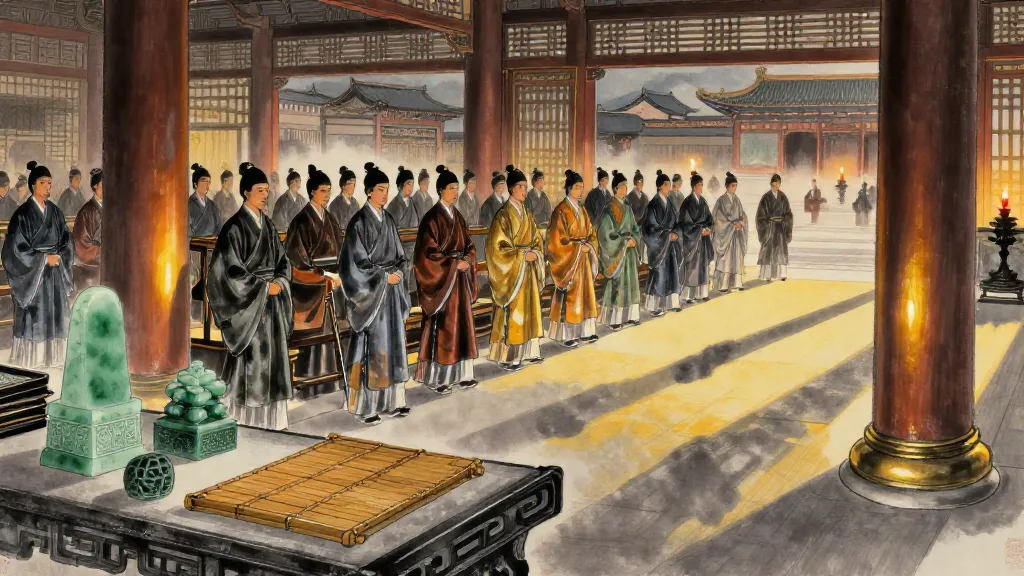
壹言 (Unifying Speech) — Chinese ink painting

商君書 Shangjunshu · Chapter 8

壹言

Unifying Speech

View:

制度壹則民從

When Institutions Are Unified the People Follow

凡將立國,制度不可不察也,治法不可不慎也,國務不可不謹也,事本不可不摶也。制度時,則國俗可化,而民從制;治法明,則官無邪;國務壹,則民套用;事本摶,則民喜農而樂戰。夫聖人之立法、化俗,而使民朝夕從事於農也,不可不變也。夫民之從事死制也,以上之設榮名、置賞罰之明也,不用辯說私門而功立矣。故民之喜農而樂戰也,見上之尊農戰之士,而下辯說技藝之民,而賤遊學之人也。故民壹務,其家必富,而身顯於國。上開公利而塞私門,以致民力;私勞不顯於國,私門不請於君。若此,而功臣勸,則上令行而荒草辟,淫民止而奸無萌。治國能摶民力而壹民務者,強;能事本而禁末者,富。

In all cases of establishing a state, institutions must be carefully examined, methods of governance must be treated with caution, state affairs must be handled with diligence, and the fundamentals of enterprise must be concentrated. When institutions suit the times, the state's customs can be transformed and the people will follow the system. When methods of governance are clear, officials will not be corrupt. When state affairs are unified, the people will apply themselves. When the fundamentals of enterprise are concentrated, the people will delight in agriculture and take pleasure in warfare. The sage's establishment of law and transformation of customs to make the people engage in agriculture morning and night cannot be achieved without change. The people follow the system and risk their lives because the ruler has established glorious titles and made reward and punishment clear — merit is achieved without using persuasive talk or private channels. The people delight in agriculture and take pleasure in warfare because they see the ruler honoring scholars of agriculture and warfare above, while disdaining the people of persuasion, technical crafts, and itinerant scholarship below. Therefore when the people are unified in purpose, their families will be wealthy and their persons will be honored in the state. When the ruler opens the public channel to benefit and blocks private channels, he thereby obtains the people's strength. Private labor is not honored in the state; private channels do not petition the ruler. Under such conditions, meritorious ministers are encouraged, the ruler's commands are executed, barren land is opened, dissolute people are stopped, and villainy has no sprouts. A state governed so as to concentrate the people's strength and unify their pursuits will be strong; one that can attend to fundamentals and prohibit non-essentials will be wealthy.

摶力與殺力

Concentrating Strength and Deploying Strength

夫聖人之治國也,能摶力,能殺力。制度察則民力摶,摶而不化則不行,行而無富則生亂。故治國者,其摶力也,以富國強兵也;其殺力也,以事敵勸民也。夫開而不塞,則短長;長而不攻,則有奸。塞而不開,則民渾;渾而不用,則力多;力多而不攻,則有奸虱。故摶力以壹務也,殺力以攻敵也。

治國者貴民壹,民壹則朴,朴則農,農則易勤,勤則富。富者廢之以爵,不淫;淫者廢之以刑,而務農。故能摶力而不能用者必亂,能殺力而不能摶者必亡。故明君知齊二者,其國強;不知齊二者,其國削。

The sage's governance of the state involves both concentrating strength and deploying strength. When institutions are carefully examined, the people's strength is concentrated. If concentrated but not transformed into action, nothing proceeds; if proceeding but without producing wealth, disorder arises. Therefore in governing the state, strength is concentrated in order to enrich the state and strengthen the army; strength is deployed in order to engage the enemy and motivate the people. If there is opening without blocking, there are gains and losses; if there are gains without attacking, there is villainy. If there is blocking without opening, the people become stagnant; if stagnant and not employed, strength accumulates excessively; if strength accumulates excessively without attacking, there are parasitic elements. Therefore concentrate strength for unified purpose, and deploy strength to attack the enemy.

In governing the state, what matters is that the people be unified. When unified they are simple, when simple they farm, when farming they are easily made diligent, when diligent they become wealthy. The wealthy are redirected through ranks so they do not become dissolute; the dissolute are redirected through punishment and turned back to agriculture. A state that can concentrate strength but cannot deploy it will inevitably be disordered; one that can deploy strength but cannot concentrate it will inevitably perish. Therefore the enlightened ruler who knows how to balance these two will have a strong state; one who does not know how to balance them will have a diminished state.

因世為治

Governing According to the Age

夫民之不治者,君道卑也;法之不明者,君長亂也。故明君不道卑、不長亂也;秉權而立,垂法而治,以得奸於上,而官無不;賞罰斷,而器用有度。若此,則國制明而民力竭,上爵尊而倫徒舉。今世主皆欲治民,而助之以亂;非樂以為亂也,安其故而不窺於時也。是上法古而得其塞,下修令而不時移,而不明世俗之變,不察治民之情,故多賞以致刑,輕刑以去賞。夫上設刑而民不服,賞匱而奸益多。故民之於上也,先刑而後賞。故聖人之為國也,不法古,不修今,因世而為之治,度俗而為之法。故法不察民之情而立之,則不成;治宜於時而行之,則不乾。故聖王之治也,慎為、察務,歸心於壹而已矣。

When the people are not well governed, it is because the ruler's way is debased. When the law is not clear, it is because the ruler perpetuates disorder. Therefore the enlightened ruler neither debases his way nor perpetuates disorder. He holds authority and stands firm, lets the law hang down and governs, thereby detecting villainy from above while officials are all accountable. Reward and punishment are decisive, and instruments and resources are properly measured. Under such conditions, the state's institutions are clear and the people's strength is fully utilized; ranks above are honored and peers below are properly promoted. Now the rulers of the world all desire to govern the people, yet they aid them with disorder — not that they take pleasure in disorder, but they are comfortable with the old and do not look to the times. Above they model upon antiquity and find only blockages; below they maintain edicts without adapting to the times. They do not understand the transformations of worldly customs and do not examine the true conditions of governing the people. Therefore they resort to many rewards in order to bring about more punishment, and lighten punishment in order to dispense with reward. When the ruler institutes punishment yet the people do not submit, and rewards are exhausted while villainy increases — therefore in the people's experience of the ruler, punishment comes first and reward comes after. The sage's governance of the state does not model upon antiquity and does not merely maintain the present. He governs according to the age and crafts law according to custom. If the law is established without examining the people's conditions, it will not succeed. If governance is appropriate to the times and then implemented, it will not fail. Therefore the sage king's governance consists of being careful in action, examining affairs, and focusing the mind on unity — that is all.

Edition & Source

Text
《商君書》 Shangjunshu
Edition
中華古詩文古書籍網 transcription
Commentary
Traditional commentaries