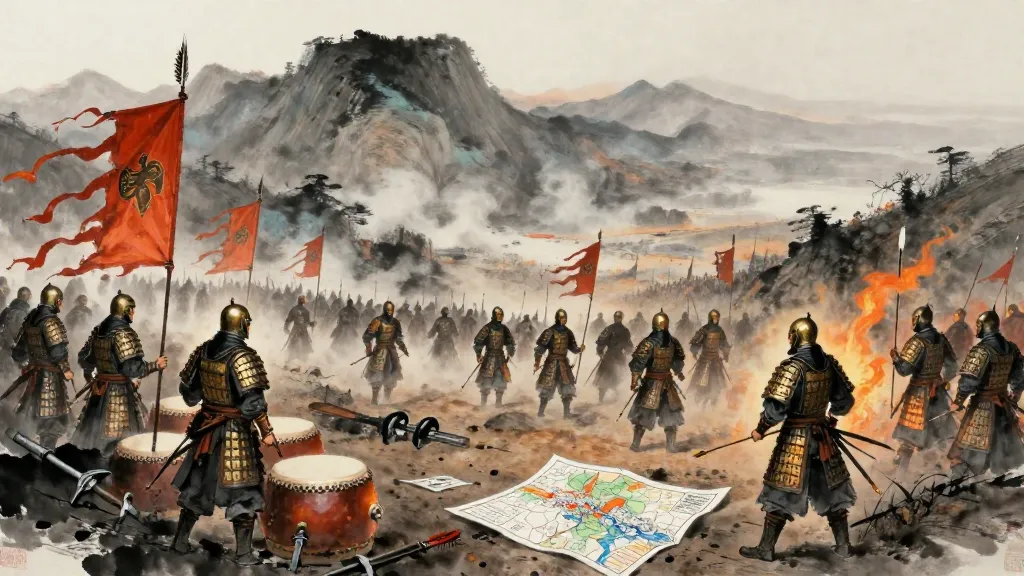
錯法 (Establishing the Law) — Chinese ink painting

商君書 Shangjunshu · Chapter 9

錯法

Establishing the Law

View:

錯法之三本

The Three Foundations of Establishing Law

臣聞:古之明君錯法而民無邪,舉事而材自練,賞行而兵強。此三者,治之本也。夫錯法而民無邪者,法明而民利之也。舉事而材自練者,功分明;功分明,則民盡力;民盡力,則材自練。行賞而兵強者,爵祿之謂也。爵祿者,兵之實也。是故人君之出爵祿也,道明。道明,則國日強;道幽,則國日削。故爵祿之所道,存亡之機也。夫削國亡主非無爵祿也,其所道過也。

三王五霸,其所道不過爵祿,而功相萬者,其所道明也。是以明君之使其臣也,用必出於其勞,賞必加於其功。功賞明,則民競於功。為國而能使其民盡力以競於功,則兵必強矣。

Your minister has heard that the enlightened rulers of antiquity established law so that the people had no villainy, undertook affairs so that talent was naturally refined, and administered reward so that the army was strong. These three are the foundations of governance. That establishing law caused the people to have no villainy was because the law was clear and the people benefited from it. That undertaking affairs caused talent to be naturally refined was because merit was clearly defined — when merit is clearly defined, the people exert their full strength, and when the people exert their full strength, talent is naturally refined. That administering reward caused the army to be strong — this refers to ranks and salaries. Ranks and salaries are the substance of the army. Therefore when the ruler dispenses ranks and salaries, the way must be clear. When the way is clear, the state grows stronger day by day; when the way is obscure, the state is diminished day by day. The direction in which ranks and salaries guide is the pivot of survival or destruction. States that are diminished and rulers who perish are not without ranks and salaries — it is that the direction in which they guide is wrong.

The Three Kings and Five Hegemons guided through nothing other than ranks and salaries, yet their achievements differed by a factor of ten thousand — because the direction in which they guided was clear. Therefore when the enlightened ruler employs his ministers, appointments must correspond to their labor and rewards must be proportionate to their merit. When merit and reward are clear, the people will compete for merit. When a state can make its people exert their full strength in competing for merit, the army will inevitably be strong.

爵其實而榮顯之

Rank the Substance and Make It Glorious

同列而相臣妾者,貧富之謂也;同實而相併兼者,強弱之謂也;有地而君,或強或弱者,亂治之謂也。苟有道,里地足容身,士民可致也;苟容市井,財貨可聚也。有土者不可以言貧,有民者不可以言弱。地誠任,不患無財;民誠用,不畏強暴。德明教行,則能以民之有為己用矣。故明主者用非其有,使非其民。

明王之所貴,惟爵其實,爵其實而榮顯之。不榮,則民不急列位;不顯,則民不事爵;爵易得也,則民不貴上爵;列爵祿賞不道其門,則民不以死爭位矣。人君而有好惡,故民可治也。人君不可以不審好惡。好惡者,賞罰之本也。夫人情好爵祿而惡刑罰,人君設二者以御民之志,而立所欲焉。夫民力盡而爵隨之,功立而賞隨之,人君能使其民信於此如明日月,則兵無敵矣。

Those of the same rank who become servants of one another — this is the difference between poverty and wealth. Those of equal substance who annex one another — this is the difference between strength and weakness. Those who possess territory and rule, yet some are strong and some weak — this is the difference between disorder and order. If there is the Way, a single li of territory sufficient to contain oneself is enough to attract scholars and people. If there is space for a marketplace, goods and wealth can be gathered. Those who possess land cannot speak of poverty; those who possess people cannot speak of weakness. If the land is truly put to use, there is no worry about lacking wealth; if the people are truly employed, there is no fear of powerful aggressors. When virtue is clear and instruction is practiced, one can employ the people's resources as one's own. Therefore the enlightened ruler uses what is not his own and commands people who are not his subjects.

What the enlightened king values above all is ranking substance — ranking substance and making it glorious and prominent. If it is not made glorious, the people will not eagerly seek position. If it is not made prominent, the people will not strive for rank. If rank is easy to obtain, the people will not value high rank. If rank, salary, and reward are not directed through the proper channel, the people will not risk death to contest for position. Because the ruler has likes and dislikes, the people can be governed. The ruler must carefully examine his likes and dislikes. Likes and dislikes are the foundation of reward and punishment. Human nature is to desire rank and salary and to dread punishment. The ruler establishes these two to control the people's wills and to establish what he desires. When the people exhaust their strength and rank follows, when merit is established and reward follows — if the ruler can make the people trust in this as they trust in the sun and moon, then the army will be invincible.

任力不任德

Rely on Strength, Not on Virtue

人君有爵行而兵弱者,有祿行而國貧者,有法立而亂者。此三者,國之患也。故人君者先便請謁而後功力,則爵行而兵弱矣。民不死犯難而利祿可致也,則祿行而國貧矣。法無度數,而事日煩,則法立而治亂矣。是以明君之使其民也,使必盡力以規其功,功立而富貴隨之,無私德也,故教流成。

如此,則臣忠、君明,治著而兵強矣。故凡明君之治也,任其力不任其德,是以不憂不勞,而功可立也。

度數已立,而法可修。故人君者不可不慎己也。夫離朱見秋豪百步之外,而不能以明目易人;烏獲舉千鈞之重,而不能以多力易力。夫聖人之存體性,不可以易人,然而功可得者,法之謂也。

Some rulers dispense rank yet their armies are weak; some administer salaries yet their states are poor; some establish law yet there is disorder. These three are the afflictions of a state. If the ruler first grants favors through petitions and audiences and only afterward considers merit and strength, then rank is dispensed yet the army is weak. If the people need not risk death in the face of danger and yet profitable salaries can be obtained, then salaries are administered yet the state is poor. If the law has no fixed standards and numbers while affairs grow daily more complex, then law is established yet governance is disordered. Therefore when the enlightened ruler employs his people, he ensures they exert their full strength in pursuit of merit. When merit is established, wealth and honor follow — there is no private favor, and therefore instruction flows and succeeds.

Under these conditions, ministers are loyal, the ruler is enlightened, governance is manifest, and the army is strong. In all cases, the enlightened ruler's governance relies on the people's strength, not on their virtue — therefore without worry or toil, merit can be established.

Once standards and numbers are established, the law can be maintained. Therefore the ruler must be cautious about himself. Li Zhu could see the tip of an autumn hair at a hundred paces, but he could not transfer his sharp eyes to another person. Wu Huo could lift a weight of a thousand jun, but he could not transfer his great strength to another person. The sage's endowment of body and nature cannot be transferred to others — yet achievements can be obtained: this is what is meant by the law.

Notes

1person離朱Lí Zhū

Li Zhu (離朱) was a legendary figure of extraordinary eyesight, often cited in philosophical texts as exemplifying superhuman natural ability that cannot be taught.

2person烏獲Wū Huò

Wu Huo (烏獲) was a legendary strongman of ancient times, famous for his prodigious physical strength.

Edition & Source

Text
《商君書》 Shangjunshu
Edition
中華古詩文古書籍網 transcription
Commentary
Traditional commentaries