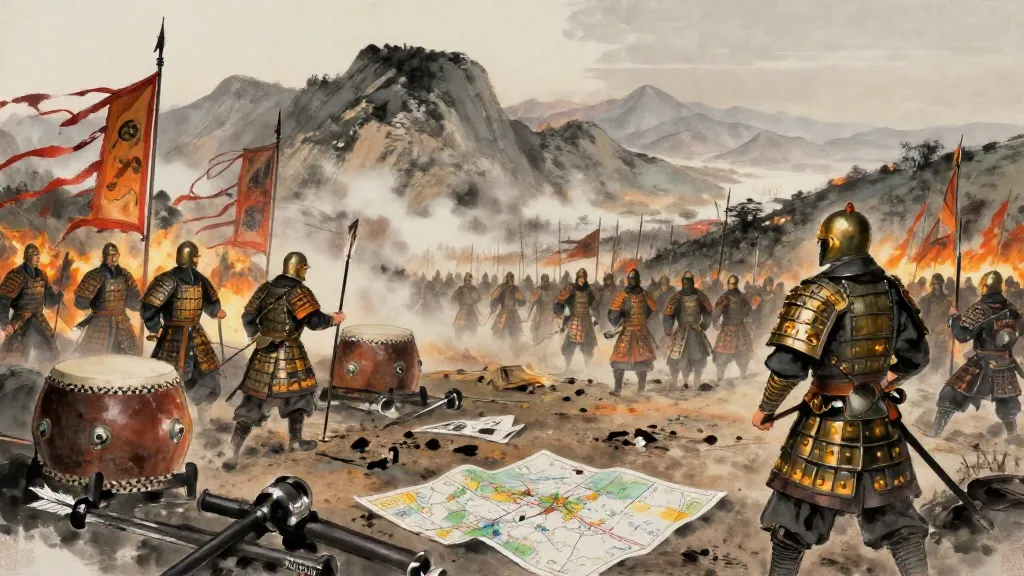
兵起而程敵,政不若者勿與戰;食不若者勿與久;敵眾勿為客;敵盡不如,擊之勿疑。故曰:兵大律在謹,論敵察眾,則勝負可先知也。
王者之兵,勝而不驕,敗而不怨。勝而不驕者,術明也;敗而不怨者,知所失也。
若兵敵強弱,將賢則勝,將不如則敗。若其政出廟算者,將賢亦勝,將不如亦勝。政久持勝術者,必強至王。若民服而聽上,則國富而兵勝,行是,必久王。
其過失,無敵深入,偕險絕塞,民倦且饑渴,而復遇疾,此其道也。故將使民者乘良馬者,不可不齊也。
When war arises, assess the enemy. If your governance is not superior, do not engage in battle. If your provisions are not superior, do not prolong the campaign. If the enemy is more numerous, do not act as the invader. If the enemy is inferior in every respect, strike without hesitation. Therefore it is said: the great principle of warfare lies in caution. Analyze the enemy and assess the forces, and victory or defeat can be known in advance.
The army of the true king is victorious without becoming arrogant and suffers defeat without becoming resentful. It is victorious without arrogance because its methods are clear; it suffers defeat without resentment because it knows where it failed.
Given evenly matched armies of equal strength and weakness: if the general is superior, victory; if the general is inferior, defeat. But if governance originates from the grand strategy of the ancestral temple: a superior general still wins, and an inferior general still wins. Governance that sustains the art of victory over a long period will inevitably become strong to the point of kingship. If the people submit and obey the ruler, the state will be wealthy and the army victorious — practice this, and kingship will endure.
As for strategic errors: penetrating too deeply without an enemy to engage, traversing dangerous terrain and impassable barriers, when the people are weary, hungry and thirsty, and then encounter disease — this is the outcome. Therefore when leading the people, it is like riding fine horses — one must keep them in proper order.