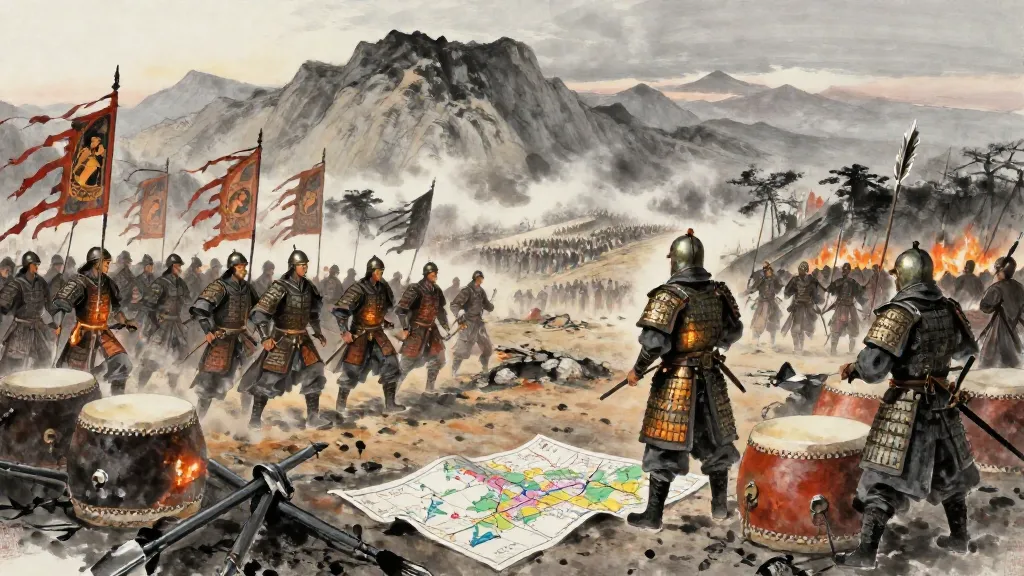
禁使 (Prohibitions and Mandates) — Chinese ink painting

商君書 Shangjunshu · Chapter 24

禁使

Prohibitions and Mandates

View:

賞隨功罰隨罪

Reward Follows Merit, Punishment Follows Crime

人主之所以禁使者,賞罰也。賞隨功,罰隨罪。故論功察罪,不可不審也。夫賞高罰下,而上無必知其道也,與無道同也。

凡知道者,勢、數也。故先王不恃其強,而恃其勢;不恃其信,而恃其數。今夫飛蓬遇飄風而行千里,乘風之勢也;探淵者知千仞之深,縣繩之數也。故托其勢者,雖遠必至;守其數者,雖深必得。今夫幽夜,山陵之大,而離婁不見;清朝日,則上別飛鳥,下察秋豪。故目之見也,托日之勢也。

The means by which the ruler prohibits and commands are reward and punishment. Reward follows merit; punishment follows crime. Therefore in evaluating merit and examining crime, one must not be anything less than thorough. If rewards are generous and punishments are harsh, yet those above have no reliable way of knowing the truth, it is the same as having no Way.

All those who know the Way operate through positional advantage and method. Therefore the former kings did not rely on their strength but relied on their positional advantage; they did not rely on trust but relied on their method. A tumbleweed encounters a gust and travels a thousand li — this is riding the advantage of the wind. One who plumbs an abyss knows its depth of a thousand ren — this is the method of the dangling cord. Therefore those who exploit positional advantage, however distant the goal, will inevitably reach it; those who maintain their method, however deep the matter, will inevitably fathom it. In the dark of night, mountains and hills loom large, yet Li Zhu cannot see them. In the clear morning light, he can distinguish flying birds above and observe the tip of an autumn hair below. Thus the eyes' ability to see relies on the positional advantage of sunlight.

勢數之治

Governing Through Positional Advantage and Method

得勢之至,不參官而潔,陳數而物當。今恃多官眾吏,官立丞、監。夫置丞立監者,且以禁人之為利也;而丞、監亦欲為利,則何以相禁?故恃丞、監而治者,僅存之治也。通數者不然也。別其勢,難其道,故曰:其勢難匿者,雖跖不為非焉。故先王貴勢。

When positional advantage is fully realized, one need not double up on officials yet affairs are clean — deploy the method and all things are properly matched. Now rulers rely on many officials and numerous clerks, establishing vice-ministers and supervisors for each office. The purpose of installing vice-ministers and supervisors is to prevent people from pursuing private profit — but the vice-ministers and supervisors also desire private profit, so how can they prevent each other? Therefore governance that relies on vice-ministers and supervisors is governance that barely survives. Those who understand method proceed differently. They differentiate positional advantages and make the path to wrongdoing difficult. Therefore it is said: when the structural position makes concealment difficult, even Robber Zhi would not do wrong. Therefore the former kings valued positional advantage.

利異則相監

When Interests Diverge, There Is Mutual Supervision

或曰:"人主執虛、後以應,則物應稽驗;稽驗,則奸得。"君以為不然。夫吏專制決事於千里之外,十二月而計書以定,事以一歲別計,而主以一聽,見所疑焉,不可蔽,員不足。夫物至,則目不得不見;言薄,則耳不得不聞。故物至則變,言至則論。故治國之制,民不得避罪,如目不能以所見遁心。今亂國不然,恃多官眾吏。吏雖眾,同體一也。夫同體一者相不可。

且夫利異而害不同者。先王所以為保也。故至治,夫妻、交友不能相為棄惡蓋非,而不害於親,民人不能相為隱。上與吏也,事合而利異者也。今夫騶、虞以相監,不可,事合而利異者也。若使馬、焉能言,則騶、虞無所逃其惡矣,利異也。利合而惡同者,父不能以問子,君不能以問臣。吏之與吏,利合而惡同也。夫事合而利異者,先王之所以為端也。民之蔽主,而不害於蓋。

賢者不能益,不肖者不能損。故遺賢去知,治之數也。

Some say: 'The ruler should maintain emptiness and respond afterward — then reports can be verified; through verification, villainy is detected.' Your minister considers this incorrect. Officials exercise exclusive control over decisions a thousand li away. Accounts are settled once in twelve months; affairs are reviewed in annual audits, while the ruler listens only once. He sees what raises suspicion but cannot fully investigate — the personnel are insufficient. When things arrive, the eyes cannot help but see them; when words approach, the ears cannot help but hear them. Therefore when things arrive, there is transformation; when words arrive, there is discussion. In the system of governing the state, the people should be unable to evade guilt, just as the eye cannot hide what it sees from the mind. Disordered states are not like this — they rely on many officials and numerous clerks. Though the clerks are many, they are of one body and one nature. Those who share one body and nature cannot check each other.

But when interests diverge and harms differ — this is what the former kings used as their safeguard. Therefore in the ultimate order, husbands and wives, friends and companions cannot cover each other's wrongs or conceal each other's faults, without harming their closeness — the people cannot conceal things from one another. The ruler and his officials share the same tasks but have different interests. Now if grooms and gamekeepers are set to supervise each other, it does not work — they share the same tasks and their interests differ. But if the horses could speak, then the grooms and gamekeepers would have nowhere to hide their wrongs — because interests diverge. When interests converge and aversions are the same, a father cannot investigate his son, and a ruler cannot investigate his minister. Among officials and other officials, interests converge and aversions are the same. When tasks are shared but interests diverge — this is what the former kings used as their starting point. The people's ability to deceive the ruler does not harm the covering.

The worthy cannot add anything, and the unworthy cannot diminish anything. Therefore setting aside the worthy and discarding the clever is the method of governance.

Notes

1context

This chapter presents a sophisticated theory of institutional design based on the alignment and divergence of interests. The key insight is that mutual supervision only works when the supervisors have structurally opposed interests — a principle remarkably similar to modern theories of checks and balances.

Edition & Source

Text
《商君書》 Shangjunshu
Edition
中華古詩文古書籍網 transcription
Commentary
Traditional commentaries